Before you start
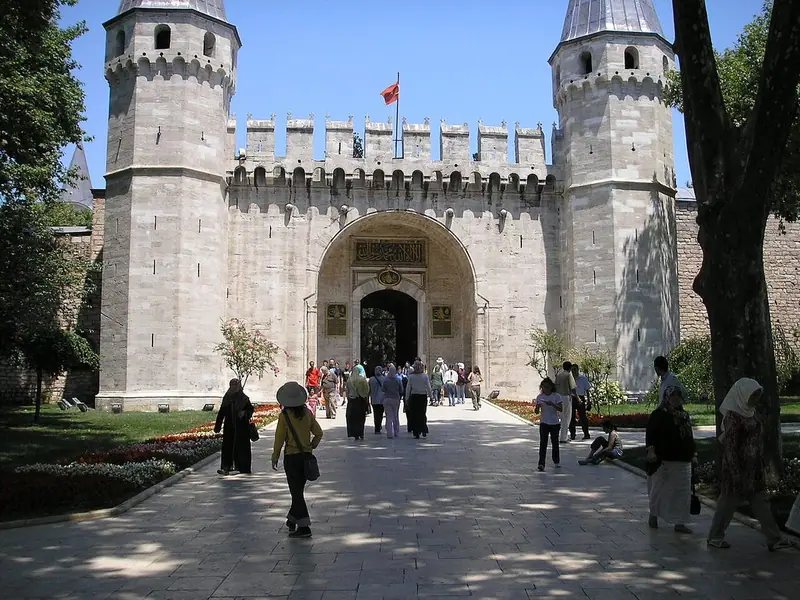
Topkapı Palace, Topkapı Sarayı, crowns Seraglio Point, the tip of Istanbul’s historic peninsula, where the Golden Horn and the Bosphorus meet the Sea of Marmara. It sits just behind Hagia Sophia in Sultanahmet and is one of the monuments of the Historic Areas of Istanbul, a UNESCO World Heritage Site since 1985. Today it is a museum run by the Turkish state. Rather than one great building, it is a series of courtyards, each more private than the last, with pavilions, kitchens, offices and gardens set around them. This guide follows the natural visiting order: through the Imperial Gate into the First Courtyard, past the Gate of Salutation to the kitchens and the Imperial Council in the Second Courtyard, into the Harem, through the Gate of Felicity to the Audience Chamber, Treasury and Sacred Relics, and finally out to the Baghdad Kiosk in the gardens of the Fourth Courtyard.
Use it as a self-guided tour of Topkapı Palace: 9 stops in visit order, each played when you’re ready, at your own pace.
 Free preview · Stop 1
Imperial Gate and First Courtyard
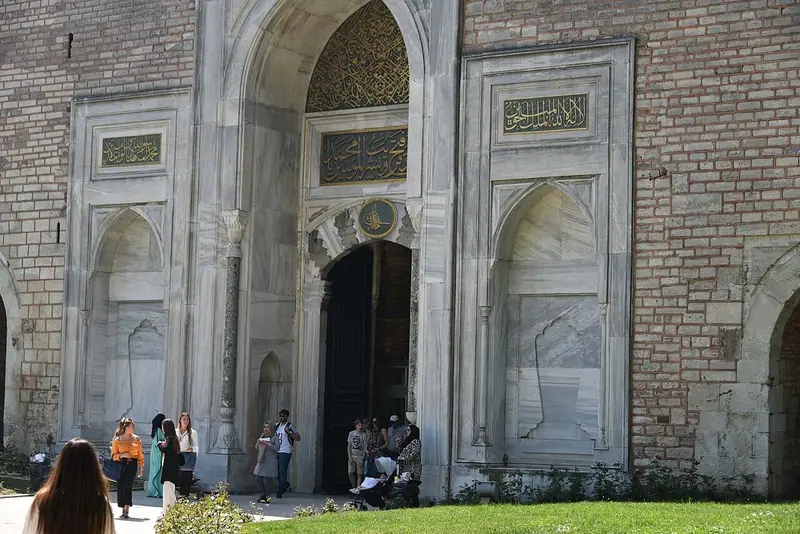
Begin at the Imperial Gate, the massive marble entrance just behind Hagia Sophia. Completed under Mehmed II in 1478, it carries a gilded calligraphic inscription recording his achievements. In Ottoman times anyone could pass through here into the First Courtyard, a broad, tree-shaded outer court that served the palace and the public. It held the mint, a hospital, a bakery, stores of firewood and the barracks of the halberdiers, guards who also cut wood for the palace. Walk forward through the gardens and look to the left for the red-brick church of Hagia Irene, the Church of Holy Peace. Built by Justinian in the sixth century, it was never turned into a mosque and served for centuries as an arsenal, which is why it survives with its early Byzantine plan. Check whether your ticket covers it; the palace ticket office is at the far end.
Photo: Osama Shukir Muhammed Amin FRCP(Glasg) · CC BY-SA 4.0 · Wikimedia Commons
What to see at Topkapı Palace: 9 stops, in visit order
- 01
 Imperial Gate and First CourtyardBab-ı HümayunFree preview
- 02
 Gate of SalutationBab-üs SelamIn the guide
- 03
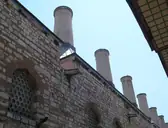 Imperial KitchensSaray MutfaklarıIn the guide
- 04
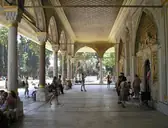 Imperial Council HallDivan-ı HümayunIn the guide
- 05
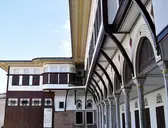 The HaremHaremIn the guide
- 06
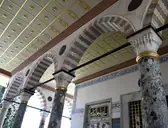 Audience ChamberArz OdasıIn the guide
- 07
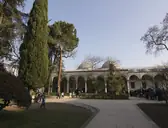 The TreasuryHazineIn the guide
- 08
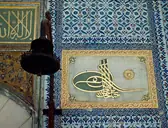 Privy Chamber and Sacred RelicsKutsal EmanetlerIn the guide
- 09
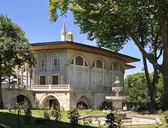 Baghdad KioskBağdat KöşküIn the guide
Site map of Topkapı Palace
History of Topkapı Palace
Topkapı was built by the Ottomans, the Turkish dynasty whose empire lasted from about 1299, when Osman I founded a small state in north-west Anatolia, until 1922, when the sultanate was abolished. At its height the empire stretched from Hungary to the Persian Gulf and from Algeria to the Caucasus. Sultan Mehmed II, who conquered Constantinople in 1453, began the palace in 1459 on the site of the ancient acropolis of Byzantium, and its first phase was finished by around 1478. For nearly four centuries it was the home of the sultans and the heart of government, enlarged by almost every ruler; the great architect Mimar Sinan rebuilt parts of it after a fire in 1574. In 1856 Sultan Abdülmecid moved the court to the new Dolmabahçe Palace on the Bosphorus, but Topkapı kept its treasury, relics and some staff. After the end of the empire, the young Turkish Republic opened it as a museum in 1924, so it has been continuously cared for ever since.
Topkapı Palace guide: questions
How many stops does the Topkapı Palace guide have?
9 stops, in visit order: 1. Imperial Gate and First Courtyard; 2. Gate of Salutation; 3. Imperial Kitchens; 4. Imperial Council Hall; 5. The Harem; 6. Audience Chamber; 7. The Treasury; 8. Privy Chamber and Sacred Relics; 9. Baghdad Kiosk.
Can I do a self-guided tour of Topkapı Palace with this guide?
Yes. The guide is made for a self-guided tour: 9 stops in visit order, each with a photo, a story and a voice, so you can explore Topkapı Palace at your own pace, without joining a group. Download it before you go and it works offline.
How long is each guide?
The 9 stops add up to about 8 minutes of listening in total. You play each stop when you’re ready, so you can go at your own pace.
Does the guide work offline?
Yes, once it’s downloaded. The guide is a single self-contained web page (about 9.6 MB) with the photos, text and audio built in. Download it to your phone before you go (Wi-Fi is best); after that it opens in any modern browser on iPhone or Android, with no app, account or mobile signal needed.
Does it use GPS or need my location?
No. The guide doesn’t use GPS and doesn’t know where you are: you play each stop when you reach it. It works on iPhone and Android in any modern browser, and it’s in English.
What’s included?
One self-contained HTML guide: 9 stops in visit order, each with a photo, text and a voice, plus the story of who built the site.
Who built Topkapı Palace?
Topkapı was built by the Ottomans, the Turkish dynasty whose empire lasted from about 1299, when Osman I founded a small state in north-west Anatolia, until 1922, when the sultanate was abolished. At its height the empire stretched from Hungary to the Persian Gulf and from Algeria to the Caucasus.
Is there a free audio guide to Topkapı Palace?
The first stop, Imperial Gate and First Courtyard, is free to read and hear on this page, so you can try the Topkapı Palace audio tour before you buy. The full guide, with all 9 stops, is a one-off purchase: download it once and it’s yours to keep, working offline.
Is the Topkapı Palace guide worth it?
If you’d like to know what you’re looking at, yes. For $10 you get 9 stops in visit order, each with a photo, a short history and a voice you play when you’re ready, plus a site map of the stops, and about 8 minutes of listening in all. It’s short on purpose, so you spend your time looking, not listening. It’s yours to keep, works offline and needs no app. The first stop is free on this page, so you can try it before you buy. If you’d like hours of detail, a guided tour will go deeper.
Audio guide or guided tour?
It depends how you like to visit. This guide lets you explore Topkapı Palace at your own pace, at any time, for a one-off price. A guided tour gives you a live expert you can ask questions, but at fixed times and usually for a higher price. Many people use both: a tour for the big picture, and the guide to read beforehand or to revisit the stops in their own time.
Is this the official Topkapı Palace guide?
No. It’s an independent guide by The Historian Guide, not affiliated with or endorsed by the operator of Topkapı Palace. For tickets and opening hours, check the official site operator before you go.
Does the guide include entry tickets or opening hours?
No. The guide is a digital companion only. Admission to Topkapı Palace is separate, so check the official site operator for current tickets and opening hours before you go.
- Stop 1 · Imperial Gate and First Courtyard: Osama Shukir Muhammed Amin FRCP(Glasg) · CC BY-SA 4.0 · Wikimedia Commons · resized
- Stop 2 · Gate of Salutation (also the cover): Gryffindor · Public domain · Wikimedia Commons · resized
- Stop 3 · Imperial Kitchens: Gryffindor · Public domain · Wikimedia Commons · resized
- Stop 4 · Imperial Council Hall: Gryffindor · Public domain · Wikimedia Commons · resized
- Stop 5 · The Harem: Julian Lupyan · CC0 · Wikimedia Commons · resized
- Stop 6 · Audience Chamber: Osama Shukir Muhammed Amin FRCP(Glasg) · CC BY-SA 4.0 · Wikimedia Commons · resized
- Stop 7 · The Treasury: Maksym Kozlenko · CC BY-SA 4.0 · Wikimedia Commons · resized
- Stop 8 · Privy Chamber and Sacred Relics: Dosseman · CC BY-SA 4.0 · Wikimedia Commons · resized
- Stop 9 · Baghdad Kiosk: Moonik · CC BY-SA 3.0 · Wikimedia Commons · resized


All photographs from Wikimedia Commons under the licences shown.
More guides in Turkey
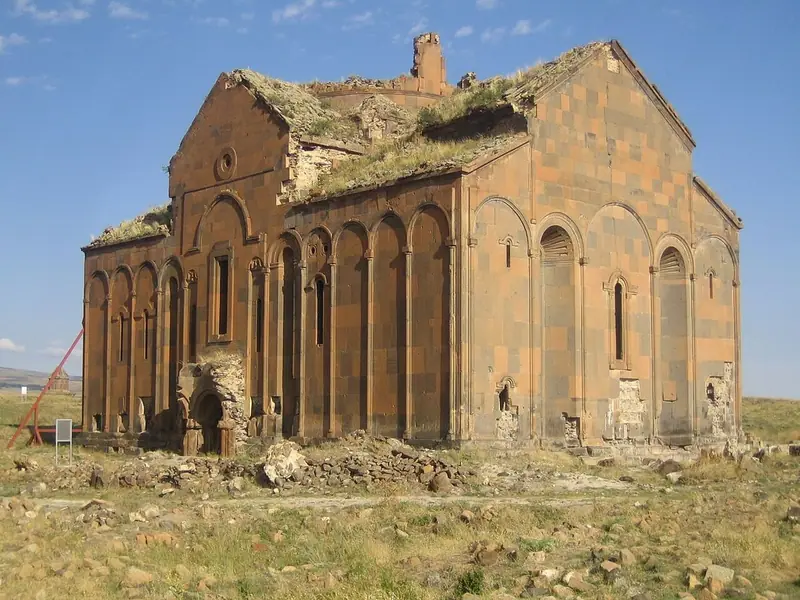 Armenian8 stops · 10th – 14th century CE
Ani audio guide
The ruined capital of medieval Armenia above a border gorge: Trdat’s cathedral, the frescoed church of Tigran Honents, the half-fallen Holy Redeemer and the minaret of Manuchihr.
 Roman8 stops · 1st century BCE – 4th century CE
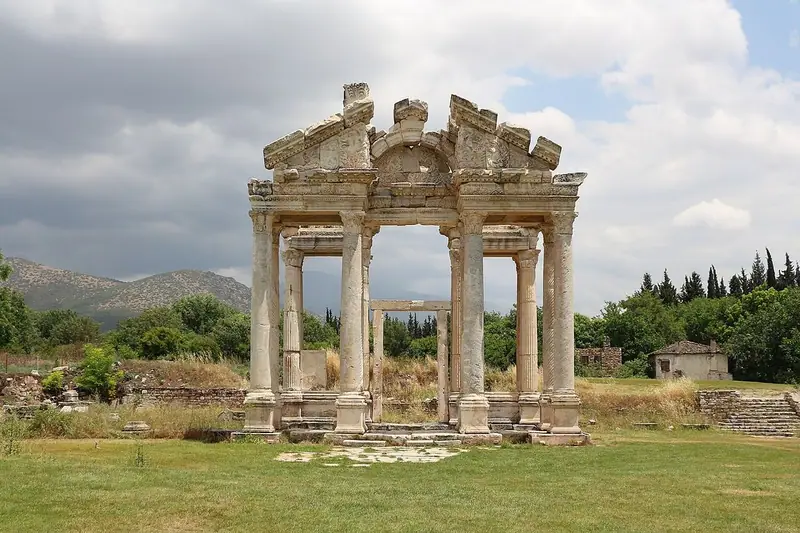
Aphrodisias audio guide
The city of Aphrodite: the Tetrapylon gate, the stadium, the theatre and the sculpted reliefs of the Sebasteion.
 Ottoman9 stops · 1609–1616
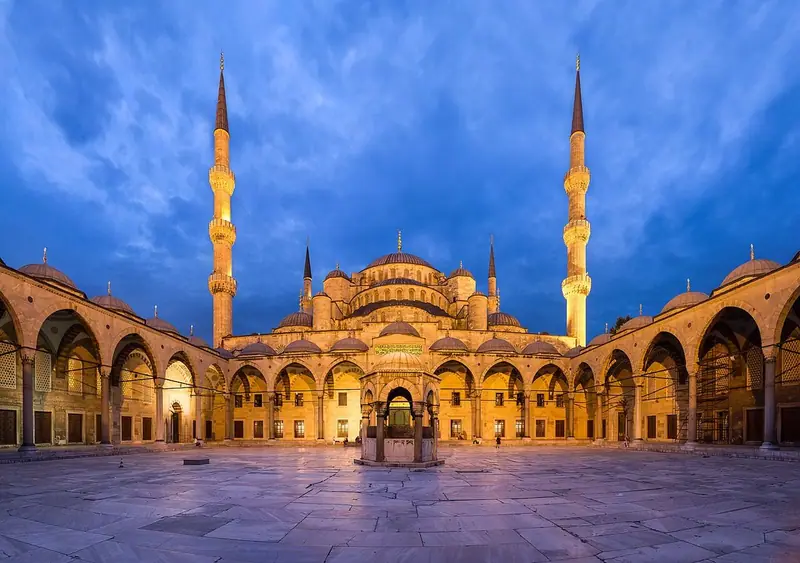
Blue Mosque audio guide
Sultan Ahmed’s mosque facing Hagia Sophia, beside the obelisks and Serpent Column of the ancient Hippodrome.
 Byzantine8 stops · 10th–12th century
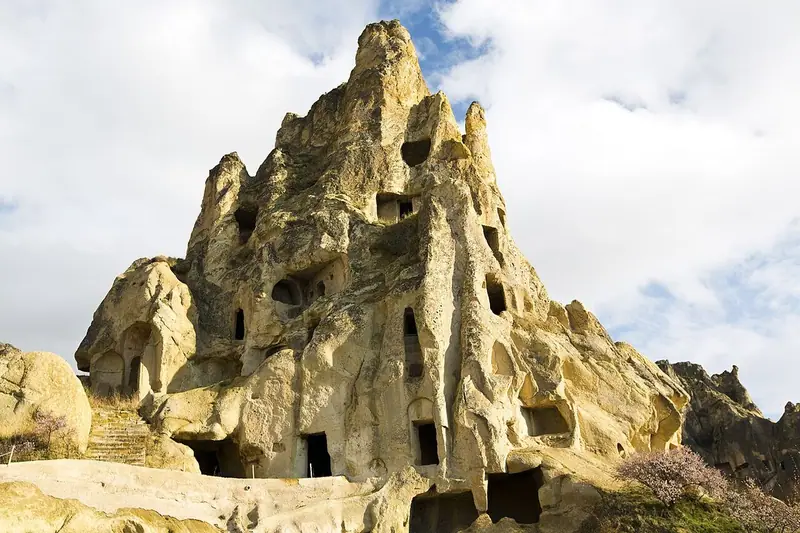
Cappadocia audio guide
Monks' churches and chapels cut into the soft rock of Göreme, among Cappadocia’s fairy chimneys.
 Byzantine7 stops · expanded c. 780–1180 CE
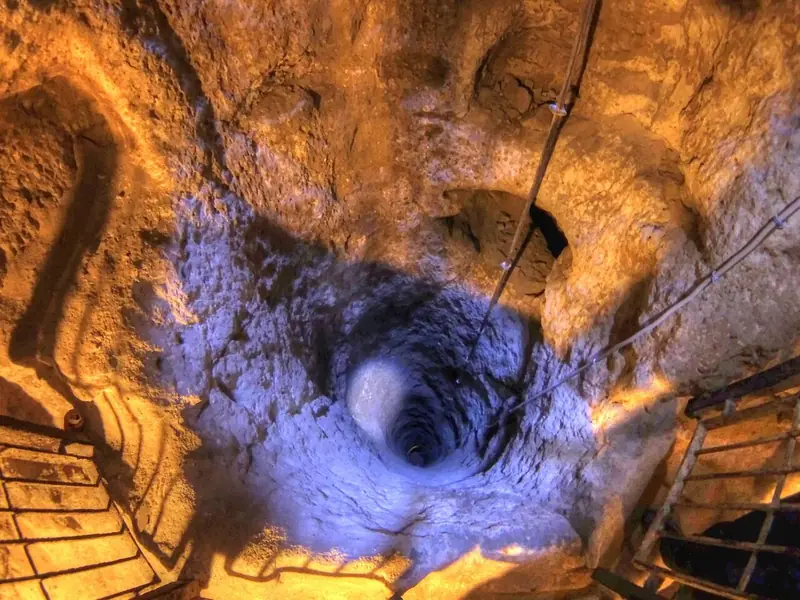
Derinkuyu audio guide
Descend through stables, kitchens and rolling stone doors into an underground city cut deep into the tuff.
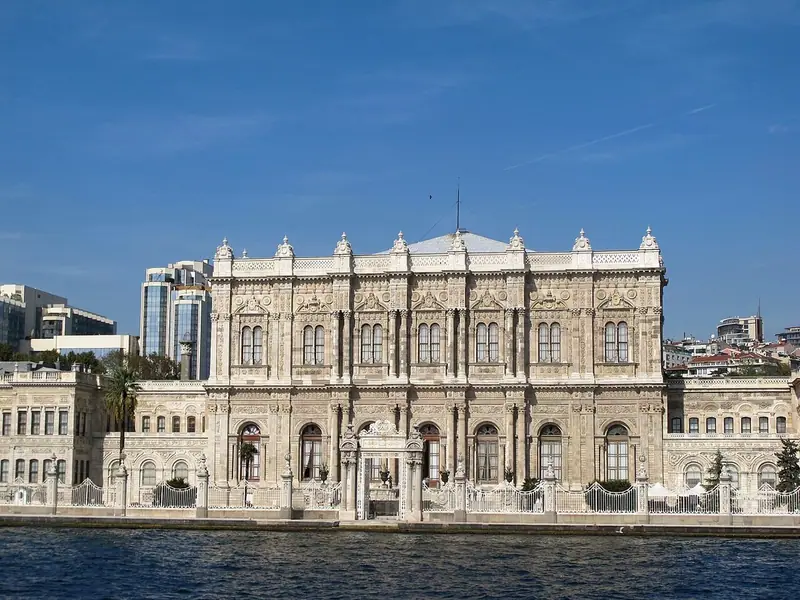 Ottoman8 stops · Late Ottoman
Dolmabahçe Palace audio guide
Climb the crystal staircase of the sultans’ palace of gold and crystal on the Bosphorus, to the vast domed Ceremonial Hall and Atatürk’s room.
Every guide, in every country
Topkapı Palace and every other guide we publish, including future ones. One payment, no subscription.