Before you start
Aphrodisias, Afrodisias in Turkish, lies on a fertile upland plateau in the hills of ancient Caria, beside the village of Geyre in Aydın Province, in south-western Turkey, roughly halfway between Pamukkale and the Aegean coast. Named after Aphrodite, the goddess of love, it was famous in Roman times for its marble and its sculptors. It has been a UNESCO World Heritage Site since 2017, together with the ancient marble quarries north-east of the city, and is run by the Turkish Ministry of Culture and Tourism, with excavations by a team from New York University and the University of Oxford. This guide follows the natural circular route round the site: from the Tetrapylon to the stadium, back through the Temple of Aphrodite to the Bouleuterion, the South Agora and its pool, the theatre and the Sebasteion, finishing in the museum.
Use it as a self-guided tour of Aphrodisias: 8 stops in visit order, each played when you’re ready, at your own pace.
 Free preview · Stop 1
The Tetrapylon
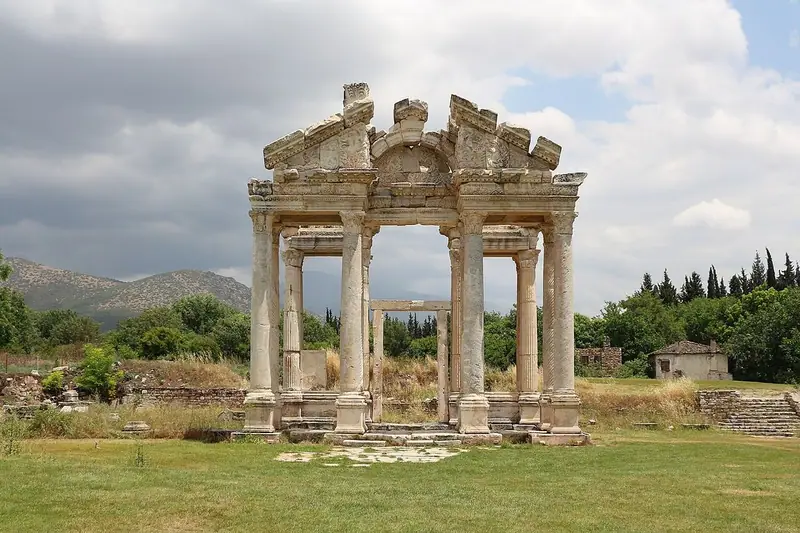
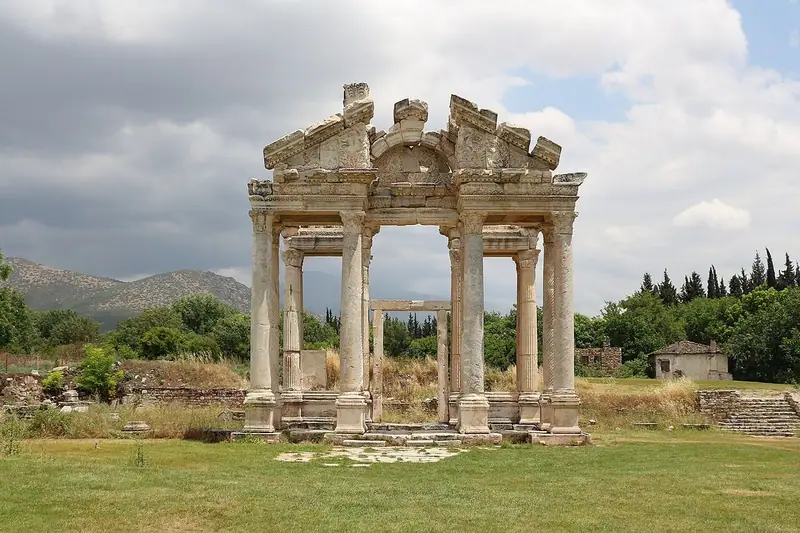
Begin at the Tetrapylon, the elegant monumental gateway just a short walk from the museum. Built around 200 CE, it has four rows of four columns, with carved pediments and spiral-fluted columns, and it marked the entrance from a main north-south street into the great forecourt of the Temple of Aphrodite. Pilgrims would have passed through it on their way to the goddess. Look up at the eastern pediment, where Erotes, little winged figures of love, play among acanthus leaves. What you see is the result of a careful reconstruction finished in 1990, using about 85 per cent original blocks. Beside the gateway is the simple grave of Professor Kenan Erim, the Turkish-American archaeologist who led the excavations from 1961 until his death in 1990 and devoted his life to Aphrodisias. He asked to be buried here, close to the monument he restored.
Photo: Bernard Gagnon · CC BY-SA 3.0 · Wikimedia Commons
What to see at Aphrodisias: 8 stops, in visit order
- 01
 The TetrapylonTetrapylonFree preview
- 02
 The StadiumStadyumIn the guide
- 03
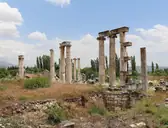 Temple of AphroditeAfrodit TapınağıIn the guide
- 04
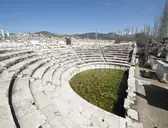 The BouleuterionBouleuterionIn the guide
- 05
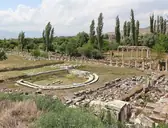 South Agora and PoolGüney Agora ve HavuzIn the guide
- 06
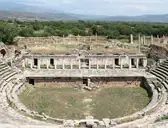 The TheatreTiyatroIn the guide
- 07
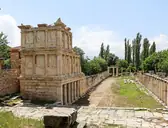 The SebasteionSebasteionIn the guide
- 08
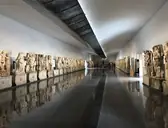 Museum and Sebasteion HallAfrodisias MüzesiIn the guide
Site map of Aphrodisias
History of Aphrodisias
People lived on this spot from prehistoric times, and the local Carians worshipped a goddess here long before the Greeks; she came to be identified with Aphrodite. Aphrodisias grew into a Greek city in the second and first centuries BCE, in the Hellenistic age. Its great opportunity came with Rome: the city stayed loyal to Rome during the wars of the first century BCE, and Julius Caesar’s family claimed descent from Venus, the Roman Aphrodite. Octavian, the future emperor Augustus, granted it freedom and tax privileges, and a wealthy former slave of his, Gaius Julius Zoilos, a native of the city, paid for the theatre and the temple. Under the Roman Empire, from the late first century BCE to the third century CE, Aphrodisias flourished, its sculptors working across the Mediterranean.
The full history continues in the guide.
Aphrodisias guide: questions
How many stops does the Aphrodisias guide have?
8 stops, in visit order: 1. The Tetrapylon; 2. The Stadium; 3. Temple of Aphrodite; 4. The Bouleuterion; 5. South Agora and Pool; 6. The Theatre; 7. The Sebasteion; 8. Museum and Sebasteion Hall.
Can I do a self-guided tour of Aphrodisias with this guide?
Yes. The guide is made for a self-guided tour: 8 stops in visit order, each with a photo, a story and a voice, so you can explore Aphrodisias at your own pace, without joining a group. Download it before you go and it works offline.
How long is each guide?
The 8 stops add up to about 7 minutes of listening in total. You play each stop when you’re ready, so you can go at your own pace.
Does the guide work offline?
Yes, once it’s downloaded. The guide is a single self-contained web page (about 9.0 MB) with the photos, text and audio built in. Download it to your phone before you go (Wi-Fi is best); after that it opens in any modern browser on iPhone or Android, with no app, account or mobile signal needed.
Does it use GPS or need my location?
No. The guide doesn’t use GPS and doesn’t know where you are: you play each stop when you reach it. It works on iPhone and Android in any modern browser, and it’s in English.
What’s included?
One self-contained HTML guide: 8 stops in visit order, each with a photo, text and a voice, plus the story of who built the site.
Who built Aphrodisias?
People lived on this spot from prehistoric times, and the local Carians worshipped a goddess here long before the Greeks; she came to be identified with Aphrodite. Aphrodisias grew into a Greek city in the second and first centuries BCE, in the Hellenistic age.
Where is Aphrodisias?
Aphrodisias, Afrodisias in Turkish, lies on a fertile upland plateau in the hills of ancient Caria, beside the village of Geyre in Aydın Province, in south-western Turkey, roughly halfway between Pamukkale and the Aegean coast.
Is there a free audio guide to Aphrodisias?
The first stop, The Tetrapylon, is free to read and hear on this page, so you can try the Aphrodisias audio tour before you buy. The full guide, with all 8 stops, is a one-off purchase: download it once and it’s yours to keep, working offline.
Is the Aphrodisias guide worth it?
If you’d like to know what you’re looking at, yes. For $10 you get 8 stops in visit order, each with a photo, a short history and a voice you play when you’re ready, plus a site map of the stops, and about 7 minutes of listening in all. It’s short on purpose, so you spend your time looking, not listening. It’s yours to keep, works offline and needs no app. The first stop is free on this page, so you can try it before you buy. If you’d like hours of detail, a guided tour will go deeper.
Audio guide or guided tour?
It depends how you like to visit. This guide lets you explore Aphrodisias at your own pace, at any time, for a one-off price. A guided tour gives you a live expert you can ask questions, but at fixed times and usually for a higher price. Many people use both: a tour for the big picture, and the guide to read beforehand or to revisit the stops in their own time.
Is this the official Aphrodisias guide?
No. It’s an independent guide by The Historian Guide, not affiliated with or endorsed by the operator of Aphrodisias. For tickets and opening hours, check the official site operator before you go.
Does the guide include entry tickets or opening hours?
No. The guide is a digital companion only. Admission to Aphrodisias is separate, so check the official site operator for current tickets and opening hours before you go.
- Stop 1 · The Tetrapylon (also the cover): Bernard Gagnon · CC BY-SA 3.0 · Wikimedia Commons · resized
- Stop 2 · The Stadium: Bernard Gagnon · CC BY-SA 3.0 · Wikimedia Commons · resized
- Stop 3 · Temple of Aphrodite: Bernard Gagnon · CC BY-SA 3.0 · Wikimedia Commons · resized
- Stop 4 · The Bouleuterion: Dosseman · CC BY-SA 4.0 · Wikimedia Commons · resized
- Stop 5 · South Agora and Pool: Bernard Gagnon · CC BY-SA 3.0 · Wikimedia Commons · resized
- Stop 6 · The Theatre: Bernard Gagnon · CC BY-SA 3.0 · Wikimedia Commons · resized
- Stop 7 · The Sebasteion: Bernard Gagnon · CC BY-SA 3.0 · Wikimedia Commons · resized
- Stop 8 · Museum and Sebasteion Hall: Raicem · CC BY-SA 4.0 · Wikimedia Commons · resized


All photographs from Wikimedia Commons under the licences shown.
More guides in Turkey
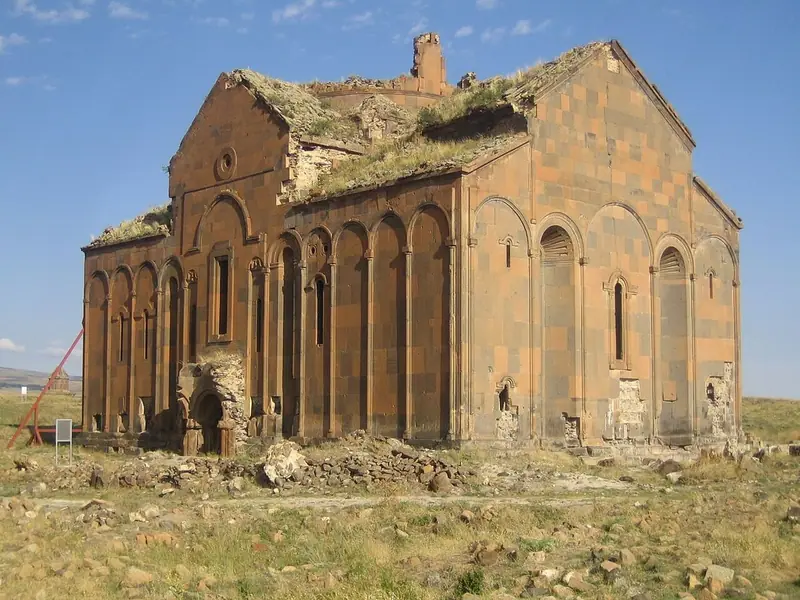 Armenian8 stops · 10th – 14th century CE
Ani audio guide
The ruined capital of medieval Armenia above a border gorge: Trdat’s cathedral, the frescoed church of Tigran Honents, the half-fallen Holy Redeemer and the minaret of Manuchihr.
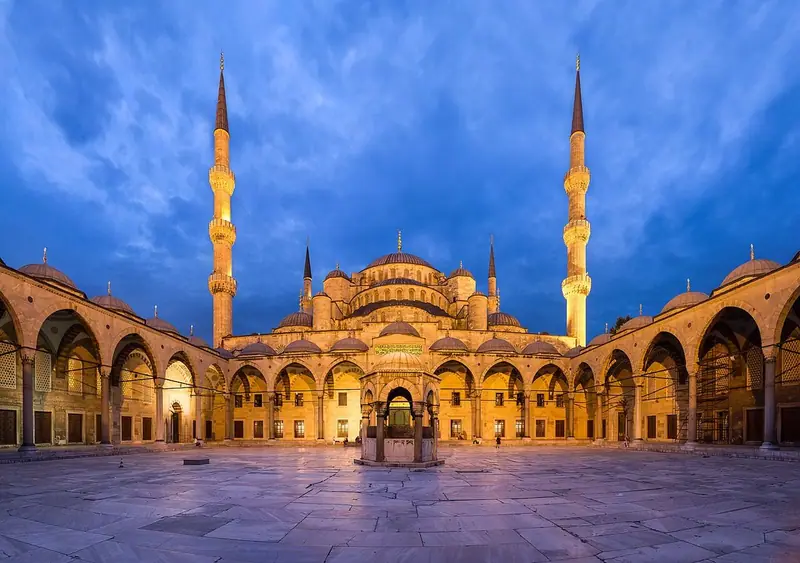 Ottoman9 stops · 1609–1616
Blue Mosque audio guide
Sultan Ahmed’s mosque facing Hagia Sophia, beside the obelisks and Serpent Column of the ancient Hippodrome.
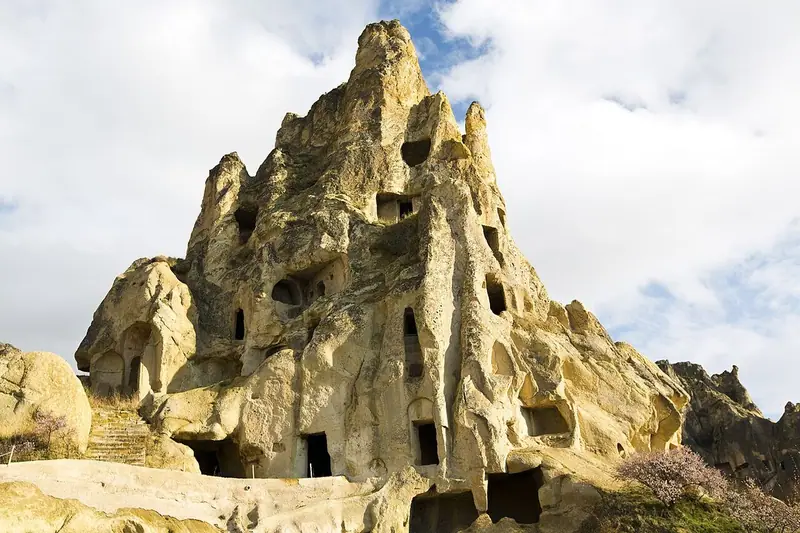 Byzantine8 stops · 10th–12th century
Cappadocia audio guide
Monks' churches and chapels cut into the soft rock of Göreme, among Cappadocia’s fairy chimneys.
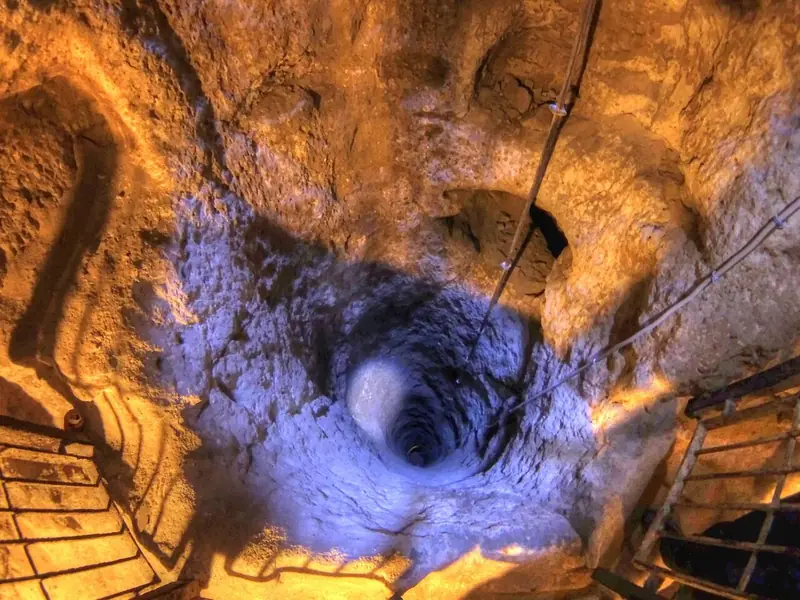 Byzantine7 stops · expanded c. 780–1180 CE
Derinkuyu audio guide
Descend through stables, kitchens and rolling stone doors into an underground city cut deep into the tuff.
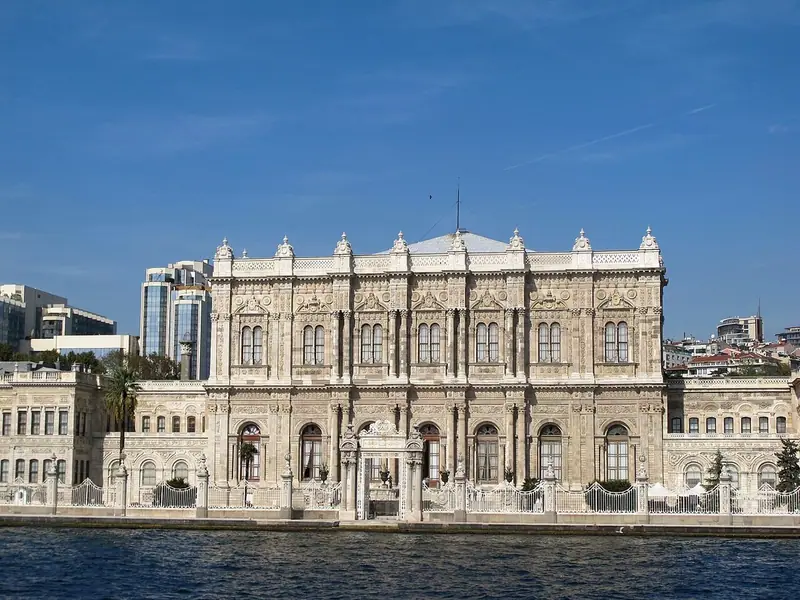 Ottoman8 stops · Late Ottoman
Dolmabahçe Palace audio guide
Climb the crystal staircase of the sultans’ palace of gold and crystal on the Bosphorus, to the vast domed Ceremonial Hall and Atatürk’s room.
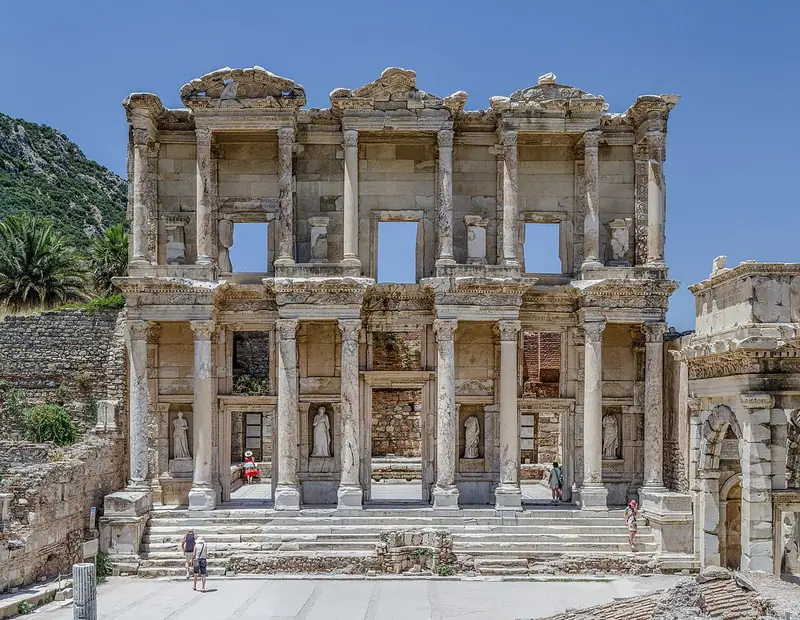 Roman9 stops · 3rd century BCE – 4th century CE
Ephesus audio guide
Down Curetes Street past the Terrace Houses to the Library of Celsus and the Great Theatre.
Every guide, in every country
Aphrodisias and every other guide we publish, including future ones. One payment, no subscription.