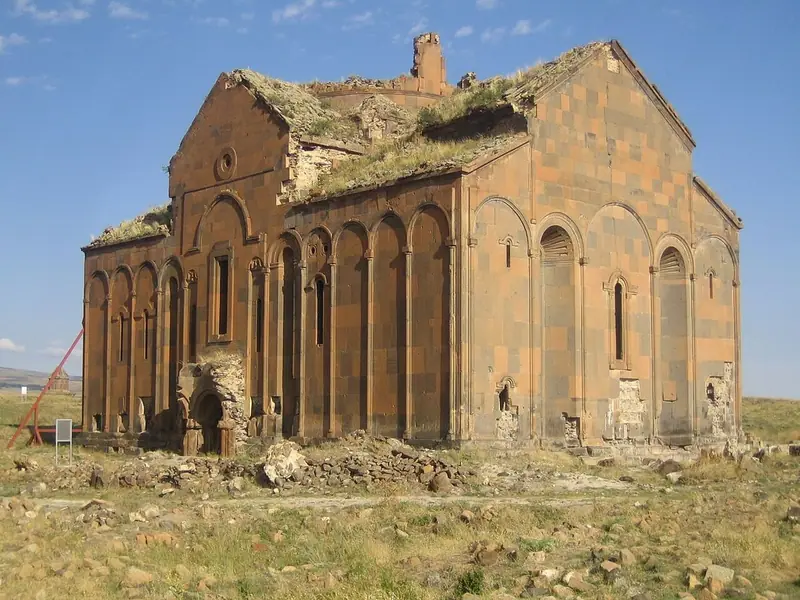
Before you start
Ani stands on a triangular plateau in Kars Province, in the far north-east of Turkey, guarded on the east by the gorge of the Akhurian river, which marks the closed border with Armenia. Most visitors come by car, taxi or minibus from the city of Kars. UNESCO inscribed Ani as a World Heritage Site in 2016. The site lies at about 1,340 metres, on open grassland with almost no shade; summers are hot by day and winters bitterly cold, so dress for the season and bring water, a hat and sun cream. Paths are long and uneven, and the edges of the gorges are steep and unfenced, so stay on the paths and follow any signs or instructions from staff near the border. Please do not climb on walls. The route enters by the Lion Gate, crosses the city to the churches above the gorge and the cathedral, and returns past the citadel and the churches of the west.
Use it as a self-guided tour of Ani: 8 stops in visit order, each played when you’re ready, at your own pace.
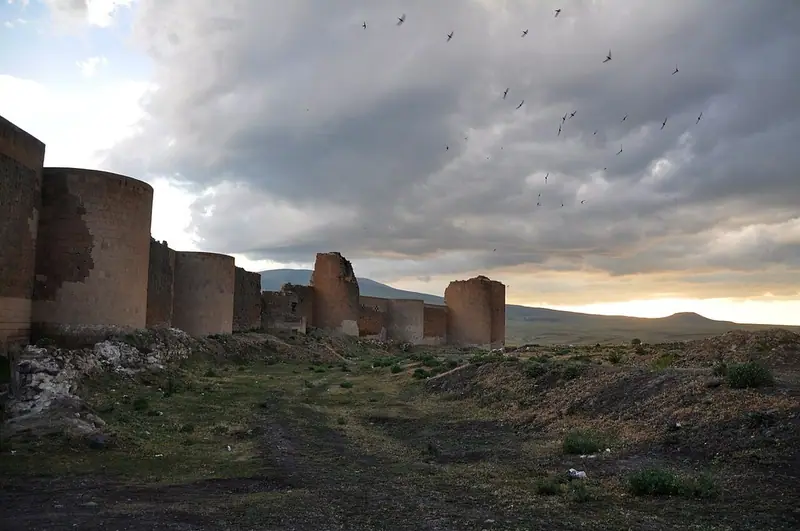 Free preview · Stop 1
City Walls and Lion Gate
Begin at the massive walls on the city’s northern edge, the one side with no river or ravine to protect it. Ani’s defence here was a double ring of walls, the higher inner wall set with big, closely spaced, half-round towers. Chroniclers credited them to King Smbat II, who reigned from 977 to 989, and later rulers made them higher and thicker and added more towers. Armenian inscriptions of the twelfth and thirteenth centuries record that some of the newer towers were paid for by private citizens. Every building at Ani is made of the local volcanic stone, easily carved, in shades from creamy yellow to rose red and black. Three gates pierced the northern walls: the Lion Gate, the Kars Gate and the Dvin Gate. Enter the city through the Lion Gate, named after a carved lion on its wall.
Photo: Panegyrics of Granovetter · CC BY-SA 2.0 · Wikimedia Commons
What to see at Ani: 8 stops, in visit order
- 01
 City Walls and Lion GateThe defences of the northFree preview
- 02
 Church of the Holy ApostlesArmenian stone, Seljuk styleIn the guide
- 03
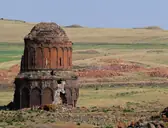 Church of the Holy RedeemerHalf a church on the skylineIn the guide
- 04
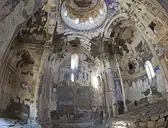 Saint Gregory of Tigran HonentsFrescoes above the gorgeIn the guide
- 05
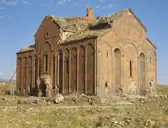 CathedralThe masterpiece of TrdatIn the guide
- 06
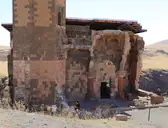 Mosque of ManuchihrA minaret above the riverIn the guide
- 07
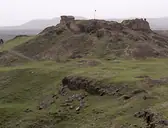 CitadelThe palace of the kingsIn the guide
- 08
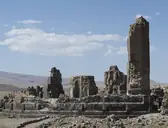 Churches of Saint GregoryA cathedral reborn, and a family chapelIn the guide
Site map of Ani
History of Ani
Ani was built by the Armenians, and later shaped by Byzantine, Muslim, Georgian and Mongol rulers. Armenian writers of the fifth century already knew it as a strong fortress of the Kamsarakan family. By the ninth century it belonged to the Bagratuni dynasty, who won Armenian independence from the Arab caliphate. In 961 King Ashot III moved his capital here from Kars, and the city grew rapidly; in 992 the head of the Armenian Church also moved his seat to Ani. It became a great trading city, famed as the city of a thousand and one churches. Ani passed to Byzantium in the 1040s, and in 1064 it was taken by the Seljuk sultan Alp Arslan.
The full history continues in the guide.
Ani guide: questions
How many stops does the Ani guide have?
8 stops, in visit order: 1. City Walls and Lion Gate; 2. Church of the Holy Apostles; 3. Church of the Holy Redeemer; 4. Saint Gregory of Tigran Honents; 5. Cathedral; 6. Mosque of Manuchihr; 7. Citadel; 8. Churches of Saint Gregory.
Can I do a self-guided tour of Ani with this guide?
Yes. The guide is made for a self-guided tour: 8 stops in visit order, each with a photo, a story and a voice, so you can explore Ani at your own pace, without joining a group. Download it before you go and it works offline.
How long do you need at Ani?
We suggest allowing half a day. The 8 stops add up to about 6 minutes of listening, and you play each one when you’re ready, so you can linger wherever you like.
How long is each guide?
The 8 stops add up to about 6 minutes of listening in total. You play each stop when you’re ready, so you can go at your own pace.
Does the guide work offline?
Yes, once it’s downloaded. The guide is a single self-contained web page (about 7.6 MB) with the photos, text and audio built in. Download it to your phone before you go (Wi-Fi is best); after that it opens in any modern browser on iPhone or Android, with no app, account or mobile signal needed.
Does it use GPS or need my location?
No. The guide doesn’t use GPS and doesn’t know where you are: you play each stop when you reach it. It works on iPhone and Android in any modern browser, and it’s in English.
What’s included?
One self-contained HTML guide: 8 stops in visit order, each with a photo, text and a voice, plus the story of who built the site.
Who built Ani?
Ani was built by the Armenians, and later shaped by Byzantine, Muslim, Georgian and Mongol rulers. Armenian writers of the fifth century already knew it as a strong fortress of the Kamsarakan family.
Where is Ani?
Ani stands on a triangular plateau in Kars Province, in the far north-east of Turkey, guarded on the east by the gorge of the Akhurian river, which marks the closed border with Armenia.
Is there a free audio guide to Ani?
The first stop, City Walls and Lion Gate, is free to read and hear on this page, so you can try the Ani audio tour before you buy. The full guide, with all 8 stops, is a one-off purchase: download it once and it’s yours to keep, working offline.
Is the Ani guide worth it?
If you’d like to know what you’re looking at, yes. For $10 you get 8 stops in visit order, each with a photo, a short history and a voice you play when you’re ready, plus a site map of the stops, and about 6 minutes of listening in all. It’s short on purpose, so you spend your time looking, not listening. It’s yours to keep, works offline and needs no app. The first stop is free on this page, so you can try it before you buy. If you’d like hours of detail, a guided tour will go deeper.
Audio guide or guided tour?
It depends how you like to visit. This guide lets you explore Ani at your own pace, at any time, for a one-off price. A guided tour gives you a live expert you can ask questions, but at fixed times and usually for a higher price. Many people use both: a tour for the big picture, and the guide to read beforehand or to revisit the stops in their own time.
Is this the official Ani guide?
No. It’s an independent guide by The Historian Guide, not affiliated with or endorsed by the operator of Ani. For tickets and opening hours, check the official site operator before you go.
Does the guide include entry tickets or opening hours?
No. The guide is a digital companion only. Admission to Ani is separate, so check the official site operator for current tickets and opening hours before you go.
- Stop 1 · City Walls and Lion Gate: Panegyrics of Granovetter · CC BY-SA 2.0 · Wikimedia Commons · resized
- Stop 2 · Church of the Holy Apostles: Dosseman · CC BY 4.0 · Wikimedia Commons · resized
- Stop 3 · Church of the Holy Redeemer: Panegyrics of Granovetter · CC BY-SA 2.0 · Wikimedia Commons · resized
- Stop 4 · Saint Gregory of Tigran Honents: Dosseman · CC BY-SA 4.0 · Wikimedia Commons · resized
- Stop 5 · Cathedral (also the cover): User: Hansm at wikivoyage shared · CC BY-SA 3.0 · Wikimedia Commons · resized
- Stop 6 · Mosque of Manuchihr: Francesco Bini · CC BY-SA 4.0 · Wikimedia Commons · resized
- Stop 7 · Citadel: Ggia · CC BY-SA 3.0 · Wikimedia Commons · resized
- Stop 8 · Churches of Saint Gregory: Dosseman · CC BY-SA 4.0 · Wikimedia Commons · resized


All photographs from Wikimedia Commons under the licences shown.
More guides in Turkey
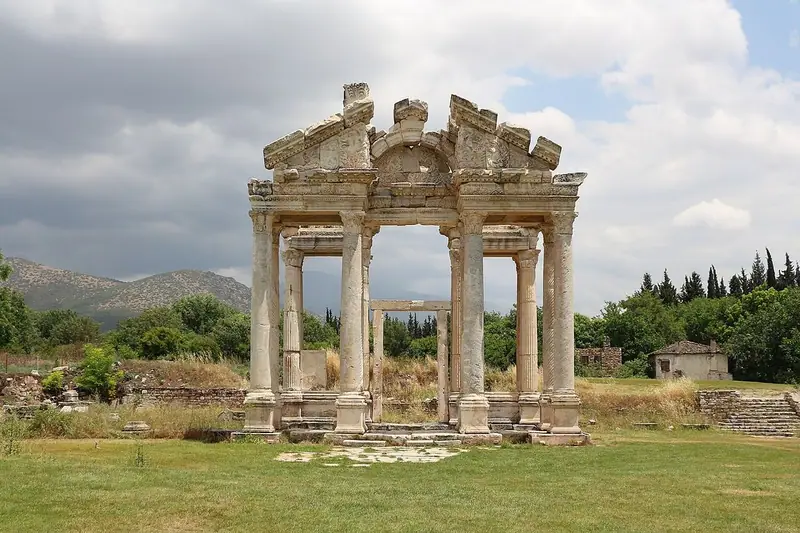 Roman8 stops · 1st century BCE – 4th century CE
Aphrodisias audio guide
The city of Aphrodite: the Tetrapylon gate, the stadium, the theatre and the sculpted reliefs of the Sebasteion.
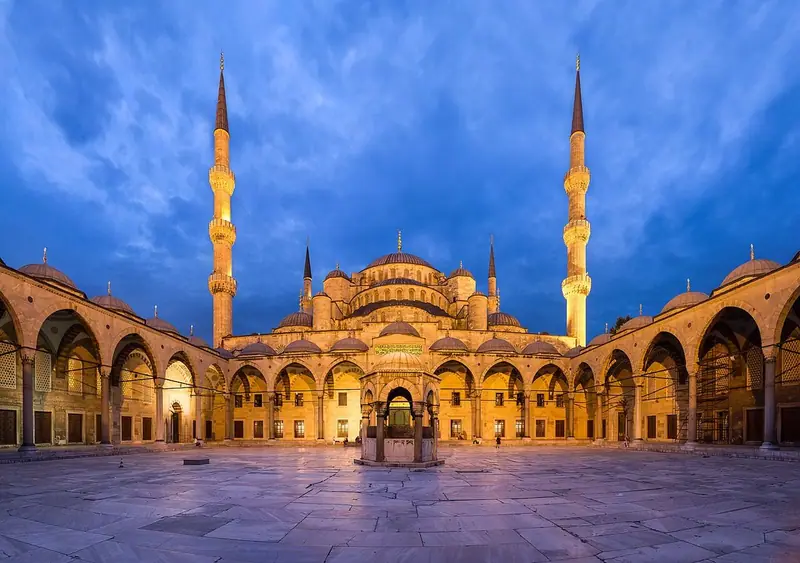 Ottoman9 stops · 1609–1616
Blue Mosque audio guide
Sultan Ahmed’s mosque facing Hagia Sophia, beside the obelisks and Serpent Column of the ancient Hippodrome.
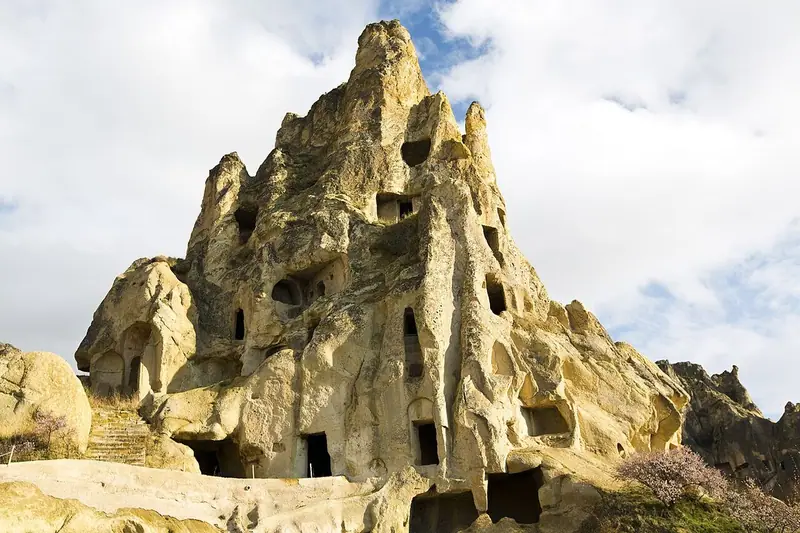 Byzantine8 stops · 10th–12th century
Cappadocia audio guide
Monks' churches and chapels cut into the soft rock of Göreme, among Cappadocia’s fairy chimneys.
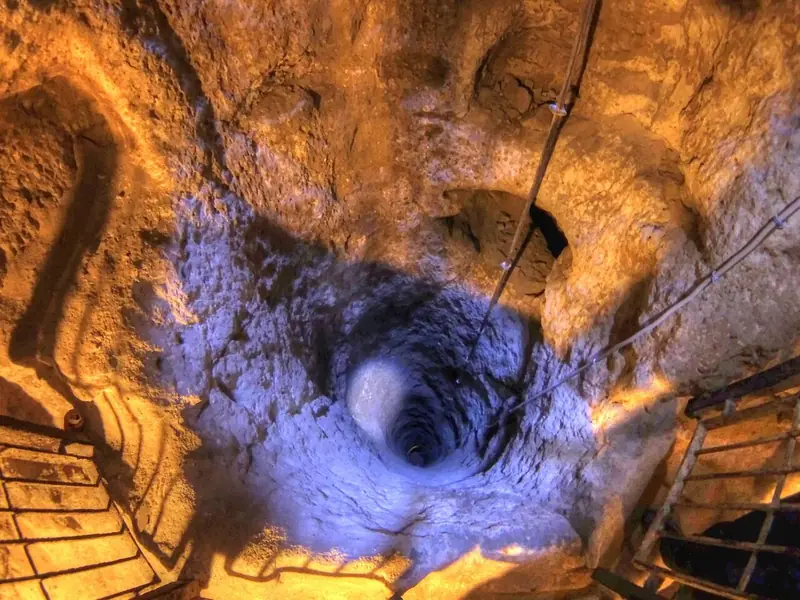 Byzantine7 stops · expanded c. 780–1180 CE
Derinkuyu audio guide
Descend through stables, kitchens and rolling stone doors into an underground city cut deep into the tuff.
 Ottoman8 stops · Late Ottoman
Dolmabahçe Palace audio guide
Climb the crystal staircase of the sultans’ palace of gold and crystal on the Bosphorus, to the vast domed Ceremonial Hall and Atatürk’s room.
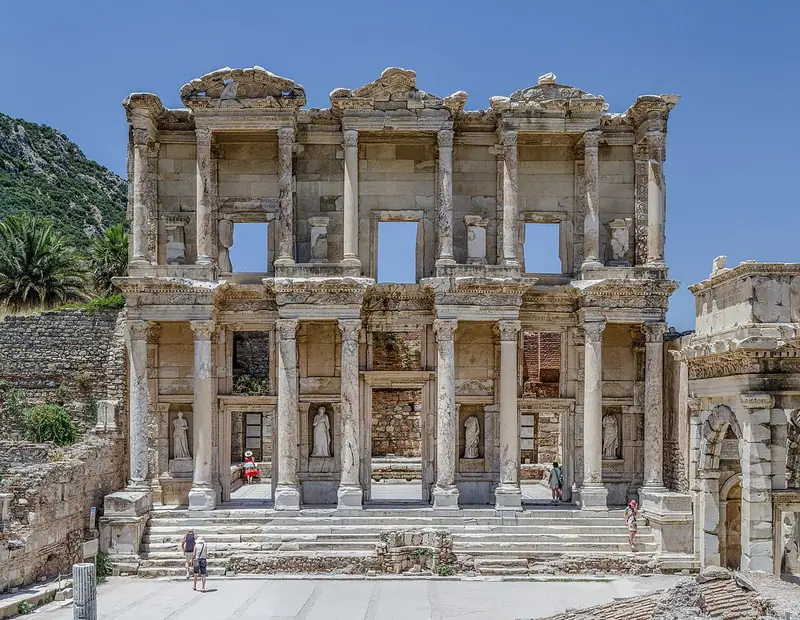 Roman9 stops · 3rd century BCE – 4th century CE
Ephesus audio guide
Down Curetes Street past the Terrace Houses to the Library of Celsus and the Great Theatre.
Every guide, in every country
Ani and every other guide we publish, including future ones. One payment, no subscription.