Before you start
Göbekli Tepe, ‘Potbelly Hill’, is a large mound on a limestone ridge about 15 kilometres north-east of Şanlıurfa, in south-eastern Turkey, looking out over the Harran plain towards Syria. Its great stone circles, built some eleven and a half thousand years ago, are among the oldest monumental structures known anywhere. It has been a UNESCO World Heritage Site since 2018, and is run by the Turkish Ministry of Culture and Tourism, with research led by Turkish archaeologists working with the German Archaeological Institute. You cannot walk among the pillars: everyone views them from a raised walkway under a protective canopy. This guide follows the visit in order: from the visitor centre and up to the canopy, then round the walkway past Enclosures A, B, C and D and the famous Vulture Stone, finishing with the view over the plain.
Use it as a self-guided tour of Göbekli Tepe: 8 stops in visit order, each played when you’re ready, at your own pace.
 Free preview · Stop 1
Visitor Centre and Approach
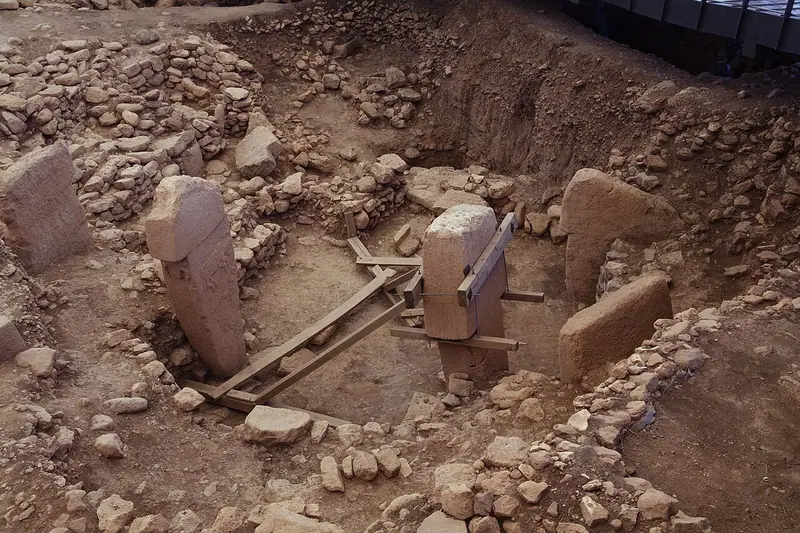
Your visit begins at the visitor centre at the foot of the ridge, where you buy tickets and can see an introductory exhibition. Spend a few minutes with the displays: they explain the dating, show replicas of key finds and set the scene for what you will see from the walkway. From here, a shuttle runs up the road to the excavation, or you can walk, which takes about fifteen minutes. As you climb, look around at the landscape. Today it is dry farmland and bare limestone, but eleven thousand years ago the area was richer, with wild cereals, nut trees and herds of gazelle, wild sheep and aurochs, the huge wild cattle. It was a place where hunter-gatherers could find plenty of food, and where large groups could gather, feast and build together.
Photo: Radosław Botev · CC BY 3.0 pl · Wikimedia Commons
What to see at Göbekli Tepe: 8 stops, in visit order
- 01
 Visitor Centre and ApproachZiyaretçi MerkeziFree preview
- 02
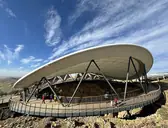 The Canopy and the MoundKoruma ÇatısıIn the guide
- 03
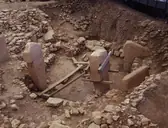 Enclosure AA YapısıIn the guide
- 04
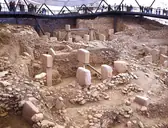 Enclosure BB YapısıIn the guide
- 05
 Enclosure CC YapısıIn the guide
- 06
 Enclosure DD YapısıIn the guide
- 07
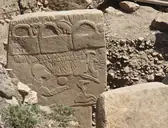 The Vulture StoneAkbaba TaşıIn the guide
- 08
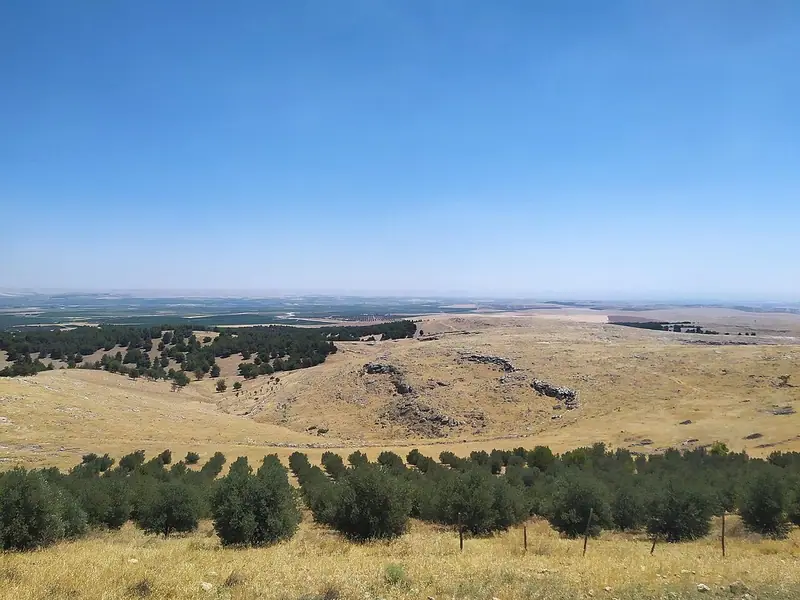
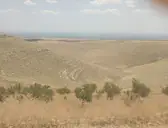 The View over the PlainHarran OvasıIn the guide
Site map of Göbekli Tepe
History of Göbekli Tepe
Göbekli Tepe was built by hunter-gatherers of the Pre-Pottery Neolithic, the period in the Near East between about 9600 and 7000 BCE when people first began to settle down, herd and farm, but had not yet learned to make pottery. The great round enclosures with their T-shaped pillars belong to the earlier phase, from about 9600 to 8800 BCE; smaller rectangular buildings followed, and the site was abandoned and largely buried by around 8000 BCE. These people had no metal tools, no wheel and no writing, yet they quarried, carved and raised pillars weighing several tonnes. For years Göbekli Tepe was described as a temple on a hill where nobody lived, but recent excavations have found houses, water cisterns and evidence of large-scale processing of wild cereals, so many archaeologists now see it as a settlement with ritual buildings.
The full history continues in the guide.
Göbekli Tepe guide: questions
How many stops does the Göbekli Tepe guide have?
8 stops, in visit order: 1. Visitor Centre and Approach; 2. The Canopy and the Mound; 3. Enclosure A; 4. Enclosure B; 5. Enclosure C; 6. Enclosure D; 7. The Vulture Stone; 8. The View over the Plain.
Can I do a self-guided tour of Göbekli Tepe with this guide?
Yes. The guide is made for a self-guided tour: 8 stops in visit order, each with a photo, a story and a voice, so you can explore Göbekli Tepe at your own pace, without joining a group. Download it before you go and it works offline.
How long is each guide?
The 8 stops add up to about 7 minutes of listening in total. You play each stop when you’re ready, so you can go at your own pace.
Does the guide work offline?
Yes, once it’s downloaded. The guide is a single self-contained web page (about 8.7 MB) with the photos, text and audio built in. Download it to your phone before you go (Wi-Fi is best); after that it opens in any modern browser on iPhone or Android, with no app, account or mobile signal needed.
Does it use GPS or need my location?
No. The guide doesn’t use GPS and doesn’t know where you are: you play each stop when you reach it. It works on iPhone and Android in any modern browser, and it’s in English.
What’s included?
One self-contained HTML guide: 8 stops in visit order, each with a photo, text and a voice, plus the story of who built the site.
Who built Göbekli Tepe?
Göbekli Tepe was built by hunter-gatherers of the Pre-Pottery Neolithic, the period in the Near East between about 9600 and 7000 BCE when people first began to settle down, herd and farm, but had not yet learned to make pottery. The great round enclosures with their T-shaped pillars belong to the earlier phase, from about 9600 to 8800 BCE; smaller rectangular buildings followed, and the site was abandoned and largely buried by around 8000 BCE.
Where is Göbekli Tepe?
Göbekli Tepe, ‘Potbelly Hill’, is a large mound on a limestone ridge about 15 kilometres north-east of Şanlıurfa, in south-eastern Turkey, looking out over the Harran plain towards Syria.
Is there a free audio guide to Göbekli Tepe?
The first stop, Visitor Centre and Approach, is free to read and hear on this page, so you can try the Göbekli Tepe audio tour before you buy. The full guide, with all 8 stops, is a one-off purchase: download it once and it’s yours to keep, working offline.
Is the Göbekli Tepe guide worth it?
If you’d like to know what you’re looking at, yes. For $10 you get 8 stops in visit order, each with a photo, a short history and a voice you play when you’re ready, plus a site map of the stops, and about 7 minutes of listening in all. It’s short on purpose, so you spend your time looking, not listening. It’s yours to keep, works offline and needs no app. The first stop is free on this page, so you can try it before you buy. If you’d like hours of detail, a guided tour will go deeper.
Audio guide or guided tour?
It depends how you like to visit. This guide lets you explore Göbekli Tepe at your own pace, at any time, for a one-off price. A guided tour gives you a live expert you can ask questions, but at fixed times and usually for a higher price. Many people use both: a tour for the big picture, and the guide to read beforehand or to revisit the stops in their own time.
Is this the official Göbekli Tepe guide?
No. It’s an independent guide by The Historian Guide, not affiliated with or endorsed by the operator of Göbekli Tepe. For tickets and opening hours, check the official site operator before you go.
Does the guide include entry tickets or opening hours?
No. The guide is a digital companion only. Admission to Göbekli Tepe is separate, so check the official site operator for current tickets and opening hours before you go.
- Stop 1 · Visitor Centre and Approach: Radosław Botev · CC BY 3.0 pl · Wikimedia Commons · resized
- Stop 2 · The Canopy and the Mound: Bjelica · CC BY 4.0 · Wikimedia Commons · resized
- Stop 3 · Enclosure A (also the cover): Dosseman · CC BY-SA 4.0 · Wikimedia Commons · resized
- Stop 4 · Enclosure B: Dosseman · CC BY-SA 4.0 · Wikimedia Commons · resized
- Stop 5 · Enclosure C: Dosseman · CC BY-SA 4.0 · Wikimedia Commons · resized
- Stop 6 · Enclosure D: Dosseman · CC BY-SA 4.0 · Wikimedia Commons · resized
- Stop 7 · The Vulture Stone: Sue Fleckney · CC BY-SA 2.0 · Wikimedia Commons · resized
- Stop 8 · The View over the Plain: Immanuelle · CC BY-SA 4.0 · Wikimedia Commons · resized


All photographs from Wikimedia Commons under the licences shown.
More guides in Turkey
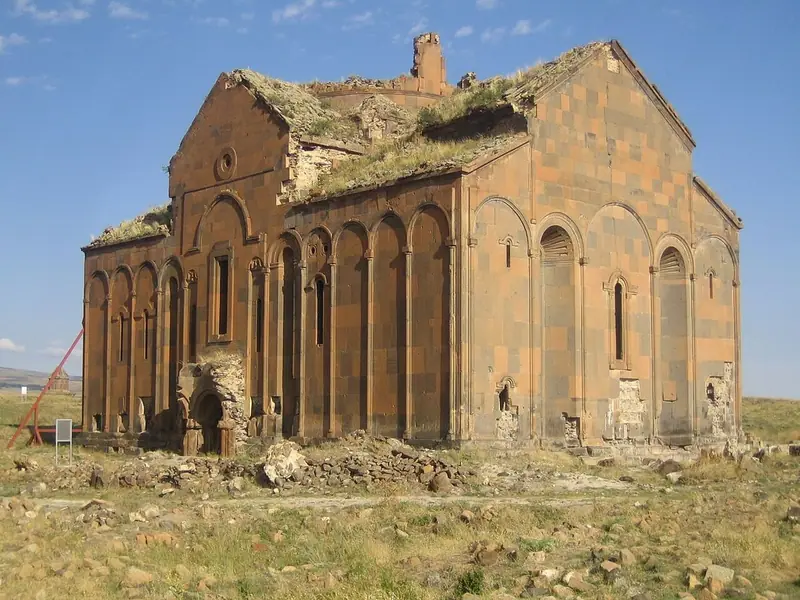 Armenian8 stops · 10th – 14th century CE
Ani audio guide
The ruined capital of medieval Armenia above a border gorge: Trdat’s cathedral, the frescoed church of Tigran Honents, the half-fallen Holy Redeemer and the minaret of Manuchihr.
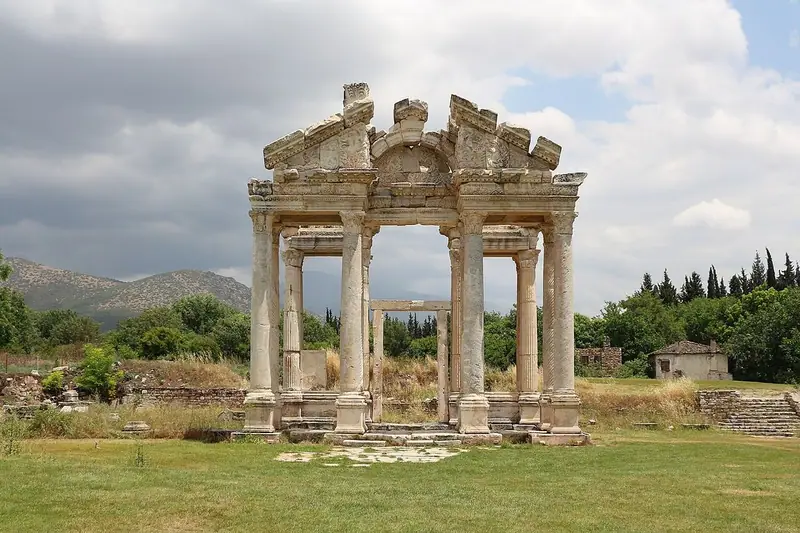 Roman8 stops · 1st century BCE – 4th century CE
Aphrodisias audio guide
The city of Aphrodite: the Tetrapylon gate, the stadium, the theatre and the sculpted reliefs of the Sebasteion.
 Ottoman9 stops · 1609–1616
Blue Mosque audio guide
Sultan Ahmed’s mosque facing Hagia Sophia, beside the obelisks and Serpent Column of the ancient Hippodrome.
 Byzantine8 stops · 10th–12th century
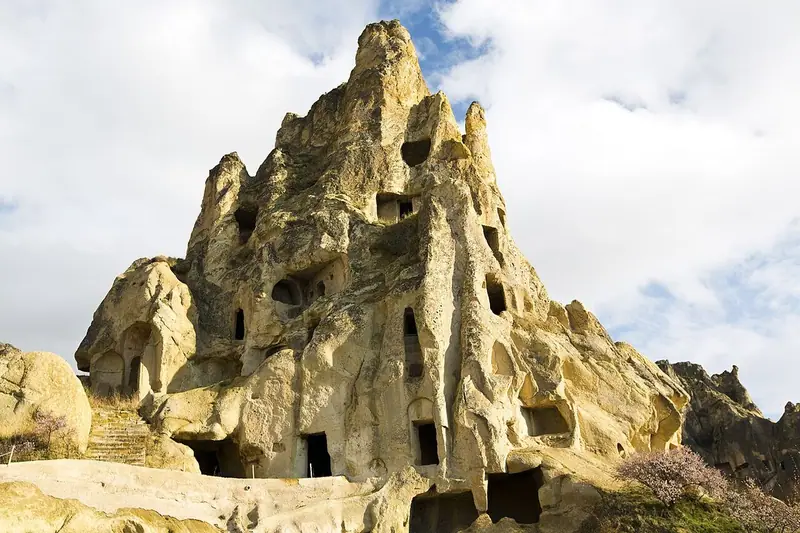
Cappadocia audio guide
Monks' churches and chapels cut into the soft rock of Göreme, among Cappadocia’s fairy chimneys.
 Byzantine7 stops · expanded c. 780–1180 CE
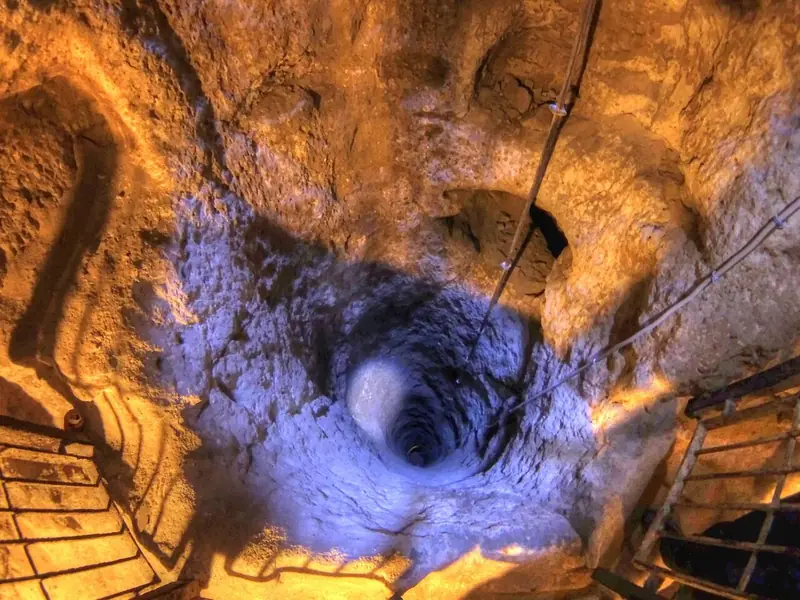
Derinkuyu audio guide
Descend through stables, kitchens and rolling stone doors into an underground city cut deep into the tuff.
 Ottoman8 stops · Late Ottoman
Dolmabahçe Palace audio guide
Climb the crystal staircase of the sultans’ palace of gold and crystal on the Bosphorus, to the vast domed Ceremonial Hall and Atatürk’s room.
Every guide, in every country
Göbekli Tepe and every other guide we publish, including future ones. One payment, no subscription.