Before you start
Nijō Castle was the Kyoto residence of the Tokugawa shoguns, the military rulers of Japan for more than two and a half centuries. It was built to impress, and its Ninomaru Palace, with its golden painted screens and singing floors, is one of the finest surviving palaces of its age. Here, too, the last shogun gave up his power in 1867. The route crosses the moat, tours the palace and its garden, and climbs to the ruined keep. Allow about two hours.
Use it as a self-guided tour of Nijō Castle: 8 stops in visit order, each played when you’re ready, at your own pace.
 Free preview · Stop 1
The East Gate
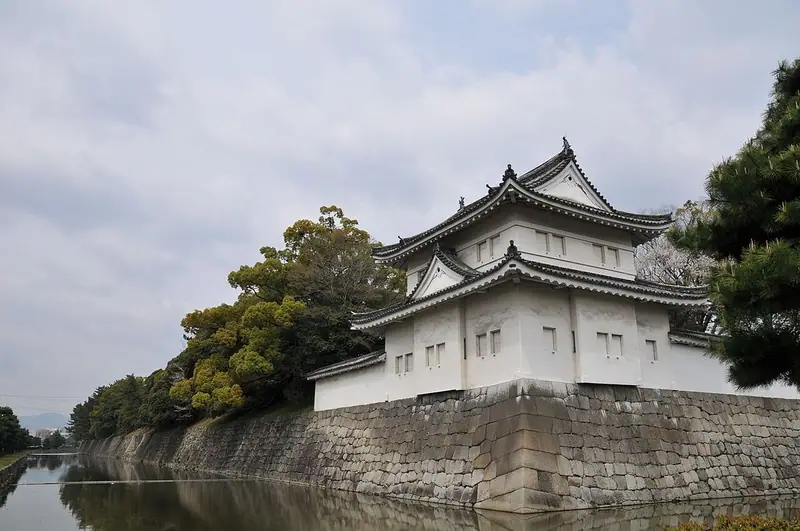
Begin outside the East Gate, the main entrance to the castle, and look at the broad moat and the high walls of fitted stone. Nijō is a flatland castle, built not on a hill but on level ground in the middle of the city. It has two rings of defences, each with a wall and a moat, enclosing an area of about twenty-seven hectares. Look along the wall to the corner turret, one of two that survive on the outer wall. The castle was strong, but it was never really meant for war. By the time it was finished, Japan was at peace under the Tokugawa, and the castle served above all as a palace, and as a show of strength. Pass through the gate, and walk ahead towards the ornate gateway on your left.
Photo: Reggaeman · CC BY-SA 3.0 · Wikimedia Commons
What to see at Nijō Castle: 8 stops, in visit order
- 01
 The East GateWalls and a moatFree preview
- 02
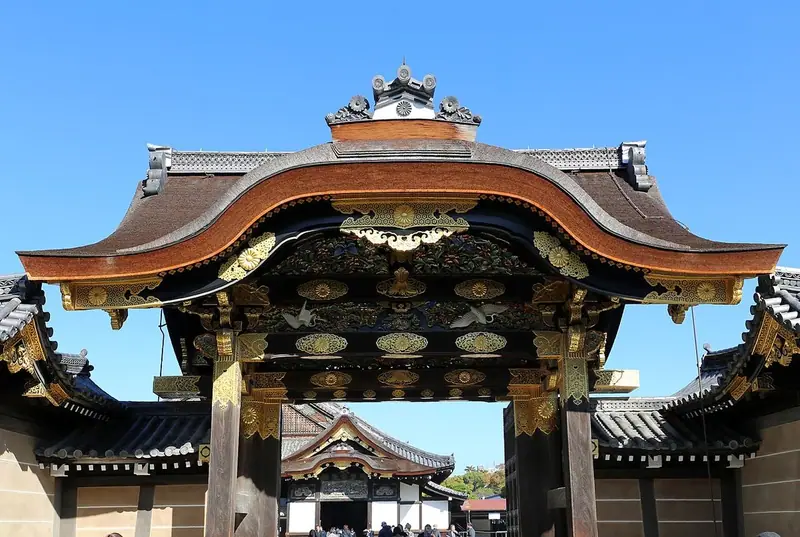
 The Karamon GateA gateway of carving and goldIn the guide
- 03
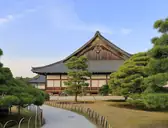 The Ninomaru PalaceTigers on golden wallsIn the guide
- 04
 The Nightingale FloorsCorridors that singIn the guide
- 05
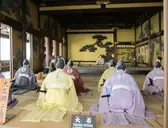 The Great HallThe end of the shogunsIn the guide
- 06
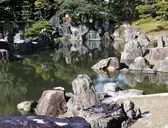 The Ninomaru GardenPond, stones and pinesIn the guide
- 07
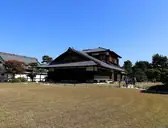 The Honmaru PalaceA prince’s palace moved hereIn the guide
- 08
 The Keep FoundationsThe view over KyotoIn the guide
Site map of Nijō Castle
History of Nijō Castle
The castle was begun in 1601 by Tokugawa Ieyasu, founder of the Tokugawa shogunate, who ordered the feudal lords of western Japan to pay for its construction. It was completed in 1626 by his grandson, Tokugawa Iemitsu. Though the shoguns ruled from Edo, now Tokyo, the emperor’s court remained in Kyoto, and the castle was a statement of their power in the imperial city. In 1939 it was given to the city of Kyoto, and it is now a World Heritage Site.
Nijō Castle guide: questions
How many stops does the Nijō Castle guide have?
8 stops, in visit order: 1. The East Gate; 2. The Karamon Gate; 3. The Ninomaru Palace; 4. The Nightingale Floors; 5. The Great Hall; 6. The Ninomaru Garden; 7. The Honmaru Palace; 8. The Keep Foundations.
Can I do a self-guided tour of Nijō Castle with this guide?
Yes. The guide is made for a self-guided tour: 8 stops in visit order, each with a photo, a story and a voice, so you can explore Nijō Castle at your own pace, without joining a group. Download it before you go and it works offline.
How long is each guide?
The 8 stops add up to about 5 minutes of listening in total. You play each stop when you’re ready, so you can go at your own pace.
Does the guide work offline?
Yes, once it’s downloaded. The guide is a single self-contained web page (about 6.8 MB) with the photos, text and audio built in. Download it to your phone before you go (Wi-Fi is best); after that it opens in any modern browser on iPhone or Android, with no app, account or mobile signal needed.
Does it use GPS or need my location?
No. The guide doesn’t use GPS and doesn’t know where you are: you play each stop when you reach it. It works on iPhone and Android in any modern browser, and it’s in English.
What’s included?
One self-contained HTML guide: 8 stops in visit order, each with a photo, text and a voice, plus the story of who built the site.
Who built Nijō Castle?
The castle was begun in 1601 by Tokugawa Ieyasu, founder of the Tokugawa shogunate, who ordered the feudal lords of western Japan to pay for its construction. It was completed in 1626 by his grandson, Tokugawa Iemitsu.
Where is Nijō Castle?
Nijō Castle was the Kyoto residence of the Tokugawa shoguns, the military rulers of Japan for more than two and a half centuries.
Is there a free audio guide to Nijō Castle?
The first stop, The East Gate, is free to read and hear on this page, so you can try the Nijō Castle audio tour before you buy. The full guide, with all 8 stops, is a one-off purchase: download it once and it’s yours to keep, working offline.
Is the Nijō Castle guide worth it?
If you’d like to know what you’re looking at, yes. For $10 you get 8 stops in visit order, each with a photo, a short history and a voice you play when you’re ready, plus a site map of the stops, and about 5 minutes of listening in all. It’s short on purpose, so you spend your time looking, not listening. It’s yours to keep, works offline and needs no app. The first stop is free on this page, so you can try it before you buy. If you’d like hours of detail, a guided tour will go deeper.
Audio guide or guided tour?
It depends how you like to visit. This guide lets you explore Nijō Castle at your own pace, at any time, for a one-off price. A guided tour gives you a live expert you can ask questions, but at fixed times and usually for a higher price. Many people use both: a tour for the big picture, and the guide to read beforehand or to revisit the stops in their own time.
Is this the official Nijō Castle guide?
No. It’s an independent guide by The Historian Guide, not affiliated with or endorsed by the operator of Nijō Castle. For tickets and opening hours, check the official site operator before you go.
Does the guide include entry tickets or opening hours?
No. The guide is a digital companion only. Admission to Nijō Castle is separate, so check the official site operator for current tickets and opening hours before you go.
- Stop 1 · The East Gate: Reggaeman · CC BY-SA 3.0 · Wikimedia Commons · resized
- Stop 2 · The Karamon Gate (also the cover): Sailko · CC BY 3.0 · Wikimedia Commons · resized
- Stop 3 · The Ninomaru Palace: Martin Falbisoner · CC BY-SA 4.0 · Wikimedia Commons · resized
- Stop 4 · The Nightingale Floors: Chris Gladis · CC BY 2.0 · Wikimedia Commons · resized
- Stop 5 · The Great Hall: I, Sailko · CC BY-SA 3.0 · Wikimedia Commons · resized
- Stop 6 · The Ninomaru Garden: 663highland · CC BY 2.5 · Wikimedia Commons · resized
- Stop 7 · The Honmaru Palace: Sailko · CC BY 3.0 · Wikimedia Commons · resized
- Stop 8 · The Keep Foundations: そらみみ (Soramimi) · CC BY-SA 4.0 · Wikimedia Commons · resized


All photographs from Wikimedia Commons under the licences shown.
More guides in Japan
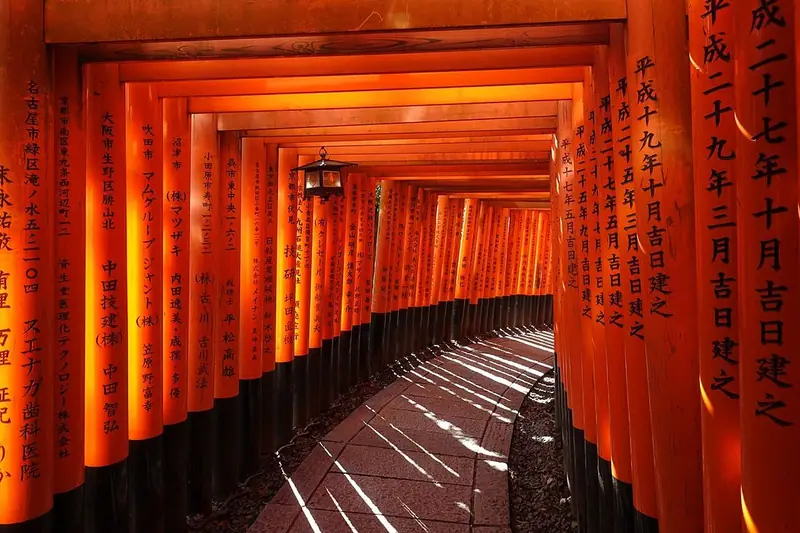 Shinto7 stops · founded 711; main hall 1499
Fushimi Inari Taisha audio guide
Pass through the Senbon Torii, the 'thousand gates', on the trail that winds up Mount Inari to the summit.
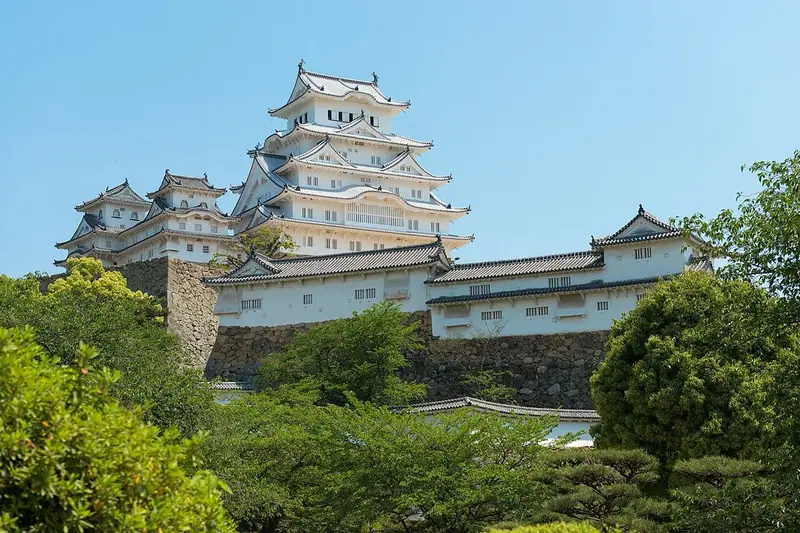 Edo7 stops · keep 1601–1609
Himeji Castle audio guide
Through the gates of the maze and the baileys to the main keep of Himeji, the great castle of the samurai lords.
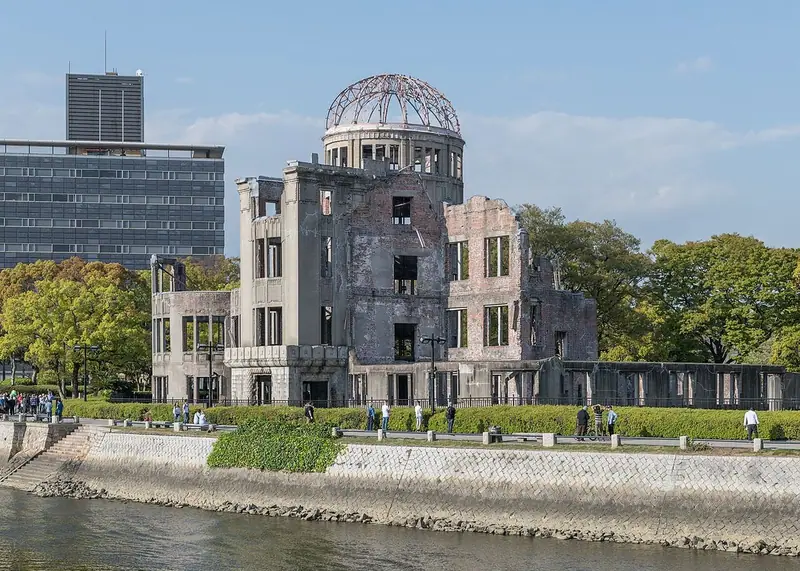 Shōwa Japan8 stops · Post-war Shōwa
Hiroshima Peace Memorial Park audio guide
The Peace Memorial Park, from the museum and the cenotaph to the Children’s Peace Monument and the Atomic Bomb Dome.
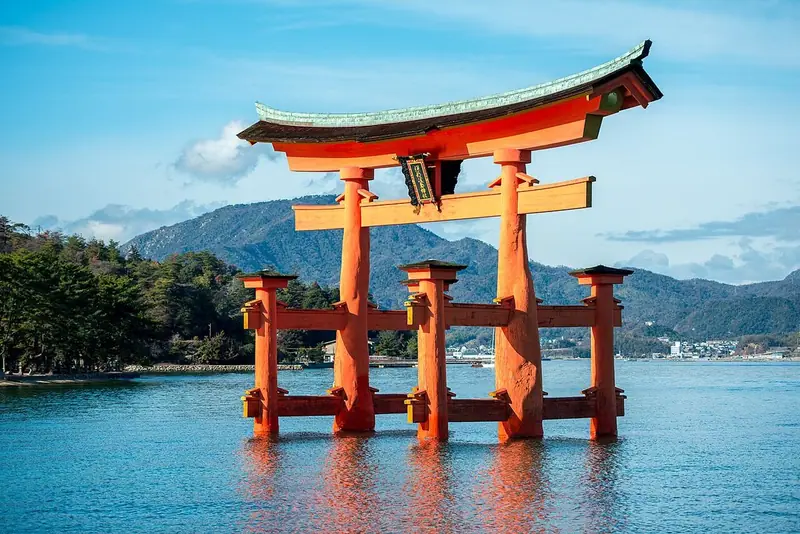 Heian7 stops · plan of 1168
Itsukushima Shrine audio guide
Past the Great Torii to the shrine’s corridors, stages and Noh stage on the shore of Miyajima.
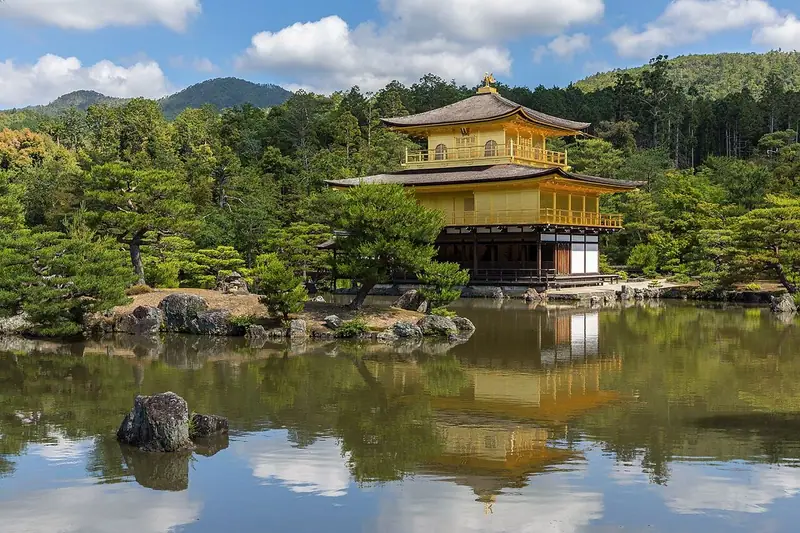 Muromachi7 stops · 1397 (rebuilt 1955)
Kinkaku-ji audio guide
The Golden Pavilion mirrored in its pond, then a garden path past the Ryumon Falls to an old teahouse.
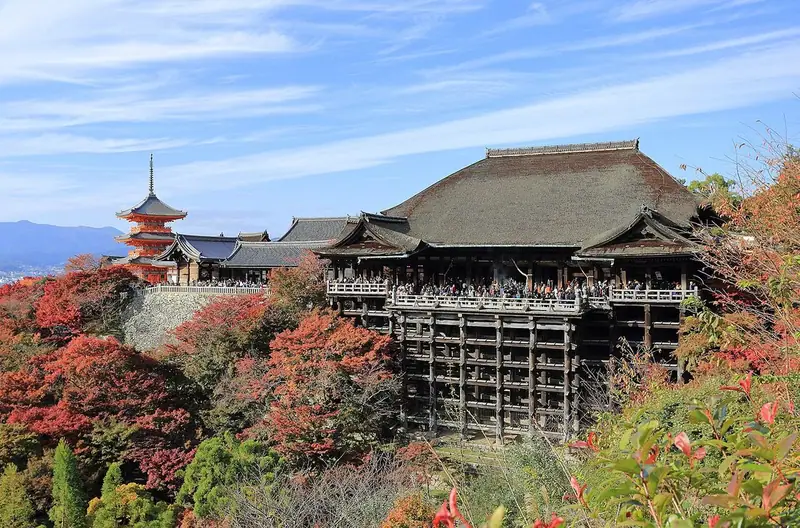 Japanese Buddhist7 stops · founded 778; main hall 1633
Kiyomizu-dera audio guide
Out onto the great wooden stage of the Main Hall, then down to the Otowa Waterfall below.
Every guide, in every country
Nijō Castle and every other guide we publish, including future ones. One payment, no subscription.