Before you start
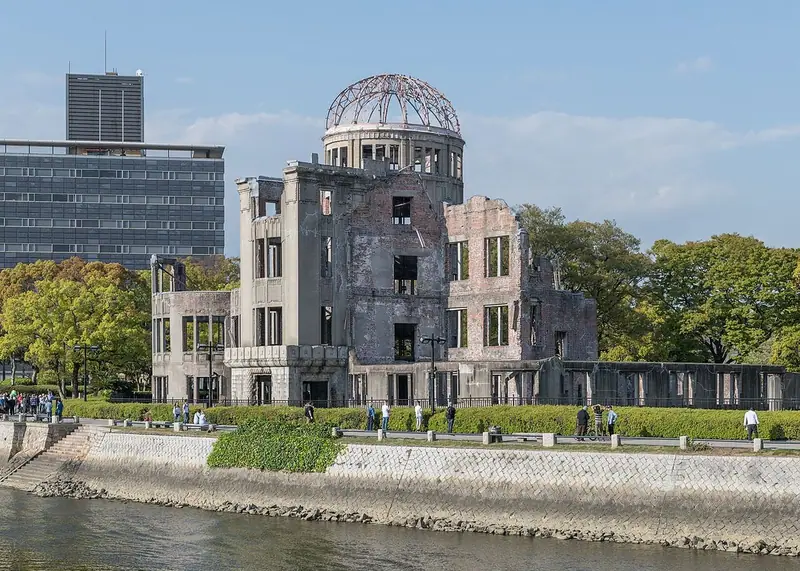
At 8.15 in the morning on 6 August 1945, the first atomic bomb used in war exploded over Hiroshima. By the end of that year, as many as 140,000 people may have died. The Peace Memorial Park, built on the ground the blast laid bare, remembers them and calls for a world without nuclear weapons. The route starts at the Peace Memorial Museum, follows the park’s central axis to the cenotaph and the Peace Flame, and ends at the ruined Atomic Bomb Dome. Allow half a day.
Use it as a self-guided tour of the Hiroshima Peace Memorial Park: 8 stops in visit order, each played when you’re ready, at your own pace.
 Free preview · Stop 1
The Peace Memorial Museum
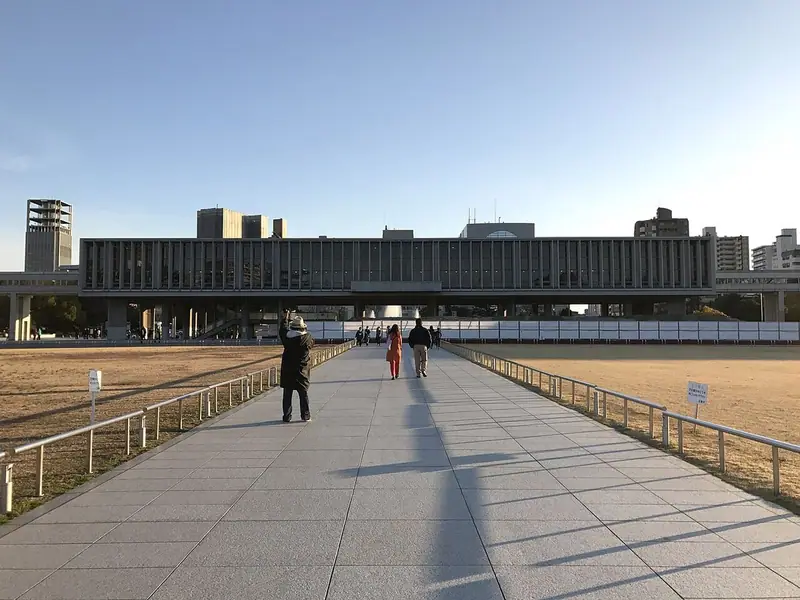
Begin at the Peace Memorial Museum, at the southern end of the park. Look at the long main building, raised above the ground on concrete pillars. It was designed by Kenzō Tange, and the museum opened in 1955. After a long renovation, the main building reopened in 2019, and its displays now focus on the victims themselves. Inside, you will see the belongings of people who died, torn school uniforms, a child’s tricycle, and photographs and drawings by survivors. Some of the exhibits are very distressing, and you may want to take your time, or pause. Visitors with young children may wish to prepare them before going in. When you leave, walk north along the central path, towards the curved stone monument ahead.
Photo: そらみみ · CC BY-SA 4.0 · Wikimedia Commons
What to see at the Hiroshima Peace Memorial Park: 8 stops, in visit order
- 01
 The Peace Memorial MuseumRemembering the victimsFree preview
- 02
 The Memorial CenotaphA shelter for the soulsIn the guide
- 03
 The Peace FlameBurning until the last bombIn the guide
- 04
 The Rest HouseA survivor in the basementIn the guide
- 05
 The Children’s Peace MonumentA thousand paper cranesIn the guide
- 06
 The Peace BellKnow yourselfIn the guide
- 07
 The HypocentreWhere the bomb explodedIn the guide
- 08
 The Atomic Bomb DomeThe ruin left standingIn the guide
Site map of the Hiroshima Peace Memorial Park
History of the Hiroshima Peace Memorial Park
Before 1945 this was the busiest commercial and residential district of Hiroshima. After the war, the architect Kenzō Tange won the competition to design a park of peace on the devastated ground. The Memorial Cenotaph was unveiled in 1952, and the Peace Memorial Museum opened in 1955. The ruin of the Industrial Promotion Hall, built in 1915, was preserved as the Atomic Bomb Dome, and it became a World Heritage Site in 1996.
Hiroshima Peace Memorial Park guide: questions
How many stops does the Hiroshima Peace Memorial Park guide have?
8 stops, in visit order: 1. The Peace Memorial Museum; 2. The Memorial Cenotaph; 3. The Peace Flame; 4. The Rest House; 5. The Children’s Peace Monument; 6. The Peace Bell; 7. The Hypocentre; 8. The Atomic Bomb Dome.
Can I do a self-guided tour of the Hiroshima Peace Memorial Park with this guide?
Yes. The guide is made for a self-guided tour: 8 stops in visit order, each with a photo, a story and a voice, so you can explore the Hiroshima Peace Memorial Park at your own pace, without joining a group. Download it before you go and it works offline.
How long is each guide?
The 8 stops add up to about 5 minutes of listening in total. You play each stop when you’re ready, so you can go at your own pace.
Does the guide work offline?
Yes, once it’s downloaded. The guide is a single self-contained web page (about 7.6 MB) with the photos, text and audio built in. Download it to your phone before you go (Wi-Fi is best); after that it opens in any modern browser on iPhone or Android, with no app, account or mobile signal needed.
Does it use GPS or need my location?
No. The guide doesn’t use GPS and doesn’t know where you are: you play each stop when you reach it. It works on iPhone and Android in any modern browser, and it’s in English.
What’s included?
One self-contained HTML guide: 8 stops in visit order, each with a photo, text and a voice, plus the story of who built the site.
Who built the Hiroshima Peace Memorial Park?
Before 1945 this was the busiest commercial and residential district of Hiroshima. After the war, the architect Kenzō Tange won the competition to design a park of peace on the devastated ground.
Where is the Hiroshima Peace Memorial Park?
At 8.15 in the morning on 6 August 1945, the first atomic bomb used in war exploded over Hiroshima.
Is there a free audio guide to the Hiroshima Peace Memorial Park?
The first stop, The Peace Memorial Museum, is free to read and hear on this page, so you can try the Hiroshima Peace Memorial Park audio tour before you buy. The full guide, with all 8 stops, is a one-off purchase: download it once and it’s yours to keep, working offline.
Is the Hiroshima Peace Memorial Park guide worth it?
If you’d like to know what you’re looking at, yes. For $10 you get 8 stops in visit order, each with a photo, a short history and a voice you play when you’re ready, plus a site map of the stops, and about 5 minutes of listening in all. It’s short on purpose, so you spend your time looking, not listening. It’s yours to keep, works offline and needs no app. The first stop is free on this page, so you can try it before you buy. If you’d like hours of detail, a guided tour will go deeper.
Audio guide or guided tour?
It depends how you like to visit. This guide lets you explore the Hiroshima Peace Memorial Park at your own pace, at any time, for a one-off price. A guided tour gives you a live expert you can ask questions, but at fixed times and usually for a higher price. Many people use both: a tour for the big picture, and the guide to read beforehand or to revisit the stops in their own time.
Is this the official Hiroshima Peace Memorial Park guide?
No. It’s an independent guide by The Historian Guide, not affiliated with or endorsed by the operator of the Hiroshima Peace Memorial Park. For tickets and opening hours, check the official site operator before you go.
Does the guide include entry tickets or opening hours?
No. The guide is a digital companion only. Admission to the Hiroshima Peace Memorial Park is separate, so check the official site operator for current tickets and opening hours before you go.
- Stop 1 · The Peace Memorial Museum: そらみみ · CC BY-SA 4.0 · Wikimedia Commons · resized
- Stop 2 · The Memorial Cenotaph: Feri88 · CC BY 3.0 · Wikimedia Commons · resized
- Stop 3 · The Peace Flame: そらみみ · CC BY-SA 4.0 · Wikimedia Commons · resized
- Stop 4 · The Rest House: そらみみ · CC BY-SA 4.0 · Wikimedia Commons · resized
- Stop 5 · The Children’s Peace Monument: Hyppolyte de Saint-Rambert · CC BY 4.0 · Wikimedia Commons · resized
- Stop 6 · The Peace Bell: Taisyo · CC BY 3.0 · Wikimedia Commons · resized
- Stop 7 · The Hypocentre: そらみみ · CC BY-SA 4.0 · Wikimedia Commons · resized
- Stop 8 · The Atomic Bomb Dome (also the cover): DXR · CC BY-SA 4.0 · Wikimedia Commons · resized


All photographs from Wikimedia Commons under the licences shown.
More guides in Japan
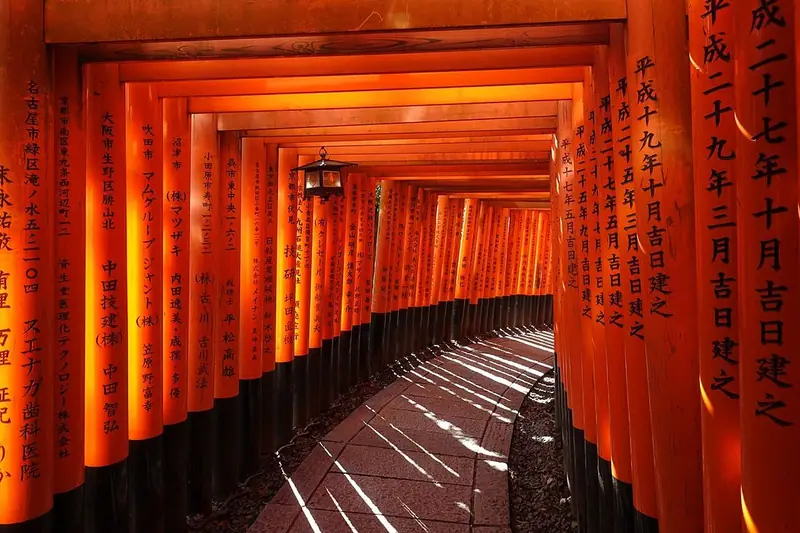 Shinto7 stops · founded 711; main hall 1499
Fushimi Inari Taisha audio guide
Pass through the Senbon Torii, the 'thousand gates', on the trail that winds up Mount Inari to the summit.
 Edo7 stops · keep 1601–1609
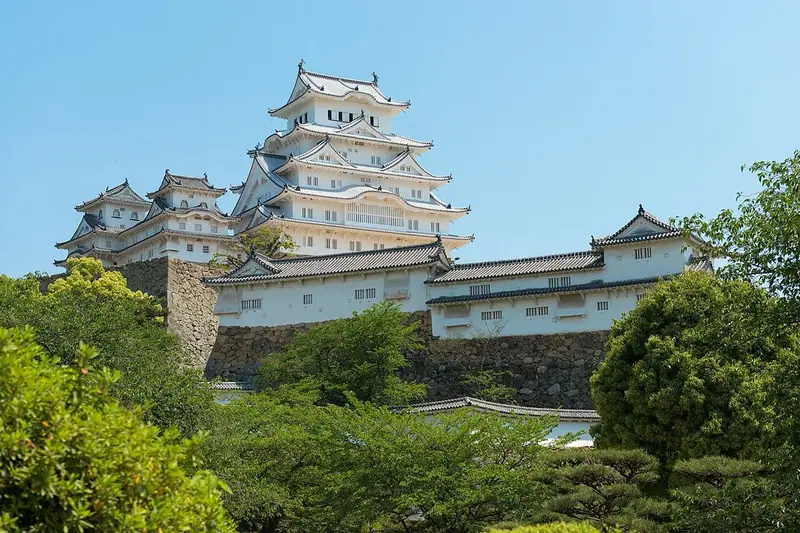
Himeji Castle audio guide
Through the gates of the maze and the baileys to the main keep of Himeji, the great castle of the samurai lords.
 Heian7 stops · plan of 1168
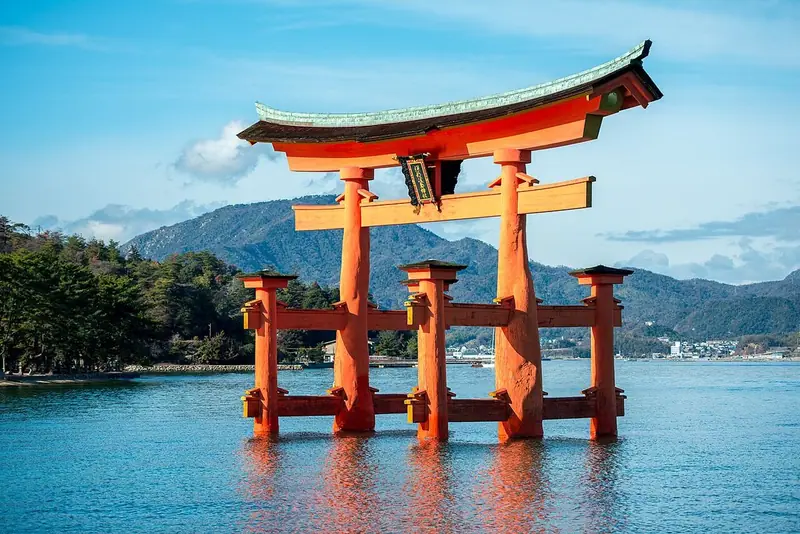
Itsukushima Shrine audio guide
Past the Great Torii to the shrine’s corridors, stages and Noh stage on the shore of Miyajima.
 Muromachi7 stops · 1397 (rebuilt 1955)
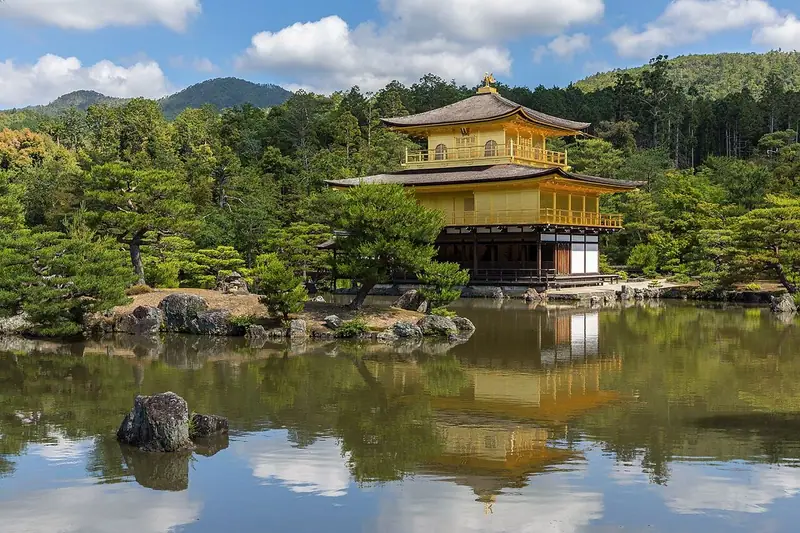
Kinkaku-ji audio guide
The Golden Pavilion mirrored in its pond, then a garden path past the Ryumon Falls to an old teahouse.
 Japanese Buddhist7 stops · founded 778; main hall 1633
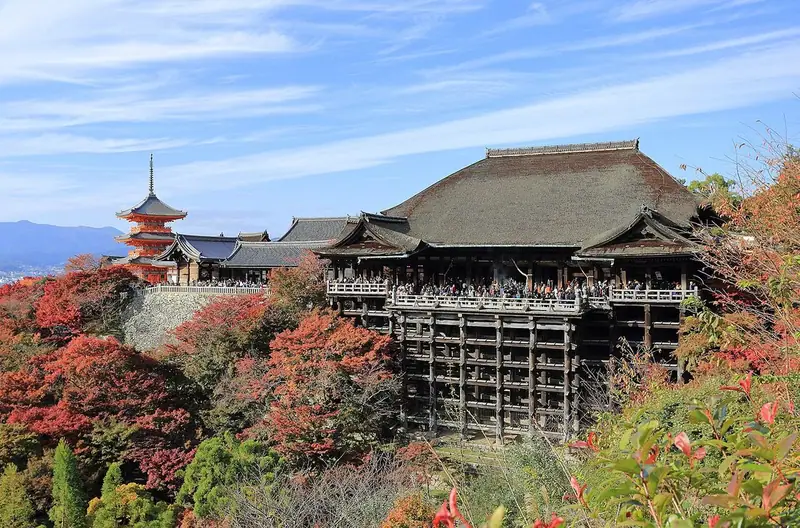
Kiyomizu-dera audio guide
Out onto the great wooden stage of the Main Hall, then down to the Otowa Waterfall below.
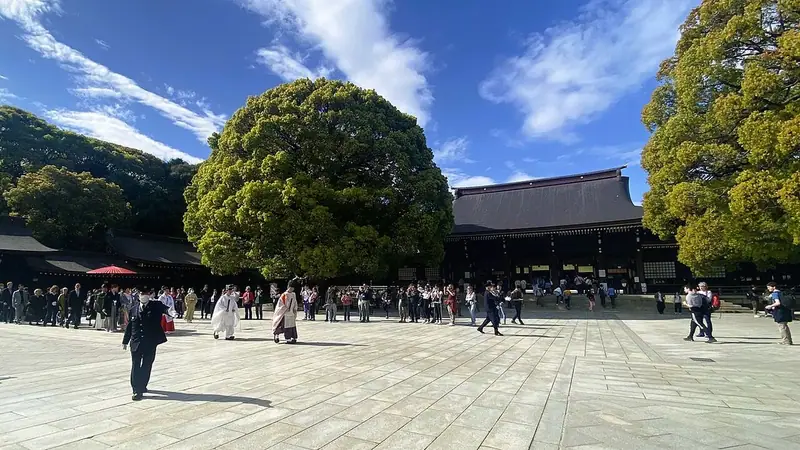 Imperial Japan7 stops · Meiji and Taishō
Meiji Jingu audio guide
Follow the gravel approach through a hand-planted forest, past the sake and wine barrels and under the great torii, to Tokyo’s great Shinto shrine.
Every guide, in every country
Hiroshima Peace Memorial Park and every other guide we publish, including future ones. One payment, no subscription.