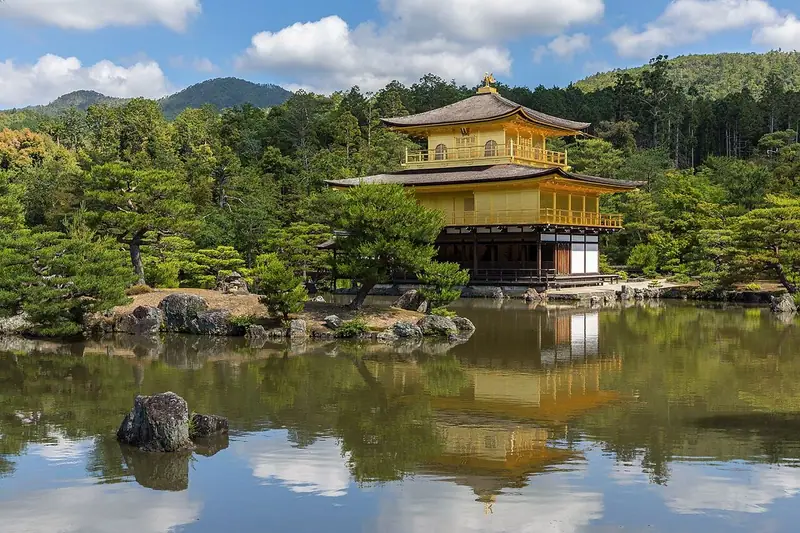
Before you start
Kinkaku-ji, the Temple of the Golden Pavilion, lies in Kita ward in north-west Kyoto, at the foot of the wooded hills of Kitayama. Its official name is Rokuon-ji, and it is a Zen temple of the Shokoku-ji branch of the Rinzai school. It is part of the UNESCO World Heritage Site ‘Historic Monuments of Ancient Kyoto’, inscribed in 1994, and its garden is designated a Special Historic Site and Special Place of Scenic Beauty. The visit follows a fixed one-way path through the garden, which is mostly gentle but includes some steps and a slope on the hillside behind the pavilion; the pavilion itself cannot be entered. The route starts at the classic view across the Mirror Pond, passes close to the pavilion and the abbot’s quarters, then climbs past springs, a waterfall and a woodland pond to the old tea house.
Use it as a self-guided tour of Kinkaku-ji: 7 stops in visit order, each played when you’re ready, at your own pace.
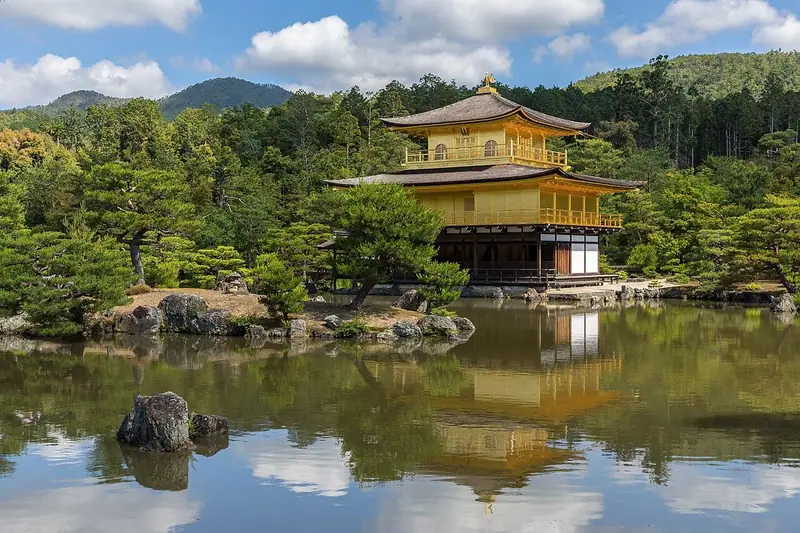 Free preview · Stop 1
Kyoko-chi Pond
Follow the path from the entrance and the trees open onto the view that everyone comes for: the Golden Pavilion floating at the edge of Kyoko-chi, the Mirror Pond. On a still day the pavilion is reflected almost perfectly in the water, which is why the pond was given its name. The temple says the garden covers more than nine hectares, and the pond itself about six thousand six hundred square metres. It contains islands of different sizes, including Ashihara-jima, the large island planted with pines, and carefully placed stones; it is one of the finest examples of a Muromachi-period strolling garden, designed to be seen from changing viewpoints. The pond is older than the pavilion, since it is the only surviving trace of the earlier Saionji villa. Take your photographs here, and notice how the hills behind are borrowed into the composition of the garden.
Photo: Basile Morin · CC BY-SA 4.0 · Wikimedia Commons
What to see at Kinkaku-ji: 7 stops, in visit order
- 01
 Kyoko-chi PondThe Mirror PondFree preview
- 02
 Golden PavilionThree styles in one buildingIn the guide
- 03
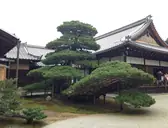 Hojo and Rikushu PineThe boat-shaped pineIn the guide
- 04
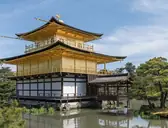 North ShoreThe pavilion from behindIn the guide
- 05
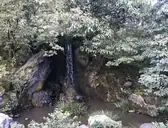 Ryumon FallsThe carp that became a dragonIn the guide
- 06
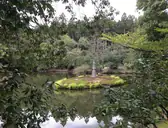 Anmintaku PondThe pond that never driesIn the guide
- 07
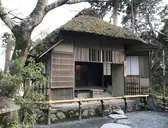 Sekka-teiThe tea house of the evening sunIn the guide
Site map of Kinkaku-ji
History of Kinkaku-ji
The Golden Pavilion was created by Ashikaga Yoshimitsu, the third shogun of the Ashikaga family, who ruled Japan as military leaders during the Muromachi period, from the fourteenth century to the late sixteenth. In the Kamakura period the site had been a villa of the aristocrat Saionji Kintsune; Yoshimitsu acquired it in 1397, after retiring as shogun, and rebuilt it as his Kitayama palace, with the gilded pavilion at its heart as a hall for relics of the Buddha. He entertained envoys of Ming China here, and the estate gave its name to the Kitayama culture of his age. After his death in 1408 the villa became a Zen temple, as he had wished. Zen Buddhism had come to Japan from China in the late twelfth century and remains a living tradition today. The original pavilion survived the wars of the fifteenth century but was burnt by a young monk in 1950; the building you see is a faithful reconstruction completed in 1955.
Kinkaku-ji guide: questions
How many stops does the Kinkaku-ji guide have?
7 stops, in visit order: 1. Kyoko-chi Pond; 2. Golden Pavilion; 3. Hojo and Rikushu Pine; 4. North Shore; 5. Ryumon Falls; 6. Anmintaku Pond; 7. Sekka-tei.
Can I do a self-guided tour of Kinkaku-ji with this guide?
Yes. The guide is made for a self-guided tour: 7 stops in visit order, each with a photo, a story and a voice, so you can explore Kinkaku-ji at your own pace, without joining a group. Download it before you go and it works offline.
How long is each guide?
The 7 stops add up to about 5 minutes of listening in total. You play each stop when you’re ready, so you can go at your own pace.
Does the guide work offline?
Yes, once it’s downloaded. The guide is a single self-contained web page (about 7.4 MB) with the photos, text and audio built in. Download it to your phone before you go (Wi-Fi is best); after that it opens in any modern browser on iPhone or Android, with no app, account or mobile signal needed.
Does it use GPS or need my location?
No. The guide doesn’t use GPS and doesn’t know where you are: you play each stop when you reach it. It works on iPhone and Android in any modern browser, and it’s in English.
What’s included?
One self-contained HTML guide: 7 stops in visit order, each with a photo, text and a voice, plus the story of who built the site.
Who built Kinkaku-ji?
The Golden Pavilion was created by Ashikaga Yoshimitsu, the third shogun of the Ashikaga family, who ruled Japan as military leaders during the Muromachi period, from the fourteenth century to the late sixteenth. In the Kamakura period the site had been a villa of the aristocrat Saionji Kintsune; Yoshimitsu acquired it in 1397, after retiring as shogun, and rebuilt it as his Kitayama palace, with the gilded pavilion at its heart as a hall for relics of the Buddha.
Where is Kinkaku-ji?
Kinkaku-ji, the Temple of the Golden Pavilion, lies in Kita ward in north-west Kyoto, at the foot of the wooded hills of Kitayama.
Is there a free audio guide to Kinkaku-ji?
The first stop, Kyoko-chi Pond, is free to read and hear on this page, so you can try the Kinkaku-ji audio tour before you buy. The full guide, with all 7 stops, is a one-off purchase: download it once and it’s yours to keep, working offline.
Is the Kinkaku-ji guide worth it?
If you’d like to know what you’re looking at, yes. For $10 you get 7 stops in visit order, each with a photo, a short history and a voice you play when you’re ready, plus a site map of the stops, and about 5 minutes of listening in all. It’s short on purpose, so you spend your time looking, not listening. It’s yours to keep, works offline and needs no app. The first stop is free on this page, so you can try it before you buy. If you’d like hours of detail, a guided tour will go deeper.
Audio guide or guided tour?
It depends how you like to visit. This guide lets you explore Kinkaku-ji at your own pace, at any time, for a one-off price. A guided tour gives you a live expert you can ask questions, but at fixed times and usually for a higher price. Many people use both: a tour for the big picture, and the guide to read beforehand or to revisit the stops in their own time.
Is this the official Kinkaku-ji guide?
No. It’s an independent guide by The Historian Guide, not affiliated with or endorsed by the operator of Kinkaku-ji. For tickets and opening hours, check the official site operator before you go.
Does the guide include entry tickets or opening hours?
No. The guide is a digital companion only. Admission to Kinkaku-ji is separate, so check the official site operator for current tickets and opening hours before you go.
- Stop 1 · Kyoko-chi Pond (also the cover): Basile Morin · CC BY-SA 4.0 · Wikimedia Commons · resized
- Stop 2 · Golden Pavilion: Nacaru · CC BY-SA 4.0 · Wikimedia Commons · resized
- Stop 3 · Hojo and Rikushu Pine: そらみみ · CC BY-SA 4.0 · Wikimedia Commons · resized
- Stop 4 · North Shore: DXR · CC BY-SA 4.0 · Wikimedia Commons · resized
- Stop 5 · Ryumon Falls: そらみみ · CC BY-SA 4.0 · Wikimedia Commons · resized
- Stop 6 · Anmintaku Pond: そらみみ · CC BY-SA 4.0 · Wikimedia Commons · resized
- Stop 7 · Sekka-tei: そらみみ · CC BY-SA 4.0 · Wikimedia Commons · resized


All photographs from Wikimedia Commons under the licences shown.
More guides in Japan
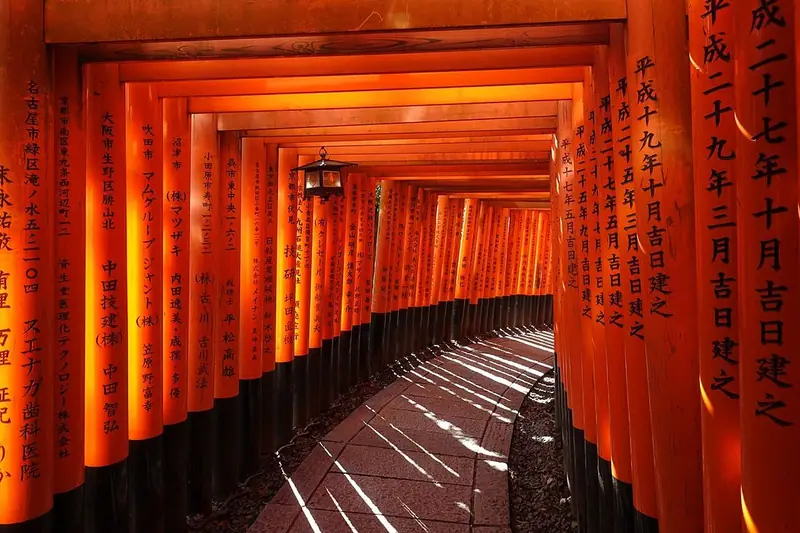 Shinto7 stops · founded 711; main hall 1499
Fushimi Inari Taisha audio guide
Pass through the Senbon Torii, the 'thousand gates', on the trail that winds up Mount Inari to the summit.
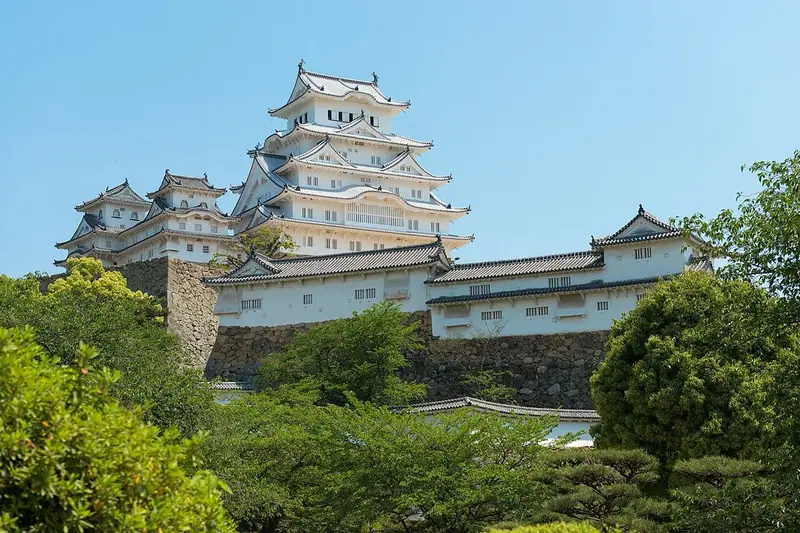 Edo7 stops · keep 1601–1609
Himeji Castle audio guide
Through the gates of the maze and the baileys to the main keep of Himeji, the great castle of the samurai lords.
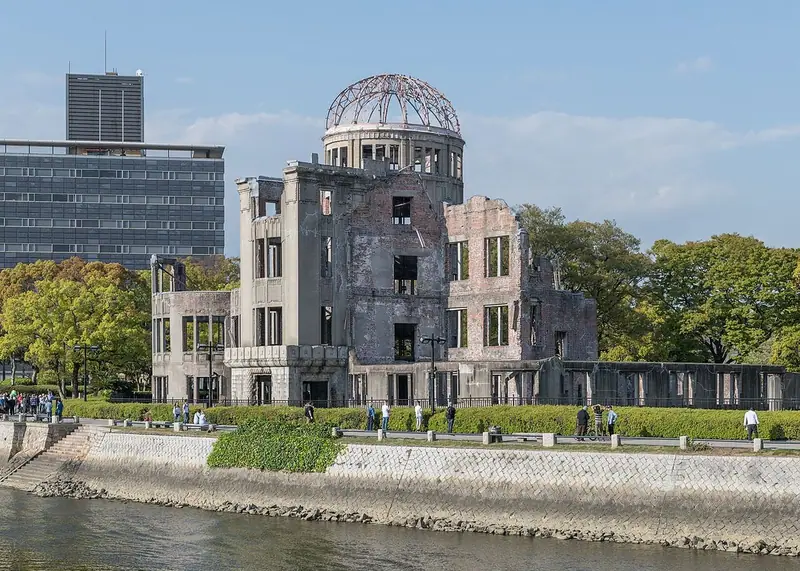 Shōwa Japan8 stops · Post-war Shōwa
Hiroshima Peace Memorial Park audio guide
The Peace Memorial Park, from the museum and the cenotaph to the Children’s Peace Monument and the Atomic Bomb Dome.
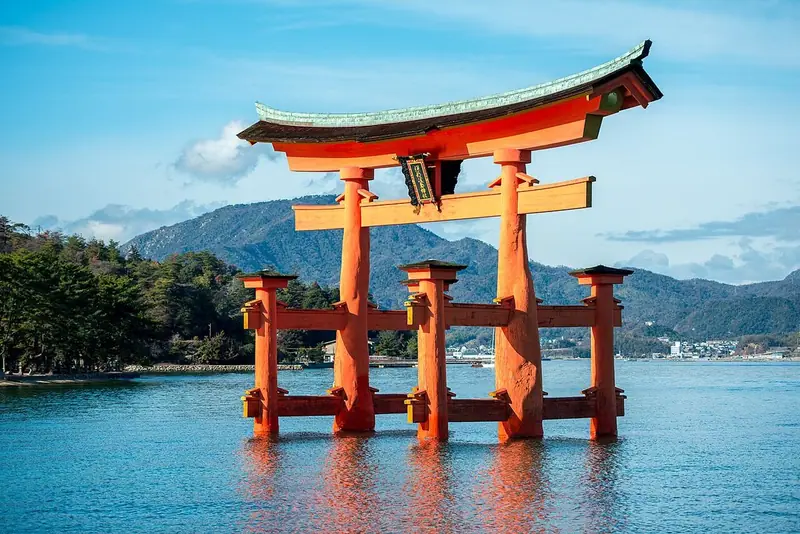 Heian7 stops · plan of 1168
Itsukushima Shrine audio guide
Past the Great Torii to the shrine’s corridors, stages and Noh stage on the shore of Miyajima.
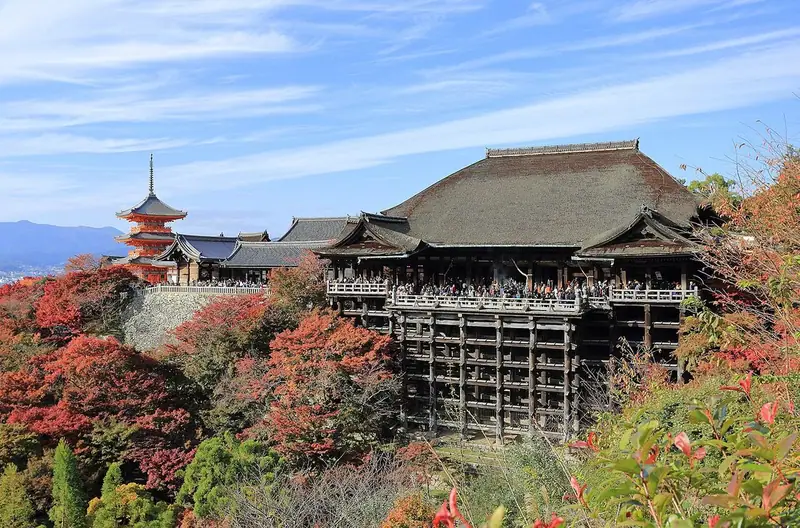 Japanese Buddhist7 stops · founded 778; main hall 1633
Kiyomizu-dera audio guide
Out onto the great wooden stage of the Main Hall, then down to the Otowa Waterfall below.
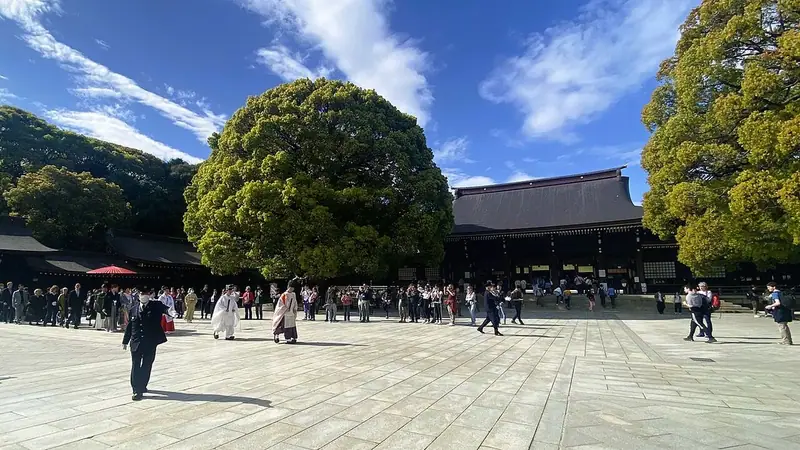 Imperial Japan7 stops · Meiji and Taishō
Meiji Jingu audio guide
Follow the gravel approach through a hand-planted forest, past the sake and wine barrels and under the great torii, to Tokyo’s great Shinto shrine.
Every guide, in every country
Kinkaku-ji and every other guide we publish, including future ones. One payment, no subscription.