Before you start
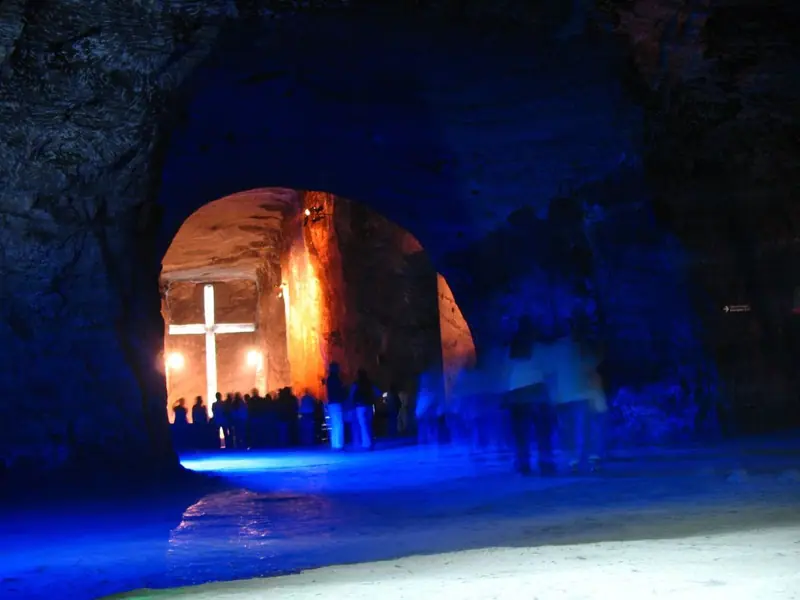
The Salt Cathedral of Zipaquirá is an underground church carved into the tunnels of a salt mine, about two hundred metres below the surface of a mountain of rock salt. It lies near the town of Zipaquirá, about forty-nine kilometres north of Bogotá, at an altitude of more than two thousand six hundred metres. This guide follows the visit from the mine entrance, down past the Stations of the Cross, to the great central nave with its glowing cross. Inside, the tunnels are dimly lit, the floor can be uneven, and the air is cool, so bring a light jacket and comfortable shoes. It is a working church, so please be respectful, especially during Sunday services.
Use it as a self-guided tour of the Salt Cathedral of Zipaquirá: 8 stops in visit order, each played when you’re ready, at your own pace.
 Free preview · Stop 1
Salt of the Muisca
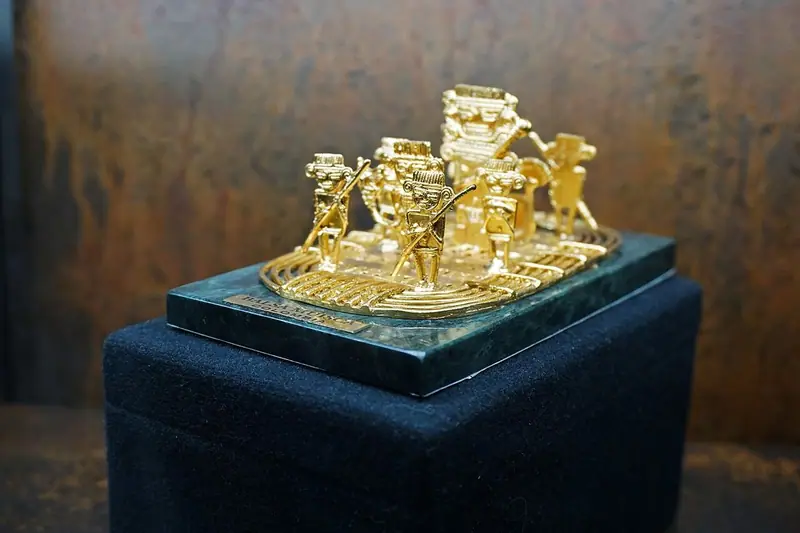
Before you enter the mine, think about the long history of salt in this place. The salt deposits of Zipaquirá were formed around two hundred and fifty million years ago, and were raised up when the Andes were formed. The Muisca people, who lived on these high plains, mined salt here from as early as the fifth century before Christ, and it was one of their most important sources of wealth. They traded it widely, in exchange for goods such as gold and cotton. The name Zipaquirá is often explained as land of the zipa, the title of a Muisca ruler. Look for the replica of the famous Muisca raft, a golden offering showing a chief on a raft, which may recall the legend of El Dorado. The original is in the Gold Museum in Bogotá.
Photo: Mariordo (Mario Roberto Durán Ortiz) · CC BY-SA 4.0 · Wikimedia Commons
What to see at the Salt Cathedral of Zipaquirá: 8 stops, in visit order
- 01
 Salt of the MuiscaBefore the SpanishFree preview
- 02
 Into the MineThe Miners’ TunnelsIn the guide
- 03
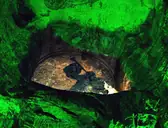 The Stations of the CrossFourteen ChapelsIn the guide
- 04
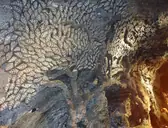 The Living RockWalls of SaltIn the guide
- 05
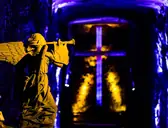 The DomeThe Heart of the MountainIn the guide
- 06
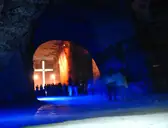 The Central NaveThe Great CrossIn the guide
- 07
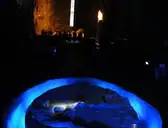 Creation and PietàSculptures in Salt and MarbleIn the guide
- 08
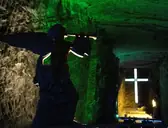 The Main AltarAt the Foot of the CrossIn the guide
History of the Salt Cathedral of Zipaquirá
Salt was mined in this mountain by the Muisca people long before the Spanish arrived. In the twentieth century, miners carved a small sanctuary in the tunnels, where they prayed for protection before starting work. A larger salt cathedral was inaugurated in 1954, but safety concerns led to its closure in 1992. The present cathedral was built deeper in the mountain, to a design by the architect Roswell Garavito Pearl, who won a competition for the project. It was inaugurated on 16 December 1995.
Salt Cathedral of Zipaquirá guide: questions
How many stops does the Salt Cathedral of Zipaquirá guide have?
8 stops, in visit order: 1. Salt of the Muisca; 2. Into the Mine; 3. The Stations of the Cross; 4. The Living Rock; 5. The Dome; 6. The Central Nave; 7. Creation and Pietà; 8. The Main Altar.
Can I do a self-guided tour of the Salt Cathedral of Zipaquirá with this guide?
Yes. The guide is made for a self-guided tour: 8 stops in visit order, each with a photo, a story and a voice, so you can explore the Salt Cathedral of Zipaquirá at your own pace, without joining a group. Download it before you go and it works offline.
How long is each guide?
The 8 stops add up to about 5 minutes of listening in total. You play each stop when you’re ready, so you can go at your own pace.
Does the guide work offline?
Yes, once it’s downloaded. The guide is a single self-contained web page (about 6.4 MB) with the photos, text and audio built in. Download it to your phone before you go (Wi-Fi is best); after that it opens in any modern browser on iPhone or Android, with no app, account or mobile signal needed.
Does it use GPS or need my location?
No. The guide doesn’t use GPS and doesn’t know where you are: you play each stop when you reach it. It works on iPhone and Android in any modern browser, and it’s in English.
What’s included?
One self-contained HTML guide: 8 stops in visit order, each with a photo, text and a voice, plus the story of who built the site.
Who built the Salt Cathedral of Zipaquirá?
Salt was mined in this mountain by the Muisca people long before the Spanish arrived. In the twentieth century, miners carved a small sanctuary in the tunnels, where they prayed for protection before starting work.
Where is the Salt Cathedral of Zipaquirá?
The Salt Cathedral of Zipaquirá is an underground church carved into the tunnels of a salt mine, about two hundred metres below the surface of a mountain of rock salt.
Is there a free audio guide to the Salt Cathedral of Zipaquirá?
The first stop, Salt of the Muisca, is free to read and hear on this page, so you can try the Salt Cathedral of Zipaquirá audio tour before you buy. The full guide, with all 8 stops, is a one-off purchase: download it once and it’s yours to keep, working offline.
Is the Salt Cathedral of Zipaquirá guide worth it?
If you’d like to know what you’re looking at, yes. For $10 you get 8 stops in visit order, each with a photo, a short history and a voice you play when you’re ready, about 5 minutes of listening in all. It’s short on purpose, so you spend your time looking, not listening. It’s yours to keep, works offline and needs no app. The first stop is free on this page, so you can try it before you buy. If you’d like hours of detail, a guided tour will go deeper.
Audio guide or guided tour?
It depends how you like to visit. This guide lets you explore the Salt Cathedral of Zipaquirá at your own pace, at any time, for a one-off price. A guided tour gives you a live expert you can ask questions, but at fixed times and usually for a higher price. Many people use both: a tour for the big picture, and the guide to read beforehand or to revisit the stops in their own time.
Is this the official Salt Cathedral of Zipaquirá guide?
No. It’s an independent guide by The Historian Guide, not affiliated with or endorsed by the operator of the Salt Cathedral of Zipaquirá. For tickets and opening hours, check the official site operator before you go.
Does the guide include entry tickets or opening hours?
No. The guide is a digital companion only. Admission to the Salt Cathedral of Zipaquirá is separate, so check the official site operator for current tickets and opening hours before you go.
- Stop 1 · Salt of the Muisca: Mariordo (Mario Roberto Durán Ortiz) · CC BY-SA 4.0 · Wikimedia Commons · resized
- Stop 2 · Into the Mine: Ricohin · CC BY-SA 4.0 · Wikimedia Commons · resized
- Stop 3 · The Stations of the Cross: Colores Mari from Bogotá, Colombia · CC BY-SA 2.0 · Wikimedia Commons · resized
- Stop 4 · The Living Rock: Ricohin · CC BY-SA 4.0 · Wikimedia Commons · resized
- Stop 5 · The Dome: Michael Tieso · CC0 · Wikimedia Commons · resized
- Stop 6 · The Central Nave (also the cover): Vero Villa from Medellin, Colombia · CC BY-SA 2.0 · Wikimedia Commons · resized
- Stop 7 · Creation and Pietà: Novoaparra · CC BY-SA 3.0 · Wikimedia Commons · resized
- Stop 8 · The Main Altar: Novoaparra · CC BY-SA 3.0 · Wikimedia Commons · resized


All photographs from Wikimedia Commons under the licences shown.
More guides in Colombia
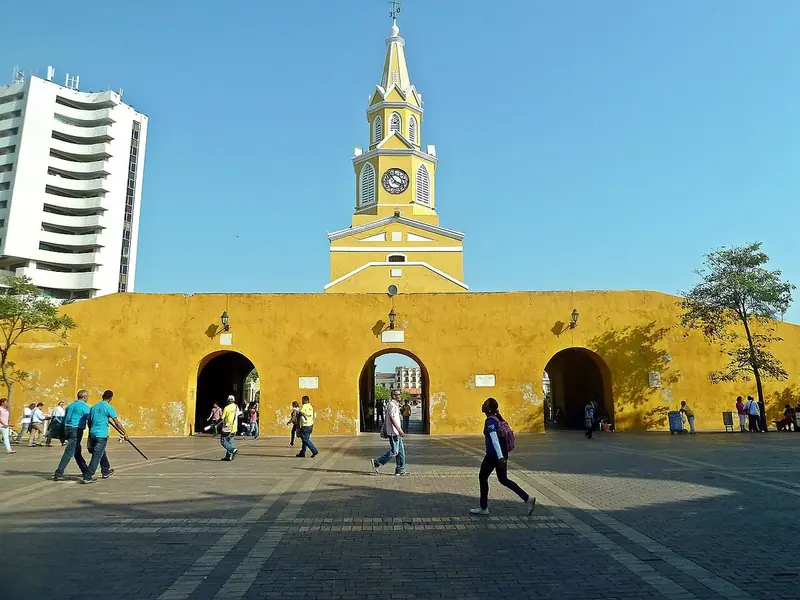 Spanish Colonial8 stops · 1533–1811 CE
Cartagena Old Town audio guide
Pass through the Clock Gate into one of the great ports of the Spanish Empire, with its squares, painted balconies and massive walls.
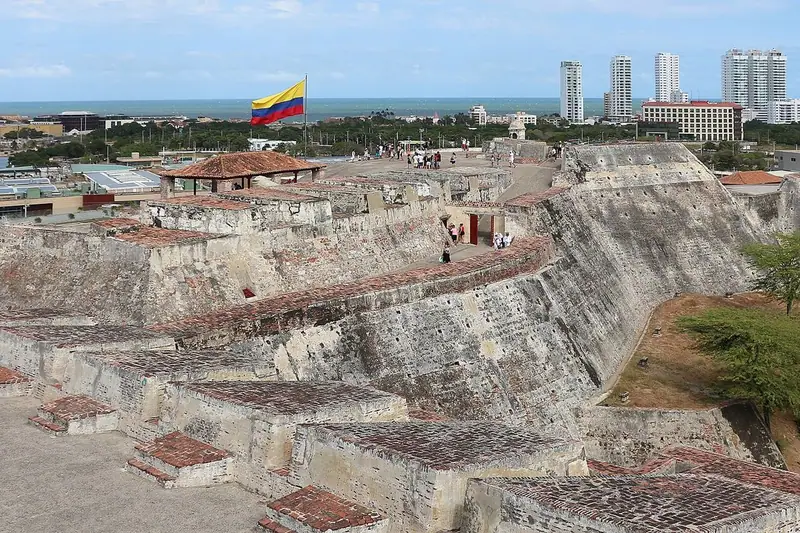 Spanish Colonial7 stops · 1639–1763 CE
Castillo San Felipe de Barajas audio guide
Climb the hill of San Lázaro to Cartagena’s great fortress of ramps, batteries and tunnels, guarding the city by land and sea.
 Spanish Colonial8 stops · 1538–1810 CE
La Candelaria, Bogotá audio guide
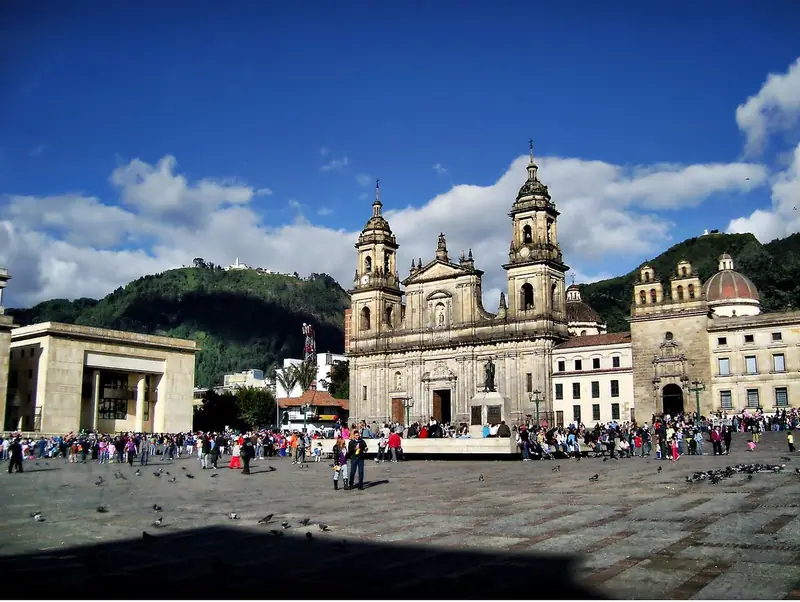
The steep colonial streets where Bogotá was founded in 1538, from the Plaza de Bolívar to the Gold Museum and the Chorro de Quevedo.
Every guide, in every country
Salt Cathedral of Zipaquirá and every other guide we publish, including future ones. One payment, no subscription.