Before you start
Crac des Chevaliers stands on a hilltop about 650 metres high above the village of Al-Husn, some 40 kilometres west of Homs, guarding the gap in the mountains between inland Syria and the Mediterranean coast. It is often called the finest surviving castle of the Crusades. The Knights Hospitaller rebuilt it in stone from 1142, and the Mamluk sultans who took it in 1271 strengthened it further, so two traditions of military building meet in one fortress. UNESCO inscribed it as a World Heritage Site in 2006, jointly with Qal’at Salah El-Din, a second castle in the hills east of Latakia that is best seen on a separate trip. Since 2013 both have been on the List of World Heritage in Danger. During the Syrian civil war the castle was shelled in 2012 and hit by air strikes in 2013 and 2014, and the earthquake of February 2023 caused further damage. It is open again, though repairs continue and some areas may be closed. Check your government’s current travel advice before you plan a visit.
Use it as a self-guided tour of Crac des Chevaliers: 10 stops in visit order, each played when you’re ready, at your own pace.
 Free preview · Stop 1
The Castle on the Hill
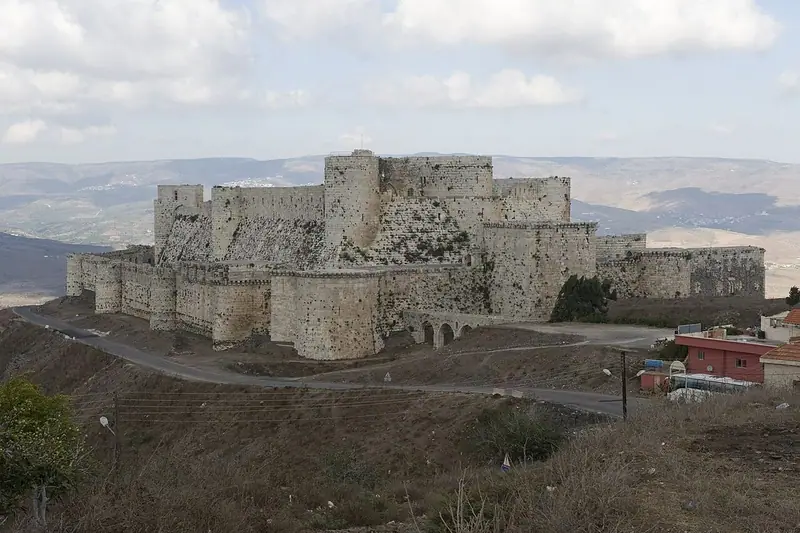
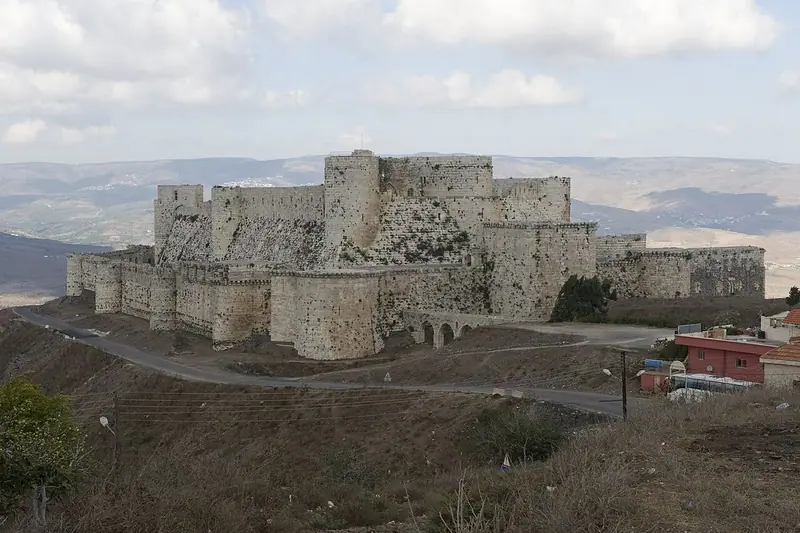
Begin with the first view of the castle on its spur, where the ground falls away steeply on three sides. From here you can read its plan: an outer ring of walls with round towers, and above it an inner castle on a great sloping base, so that defenders on the inner walls could shoot over the heads of those on the outer ones. King Andrew II of Hungary, who stayed here in 1218, called it the key of the Christian lands, and T. E. Lawrence, who studied it in 1909, thought it perhaps the best preserved and most wholly admirable castle in the world. The hill commands the Homs Gap, the main route from the Syrian interior to the coast at Tripoli and Tartus. Notice too the village of Al-Husn on the slopes below, whose people lived inside the walls until the 1930s.
Photo: Dosseman · CC BY-SA 4.0 · Wikimedia Commons
What to see at Crac des Chevaliers: 10 stops, in visit order
- 01
 The Castle on the HillThe key of the Christian landsFree preview
- 02
 The Gate TowerInscriptions over the doorIn the guide
- 03
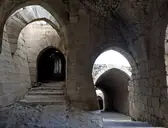 The Vaulted RampA long climb under fireIn the guide
- 04
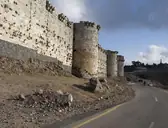 The Outer WallsA second ring of defenceIn the guide
- 05
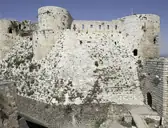 The South FrontWhere the castle fellIn the guide
- 06
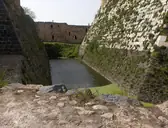 The BirkehA moat that stored waterIn the guide
- 07
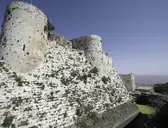 The Glacis and the Three TowersThe mountain of stoneIn the guide
- 08
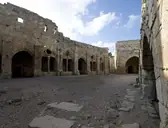 The Inner CourtyardStores for a long siegeIn the guide
- 09
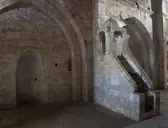 The Chapel and MosqueTwo faiths under one vaultIn the guide
- 10
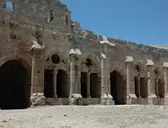 The Great Hall and LoggiaA warning against prideIn the guide
Site map of Crac des Chevaliers
History of Crac des Chevaliers
In 1031 the emir of Homs placed a garrison of Kurdish soldiers in a small fort here, which gave the site its Arabic name, Hisn al-Akrad, the fortress of the Kurds. Crusaders took it in 1110, and in 1142 Raymond II, Count of Tripoli, handed it to the Knights Hospitaller, a religious order founded to care for pilgrims that had become a military force. They rebuilt the castle after earthquakes in 1170 and 1202 and added a second ring of walls in the thirteenth century; at its peak it is said to have held a garrison of about 2,000. Saladin looked at it in 1188 and chose not to attack. Sultan Baybars captured it in 1271, and the Mamluks repaired it and added towers of their own. A village later grew up inside the walls.
The full history continues in the guide.
Crac des Chevaliers guide: questions
How many stops does the Crac des Chevaliers guide have?
10 stops, in visit order: 1. The Castle on the Hill; 2. The Gate Tower; 3. The Vaulted Ramp; 4. The Outer Walls; 5. The South Front; 6. The Birkeh; 7. The Glacis and the Three Towers; 8. The Inner Courtyard; 9. The Chapel and Mosque; 10. The Great Hall and Loggia.
Can I do a self-guided tour of Crac des Chevaliers with this guide?
Yes. The guide is made for a self-guided tour: 10 stops in visit order, each with a photo, a story and a voice, so you can explore Crac des Chevaliers at your own pace, without joining a group. Download it before you go and it works offline.
How long do you need at Crac des Chevaliers?
We suggest allowing 2–3 hours. The 10 stops add up to about 7 minutes of listening, and you play each one when you’re ready, so you can linger wherever you like.
How long is each guide?
The 10 stops add up to about 7 minutes of listening in total. You play each stop when you’re ready, so you can go at your own pace.
Does the guide work offline?
Yes, once it’s downloaded. The guide is a single self-contained web page (about 9.0 MB) with the photos, text and audio built in. Download it to your phone before you go (Wi-Fi is best); after that it opens in any modern browser on iPhone or Android, with no app, account or mobile signal needed.
Does it use GPS or need my location?
No. The guide doesn’t use GPS and doesn’t know where you are: you play each stop when you reach it. It works on iPhone and Android in any modern browser, and it’s in English.
What’s included?
One self-contained HTML guide: 10 stops in visit order, each with a photo, text and a voice, plus the story of who built the site.
Who built Crac des Chevaliers?
In 1031 the emir of Homs placed a garrison of Kurdish soldiers in a small fort here, which gave the site its Arabic name, Hisn al-Akrad, the fortress of the Kurds. Crusaders took it in 1110, and in 1142 Raymond II, Count of Tripoli, handed it to the Knights Hospitaller, a religious order founded to care for pilgrims that had become a military force.
Where is Crac des Chevaliers?
Crac des Chevaliers stands on a hilltop about 650 metres high above the village of Al-Husn, some 40 kilometres west of Homs, guarding the gap in the mountains between inland Syria and the Mediterranean coast.
Is there a free audio guide to Crac des Chevaliers?
The first stop, The Castle on the Hill, is free to read and hear on this page, so you can try the Crac des Chevaliers audio tour before you buy. The full guide, with all 10 stops, is a one-off purchase: download it once and it’s yours to keep, working offline.
Is the Crac des Chevaliers guide worth it?
If you’d like to know what you’re looking at, yes. For $10 you get 10 stops in visit order, each with a photo, a short history and a voice you play when you’re ready, plus a site map of the stops, and about 7 minutes of listening in all. It’s short on purpose, so you spend your time looking, not listening. It’s yours to keep, works offline and needs no app. The first stop is free on this page, so you can try it before you buy. If you’d like hours of detail, a guided tour will go deeper.
Audio guide or guided tour?
It depends how you like to visit. This guide lets you explore Crac des Chevaliers at your own pace, at any time, for a one-off price. A guided tour gives you a live expert you can ask questions, but at fixed times and usually for a higher price. Many people use both: a tour for the big picture, and the guide to read beforehand or to revisit the stops in their own time.
Is this the official Crac des Chevaliers guide?
No. It’s an independent guide by The Historian Guide, not affiliated with or endorsed by the operator of Crac des Chevaliers. For tickets and opening hours, check the official site operator before you go.
Does the guide include entry tickets or opening hours?
No. The guide is a digital companion only. Admission to Crac des Chevaliers is separate, so check the official site operator for current tickets and opening hours before you go.
- Stop 1 · The Castle on the Hill (also the cover): Dosseman · CC BY-SA 4.0 · Wikimedia Commons · resized
- Stop 2 · The Gate Tower: Dosseman · CC BY-SA 4.0 · Wikimedia Commons · resized
- Stop 3 · The Vaulted Ramp: Dosseman · CC BY-SA 4.0 · Wikimedia Commons · resized
- Stop 4 · The Outer Walls: Dosseman · CC BY-SA 4.0 · Wikimedia Commons · resized
- Stop 5 · The South Front: Dosseman · CC BY-SA 4.0 · Wikimedia Commons · resized
- Stop 6 · The Birkeh: Mappo · CC BY-SA 4.0 · Wikimedia Commons · resized
- Stop 7 · The Glacis and the Three Towers: Dosseman · CC BY-SA 4.0 · Wikimedia Commons · resized
- Stop 8 · The Inner Courtyard: Dosseman · CC BY-SA 4.0 · Wikimedia Commons · resized
- Stop 9 · The Chapel and Mosque: Dosseman · CC BY-SA 4.0 · Wikimedia Commons · resized
- Stop 10 · The Great Hall and Loggia: Ron Van Oers · CC BY-SA 3.0 igo · Wikimedia Commons · resized


All photographs from Wikimedia Commons under the licences shown.
More guides in Syria
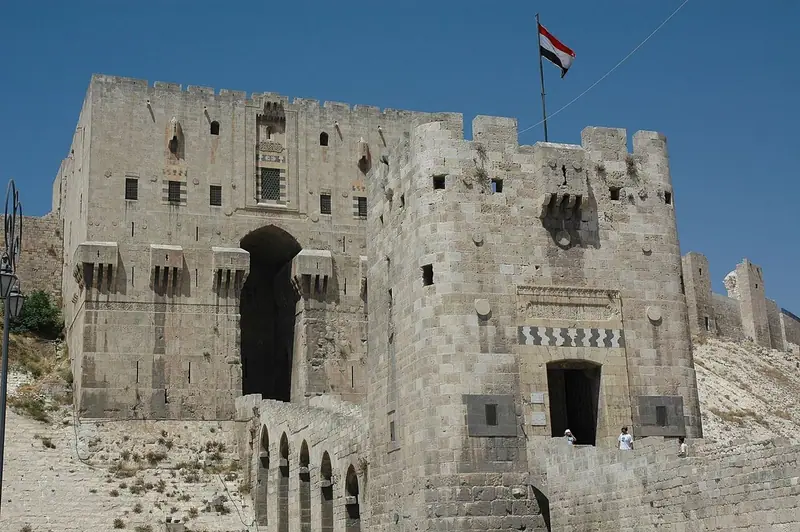 Ayyubid10 stops · Ayyubid citadel, c. 1186–1260
Ancient City of Aleppo audio guide
The great Citadel on its mound, the covered souqs, the Great Mosque and the Jdeydeh quarter, with what was lost in 2012–2016 and what has since been restored set out plainly.
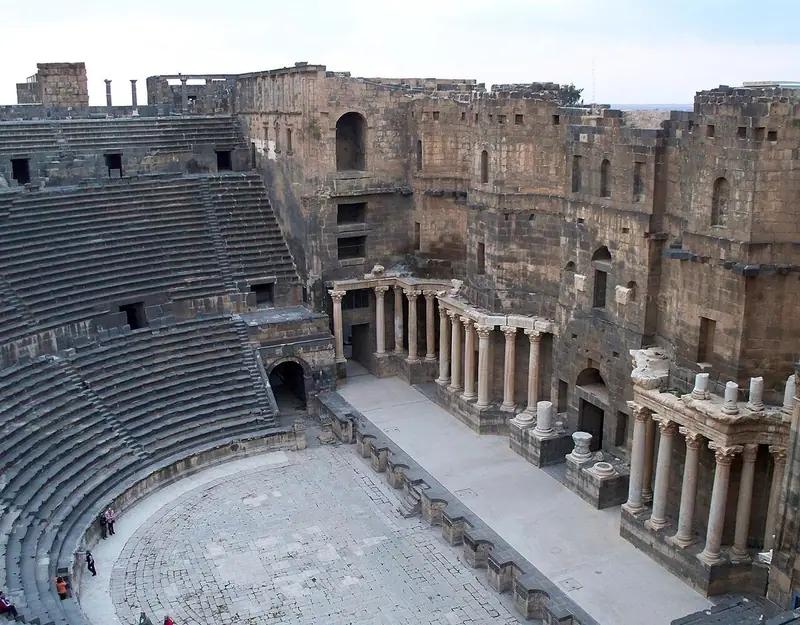 Roman10 stops · 2nd – 7th century CE
Ancient City of Bosra audio guide
Capital of Roman Arabia in black basalt: a near-complete Roman theatre sealed inside an Ayyubid citadel, colonnaded streets, early churches and one of Islam’s oldest mosques.
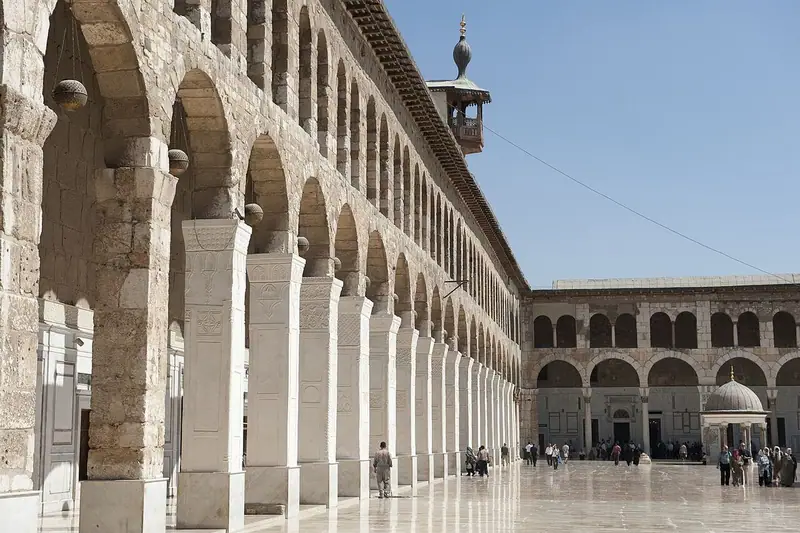 Umayyad10 stops · From the 2nd millennium BCE; Umayyad capital 661–750
Ancient City of Damascus audio guide
One of the world’s oldest cities: the Umayyad Mosque and its golden mosaics, the Citadel, Saladin’s tomb, Ottoman palaces and caravanserais, and the Street called Straight.
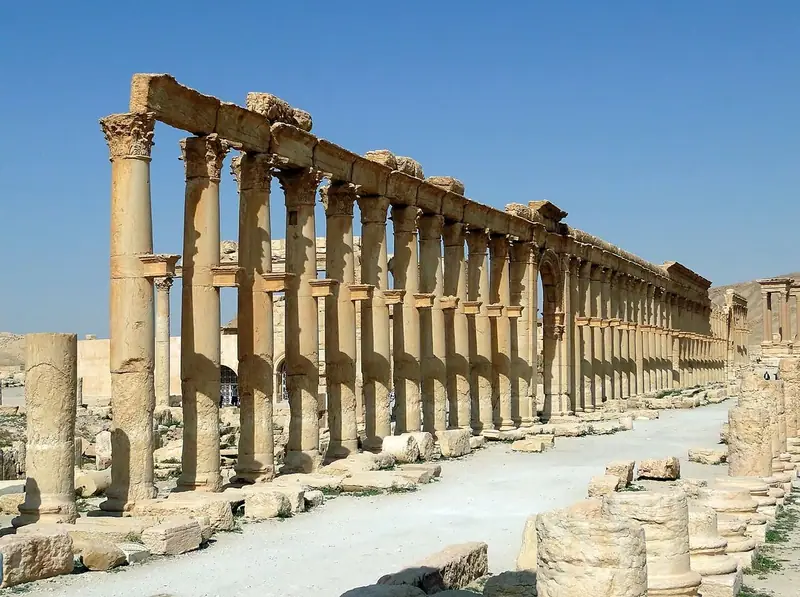 Palmyrene10 stops · 1st – 3rd century CE
Palmyra audio guide
The caravan city of Queen Zenobia in the Syrian desert: a great colonnade, a theatre and tower tombs, with the temples of Bel and Baalshamin destroyed in 2015 shown as they once stood.
Every guide, in every country
Crac des Chevaliers and every other guide we publish, including future ones. One payment, no subscription.