Before you start
Gebel Barkal is a flat-topped sandstone mountain about a hundred metres high, beside the Nile near the town of Karima in northern Sudan, some four hundred kilometres north of Khartoum. UNESCO inscribed it in 2003 with four other sites along about sixty kilometres of the river, El-Kurru, Nuri, Sanam and Zuma, as Gebel Barkal and the Sites of the Napatan Region: temples, palaces and royal pyramids of the Kingdom of Kush from about 900 BCE to 350 CE. Since April 2023 Sudan has been at war. Fighting has not been reported at the sites, but drones have struck the Merowe dam and power station nearby, maintenance and research have largely stopped, and in 2025 UNESCO warned that the property might be placed on the List of World Heritage in Danger. This guide says plainly what has been damaged, and what stands today. Check your government’s current travel advice before you plan a visit.
Use it as a self-guided tour of Gebel Barkal: 10 stops in visit order, each played when you’re ready, at your own pace.
 Free preview · Stop 1
The Holy Mountain
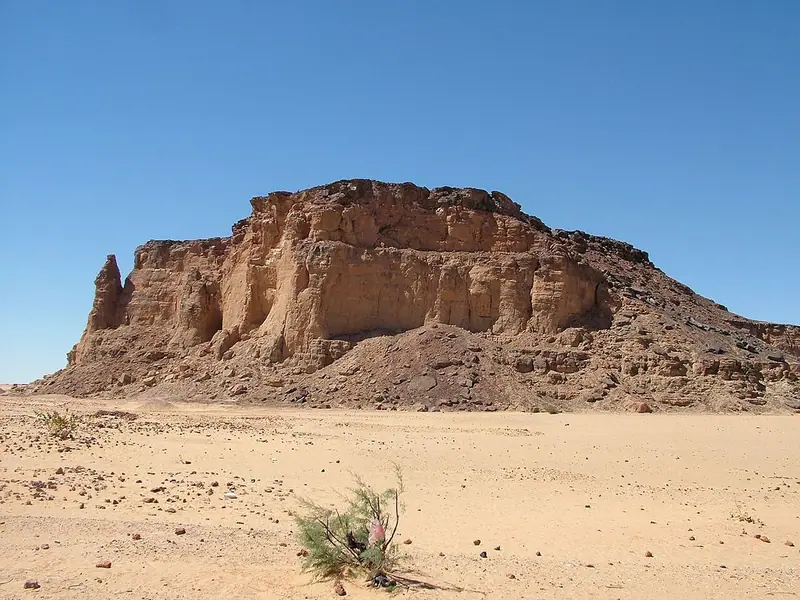
Begin on the open ground in front of Gebel Barkal, a lone mesa rising about a hundred metres from the desert, its cliffs facing the Nile. The Egyptians called it the Pure Mountain and believed it was the home of a ram-headed form of their state god, Amun. Look at the southern corner of the cliff, where a tall pinnacle of rock stands apart from the face. From some angles it resembles a rearing cobra, the royal uraeus worn on a pharaoh’s brow, crowned with a sun disc or the white crown of Upper Egypt, and it is often said that this is why the mountain was thought sacred. The mountain is known locally as Gebel Wad el-Karsani, after a Muslim saint whose tomb at its foot is still visited by local people for blessings. Please treat the tomb and its visitors with respect.
Photo: LassiHU · CC BY-SA 4.0 · Wikimedia Commons. Taken in 2005
What to see at Gebel Barkal: 10 stops, in visit order
- 01
 The Holy MountainHome of AmunFree preview
- 02
 The View from the SummitThe Nile and the temples belowIn the guide
- 03
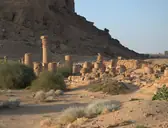 The Great Temple of AmunFive hundred years of buildingIn the guide
- 04
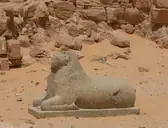 The Rams of AmunGuardians of the avenueIn the guide
- 05
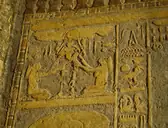 The Temple of MutCarved into the mountainIn the guide
- 06
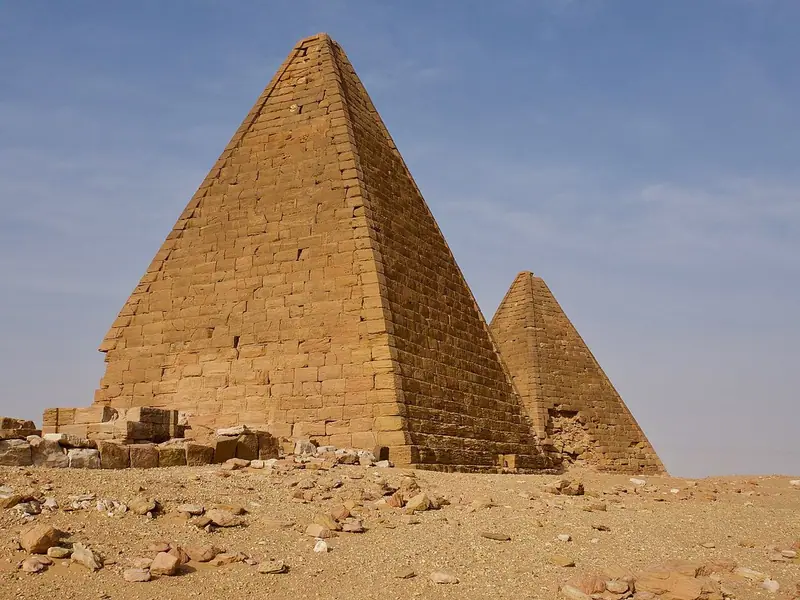
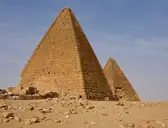 The Pyramids of Gebel BarkalA royal cemetery of Meroitic timesIn the guide
- 07
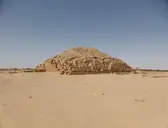 El-KurruCemetery of the first pharaohs of KushIn the guide
- 08
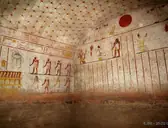 The Tomb of TantamaniPaintings beneath the desertIn the guide
- 09
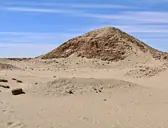 The Pyramid of Taharqa at NuriThe largest pyramid in NubiaIn the guide
- 10
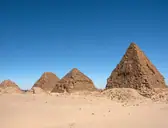 The Pyramids of NuriWhat wind and time have takenIn the guide
History of Gebel Barkal
Around 1450 BCE the Egyptian pharaoh Thutmose III made Gebel Barkal the southern limit of his empire, and the Egyptians built temples here to Amun, who they believed lived inside the mountain. The town that grew up around it was called Napata. After Egyptian rule ended, local kings of Kush rose to power here. Around 730 BCE King Piye marched north and conquered Egypt, and his successors ruled it as the Twenty-fifth Dynasty, the so-called Black Pharaohs, until the Assyrians drove them out in the 660s BCE. Back in Kush, the kings were still crowned at Napata and buried in pyramids at El-Kurru and then Nuri. Around 270 BCE royal burials moved south to Meroe, but Gebel Barkal remained a holy place for centuries more, and the tomb of a Muslim saint at its foot is still visited today.
Gebel Barkal guide: questions
How many stops does the Gebel Barkal guide have?
10 stops, in visit order: 1. The Holy Mountain; 2. The View from the Summit; 3. The Great Temple of Amun; 4. The Rams of Amun; 5. The Temple of Mut; 6. The Pyramids of Gebel Barkal; 7. El-Kurru; 8. The Tomb of Tantamani; 9. The Pyramid of Taharqa at Nuri; 10. The Pyramids of Nuri.
Can I do a self-guided tour of Gebel Barkal with this guide?
Yes. The guide is made for a self-guided tour: 10 stops in visit order, each with a photo, a story and a voice, so you can explore Gebel Barkal at your own pace, without joining a group. Download it before you go and it works offline.
How long do you need at Gebel Barkal?
We suggest allowing two days. The 10 stops add up to about 8 minutes of listening, and you play each one when you’re ready, so you can linger wherever you like.
How long is each guide?
The 10 stops add up to about 8 minutes of listening in total. You play each stop when you’re ready, so you can go at your own pace.
Does the guide work offline?
Yes, once it’s downloaded. The guide is a single self-contained web page (about 8.8 MB) with the photos, text and audio built in. Download it to your phone before you go (Wi-Fi is best); after that it opens in any modern browser on iPhone or Android, with no app, account or mobile signal needed.
Does it use GPS or need my location?
No. The guide doesn’t use GPS and doesn’t know where you are: you play each stop when you reach it. It works on iPhone and Android in any modern browser, and it’s in English.
What’s included?
One self-contained HTML guide: 10 stops in visit order, each with a photo, text and a voice, plus the story of who built the site.
Who built Gebel Barkal?
Around 1450 BCE the Egyptian pharaoh Thutmose III made Gebel Barkal the southern limit of his empire, and the Egyptians built temples here to Amun, who they believed lived inside the mountain. The town that grew up around it was called Napata.
Where is Gebel Barkal?
Gebel Barkal is a flat-topped sandstone mountain about a hundred metres high, beside the Nile near the town of Karima in northern Sudan, some four hundred kilometres north of Khartoum.
Is there a free audio guide to Gebel Barkal?
The first stop, The Holy Mountain, is free to read and hear on this page, so you can try the Gebel Barkal audio tour before you buy. The full guide, with all 10 stops, is a one-off purchase: download it once and it’s yours to keep, working offline.
Is the Gebel Barkal guide worth it?
If you’d like to know what you’re looking at, yes. For $10 you get 10 stops in visit order, each with a photo, a short history and a voice you play when you’re ready, about 8 minutes of listening in all. It’s short on purpose, so you spend your time looking, not listening. It’s yours to keep, works offline and needs no app. The first stop is free on this page, so you can try it before you buy. If you’d like hours of detail, a guided tour will go deeper.
Audio guide or guided tour?
It depends how you like to visit. This guide lets you explore Gebel Barkal at your own pace, at any time, for a one-off price. A guided tour gives you a live expert you can ask questions, but at fixed times and usually for a higher price. Many people use both: a tour for the big picture, and the guide to read beforehand or to revisit the stops in their own time.
Is this the official Gebel Barkal guide?
No. It’s an independent guide by The Historian Guide, not affiliated with or endorsed by the operator of Gebel Barkal. For tickets and opening hours, check the official site operator before you go.
Does the guide include entry tickets or opening hours?
No. The guide is a digital companion only. Admission to Gebel Barkal is separate, so check the official site operator for current tickets and opening hours before you go.
- Stop 1 · The Holy Mountain: LassiHU · CC BY-SA 4.0 · Wikimedia Commons · resized
- Stop 2 · The View from the Summit: Maurice Chédel · Public domain · Wikimedia Commons · resized
- Stop 3 · The Great Temple of Amun: Bertramz · CC BY 3.0 · Wikimedia Commons · resized
- Stop 4 · The Rams of Amun: Hans Birger Nilsen · CC BY-SA 2.0 · Wikimedia Commons · resized
- Stop 5 · The Temple of Mut: Laurent de Walick · CC BY 2.0 · Wikimedia Commons · resized
- Stop 6 · The Pyramids of Gebel Barkal (also the cover): Laurent de Walick · CC BY 2.0 · Wikimedia Commons · resized
- Stop 7 · El-Kurru: Hans Birger Nilsen · CC BY-SA 2.0 · Wikimedia Commons · resized
- Stop 8 · The Tomb of Tantamani: TrackHD · CC BY-SA 3.0 · Wikimedia Commons · resized
- Stop 9 · The Pyramid of Taharqa at Nuri: Sue Fleckney · CC BY-SA 2.0 · Wikimedia Commons · resized
- Stop 10 · The Pyramids of Nuri: Bruce Allardice · CC BY-SA 2.0 · Wikimedia Commons · resized


All photographs from Wikimedia Commons under the licences shown.
More guides in Sudan
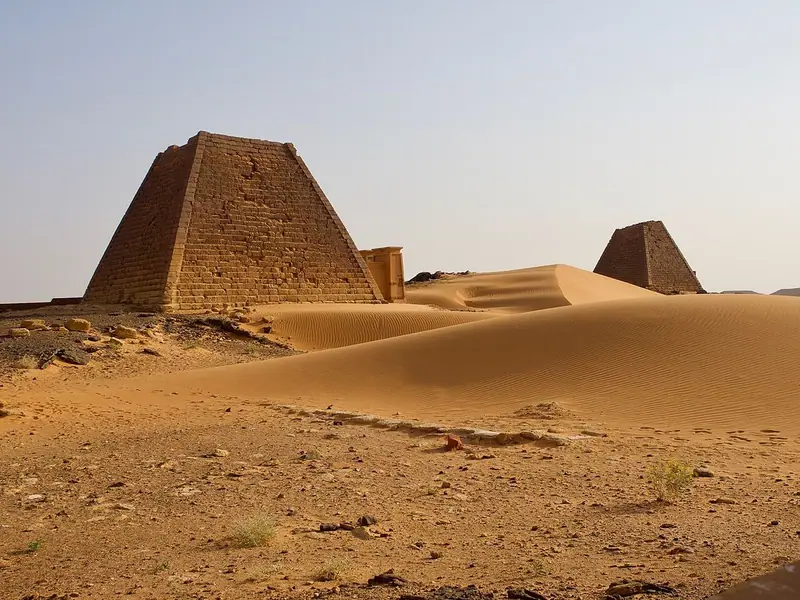 Kushite12 stops · c. 300 BCE – 4th century CE
Meroe audio guide
The royal city and steep pyramids of the kings and queens of Kush, with the desert temples of Musawwarat es-Sufra and Naqa, where Egypt, Africa and Rome met.
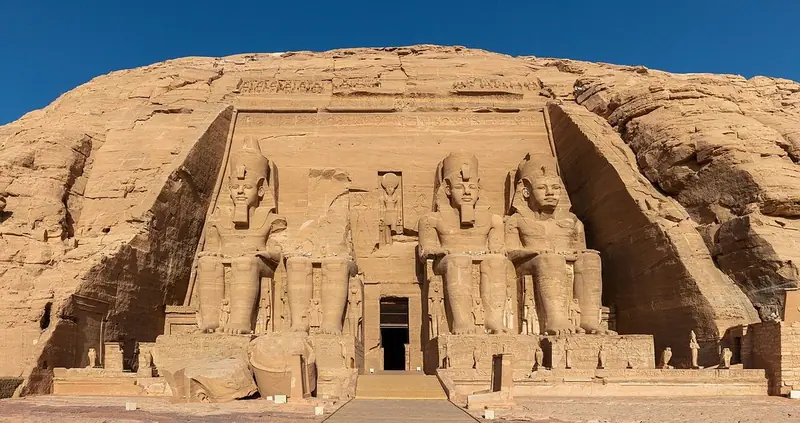 Ancient Egyptian8 stops · 13th century BCE
Abu Simbel audio guide
Ramesses II’s colossal temple façade, the Temple of Nefertari, and how both were rescued from the waters of Lake Nasser.
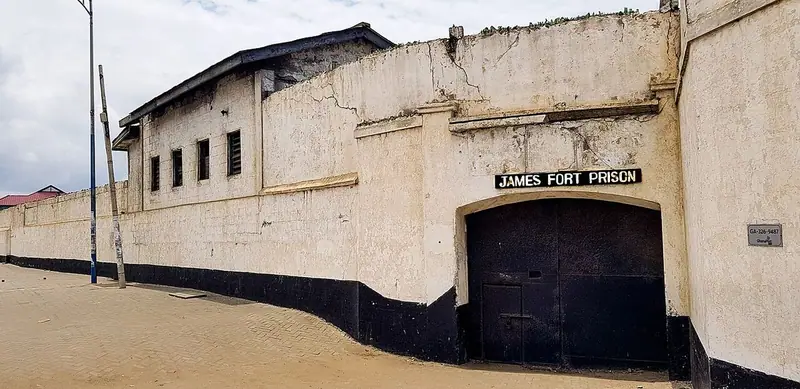 Ga7 stops · 1649–1957
Old Accra audio guide
From the old forts and lighthouse of Jamestown, through the Ga fishing quarter, to the monuments of Ghana’s independence and Osu Castle.
Every guide, in every country
Gebel Barkal and every other guide we publish, including future ones. One payment, no subscription.