Before you start
Ollantaytambo is a town and Inca site in the Sacred Valley, some seventy kilometres by road north-west of Cusco, at about 2,800 metres above sea level. Many visitors pass through on the way to Machu Picchu, as the town has a railway station and the classic Inca Trail starts nearby, but it rewards a visit of its own. The archaeological site lies at the western edge of the town, a few minutes’ walk from the main square, and is normally entered with the Cusco tourist ticket, the Boleto Turístico. The climb to the top of the terraces is steep, with many high steps. This guide starts in the old Inca town, climbs the great terraces to the Temple sector and the Wall of the Six Monoliths, descends to the fountains at the foot of the hill, and ends with a view of the storehouses on the mountain opposite.
Use it as a self-guided tour of Ollantaytambo: 6 stops in visit order, each played when you’re ready, at your own pace.
 Free preview · Stop 1
The Storehouses
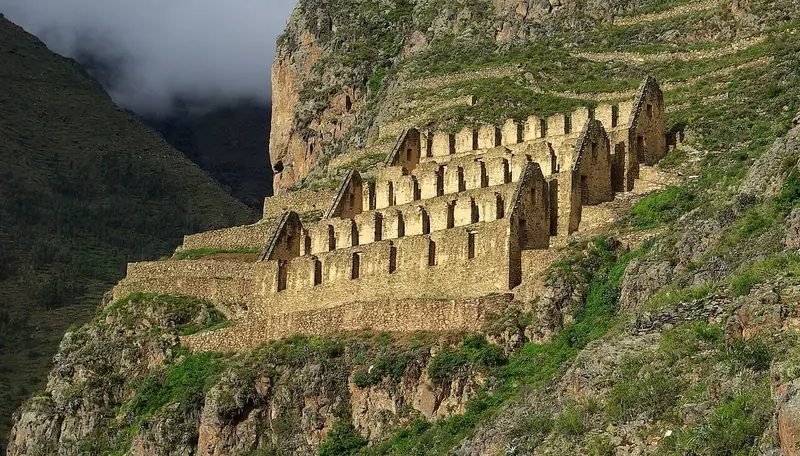
Begin by looking up at the steep mountain of Pinkuylluna, on the eastern side of the town, where you can see a series of stone buildings clinging to the slopes. These are Inca storehouses, called qollqas, built of fieldstones. Their position high on the mountain, where it is windier and cooler, helped to keep their contents from decaying, and they had a ventilation system. They probably stored the harvest from the terraces around Ollantaytambo; grain was poured in through windows on the uphill side and taken out through the downhill side. A path climbs up to them from the town, and the climb rewards you with fine views over the town and the Temple Hill. Take in the view of the terraces, the old streets and the mountains around you, before heading down into the town.
Photo: Stevage · CC BY-SA 3.0 · Wikimedia Commons
What to see at Ollantaytambo: 6 stops, in visit order
- 01
 The StorehousesPinkuyllunaFree preview
- 02
 The Inca TownStreets of the old gridIn the guide
- 03
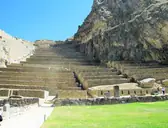 Pumatallis TerracesThe great stairwayIn the guide
- 04
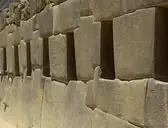 The Temple SectorAn unfinished sanctuaryIn the guide
- 05
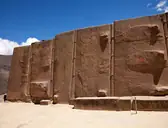 Six MonolithsThe Sun TempleIn the guide
- 06
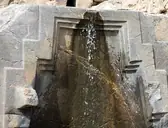 Baño de la ÑustaFountains at the foot of the hillIn the guide
Site map of Ollantaytambo
History of Ollantaytambo
Ollantaytambo was built by the Incas, whose empire grew from its capital at Cusco in the fifteenth century to become the largest in the Americas, stretching along the Andes until the Spanish conquest that began in 1532. People lived here long before the Incas, and some remains in the area belong to earlier cultures. Around the middle of the fifteenth century the Inca ruler Pachacuti conquered the town and made the area part of his personal estate, rebuilding it with fine buildings and terraces, and after his death it was cared for by his family clan. During the Spanish conquest, the Inca ruler Manco Inca made Ollantaytambo his stronghold, and in 1537 he defeated a Spanish force here, before withdrawing to the forests of Vilcabamba the following year. The town has been lived in ever since.
Ollantaytambo guide: questions
How many stops does the Ollantaytambo guide have?
6 stops, in visit order: 1. The Storehouses; 2. The Inca Town; 3. Pumatallis Terraces; 4. The Temple Sector; 5. Six Monoliths; 6. Baño de la Ñusta.
Can I do a self-guided tour of Ollantaytambo with this guide?
Yes. The guide is made for a self-guided tour: 6 stops in visit order, each with a photo, a story and a voice, so you can explore Ollantaytambo at your own pace, without joining a group. Download it before you go and it works offline.
How long is each guide?
The 6 stops add up to about 4 minutes of listening in total. You play each stop when you’re ready, so you can go at your own pace.
Does the guide work offline?
Yes, once it’s downloaded. The guide is a single self-contained web page (about 6.6 MB) with the photos, text and audio built in. Download it to your phone before you go (Wi-Fi is best); after that it opens in any modern browser on iPhone or Android, with no app, account or mobile signal needed.
Does it use GPS or need my location?
No. The guide doesn’t use GPS and doesn’t know where you are: you play each stop when you reach it. It works on iPhone and Android in any modern browser, and it’s in English.
What’s included?
One self-contained HTML guide: 6 stops in visit order, each with a photo, text and a voice, plus the story of who built the site.
Who built Ollantaytambo?
Ollantaytambo was built by the Incas, whose empire grew from its capital at Cusco in the fifteenth century to become the largest in the Americas, stretching along the Andes until the Spanish conquest that began in 1532. People lived here long before the Incas, and some remains in the area belong to earlier cultures.
Where is Ollantaytambo?
Ollantaytambo is a town and Inca site in the Sacred Valley, some seventy kilometres by road north-west of Cusco, at about 2,800 metres above sea level.
Is there a free audio guide to Ollantaytambo?
The first stop, The Storehouses, is free to read and hear on this page, so you can try the Ollantaytambo audio tour before you buy. The full guide, with all 6 stops, is a one-off purchase: download it once and it’s yours to keep, working offline.
Is the Ollantaytambo guide worth it?
If you’d like to know what you’re looking at, yes. For $10 you get 6 stops in visit order, each with a photo, a short history and a voice you play when you’re ready, plus a site map of the stops, and about 4 minutes of listening in all. It’s short on purpose, so you spend your time looking, not listening. It’s yours to keep, works offline and needs no app. The first stop is free on this page, so you can try it before you buy. If you’d like hours of detail, a guided tour will go deeper.
Audio guide or guided tour?
It depends how you like to visit. This guide lets you explore Ollantaytambo at your own pace, at any time, for a one-off price. A guided tour gives you a live expert you can ask questions, but at fixed times and usually for a higher price. Many people use both: a tour for the big picture, and the guide to read beforehand or to revisit the stops in their own time.
Is this the official Ollantaytambo guide?
No. It’s an independent guide by The Historian Guide, not affiliated with or endorsed by the operator of Ollantaytambo. For tickets and opening hours, check the official site operator before you go.
Does the guide include entry tickets or opening hours?
No. The guide is a digital companion only. Admission to Ollantaytambo is separate, so check the official site operator for current tickets and opening hours before you go.
- Stop 1 · The Storehouses: Stevage · CC BY-SA 3.0 · Wikimedia Commons · resized
- Stop 2 · The Inca Town: Apugaia · CC BY-SA 4.0 · Wikimedia Commons · resized
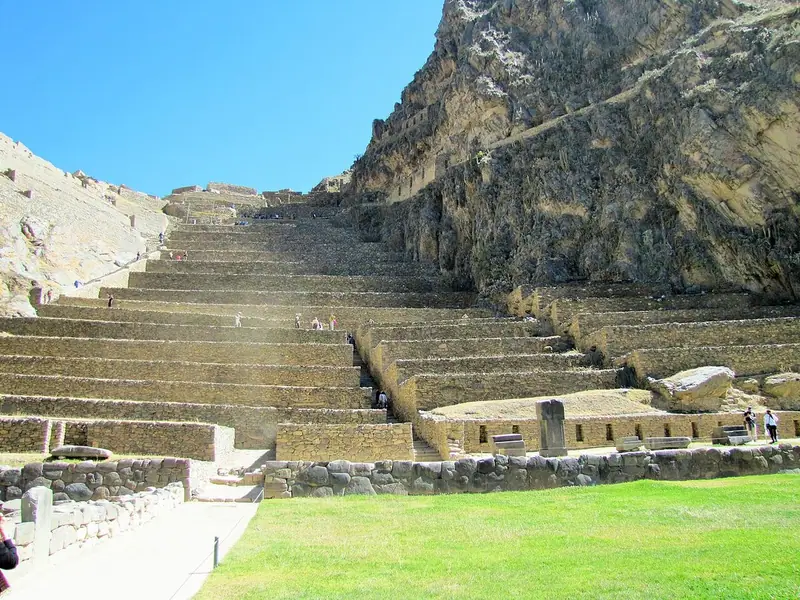
- Stop 3 · Pumatallis Terraces (also the cover): Chuck Moravec · CC BY 2.0 · Wikimedia Commons · resized
- Stop 4 · The Temple Sector: McKay Savage from London, UK · CC BY 2.0 · Wikimedia Commons · resized
- Stop 5 · Six Monoliths: Unukorno · CC BY 3.0 · Wikimedia Commons · resized
- Stop 6 · Baño de la Ñusta: PsamatheM · CC BY-SA 4.0 · Wikimedia Commons · resized


All photographs from Wikimedia Commons under the licences shown.
More guides in Peru
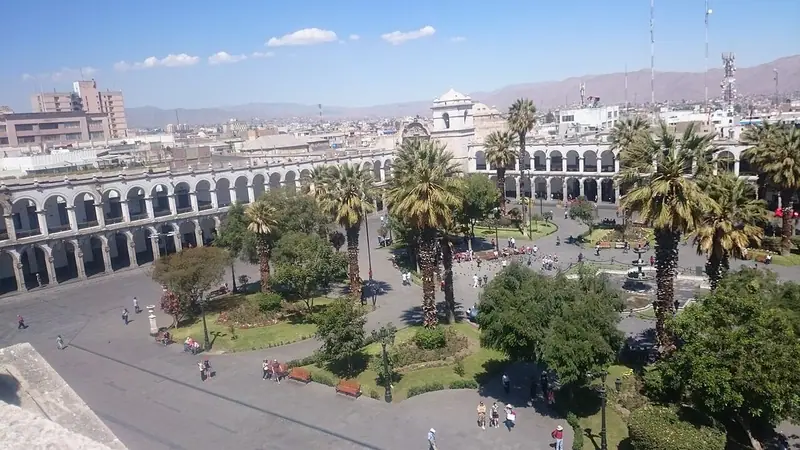 Spanish Colonial7 stops · 16th–19th century CE
Arequipa audio guide
The White City of volcanic stone: the Santa Catalina Monastery, the cathedral and La Compañía on the Plaza de Armas, the ice maiden Juanita and the Yanahuara viewpoint.
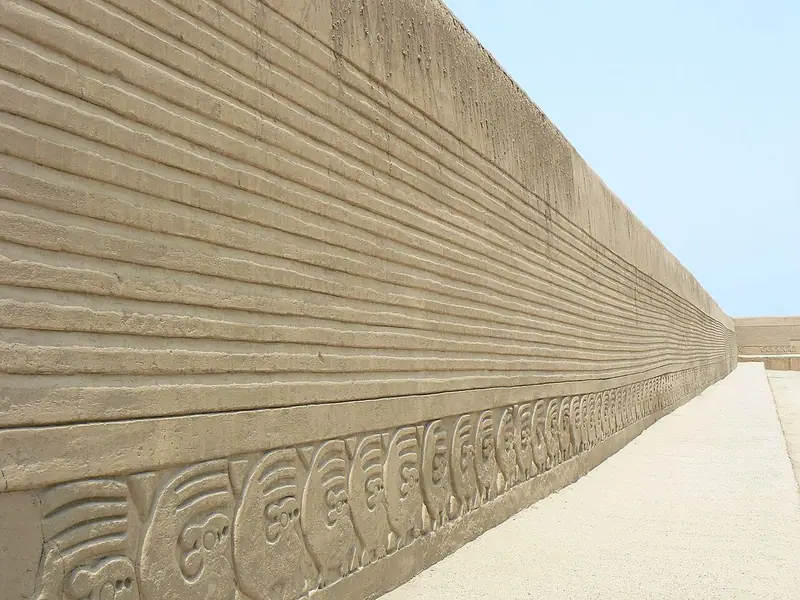 Chimú8 stops · c. 900 – 1470 CE
Chan Chan audio guide
The vast adobe capital of the Chimú kings by the Pacific: the palace of Nik An with its friezes of fish and nets, its audiencias and royal tomb, and the rainbow temple of the Huaca Arco Iris.
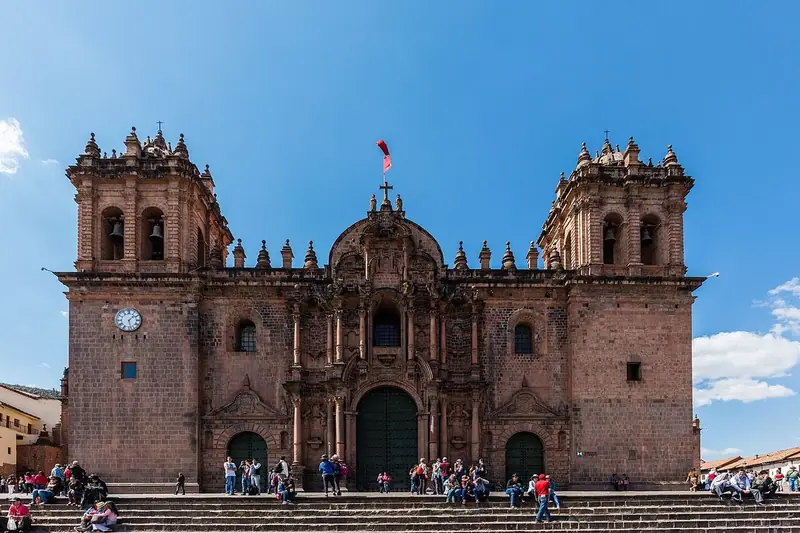 Inca7 stops · 15th–18th century CE
Historic Centre of Cusco audio guide
From the Plaza de Armas past the Twelve-Angled Stone and San Blas to the Qorikancha, temple of the Incas.
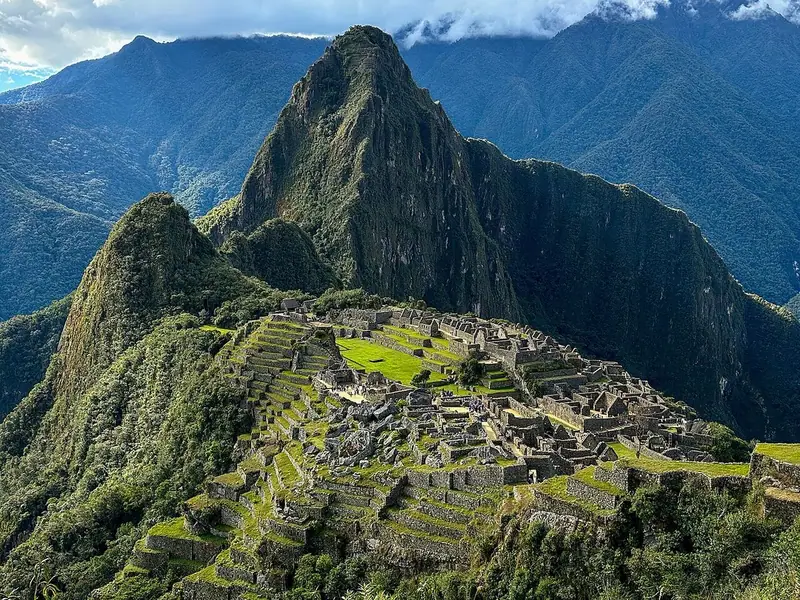 Inca8 stops · 15th century CE
Machu Picchu audio guide
Through the city gate to the Temple of the Sun, the Intihuatana and the Temple of the Condor, high above the Urubamba.
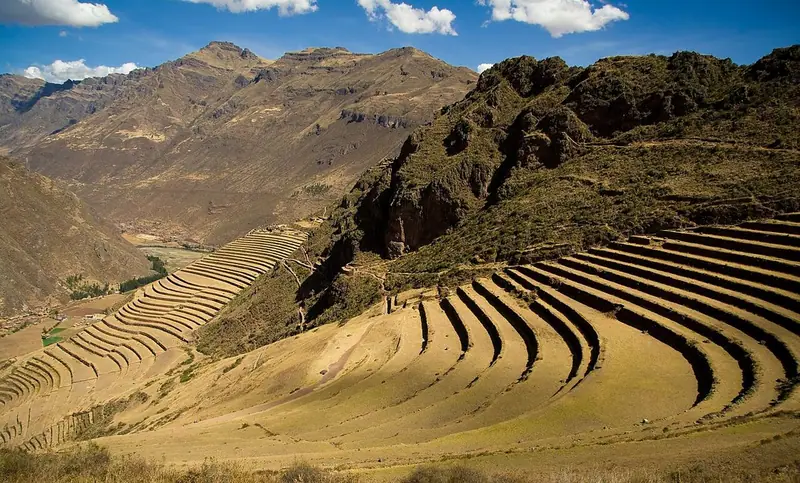 Inca6 stops · 15th century CE
Pisac audio guide
Sweeping terraces and the Intiwatana on a ridge high above the Sacred Valley, then the path down to the town.
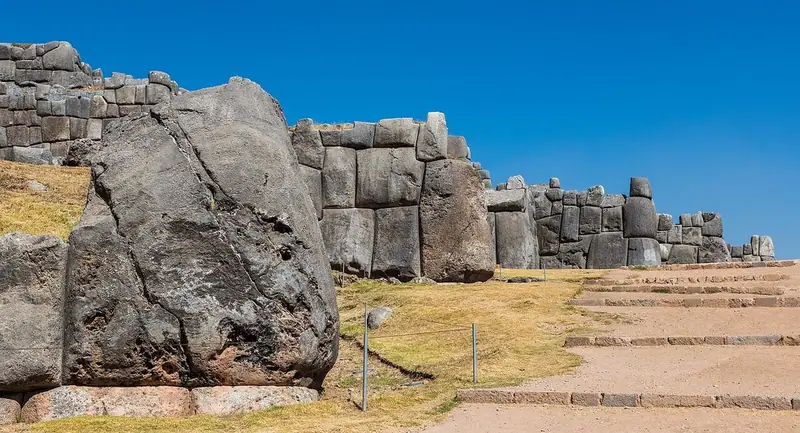 Inca6 stops · 15th–16th century CE
Sacsayhuamán audio guide
Zigzag walls of giant fitted stones on the hill above Cusco, guarding the Inca capital.
Every guide, in every country
Ollantaytambo and every other guide we publish, including future ones. One payment, no subscription.