Before you start
Arequipa lies in a green valley high in the Andes of southern Peru, at about two thousand three hundred metres, beneath the snow-capped cone of the volcano El Misti. It is known as the White City, because so many of its churches and houses are built of sillar, a pale volcanic stone that is soft enough to carve into lace-like patterns. Its historic centre was inscribed as a UNESCO World Heritage Site in 2000. This guide starts at the monastery of Santa Teresa, east of the centre, visits two great convents, the main square and the Jesuit church, and the museum of the Inca girl known as Juanita, and ends across the river at the viewpoint of Yanahuara. The thin air of the altitude can tire you, so take your time and drink plenty of water.
Use it as a self-guided tour of Arequipa: 7 stops in visit order, each played when you’re ready, at your own pace.
 Free preview · Stop 1
The Monastery of Santa Teresa
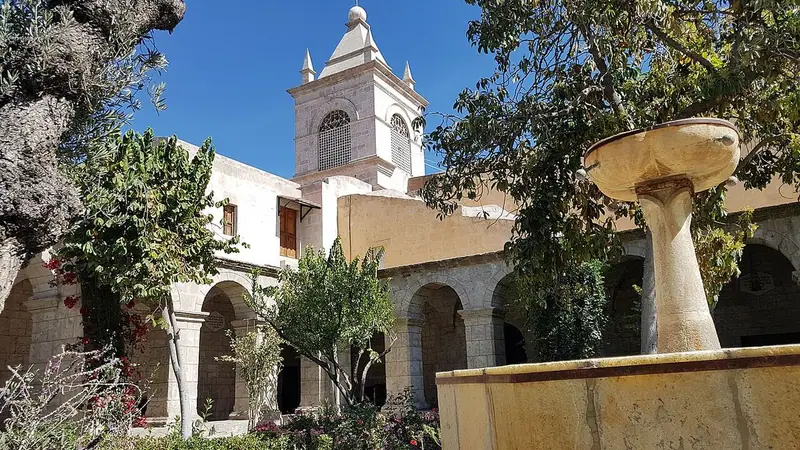
Begin at the Monastery of Santa Teresa, a few blocks east of the main square. It was founded on 23 November 1710 for Carmelite nuns of the strictest kind, the Discalced, or barefoot, Carmelites, and a community of nuns still lives here in enclosure, apart from the world. Look first at the church, whose front of white sillar is carved in the local style. Since 2005, part of the monastery has been open to visitors as the Santa Teresa Museum of Viceregal Art. Its rooms and cloisters hold paintings, sculptures, silver and the everyday objects of the nuns' life from the sixteenth to the nineteenth century, many of them gifts brought by the young women who entered the convent from the leading families of the city. Look out for the painted walls of the cloisters and the small, bright courtyards with their flowers. Remember that this is still a living convent.
Photo: Diegolazoh · CC BY-SA 4.0 · Wikimedia Commons
What to see at Arequipa: 7 stops, in visit order
- 01
 The Monastery of Santa TeresaCarmelite nuns and their treasuresFree preview
- 02
 The Church of San FranciscoThe Franciscans' churchIn the guide
- 03
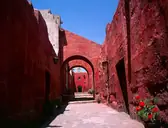 The Monastery of Santa CatalinaA city within the cityIn the guide
- 04
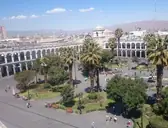 The Plaza de Armas and the CathedralThe heart of the White CityIn the guide
- 05
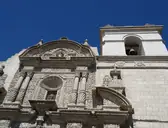 The Church of La CompañíaThe masterpiece of Arequipa's carversIn the guide
- 06
 The Museo Santuarios AndinosJuanita, the Inca girl of AmpatoIn the guide
- 07
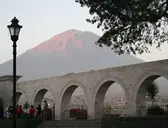 The Mirador de YanahuaraArches and the volcanoIn the guide
History of Arequipa
People have farmed this valley for thousands of years, and by the fifteenth century it was part of the Inca empire. On 15 August 1540 the Spanish founded a town here, laid out in a grid of blocks around a central square, and a year later it received the title of city. Its farms and its place on the road between the coast and the silver mines of the high Andes made it rich. The local masons, working the white and pink sillar quarried from the slopes of the nearby volcanoes, developed a style of their own, in which European forms were covered with carved flowers, fruits, birds and faces drawn from the Andean world. Arequipa has always lived with earthquakes, and many of its buildings have been damaged and rebuilt again and again, most recently after the great earthquake of 23 June 2001. Thick walls and low vaults are the masons' answer to the shaking ground.
Arequipa guide: questions
How many stops does the Arequipa guide have?
7 stops, in visit order: 1. The Monastery of Santa Teresa; 2. The Church of San Francisco; 3. The Monastery of Santa Catalina; 4. The Plaza de Armas and the Cathedral; 5. The Church of La Compañía; 6. The Museo Santuarios Andinos; 7. The Mirador de Yanahuara.
Can I do a self-guided tour of Arequipa with this guide?
Yes. The guide is made for a self-guided tour: 7 stops in visit order, each with a photo, a story and a voice, so you can explore Arequipa at your own pace, without joining a group. Download it before you go and it works offline.
How long is each guide?
The 7 stops add up to about 5 minutes of listening in total. You play each stop when you’re ready, so you can go at your own pace.
Does the guide work offline?
Yes, once it’s downloaded. The guide is a single self-contained web page (about 6.7 MB) with the photos, text and audio built in. Download it to your phone before you go (Wi-Fi is best); after that it opens in any modern browser on iPhone or Android, with no app, account or mobile signal needed.
Does it use GPS or need my location?
No. The guide doesn’t use GPS and doesn’t know where you are: you play each stop when you reach it. It works on iPhone and Android in any modern browser, and it’s in English.
What’s included?
One self-contained HTML guide: 7 stops in visit order, each with a photo, text and a voice, plus the story of who built the site.
Who built Arequipa?
People have farmed this valley for thousands of years, and by the fifteenth century it was part of the Inca empire. On 15 August 1540 the Spanish founded a town here, laid out in a grid of blocks around a central square, and a year later it received the title of city.
Where is Arequipa?
Arequipa lies in a green valley high in the Andes of southern Peru, at about two thousand three hundred metres, beneath the snow-capped cone of the volcano El Misti.
Is there a free audio guide to Arequipa?
The first stop, The Monastery of Santa Teresa, is free to read and hear on this page, so you can try the Arequipa audio tour before you buy. The full guide, with all 7 stops, is a one-off purchase: download it once and it’s yours to keep, working offline.
Is the Arequipa guide worth it?
If you’d like to know what you’re looking at, yes. For $10 you get 7 stops in visit order, each with a photo, a short history and a voice you play when you’re ready, about 5 minutes of listening in all. It’s short on purpose, so you spend your time looking, not listening. It’s yours to keep, works offline and needs no app. The first stop is free on this page, so you can try it before you buy. If you’d like hours of detail, a guided tour will go deeper.
Audio guide or guided tour?
It depends how you like to visit. This guide lets you explore Arequipa at your own pace, at any time, for a one-off price. A guided tour gives you a live expert you can ask questions, but at fixed times and usually for a higher price. Many people use both: a tour for the big picture, and the guide to read beforehand or to revisit the stops in their own time.
Is this the official Arequipa guide?
No. It’s an independent guide by The Historian Guide, not affiliated with or endorsed by the operator of Arequipa. For tickets and opening hours, check the official site operator before you go.
Does the guide include entry tickets or opening hours?
No. The guide is a digital companion only. Admission to Arequipa is separate, so check the official site operator for current tickets and opening hours before you go.
- Stop 1 · The Monastery of Santa Teresa: Diegolazoh · CC BY-SA 4.0 · Wikimedia Commons · resized
- Stop 2 · The Church of San Francisco: Draceane · CC BY-SA 4.0 · Wikimedia Commons · resized
- Stop 3 · The Monastery of Santa Catalina: Colegota · CC BY-SA 2.5 es · Wikimedia Commons · resized
- Stop 4 · The Plaza de Armas and the Cathedral (also the cover): Manuel Reyes Mantilla · CC BY-SA 4.0 · Wikimedia Commons · resized
- Stop 5 · The Church of La Compañía: Jklamo · CC BY-SA 4.0 · Wikimedia Commons · resized
- Stop 6 · The Museo Santuarios Andinos: Humbertobalvin · CC BY-SA 4.0 · Wikimedia Commons · resized
- Stop 7 · The Mirador de Yanahuara: Véronique Debord-Lazaro · CC BY-SA 2.0 · Wikimedia Commons · resized


All photographs from Wikimedia Commons under the licences shown.
More guides in Peru
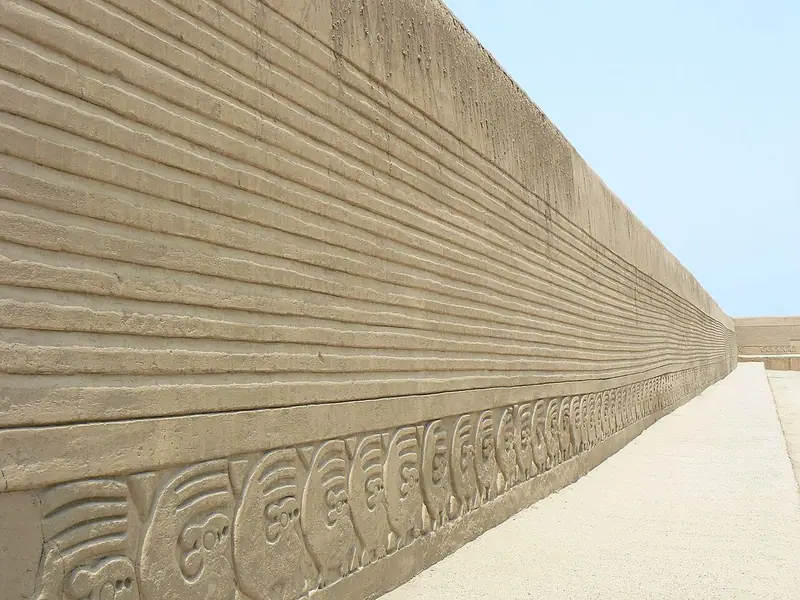 Chimú8 stops · c. 900 – 1470 CE
Chan Chan audio guide
The vast adobe capital of the Chimú kings by the Pacific: the palace of Nik An with its friezes of fish and nets, its audiencias and royal tomb, and the rainbow temple of the Huaca Arco Iris.
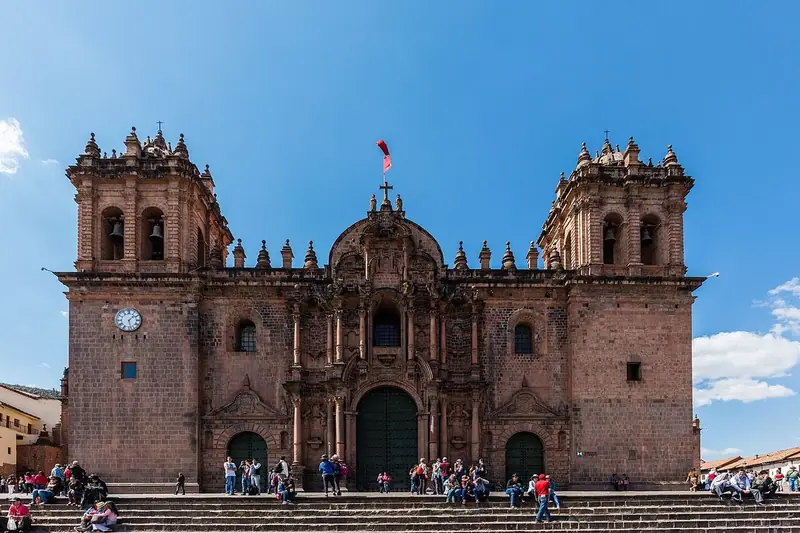 Inca7 stops · 15th–18th century CE
Historic Centre of Cusco audio guide
From the Plaza de Armas past the Twelve-Angled Stone and San Blas to the Qorikancha, temple of the Incas.
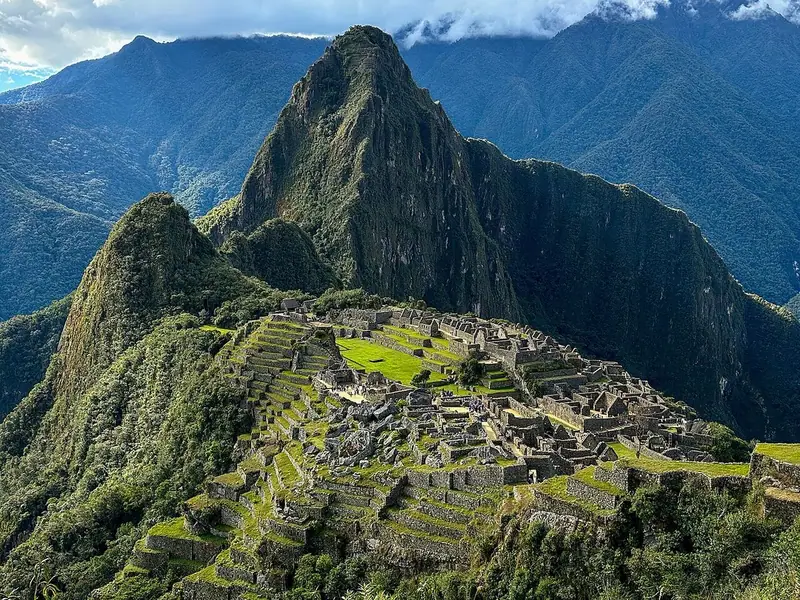 Inca8 stops · 15th century CE
Machu Picchu audio guide
Through the city gate to the Temple of the Sun, the Intihuatana and the Temple of the Condor, high above the Urubamba.
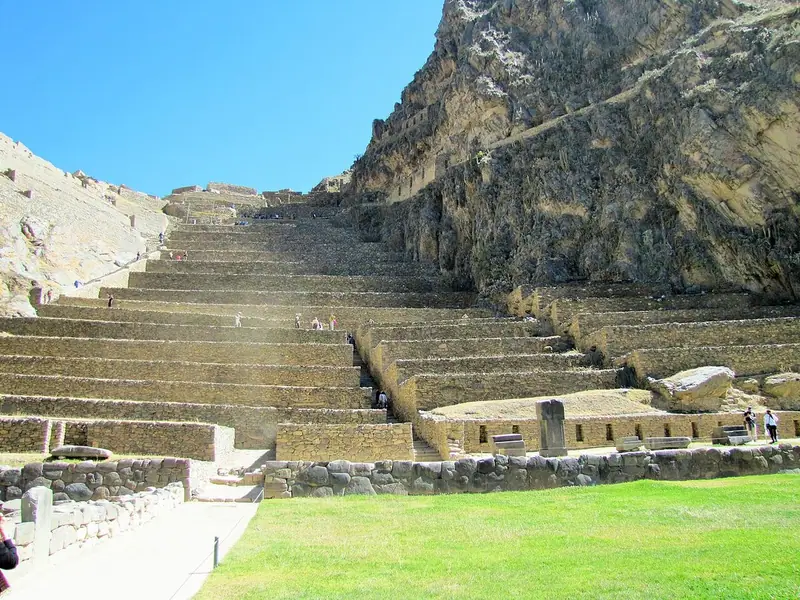 Inca6 stops · 15th–16th century CE
Ollantaytambo audio guide
The Pumatallis terraces, the Temple Sector’s six great monoliths and the Inca town below.
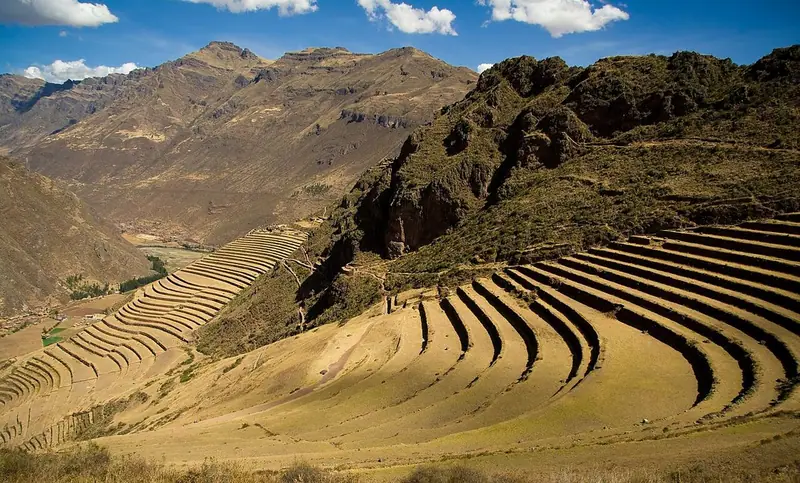 Inca6 stops · 15th century CE
Pisac audio guide
Sweeping terraces and the Intiwatana on a ridge high above the Sacred Valley, then the path down to the town.
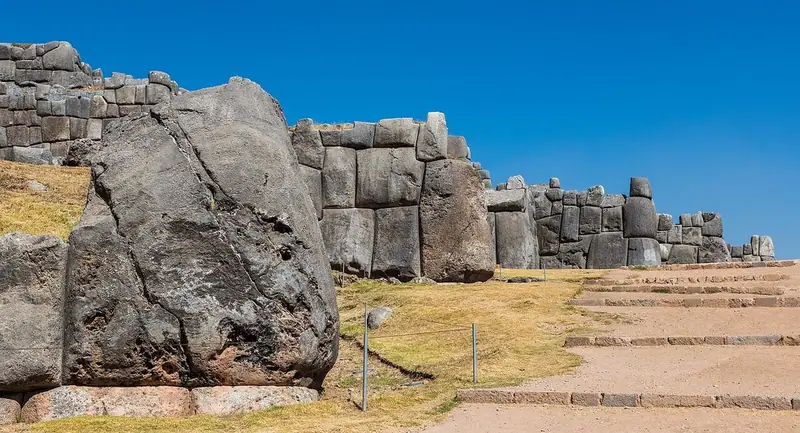 Inca6 stops · 15th–16th century CE
Sacsayhuamán audio guide
Zigzag walls of giant fitted stones on the hill above Cusco, guarding the Inca capital.
Every guide, in every country
Arequipa and every other guide we publish, including future ones. One payment, no subscription.