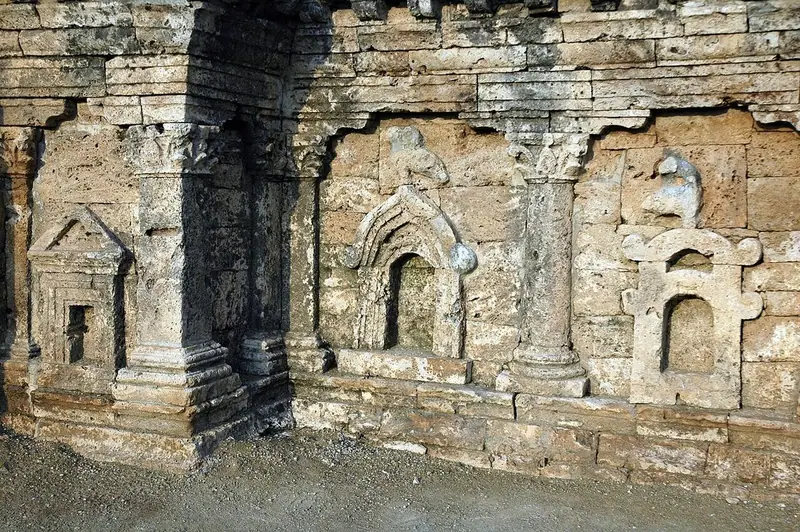
Before you start
Taxila lies on the Pothohar Plateau of northern Punjab, about twenty-five kilometres north-west of Islamabad and Rawalpindi. Known in Sanskrit as Takshashila, it was one of the great cities of ancient Gandhara, standing on the routes that linked the plains of South Asia with Central Asia. Three successive cities rose in its valley, the Bhir Mound, Sirkap and Sirsukh, ringed by Buddhist stupas and monasteries on the surrounding hills. UNESCO inscribed the ruins as a World Heritage Site in 1980. This guide begins at the Taxila Museum, visits the Bhir Mound, the Dharmarajika stupa and the city of Sirkap with the temple at Jandial, and ends at the hill monasteries of Mohra Muradu and Jaulian. The sites are spread across the valley and are best linked by road.
Use it as a self-guided tour of Taxila: 9 stops in visit order, each played when you’re ready, at your own pace.
 Free preview · Stop 1
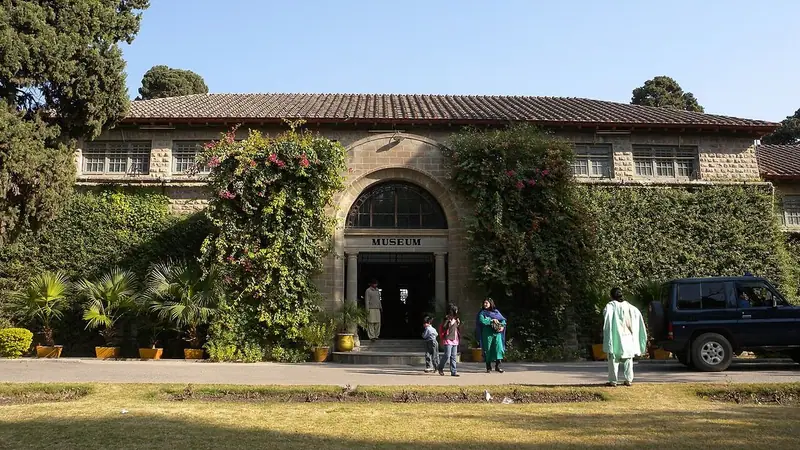
The Taxila Museum
Begin at the Taxila Museum, which holds one of the most important collections of Gandharan art. Its foundation stone was laid in 1918 by Lord Chelmsford, then Viceroy of India, and it opened in 1928, the year that John Marshall, who directed the excavations at Taxila for more than twenty years, retired as head of the Archaeological Survey of India. A northern gallery was added in 1998. Some four thousand objects are displayed, in stone, stucco, terracotta, silver, gold, iron and semi-precious stones, most of them excavated in the Taxila valley and dating from around 600 BCE to 500 CE. Buddhist, Hindu and Jain beliefs are all represented. Look especially for the Buddhist sculpture, and for the coins, which run from the Indo-Greek kings to the late Kushans and help to date the cities you will see.
Photo: Maztek · CC BY-SA 3.0 · Wikimedia Commons
What to see at Taxila: 9 stops, in visit order
- 01
 The Taxila MuseumTreasures of GandharaFree preview
- 02
 The Bhir MoundThe second city of TaxilaIn the guide
- 03
 The Dharmarajika StupaThe great stupa of TaxilaIn the guide
- 04
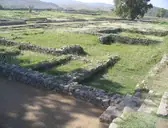 SirkapA Greek city on a gridIn the guide
- 05
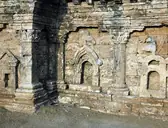 The Double-Headed Eagle StupaEast meets West in stoneIn the guide
- 06
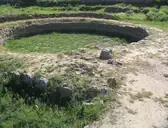 The Apsidal TempleThe great shrine of SirkapIn the guide
- 07
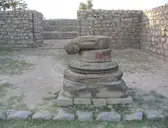 The Jandial TempleIonic columns in the PunjabIn the guide
- 08
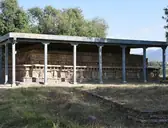 Mohra MuraduA monastery in a quiet valleyIn the guide
- 09
 JaulianThe seat of saintsIn the guide
Site map of Taxila
History of Taxila
The first settlement at Taxila, on the Hathial mound, dates from around 1000 BCE, and the city that followed on the Bhir Mound grew into a centre of trade and learning. In 326 BCE its king, whom the Greeks called Taxiles, submitted to Alexander the Great, and within a few decades the city passed to the Mauryan empire; Buddhist texts say that Ashoka served as governor here before he became emperor. In the second century BCE Indo-Greek kings built a new city at Sirkap, and it was ruled in turn by Indo-Scythians, Indo-Parthians and the Kushans, who founded Sirsukh. Under them Taxila became a great centre of Buddhism and of Gandharan art, which blended Greek and Indian forms. In the fifth century CE the Huns devastated the region, and in the seventh century the Chinese pilgrim Xuanzang found the city in decline.
Taxila guide: questions
How many stops does the Taxila guide have?
9 stops, in visit order: 1. The Taxila Museum; 2. The Bhir Mound; 3. The Dharmarajika Stupa; 4. Sirkap; 5. The Double-Headed Eagle Stupa; 6. The Apsidal Temple; 7. The Jandial Temple; 8. Mohra Muradu; 9. Jaulian.
Can I do a self-guided tour of Taxila with this guide?
Yes. The guide is made for a self-guided tour: 9 stops in visit order, each with a photo, a story and a voice, so you can explore Taxila at your own pace, without joining a group. Download it before you go and it works offline.
How long do you need at Taxila?
We suggest allowing A full day. The 9 stops add up to about 7 minutes of listening, and you play each one when you’re ready, so you can linger wherever you like.
How long is each guide?
The 9 stops add up to about 7 minutes of listening in total. You play each stop when you’re ready, so you can go at your own pace.
Does the guide work offline?
Yes, once it’s downloaded. The guide is a single self-contained web page (about 9.2 MB) with the photos, text and audio built in. Download it to your phone before you go (Wi-Fi is best); after that it opens in any modern browser on iPhone or Android, with no app, account or mobile signal needed.
Does it use GPS or need my location?
No. The guide doesn’t use GPS and doesn’t know where you are: you play each stop when you reach it. It works on iPhone and Android in any modern browser, and it’s in English.
What’s included?
One self-contained HTML guide: 9 stops in visit order, each with a photo, text and a voice, plus the story of who built the site.
Who built Taxila?
The first settlement at Taxila, on the Hathial mound, dates from around 1000 BCE, and the city that followed on the Bhir Mound grew into a centre of trade and learning. In 326 BCE its king, whom the Greeks called Taxiles, submitted to Alexander the Great, and within a few decades the city passed to the Mauryan empire; Buddhist texts say that Ashoka served as governor here before he became emperor.
Where is Taxila?
Taxila lies on the Pothohar Plateau of northern Punjab, about twenty-five kilometres north-west of Islamabad and Rawalpindi.
Is there a free audio guide to Taxila?
The first stop, The Taxila Museum, is free to read and hear on this page, so you can try the Taxila audio tour before you buy. The full guide, with all 9 stops, is a one-off purchase: download it once and it’s yours to keep, working offline.
Is the Taxila guide worth it?
If you’d like to know what you’re looking at, yes. For $10 you get 9 stops in visit order, each with a photo, a short history and a voice you play when you’re ready, plus a site map of the stops, and about 7 minutes of listening in all. It’s short on purpose, so you spend your time looking, not listening. It’s yours to keep, works offline and needs no app. The first stop is free on this page, so you can try it before you buy. If you’d like hours of detail, a guided tour will go deeper.
Audio guide or guided tour?
It depends how you like to visit. This guide lets you explore Taxila at your own pace, at any time, for a one-off price. A guided tour gives you a live expert you can ask questions, but at fixed times and usually for a higher price. Many people use both: a tour for the big picture, and the guide to read beforehand or to revisit the stops in their own time.
Is this the official Taxila guide?
No. It’s an independent guide by The Historian Guide, not affiliated with or endorsed by the operator of Taxila. For tickets and opening hours, check the official site operator before you go.
Does the guide include entry tickets or opening hours?
No. The guide is a digital companion only. Admission to Taxila is separate, so check the official site operator for current tickets and opening hours before you go.
- Stop 1 · The Taxila Museum: Maztek · CC BY-SA 3.0 · Wikimedia Commons · resized
- Stop 2 · The Bhir Mound: Dawoodmajoka · Public domain · Wikimedia Commons · resized
- Stop 3 · The Dharmarajika Stupa: Mhtoori · CC BY-SA 4.0 · Wikimedia Commons · resized
- Stop 4 · Sirkap: Ecritures · CC0 · Wikimedia Commons · resized
- Stop 5 · The Double-Headed Eagle Stupa (also the cover): Besal1966 · CC BY-SA 4.0 · Wikimedia Commons · resized
- Stop 6 · The Apsidal Temple: Ecritures · CC0 · Wikimedia Commons · resized
- Stop 7 · The Jandial Temple: Ecritures · CC0 · Wikimedia Commons · resized
- Stop 8 · Mohra Muradu: Mhtoori · CC BY-SA 4.0 · Wikimedia Commons · resized
- Stop 9 · Jaulian: Muhammad Zahir · CC BY-SA 3.0 · Wikimedia Commons · resized


All photographs from Wikimedia Commons under the licences shown.
More guides in Pakistan
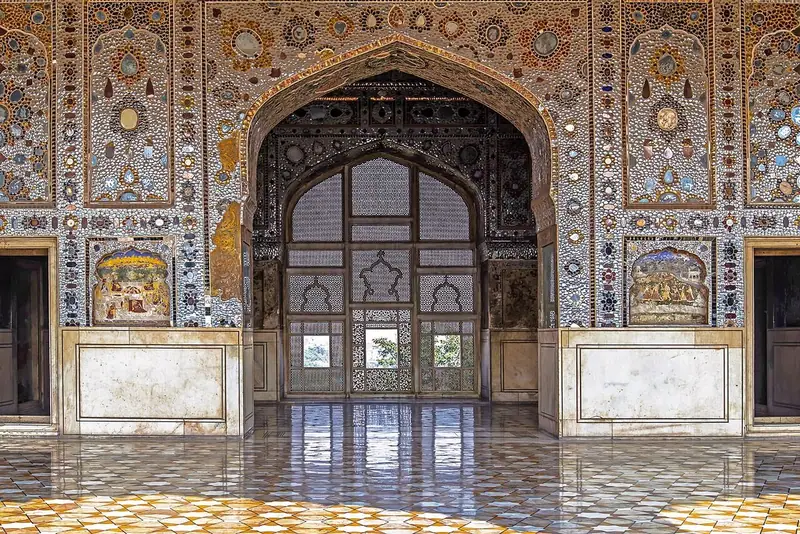 Mughal9 stops · 1566 – 1674 (Akbar’s fort to the Alamgiri Gate)
Lahore Fort and Shalamar Gardens audio guide
The Mughal citadel of Lahore, with its marble halls, Palace of Mirrors and tiled Picture Wall, and Shah Jahan’s terraced Shalamar Gardens across the city.
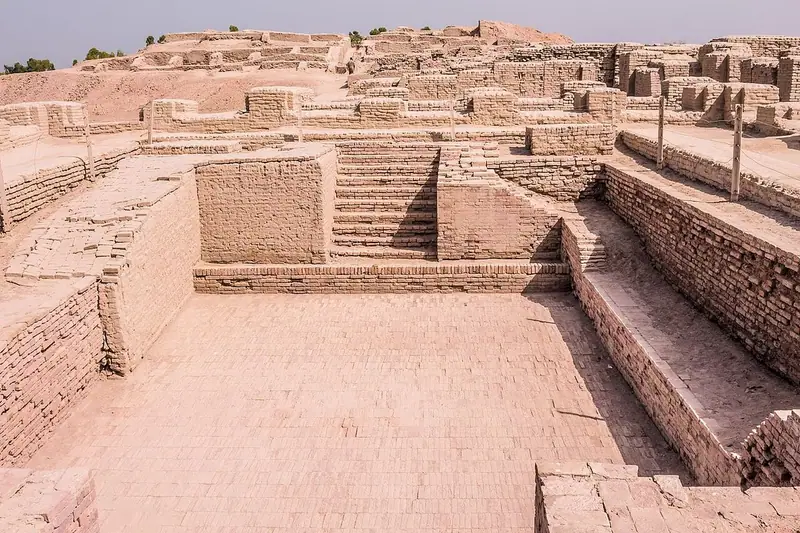 Indus Valley8 stops · c. 2500 – 1700 BCE
Mohenjo-daro audio guide
One of the world’s first great cities on the Indus: the Great Bath, the Citadel and its later Buddhist stupa, grid-planned streets with covered drains, brick wells and the houses of the Lower City.
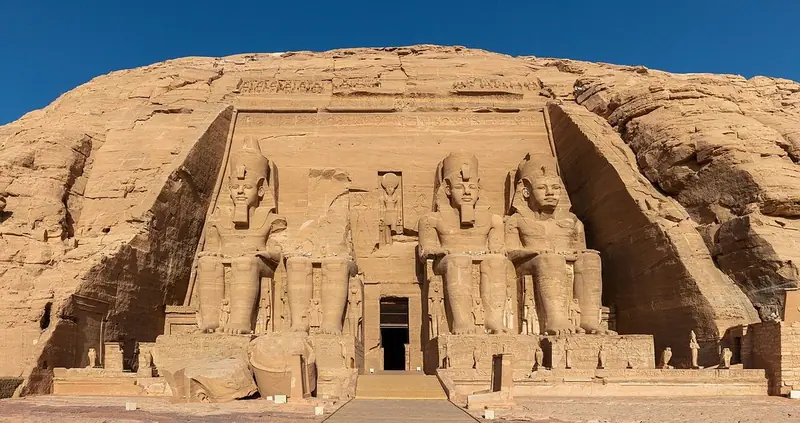 Ancient Egyptian8 stops · 13th century BCE
Abu Simbel audio guide
Ramesses II’s colossal temple façade, the Temple of Nefertari, and how both were rescued from the waters of Lake Nasser.
Every guide, in every country
Taxila and every other guide we publish, including future ones. One payment, no subscription.