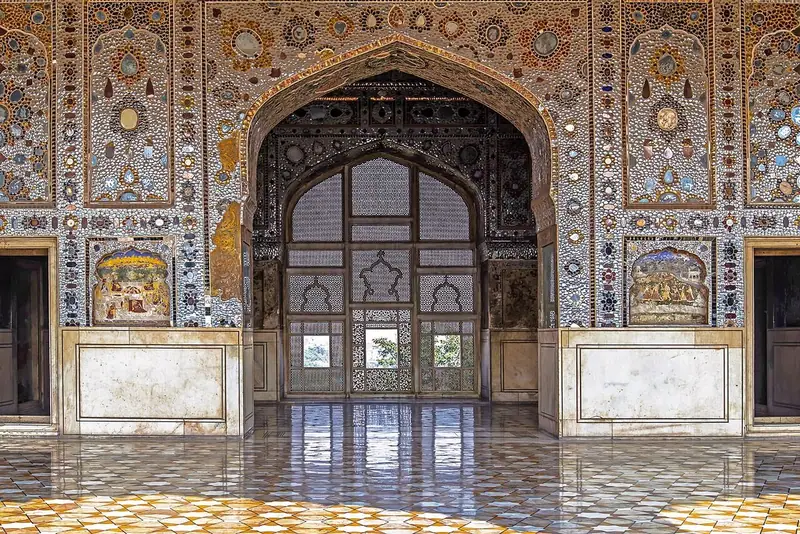
Before you start
Lahore, the capital of Punjab and one of the great cities of South Asia, was a favourite residence of the Mughal emperors. In the north-western corner of its walled city stands the Lahore Fort, the Shahi Qila, whose twenty-one surviving monuments record Mughal architecture from the reign of Akbar to that of Aurangzeb. About seven kilometres to the east lie the Shalamar Gardens, also spelled Shalimar, a walled paradise garden of terraces, pools and fountains laid out for Shah Jahan. UNESCO inscribed the fort and gardens together as a World Heritage Site in 1981, describing them as outstanding examples of Mughal artistic expression at its height. This guide follows the fort from the Alamgiri Gate to the Picture Wall, then crosses the city to the gardens.
Use it as a self-guided tour of the Lahore Fort and Shalamar Gardens: 9 stops in visit order, each played when you’re ready, at your own pace.
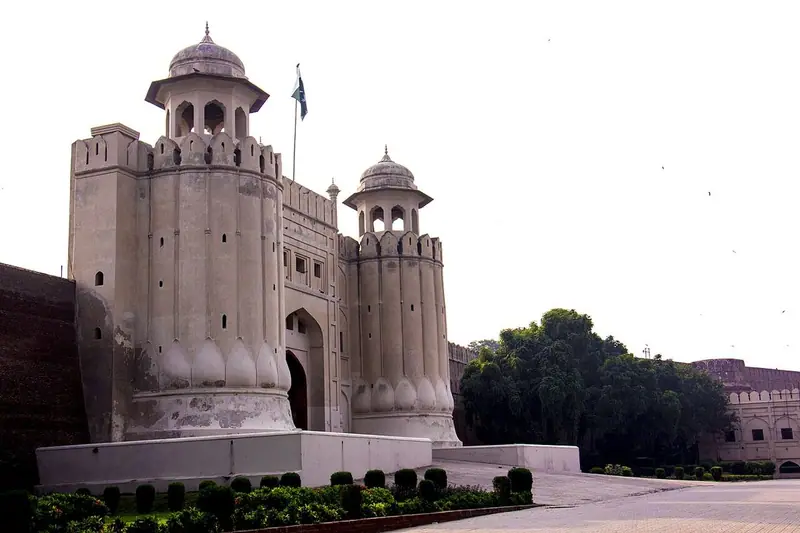 Free preview · Stop 1
The Alamgiri Gate
Begin at the Alamgiri Gate, the monumental entrance on the western side of the fort, facing the Hazuri Bagh, a garden square with a marble pavilion at its centre. The gate was built in 1674 by the emperor Aurangzeb, whose title was Alamgir, when he also built the Badshahi Mosque across the square. Its two great semi-octagonal towers with domed pavilions frame a high arched entrance said to be wide enough for elephants carrying members of the royal household. Many see it as the last great statement of Mughal imperial gateway design. In the early nineteenth century, it is said, Ranjit Singh stabled horses in the gateway. The pavilion in the Hazuri Bagh dates from the Sikh period and marks the maharaja's seizure of the Koh-i-Noor diamond. Turn and look back at the vast red sandstone mosque, one of the largest of the Mughal age.
Photo: MariyamAftab · CC BY-SA 4.0 · Wikimedia Commons
What to see at the Lahore Fort and Shalamar Gardens: 9 stops, in visit order
- 01
 The Alamgiri GateAn emperor’s grand entranceFree preview
- 02
 The Hall of Public AudienceWhere the emperor met his peopleIn the guide
- 03
 Jahangir’s QuadrangleAnimal brackets and a garden courtIn the guide
- 04
 The Moti MasjidThe pearl mosqueIn the guide
- 05
 The Sheesh MahalThe palace of mirrorsIn the guide
- 06
 The Naulakha PavilionA jewel in white marbleIn the guide
- 07
 The Picture WallA gallery of tilesIn the guide
- 08
 The Shalamar GardensA paradise on three terracesIn the guide
- 09
 The Great CascadeWater, marble and four hundred fountainsIn the guide
Site map of the Lahore Fort and Shalamar Gardens
History of the Lahore Fort and Shalamar Gardens
The Mughals were a Muslim dynasty descended from Timur and Genghis Khan, founded by Babur in 1526, who ruled much of the Indian subcontinent for more than two centuries. A fort stood on this site long before them, but the emperor Akbar rebuilt it in brick and red sandstone from 1566, when Lahore became one of his capitals. His son Jahangir added palaces and the great Picture Wall, Shah Jahan built marble halls and the Shalamar Gardens, and Aurangzeb added the Alamgiri Gate and, beside the fort, the Badshahi Mosque. In the nineteenth century the fort became the seat of Maharaja Ranjit Singh, ruler of the Sikh Empire, who altered and reused many buildings. After the Sikhs were defeated in 1849, the fort passed to the East India Company and then to the colonial government. In 2000 the two sites were placed on UNESCO’s list of World Heritage in Danger, and after years of restoration they were removed from it in 2012.
Lahore Fort and Shalamar Gardens guide: questions
How many stops does the Lahore Fort and Shalamar Gardens guide have?
9 stops, in visit order: 1. The Alamgiri Gate; 2. The Hall of Public Audience; 3. Jahangir’s Quadrangle; 4. The Moti Masjid; 5. The Sheesh Mahal; 6. The Naulakha Pavilion; 7. The Picture Wall; 8. The Shalamar Gardens; 9. The Great Cascade.
Can I do a self-guided tour of the Lahore Fort and Shalamar Gardens with this guide?
Yes. The guide is made for a self-guided tour: 9 stops in visit order, each with a photo, a story and a voice, so you can explore the Lahore Fort and Shalamar Gardens at your own pace, without joining a group. Download it before you go and it works offline.
How long do you need at the Lahore Fort and Shalamar Gardens?
We suggest allowing about half a day. The 9 stops add up to about 7 minutes of listening, and you play each one when you’re ready, so you can linger wherever you like.
How long is each guide?
The 9 stops add up to about 7 minutes of listening in total. You play each stop when you’re ready, so you can go at your own pace.
Does the guide work offline?
Yes, once it’s downloaded. The guide is a single self-contained web page (about 8.3 MB) with the photos, text and audio built in. Download it to your phone before you go (Wi-Fi is best); after that it opens in any modern browser on iPhone or Android, with no app, account or mobile signal needed.
Does it use GPS or need my location?
No. The guide doesn’t use GPS and doesn’t know where you are: you play each stop when you reach it. It works on iPhone and Android in any modern browser, and it’s in English.
What’s included?
One self-contained HTML guide: 9 stops in visit order, each with a photo, text and a voice, plus the story of who built the site.
Who built the Lahore Fort and Shalamar Gardens?
The Mughals were a Muslim dynasty descended from Timur and Genghis Khan, founded by Babur in 1526, who ruled much of the Indian subcontinent for more than two centuries. A fort stood on this site long before them, but the emperor Akbar rebuilt it in brick and red sandstone from 1566, when Lahore became one of his capitals.
Where is the Lahore Fort and Shalamar Gardens?
Lahore, the capital of Punjab and one of the great cities of South Asia, was a favourite residence of the Mughal emperors.
Is there a free audio guide to the Lahore Fort and Shalamar Gardens?
The first stop, The Alamgiri Gate, is free to read and hear on this page, so you can try the Lahore Fort and Shalamar Gardens audio tour before you buy. The full guide, with all 9 stops, is a one-off purchase: download it once and it’s yours to keep, working offline.
Is the Lahore Fort and Shalamar Gardens guide worth it?
If you’d like to know what you’re looking at, yes. For $10 you get 9 stops in visit order, each with a photo, a short history and a voice you play when you’re ready, plus a site map of the stops, and about 7 minutes of listening in all. It’s short on purpose, so you spend your time looking, not listening. It’s yours to keep, works offline and needs no app. The first stop is free on this page, so you can try it before you buy. If you’d like hours of detail, a guided tour will go deeper.
Audio guide or guided tour?
It depends how you like to visit. This guide lets you explore the Lahore Fort and Shalamar Gardens at your own pace, at any time, for a one-off price. A guided tour gives you a live expert you can ask questions, but at fixed times and usually for a higher price. Many people use both: a tour for the big picture, and the guide to read beforehand or to revisit the stops in their own time.
Is this the official Lahore Fort and Shalamar Gardens guide?
No. It’s an independent guide by The Historian Guide, not affiliated with or endorsed by the operator of the Lahore Fort and Shalamar Gardens. For tickets and opening hours, check the official site operator before you go.
Does the guide include entry tickets or opening hours?
No. The guide is a digital companion only. Admission to the Lahore Fort and Shalamar Gardens is separate, so check the official site operator for current tickets and opening hours before you go.
- Stop 1 · The Alamgiri Gate: MariyamAftab · CC BY-SA 4.0 · Wikimedia Commons · resized
- Stop 2 · The Hall of Public Audience: Faizanahmad · CC BY-SA 4.0 · Wikimedia Commons · resized
- Stop 3 · Jahangir’s Quadrangle: Guilhem Vellut from Annecy, France · CC BY 2.0 · Wikimedia Commons · resized
- Stop 4 · The Moti Masjid: The Walled City of Lahore Authority · CC BY-SA 4.0 · Wikimedia Commons · resized
- Stop 5 · The Sheesh Mahal (also the cover): Faisalrazamalik · CC BY-SA 4.0 · Wikimedia Commons · resized
- Stop 6 · The Naulakha Pavilion: Faran Shehryar Malik · CC BY-SA 4.0 · Wikimedia Commons · resized
- Stop 7 · The Picture Wall: Aun Muhammad · CC BY-SA 3.0 · Wikimedia Commons · resized
- Stop 8 · The Shalamar Gardens: Guilhem Vellut from Annecy, France · CC BY 2.0 · Wikimedia Commons · resized
- Stop 9 · The Great Cascade: Guilhem Vellut from Annecy, France · CC BY 2.0 · Wikimedia Commons · resized


All photographs from Wikimedia Commons under the licences shown.
More guides in Pakistan
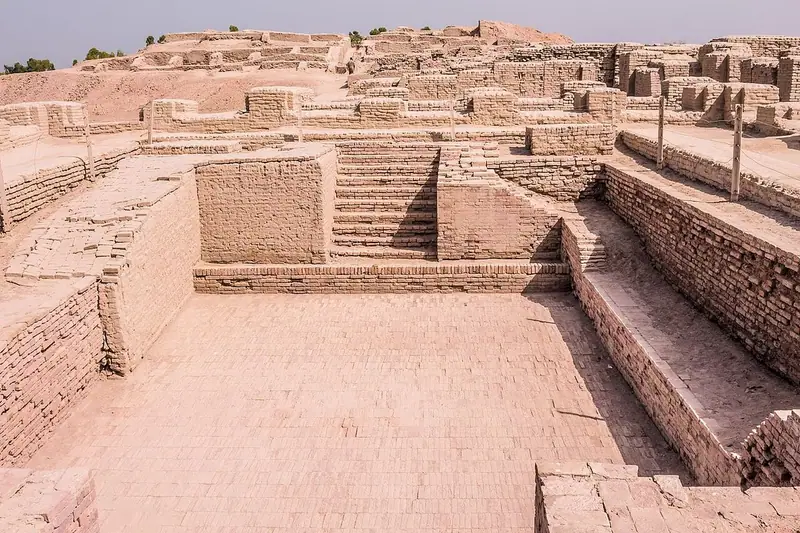 Indus Valley8 stops · c. 2500 – 1700 BCE
Mohenjo-daro audio guide
One of the world’s first great cities on the Indus: the Great Bath, the Citadel and its later Buddhist stupa, grid-planned streets with covered drains, brick wells and the houses of the Lower City.
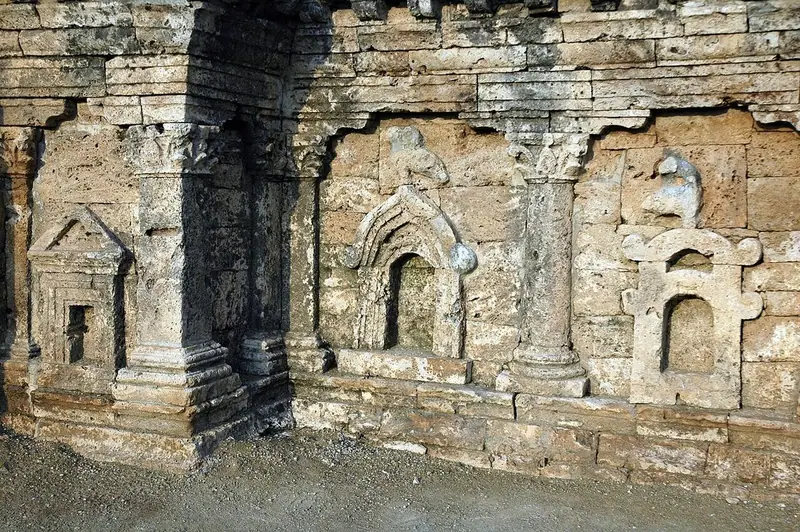 Gandharan9 stops · c. 1000 BCE – 5th century CE
Taxila audio guide
Ancient Gandhara’s great city: the Taxila Museum, the Bhir Mound, the Dharmarajika stupa, Greek-planned Sirkap, the Ionic temple at Jandial and the hill monasteries of Mohra Muradu and Jaulian.
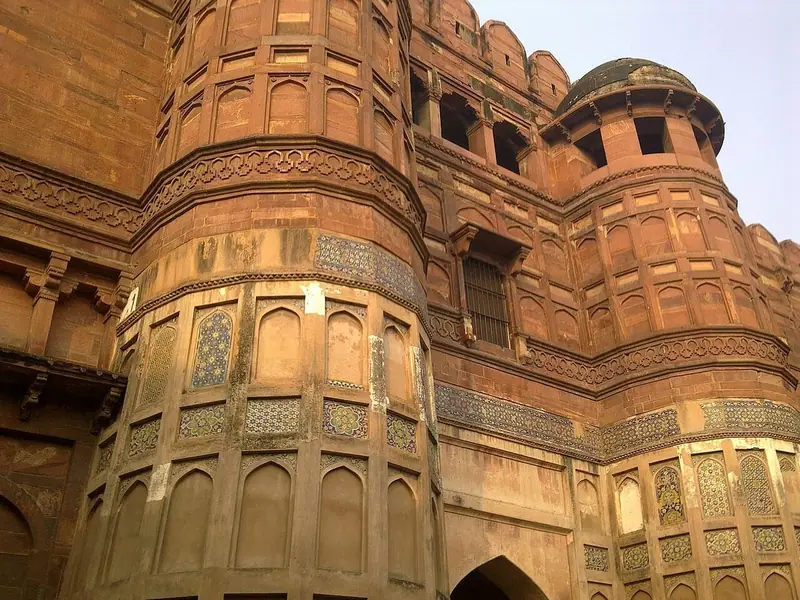 Mughal7 stops · 1565–1640s
Agra Fort audio guide
Red sandstone ramparts and marble palaces, with the Taj Mahal in view from the riverside terraces.
Every guide, in every country
Lahore Fort and Shalamar Gardens and every other guide we publish, including future ones. One payment, no subscription.