Before you start
This guide covers the three walled cities that make up one World Heritage Site in the dry zone of the Ayeyarwady valley, in central Myanmar: Sri Ksetra, near the town of Pyay; Beikthano, near Taungdwingyi; and Halin, near Shwebo, several hundred kilometres to the north. UNESCO inscribed them in 2014 as the remains of the Pyu kingdoms, which flourished for more than a thousand years, from about 200 BCE to 900 CE, and as the earliest evidence of Buddhism taking root in South-East Asia. Since the military seized power in February 2021, Myanmar has been in armed conflict, and fighting has been heavy in parts of Sagaing Region, where Halin lies. The earthquake of March 2025 shook Halin strongly, though satellite images showed no visible damage at any of the three cities. This guide says plainly what is known of current conditions. Check your government’s current travel advice before you plan a visit.
Use it as a self-guided tour of the Pyu Ancient Cities: 11 stops in visit order, each played when you’re ready, at your own pace.
 Free preview · Stop 1
The Bawbawgyi Stupa
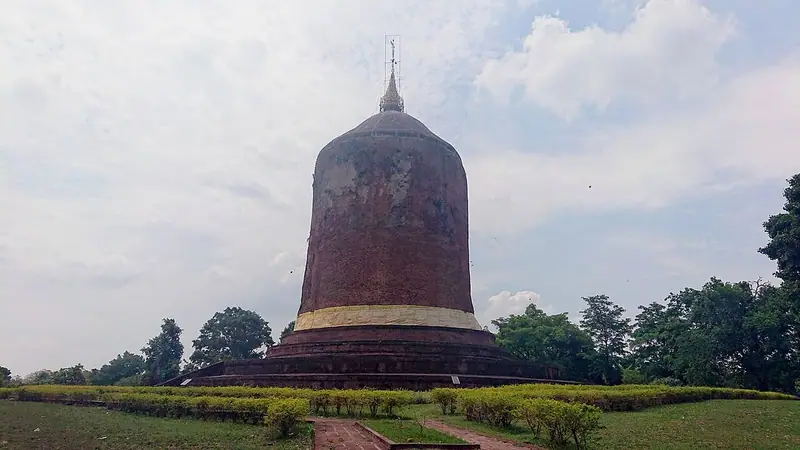
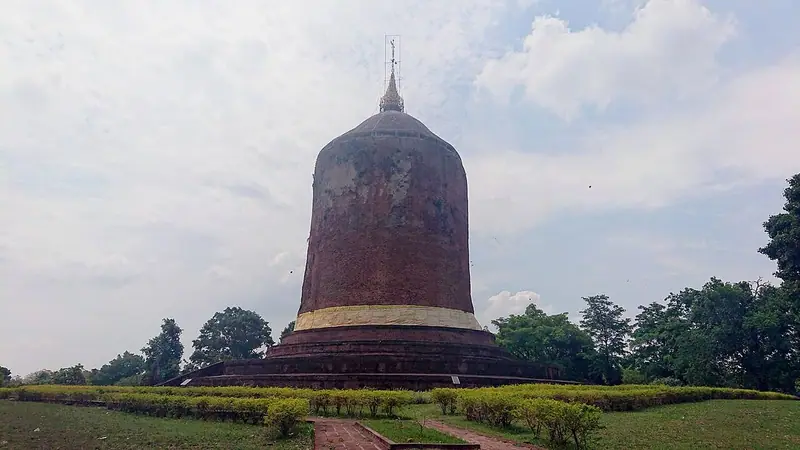
Begin at the Bawbawgyi Stupa, the most famous monument of Sri Ksetra, the ancient city about eight kilometres south-east of Pyay. The stupa stands just outside the city’s southern walls. It is a tall cylinder of brick, rising from five low terraces and topped by a conical spire and a crowning umbrella, or hti. The whole structure is about forty-six metres high, and inside its body is a hollow shaft about twenty-four metres tall. No inscription has been found to date it, but it was probably built in the fifth or sixth century CE, which would make it one of the oldest standing Buddhist monuments in Myanmar. Its tall cylindrical shape, unlike the bell-shaped stupas of later centuries, is often compared with early stupas in southern India. It has survived many earthquakes over the centuries. The stupa is still venerated, and pilgrims come to make offerings. This photograph was taken in 2022.
Photo: Ninjastrikers · CC BY-SA 4.0 · Wikimedia Commons. Taken in 2022
What to see at the Pyu Ancient Cities: 11 stops, in visit order
- 01
 The Bawbawgyi StupaA tower of brickFree preview
- 02
 The Rahanta PondWater for fields and ritualsIn the guide
- 03
 The City Walls and GatesA city of extended formatIn the guide
- 04
 The East Zegu TempleA forerunner of BaganIn the guide
- 05
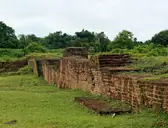 The Palace CitadelThe centre of the cosmosIn the guide
- 06
 The Sri Ksetra MuseumGold leaves and silver relicsIn the guide
- 07
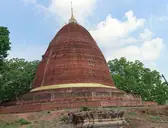 The Payama StupaRelics of the BuddhaIn the guide
- 08
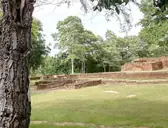 The Ruins of BeikthanoVishnu CityIn the guide
- 09
 The Silver Coins of the PyuMoney of the first millenniumIn the guide
- 10
 The Burial Ground at HalinBefore the PyuIn the guide
- 11
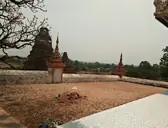 Halin TodaySalt, springs and pagodasIn the guide
Site map of the Pyu Ancient Cities
History of the Pyu Ancient Cities
The Pyu were a people speaking a Tibeto-Burman language who settled the plains of the Ayeyarwady valley from around the second century BCE. They built large walled cities of brick, surrounded by moats and fields watered by canals and reservoirs. Trade with India brought Buddhism, Hindu gods, and the Brahmi script, which the Pyu adapted to write their own language. Chinese records of the Tang dynasty describe a Pyu kingdom that sent musicians and envoys to the imperial court around 800 CE. In the ninth century raids from the kingdom of Nanzhao, in what is now south-western China, weakened the Pyu states. The Burmans who founded the kingdom of Bagan absorbed them, and by the thirteenth century the Pyu had disappeared as a separate people.
The full history continues in the guide.
Pyu Ancient Cities guide: questions
How many stops does the Pyu Ancient Cities guide have?
11 stops, in visit order: 1. The Bawbawgyi Stupa; 2. The Rahanta Pond; 3. The City Walls and Gates; 4. The East Zegu Temple; 5. The Palace Citadel; 6. The Sri Ksetra Museum; 7. The Payama Stupa; 8. The Ruins of Beikthano; 9. The Silver Coins of the Pyu; 10. The Burial Ground at Halin; 11. Halin Today.
Can I do a self-guided tour of the Pyu Ancient Cities with this guide?
Yes. The guide is made for a self-guided tour: 11 stops in visit order, each with a photo, a story and a voice, so you can explore the Pyu Ancient Cities at your own pace, without joining a group. Download it before you go and it works offline.
How long do you need at the Pyu Ancient Cities?
We suggest allowing three days for all three cities. The 11 stops add up to about 9 minutes of listening, and you play each one when you’re ready, so you can linger wherever you like.
How long is each guide?
The 11 stops add up to about 9 minutes of listening in total. You play each stop when you’re ready, so you can go at your own pace.
Does the guide work offline?
Yes, once it’s downloaded. The guide is a single self-contained web page (about 10.0 MB) with the photos, text and audio built in. Download it to your phone before you go (Wi-Fi is best); after that it opens in any modern browser on iPhone or Android, with no app, account or mobile signal needed.
Does it use GPS or need my location?
No. The guide doesn’t use GPS and doesn’t know where you are: you play each stop when you reach it. It works on iPhone and Android in any modern browser, and it’s in English.
What’s included?
One self-contained HTML guide: 11 stops in visit order, each with a photo, text and a voice, plus the story of who built the site.
Who built the Pyu Ancient Cities?
The Pyu were a people speaking a Tibeto-Burman language who settled the plains of the Ayeyarwady valley from around the second century BCE. They built large walled cities of brick, surrounded by moats and fields watered by canals and reservoirs.
Where is the Pyu Ancient Cities?
This guide covers the three walled cities that make up one World Heritage Site in the dry zone of the Ayeyarwady valley, in central Myanmar: Sri Ksetra, near the town of Pyay; Beikthano, near Taungdwingyi; and Halin, near Shwebo, several hundred kilometres to the north.
Is there a free audio guide to the Pyu Ancient Cities?
The first stop, The Bawbawgyi Stupa, is free to read and hear on this page, so you can try the Pyu Ancient Cities audio tour before you buy. The full guide, with all 11 stops, is a one-off purchase: download it once and it’s yours to keep, working offline.
Is the Pyu Ancient Cities guide worth it?
If you’d like to know what you’re looking at, yes. For $10 you get 11 stops in visit order, each with a photo, a short history and a voice you play when you’re ready, plus a site map of the stops, and about 9 minutes of listening in all. It’s short on purpose, so you spend your time looking, not listening. It’s yours to keep, works offline and needs no app. The first stop is free on this page, so you can try it before you buy. If you’d like hours of detail, a guided tour will go deeper.
Audio guide or guided tour?
It depends how you like to visit. This guide lets you explore the Pyu Ancient Cities at your own pace, at any time, for a one-off price. A guided tour gives you a live expert you can ask questions, but at fixed times and usually for a higher price. Many people use both: a tour for the big picture, and the guide to read beforehand or to revisit the stops in their own time.
Is this the official Pyu Ancient Cities guide?
No. It’s an independent guide by The Historian Guide, not affiliated with or endorsed by the operator of the Pyu Ancient Cities. For tickets and opening hours, check the official site operator before you go.
Does the guide include entry tickets or opening hours?
No. The guide is a digital companion only. Admission to the Pyu Ancient Cities is separate, so check the official site operator for current tickets and opening hours before you go.
- Stop 1 · The Bawbawgyi Stupa (also the cover): Ninjastrikers · CC BY-SA 4.0 · Wikimedia Commons · resized
- Stop 2 · The Rahanta Pond: Ninjastrikers · CC BY-SA 4.0 · Wikimedia Commons · resized
- Stop 3 · The City Walls and Gates: Jakub Hałun · CC BY-SA 4.0 · Wikimedia Commons · resized
- Stop 4 · The East Zegu Temple: Jakub Hałun · CC BY-SA 4.0 · Wikimedia Commons · resized
- Stop 5 · The Palace Citadel: Jakub Hałun · CC BY-SA 4.0 · Wikimedia Commons · resized
- Stop 6 · The Sri Ksetra Museum: Ninjastrikers · CC BY-SA 4.0 · Wikimedia Commons · resized
- Stop 7 · The Payama Stupa: Ninjastrikers · CC BY-SA 4.0 · Wikimedia Commons · resized
- Stop 8 · The Ruins of Beikthano: Yarzaryeni · CC0 · Wikimedia Commons · resized
- Stop 9 · The Silver Coins of the Pyu: Yarzaryeni · CC0 · Wikimedia Commons · resized
- Stop 10 · The Burial Ground at Halin: Ninjastrikers · CC BY-SA 4.0 · Wikimedia Commons · resized
- Stop 11 · Halin Today: Ko Ko Chit Chit · CC BY-SA 4.0 · Wikimedia Commons · resized


All photographs from Wikimedia Commons under the licences shown.
More guides in Myanmar
 Pagan Kingdom8 stops · 11th–13th century CE
Bagan audio guide
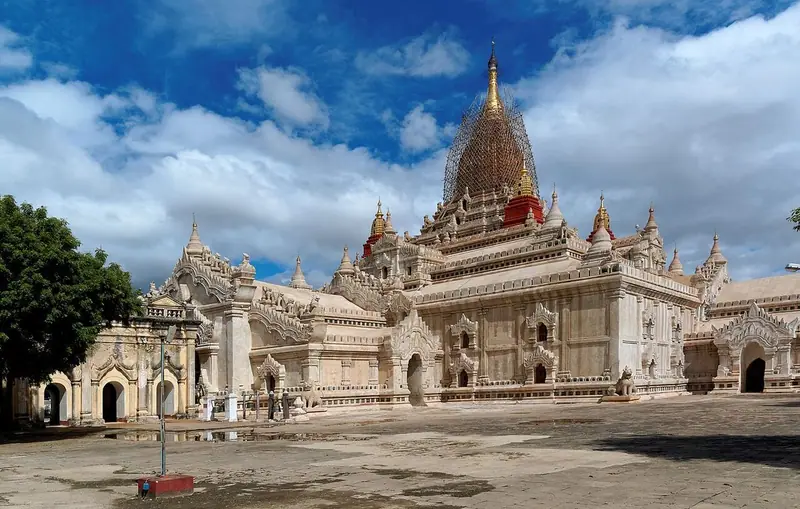
Explore a dry plain beside the Irrawaddy scattered with more than two thousand red-brick temples and stupas, from Shwezigon Pagoda to Ananda and Sulamani.
 Mon6 stops · 1287–1599 CE
Bago audio guide
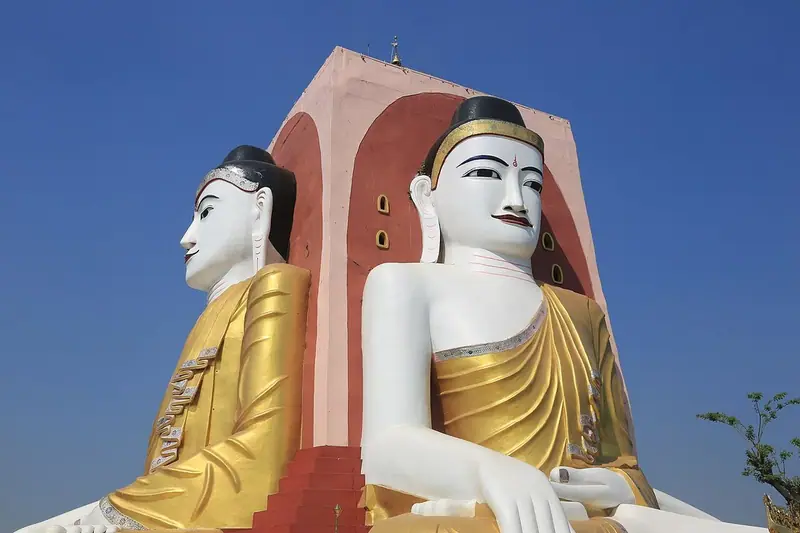
Visit the old Mon capital of Pegu, with the giant Shwemawdaw stupa, the reconstructed palace of Bayinnaung and the great reclining Shwethalyaung Buddha.
 Mon7 stops · date unknown; living shrine
Golden Rock audio guide
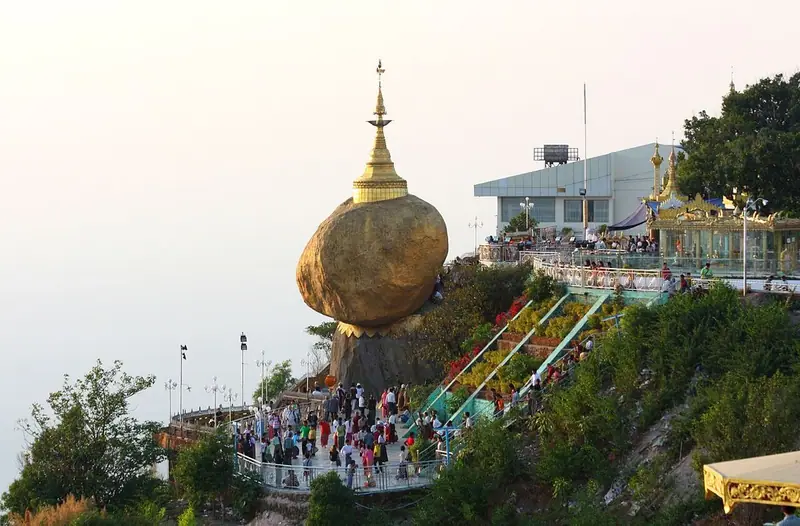
Join the pilgrims climbing to a gilded granite boulder balanced on a cliff edge near the summit of Mount Kyaiktiyo.
 Mon7 stops · 14th century CE onwards
Shwedagon Pagoda audio guide
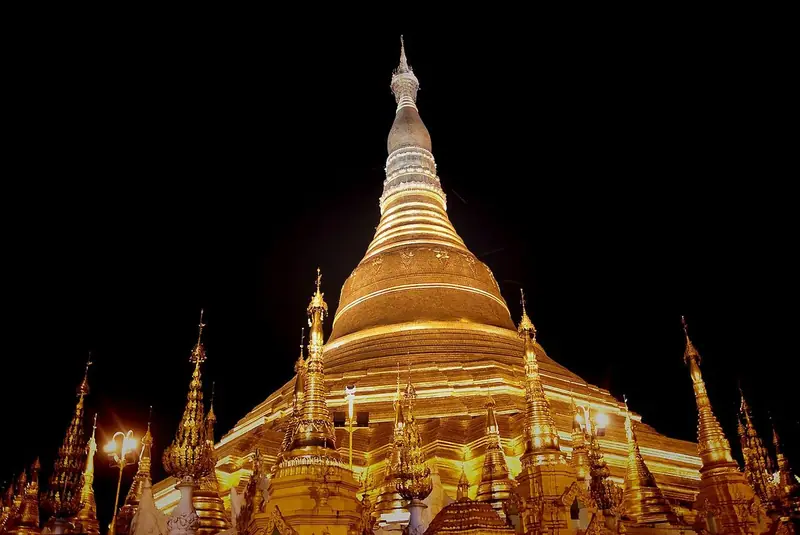
Climb the southern stairway to the golden stupa on Singuttara Hill, and walk round its marble platform among shrines, bells and pilgrims.
Every guide, in every country
Pyu Ancient Cities and every other guide we publish, including future ones. One payment, no subscription.