Before you start
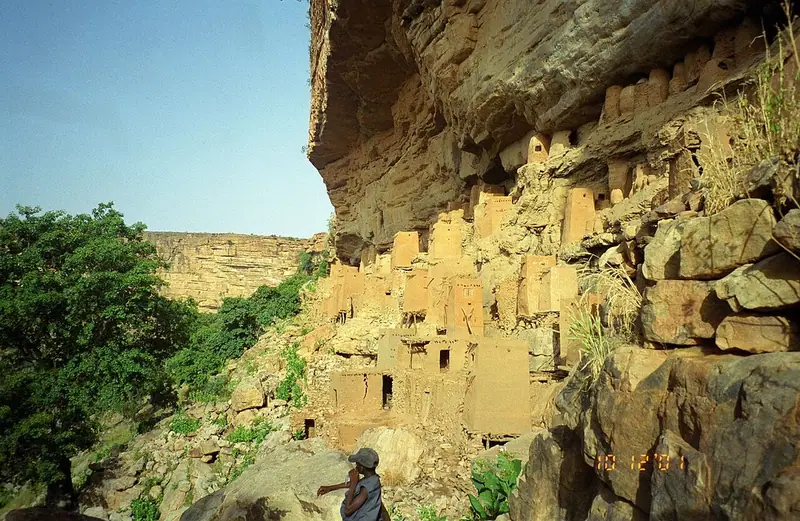
The Cliff of Bandiagara is a sandstone escarpment that runs for some one hundred and fifty to two hundred kilometres across central Mali, separating a high rocky plateau from the sandy plain of the Seno-Gondo. Along its foot, on its ledges and across the plateau stand the villages of the Dogon, with their granaries, shrines and meeting shelters, and above them the cliff dwellings of an earlier people, the Tellem. UNESCO inscribed the Cliff of Bandiagara, Land of the Dogons, as a World Heritage Site in 1989, for both its culture and its natural beauty; it covers four thousand square kilometres and 289 villages. Since about 2015 central Mali, including the Dogon country, has been affected by armed conflict: attacks by armed groups and violence between communities have killed many people and displaced thousands, and tourism, once important to the villages, has almost stopped. Check your government’s current travel advice before you plan a visit.
Use it as a self-guided tour of the Cliff of Bandiagara: 9 stops in visit order, each played when you’re ready, at your own pace.
 Free preview · Stop 1
The Edge of the Plateau
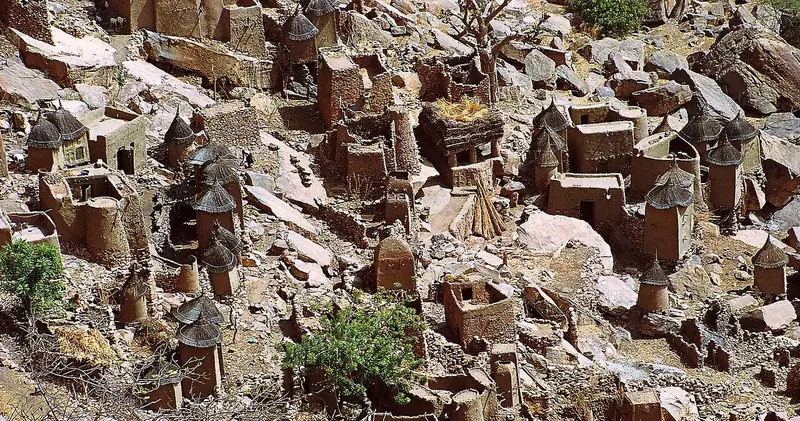
Begin on the rim of the plateau, where the sandstone suddenly falls away and the view opens over the plain of the Seno-Gondo, with its ochre dunes running parallel to the cliff. The sandstone was laid down in the Precambrian era, long before life on land, on an ancient coastline; erosion over hundreds of millions of years carved out the scarp. Its height grows from south to north, from about a hundred metres to several hundred metres. Below, villages cling to the scree at the foot of the cliff, where water gathers after the rains and fields can be farmed. UNESCO describes three natural zones: the plateau, the escarpment and the plain, each with its own kind of village. The cliffs also shelter a rare plant found nowhere else, Acridocarpus monodii, and herbs still used by Dogon healers.
Photo: Ondřej Havelka · CC BY-SA 4.0 · Wikimedia Commons
What to see at the Cliff of Bandiagara: 9 stops, in visit order
- 01
 The Edge of the PlateauA view over the Seno-GondoFree preview
- 02
 Granaries of the PlateauThatched hats of stone and earthIn the guide
- 03
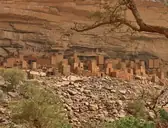 The EscarpmentA cliff of the deadIn the guide
- 04
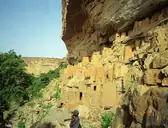 TeliA village against the cliffIn the guide
- 05
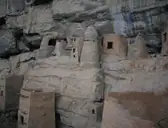 The Tellem DwellingsThose who were beforeIn the guide
- 06
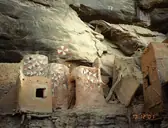 Shrines and the HogonPainted walls of the binuIn the guide
- 07
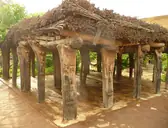 The TogunaWhere the elders talkIn the guide
- 08
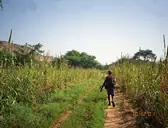 Fields of the PlainMillet, sorghum and onionsIn the guide
- 09
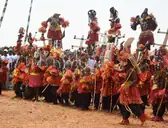 The Dance of the MasksHonouring the deadIn the guide
History of the Cliff of Bandiagara
People have lived around the escarpment since very early times, and UNESCO notes settlement going back to the Palaeolithic. From about the eleventh century the cliff was home to the Tellem, whose name in Dogon is often translated as those who were before us; before them, it is said, came the Toloy. The Dogon arrived from the Mandé region to the south-west, probably in the fourteenth or fifteenth century. Tradition holds that they first reached the cliff near the village of Kani Bonzon and spread out from there. The cliff offered refuge and defence, and here the Dogon kept their own religion, centred on the creator god Amma, the ancestors and the spirits of nature, along with their mask societies, carving and architecture. From the 1930s the French anthropologist Marcel Griaule made the Dogon famous in Europe, though some of his conclusions have since been questioned.
The full history continues in the guide.
Cliff of Bandiagara guide: questions
How many stops does the Cliff of Bandiagara guide have?
9 stops, in visit order: 1. The Edge of the Plateau; 2. Granaries of the Plateau; 3. The Escarpment; 4. Teli; 5. The Tellem Dwellings; 6. Shrines and the Hogon; 7. The Toguna; 8. Fields of the Plain; 9. The Dance of the Masks.
Can I do a self-guided tour of the Cliff of Bandiagara with this guide?
Yes. The guide is made for a self-guided tour: 9 stops in visit order, each with a photo, a story and a voice, so you can explore the Cliff of Bandiagara at your own pace, without joining a group. Download it before you go and it works offline.
How long do you need at the Cliff of Bandiagara?
We suggest allowing two to four days. The 9 stops add up to about 6 minutes of listening, and you play each one when you’re ready, so you can linger wherever you like.
How long is each guide?
The 9 stops add up to about 6 minutes of listening in total. You play each stop when you’re ready, so you can go at your own pace.
Does the guide work offline?
Yes, once it’s downloaded. The guide is a single self-contained web page (about 8.6 MB) with the photos, text and audio built in. Download it to your phone before you go (Wi-Fi is best); after that it opens in any modern browser on iPhone or Android, with no app, account or mobile signal needed.
Does it use GPS or need my location?
No. The guide doesn’t use GPS and doesn’t know where you are: you play each stop when you reach it. It works on iPhone and Android in any modern browser, and it’s in English.
What’s included?
One self-contained HTML guide: 9 stops in visit order, each with a photo, text and a voice, plus the story of who built the site.
Who built the Cliff of Bandiagara?
People have lived around the escarpment since very early times, and UNESCO notes settlement going back to the Palaeolithic. From about the eleventh century the cliff was home to the Tellem, whose name in Dogon is often translated as those who were before us; before them, it is said, came the Toloy.
Where is the Cliff of Bandiagara?
The Cliff of Bandiagara is a sandstone escarpment that runs for some one hundred and fifty to two hundred kilometres across central Mali, separating a high rocky plateau from the sandy plain of the Seno-Gondo.
Is there a free audio guide to the Cliff of Bandiagara?
The first stop, The Edge of the Plateau, is free to read and hear on this page, so you can try the Cliff of Bandiagara audio tour before you buy. The full guide, with all 9 stops, is a one-off purchase: download it once and it’s yours to keep, working offline.
Is the Cliff of Bandiagara guide worth it?
If you’d like to know what you’re looking at, yes. For $10 you get 9 stops in visit order, each with a photo, a short history and a voice you play when you’re ready, about 6 minutes of listening in all. It’s short on purpose, so you spend your time looking, not listening. It’s yours to keep, works offline and needs no app. The first stop is free on this page, so you can try it before you buy. If you’d like hours of detail, a guided tour will go deeper.
Audio guide or guided tour?
It depends how you like to visit. This guide lets you explore the Cliff of Bandiagara at your own pace, at any time, for a one-off price. A guided tour gives you a live expert you can ask questions, but at fixed times and usually for a higher price. Many people use both: a tour for the big picture, and the guide to read beforehand or to revisit the stops in their own time.
Is this the official Cliff of Bandiagara guide?
No. It’s an independent guide by The Historian Guide, not affiliated with or endorsed by the operator of the Cliff of Bandiagara. For tickets and opening hours, check the official site operator before you go.
Does the guide include entry tickets or opening hours?
No. The guide is a digital companion only. Admission to the Cliff of Bandiagara is separate, so check the official site operator for current tickets and opening hours before you go.
- Stop 1 · The Edge of the Plateau: Dr. Ondřej Havelka (cestovatel) · CC BY-SA 4.0 · Wikimedia Commons · resized
- Stop 2 · Granaries of the Plateau: David Sessoms · CC BY-SA 2.0 · Wikimedia Commons · resized
- Stop 3 · The Escarpment: Ferdinand Reus from Arnhem, Holland · CC BY-SA 2.0 · Wikimedia Commons · resized
- Stop 4 · Teli (also the cover): upyernoz from Haverford, USA · CC BY 2.0 · Wikimedia Commons · resized
- Stop 5 · The Tellem Dwellings: David Sessoms · CC BY-SA 2.0 · Wikimedia Commons · resized
- Stop 6 · Shrines and the Hogon: upyernoz from Haverford, USA · CC BY 2.0 · Wikimedia Commons · resized
- Stop 7 · The Toguna: René Boncompain · CC BY-SA 4.0 · Wikimedia Commons · resized
- Stop 8 · Fields of the Plain: upyernoz from Haverford, USA · CC BY 2.0 · Wikimedia Commons · resized
- Stop 9 · The Dance of the Masks: Fasokan · CC BY-SA 4.0 · Wikimedia Commons · resized


All photographs from Wikimedia Commons under the licences shown.
More guides in Mali
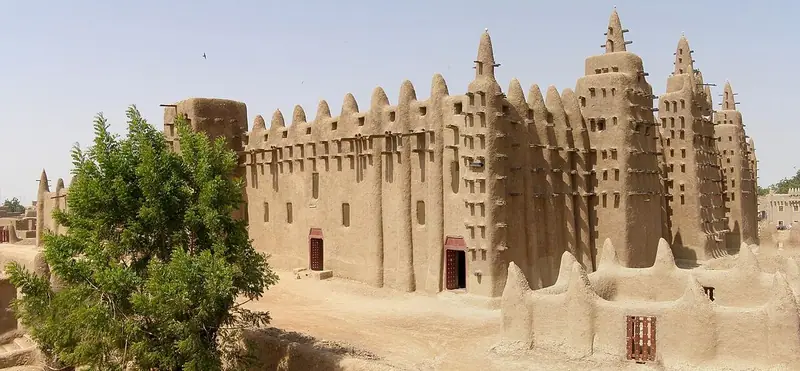 Mali and Songhai9 stops · c. 1000 CE – present (Djenné-Djeno from c. 250 BCE)
Djenné audio guide
The river town of earth on the Inland Niger Delta: the Great Mosque, the yearly replastering festival, the Monday market, two-storey merchants' houses and the ancient mound of Djenné-Djeno.
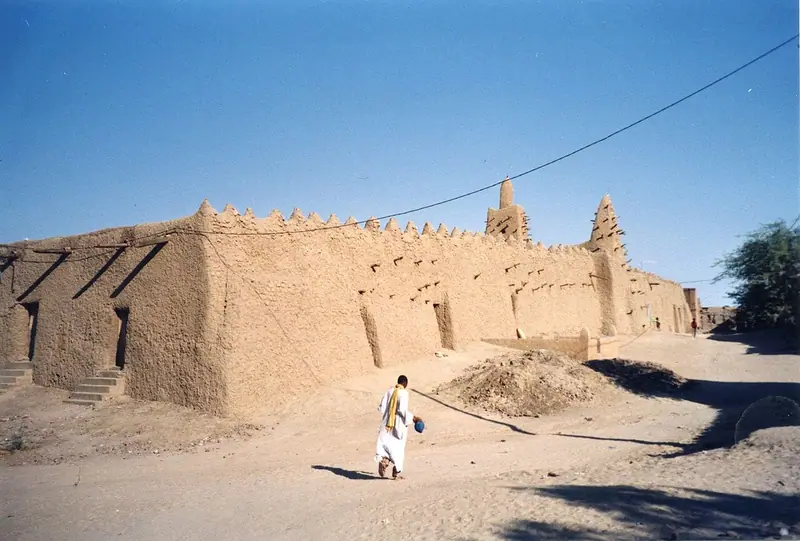 Mali and Songhai9 stops · 12th – 16th century CE
Timbuktu audio guide
The desert city of scholars on the edge of the Sahara: the earthen mosques of Djingareyber, Sankoré and Sidi Yahia, the rebuilt mausoleums of its saints, and its manuscript libraries.
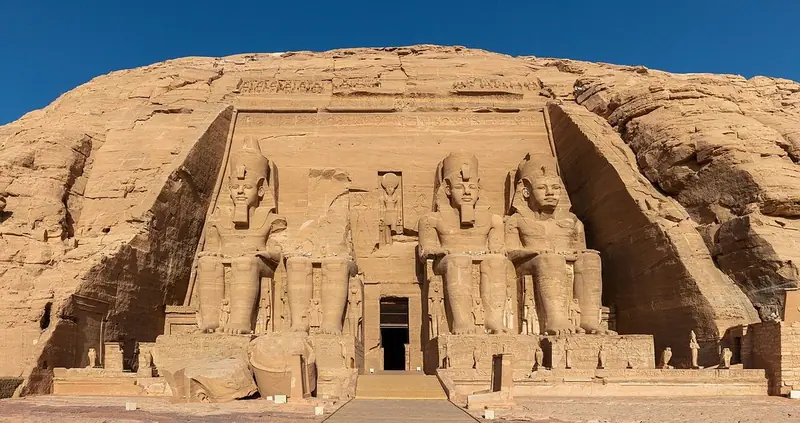 Ancient Egyptian8 stops · 13th century BCE
Abu Simbel audio guide
Ramesses II’s colossal temple façade, the Temple of Nefertari, and how both were rescued from the waters of Lake Nasser.
Every guide, in every country
Cliff of Bandiagara and every other guide we publish, including future ones. One payment, no subscription.