Before you start
Vientiane, the capital of Laos, spreads along the banks of the Mekong, with Thailand on the far shore. It is a quiet, low-rise capital, but behind its French boulevards lie the temples and stupas of Lan Xang, the old kingdom of the million elephants. The guide opens on the riverbank and visits the old royal temples, the Black Stupa and the Victory Gate. It ends at That Luang, the golden stupa that is the national symbol of Laos. Allow most of a day. The last stop is about four kilometres out, so take a tuk-tuk for that stretch.
Use it as a self-guided tour of Vientiane: 7 stops in visit order, each played when you’re ready, at your own pace.
 Free preview · Stop 1
Chao Anouvong Park
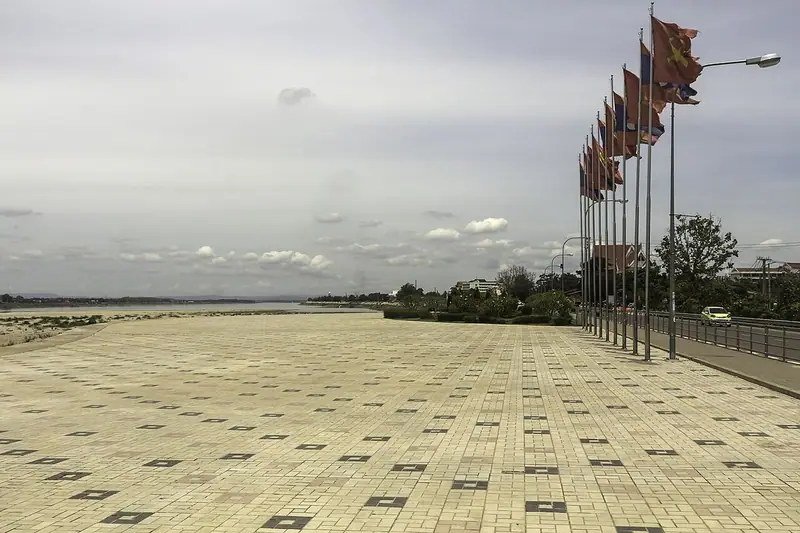
Begin on the riverbank, in Chao Anouvong Park, looking out over the Mekong to Thailand. At the end of the park stands a bronze statue of King Anouvong, about eight metres high. He holds a sword in his left hand and stretches out his right towards the river. Anouvong was the last king of Vientiane. In 1826 he rose against Siam, which had long held sway over his kingdom. The rebellion failed. In 1828 the Siamese took the city and burned it, and large numbers of people were forced to resettle on the far side of the river. Anouvong himself was captured, and he died in Bangkok in 1829. To the Lao he is a hero king. The park and statue were opened in 2010, for the four hundred and fiftieth anniversary of Vientiane as capital. In the late afternoon a busy night market sets up here.
Photo: Stefan Fussan · CC BY-SA 3.0 · Wikimedia Commons · The Mekong riverfront by the park
What to see at Vientiane: 7 stops, in visit order
- 01
 Chao Anouvong ParkThe king who faced SiamFree preview
- 02
 The Presidential PalaceThe golden palaceIn the guide
- 03
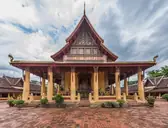 Wat Si SaketTwo thousand BuddhasIn the guide
- 04
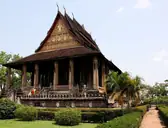 Haw Phra KaewHome of the Emerald BuddhaIn the guide
- 05
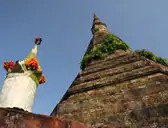 That DamThe Black StupaIn the guide
- 06
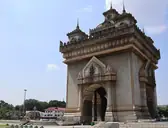 PatuxaiThe vertical runwayIn the guide
- 07
 That LuangThe great golden stupaIn the guide
Site map of Vientiane
History of Vientiane
People have lived on this bend of the Mekong for well over a thousand years, and early city states here took up Theravada Buddhism. In 1353 Fa Ngum founded the kingdom of Lan Xang, and Vientiane became one of its main towns. In the 1560s King Setthathirath made it his capital, to be further from the Burmese armies, and he built many of its great monuments. Later the kingdom split, and by the late eighteenth century Vientiane was under the power of Siam. In 1826 King Anouvong rebelled against Siam. He was defeated, and in 1828 the Siamese army sacked the city.
The full history continues in the guide.
Vientiane guide: questions
How many stops does the Vientiane guide have?
7 stops, in visit order: 1. Chao Anouvong Park; 2. The Presidential Palace; 3. Wat Si Saket; 4. Haw Phra Kaew; 5. That Dam; 6. Patuxai; 7. That Luang.
Can I do a self-guided tour of Vientiane with this guide?
Yes. The guide is made for a self-guided tour: 7 stops in visit order, each with a photo, a story and a voice, so you can explore Vientiane at your own pace, without joining a group. Download it before you go and it works offline.
How long is each guide?
The 7 stops add up to about 5 minutes of listening in total. You play each stop when you’re ready, so you can go at your own pace.
Does the guide work offline?
Yes, once it’s downloaded. The guide is a single self-contained web page (about 6.4 MB) with the photos, text and audio built in. Download it to your phone before you go (Wi-Fi is best); after that it opens in any modern browser on iPhone or Android, with no app, account or mobile signal needed.
Does it use GPS or need my location?
No. The guide doesn’t use GPS and doesn’t know where you are: you play each stop when you reach it. It works on iPhone and Android in any modern browser, and it’s in English.
What’s included?
One self-contained HTML guide: 7 stops in visit order, each with a photo, text and a voice, plus the story of who built the site.
Who built Vientiane?
People have lived on this bend of the Mekong for well over a thousand years, and early city states here took up Theravada Buddhism. In 1353 Fa Ngum founded the kingdom of Lan Xang, and Vientiane became one of its main towns.
Where is Vientiane?
Vientiane, the capital of Laos, spreads along the banks of the Mekong, with Thailand on the far shore.
Is there a free audio guide to Vientiane?
The first stop, Chao Anouvong Park, is free to read and hear on this page, so you can try the Vientiane audio tour before you buy. The full guide, with all 7 stops, is a one-off purchase: download it once and it’s yours to keep, working offline.
Is the Vientiane guide worth it?
If you’d like to know what you’re looking at, yes. For $10 you get 7 stops in visit order, each with a photo, a short history and a voice you play when you’re ready, plus a site map of the stops, and about 5 minutes of listening in all. It’s short on purpose, so you spend your time looking, not listening. It’s yours to keep, works offline and needs no app. The first stop is free on this page, so you can try it before you buy. If you’d like hours of detail, a guided tour will go deeper.
Audio guide or guided tour?
It depends how you like to visit. This guide lets you explore Vientiane at your own pace, at any time, for a one-off price. A guided tour gives you a live expert you can ask questions, but at fixed times and usually for a higher price. Many people use both: a tour for the big picture, and the guide to read beforehand or to revisit the stops in their own time.
Is this the official Vientiane guide?
No. It’s an independent guide by The Historian Guide, not affiliated with or endorsed by the operator of Vientiane. For tickets and opening hours, check the official site operator before you go.
Does the guide include entry tickets or opening hours?
No. The guide is a digital companion only. Admission to Vientiane is separate, so check the official site operator for current tickets and opening hours before you go.
- Stop 1 · Chao Anouvong Park: Stefan Fussan · CC BY-SA 3.0 · Wikimedia Commons · resized
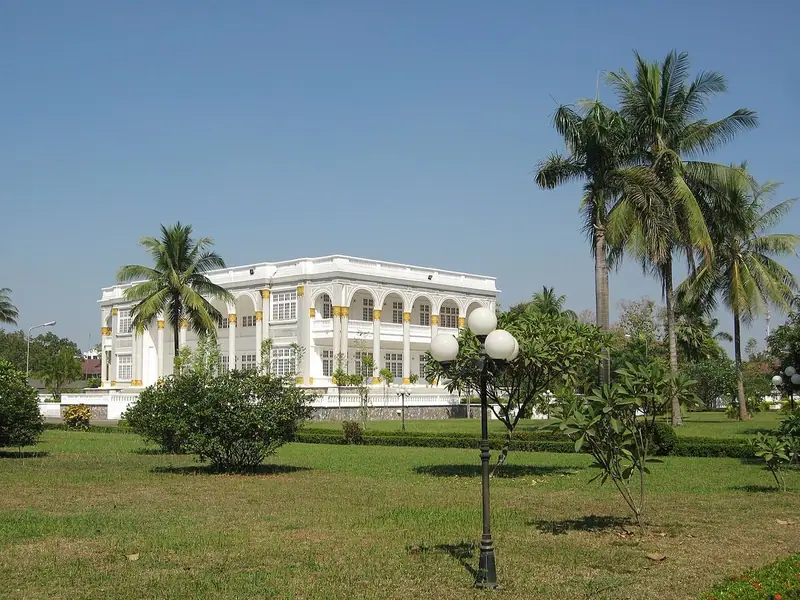
- Stop 2 · The Presidential Palace (also the cover): KAI LARS SCHERER · CC BY 3.0 · Wikimedia Commons · resized
- Stop 3 · Wat Si Saket: Basile Morin · CC BY-SA 4.0 · Wikimedia Commons · resized
- Stop 4 · Haw Phra Kaew: Dan Searle · CC BY-SA 2.0 · Wikimedia Commons · resized
- Stop 5 · That Dam: yeowatzup · CC BY 2.0 · Wikimedia Commons · resized
- Stop 6 · Patuxai: Kenichiro Yamada.V · CC BY-SA 4.0 · Wikimedia Commons · resized
- Stop 7 · That Luang: Stefan Fussan · CC BY-SA 3.0 · Wikimedia Commons · resized


All photographs from Wikimedia Commons under the licences shown.
More guides in Laos
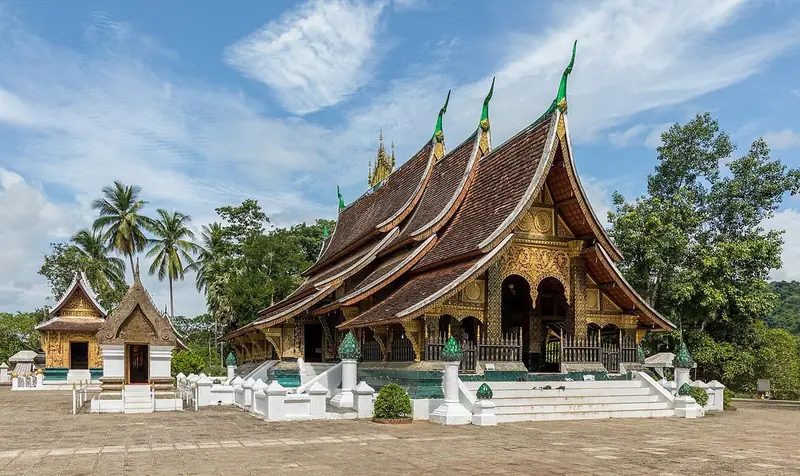 Lao8 stops · 14th–20th century
Luang Prabang audio guide
A peninsula of gilded temples and saffron-robed monks where the Nam Khan meets the Mekong, from Mount Phousi to Wat Xieng Thong.
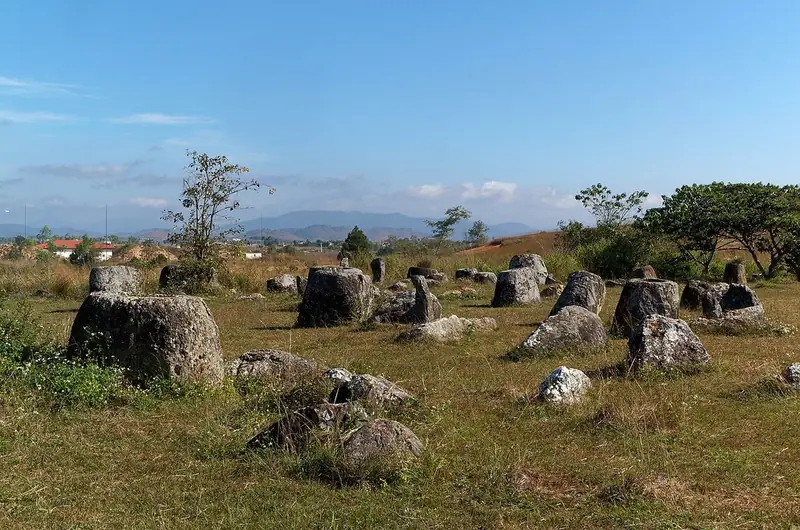 Iron Age7 stops · c. 500 BCE – 500 CE
Plain of Jars audio guide
Thousands of Iron Age stone jars on the hills of the Xiangkhouang Plateau: the great jar field of Site 1, Colani’s crematorium cave, the wooded Site 2 and Site 3 above the rice fields.
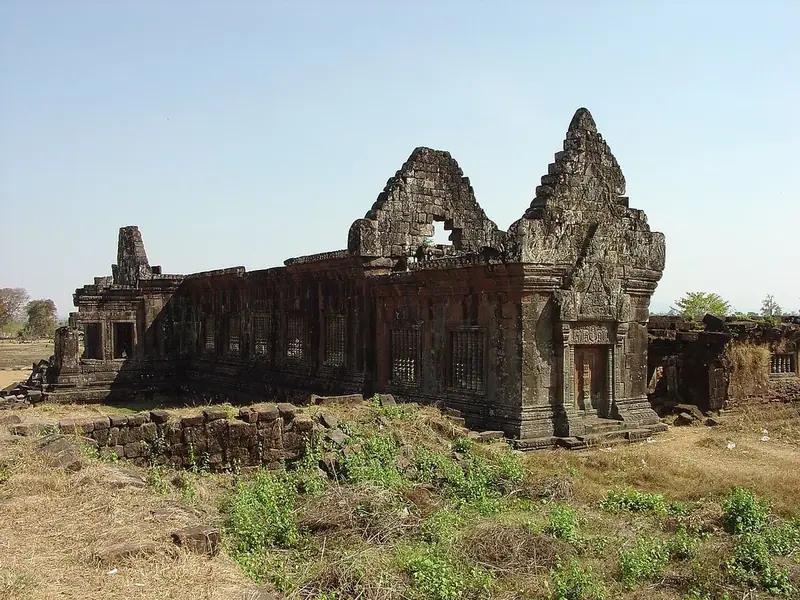 Khmer7 stops · 7th–12th century
Vat Phou audio guide
Follow the long processional way from the great reservoir up the stairway to a Khmer sanctuary and its sacred spring, older than Angkor Wat.
Every guide, in every country
Vientiane and every other guide we publish, including future ones. One payment, no subscription.