Before you start
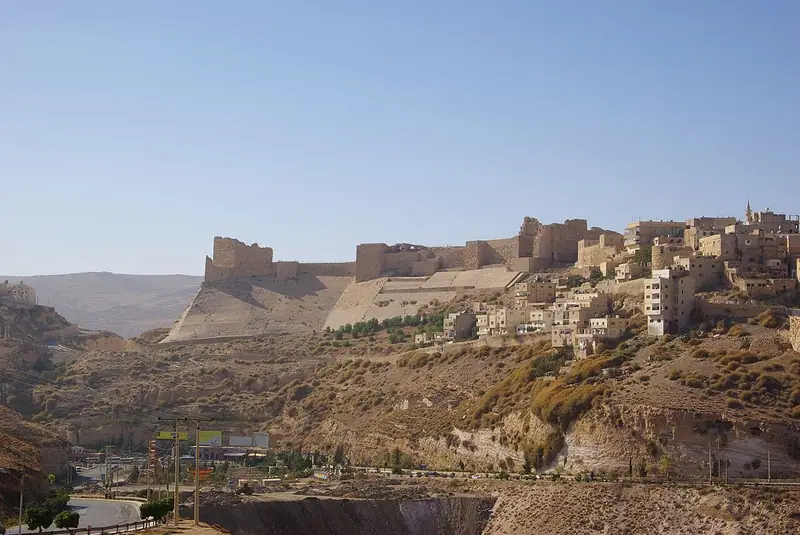
Kerak Castle stands at the southern tip of the plateau occupied by the town of al-Karak, about two hours’ drive south of Amman along the King’s Highway or the Desert Highway, and is often visited on the way to or from Petra. It is one of the largest castles in the Levant. The castle is a maze of dark vaulted passages, stairways, uneven floors and open courts, some without railings, so bring a torch or use your phone’s light, wear sturdy shoes and watch your step. This guide starts at the archaeological museum just outside the walls, enters across the modern bridge, explores the Crusader galleries and chapel of the upper court, visits the Mamluk palace and keep at the southern end, and finishes in the lower court along the western side.
Use it as a self-guided tour of Kerak Castle: 7 stops in visit order, each played when you’re ready, at your own pace.
 Free preview · Stop 1
Archaeological Museum
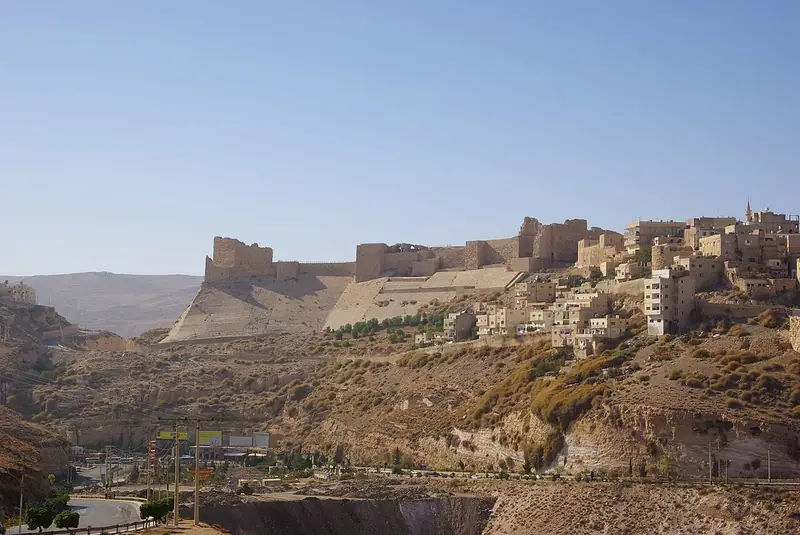
Begin at the Al-Karak Archaeological Museum, housed in a historic Ottoman building just outside the castle, facing its main wall. It was originally inside the castle’s lower court but moved here in 2019. The museum introduces the history of the region around Kerak, the ancient land of Moab, from prehistoric times to the Islamic period, and tells in detail the story of the Crusaders and Muslims who fought over the castle and the town. Spend a little time with its displays, which will help you to make sense of the castle’s long and complex history. Then step outside and look up at the massive northern wall above you, built of dark, roughly shaped stone. The town of al-Karak stretches behind you across the plateau, while deep valleys fall away on the other sides of the castle.
Photo: Berthold Werner · CC BY 3.0 · Wikimedia Commons
What to see at Kerak Castle: 7 stops, in visit order
- 01
 Archaeological MuseumThe land of MoabFree preview
- 02
 The North FrontDitch, glacis and wallsIn the guide
- 03
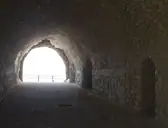 Crusader GalleriesVaulted halls in the north wallIn the guide
- 04
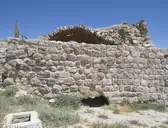 The ChapelThe Crusader churchIn the guide
- 05
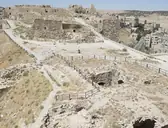 The Mamluk PalaceA four-iwan reception hallIn the guide
- 06
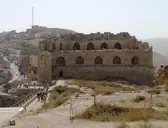 The Mamluk KeepThe last line of defenceIn the guide
- 07
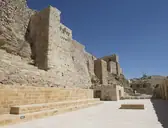 The Lower CourtThe western terraceIn the guide
Site map of Kerak Castle
History of Kerak Castle
The castle was begun in the 1140s by Pagan the Butler, lord of Oultrejordain, under Fulk, King of Jerusalem, as the centre of a Crusader lordship east of the Dead Sea. From here its lords could control the routes between Damascus, Egypt and Arabia, including the pilgrim road to Mecca. Pagan’s successors added towers and rock-cut ditches, and in 1176 the castle passed to Raynald of Châtillon, whose raids on caravans provoked Saladin. After Saladin’s victory at Hattin in 1187, Kerak was besieged again and surrendered in 1188. Under the Ayyubids it was a regional capital and treasury, and after the Mamluk sultan Baibars took it in 1263 the Mamluks rebuilt much of it. It later served the Ottomans, who stationed a governor here in the 1890s.
The full history continues in the guide.
Kerak Castle guide: questions
How many stops does the Kerak Castle guide have?
7 stops, in visit order: 1. Archaeological Museum; 2. The North Front; 3. Crusader Galleries; 4. The Chapel; 5. The Mamluk Palace; 6. The Mamluk Keep; 7. The Lower Court.
Can I do a self-guided tour of Kerak Castle with this guide?
Yes. The guide is made for a self-guided tour: 7 stops in visit order, each with a photo, a story and a voice, so you can explore Kerak Castle at your own pace, without joining a group. Download it before you go and it works offline.
How long is each guide?
The 7 stops add up to about 5 minutes of listening in total. You play each stop when you’re ready, so you can go at your own pace.
Does the guide work offline?
Yes, once it’s downloaded. The guide is a single self-contained web page (about 6.4 MB) with the photos, text and audio built in. Download it to your phone before you go (Wi-Fi is best); after that it opens in any modern browser on iPhone or Android, with no app, account or mobile signal needed.
Does it use GPS or need my location?
No. The guide doesn’t use GPS and doesn’t know where you are: you play each stop when you reach it. It works on iPhone and Android in any modern browser, and it’s in English.
What’s included?
One self-contained HTML guide: 7 stops in visit order, each with a photo, text and a voice, plus the story of who built the site.
Who built Kerak Castle?
The castle was begun in the 1140s by Pagan the Butler, lord of Oultrejordain, under Fulk, King of Jerusalem, as the centre of a Crusader lordship east of the Dead Sea. From here its lords could control the routes between Damascus, Egypt and Arabia, including the pilgrim road to Mecca.
Where is Kerak Castle?
Kerak Castle stands at the southern tip of the plateau occupied by the town of al-Karak, about two hours’ drive south of Amman along the King’s Highway or the Desert Highway, and is often visited on the way to or from Petra.
Is there a free audio guide to Kerak Castle?
The first stop, Archaeological Museum, is free to read and hear on this page, so you can try the Kerak Castle audio tour before you buy. The full guide, with all 7 stops, is a one-off purchase: download it once and it’s yours to keep, working offline.
Is the Kerak Castle guide worth it?
If you’d like to know what you’re looking at, yes. For $10 you get 7 stops in visit order, each with a photo, a short history and a voice you play when you’re ready, plus a site map of the stops, and about 5 minutes of listening in all. It’s short on purpose, so you spend your time looking, not listening. It’s yours to keep, works offline and needs no app. The first stop is free on this page, so you can try it before you buy. If you’d like hours of detail, a guided tour will go deeper.
Audio guide or guided tour?
It depends how you like to visit. This guide lets you explore Kerak Castle at your own pace, at any time, for a one-off price. A guided tour gives you a live expert you can ask questions, but at fixed times and usually for a higher price. Many people use both: a tour for the big picture, and the guide to read beforehand or to revisit the stops in their own time.
Is this the official Kerak Castle guide?
No. It’s an independent guide by The Historian Guide, not affiliated with or endorsed by the operator of Kerak Castle. For tickets and opening hours, check the official site operator before you go.
Does the guide include entry tickets or opening hours?
No. The guide is a digital companion only. Admission to Kerak Castle is separate, so check the official site operator for current tickets and opening hours before you go.
- Stop 1 · Archaeological Museum (also the cover): Berthold Werner · CC BY 3.0 · Wikimedia Commons · resized
- Stop 2 · The North Front: Dosseman · CC BY-SA 4.0 · Wikimedia Commons · resized
- Stop 3 · Crusader Galleries: Dosseman · CC BY-SA 4.0 · Wikimedia Commons · resized
- Stop 4 · The Chapel: Dosseman · CC BY-SA 4.0 · Wikimedia Commons · resized
- Stop 5 · The Mamluk Palace: Dosseman · CC BY-SA 4.0 · Wikimedia Commons · resized
- Stop 6 · The Mamluk Keep: Michael Gunther · CC BY-SA 4.0 · Wikimedia Commons · resized
- Stop 7 · The Lower Court: Dosseman · CC BY-SA 4.0 · Wikimedia Commons · resized


All photographs from Wikimedia Commons under the licences shown.
More guides in Jordan
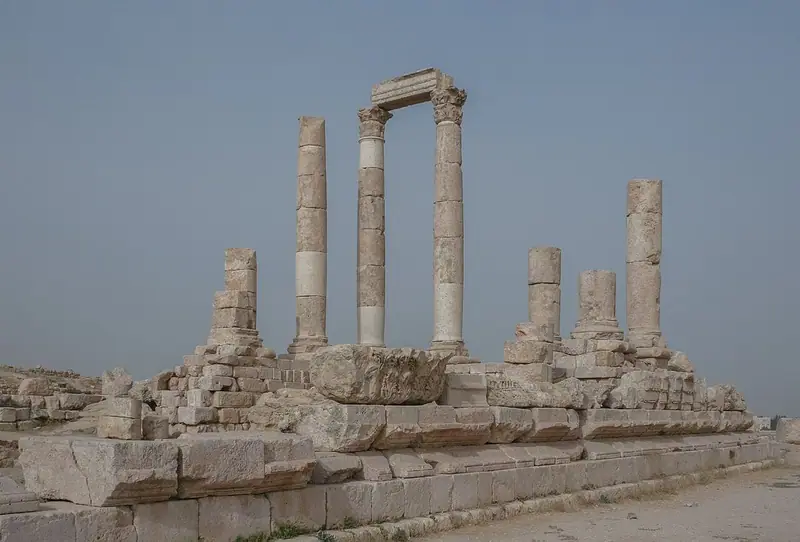 Roman7 stops · 2nd–8th century CE
Amman Citadel and Roman Theatre audio guide
From the Temple of Hercules and its colossal hand to the Umayyad palace, then down to the Roman Theatre carved into the hill.
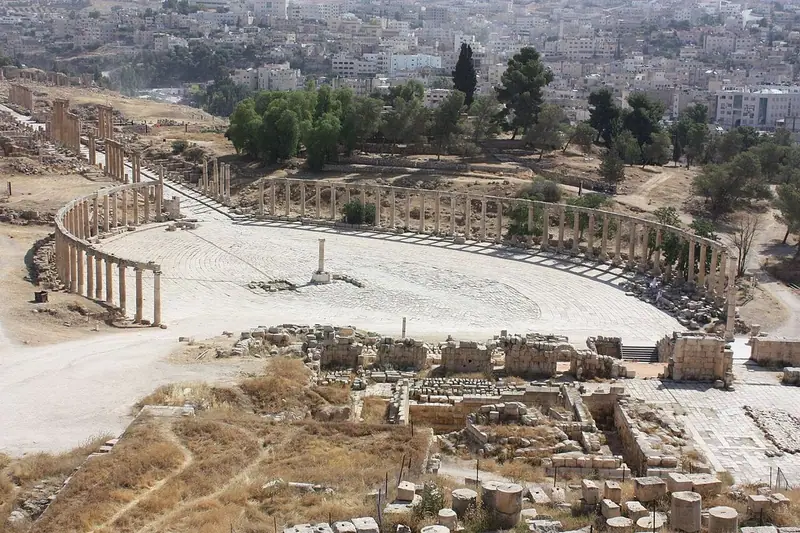 Roman8 stops · 1st–7th century CE
Jerash audio guide
Through Hadrian’s Arch to the Oval Plaza and down the colonnaded Cardo of Roman Gerasa.
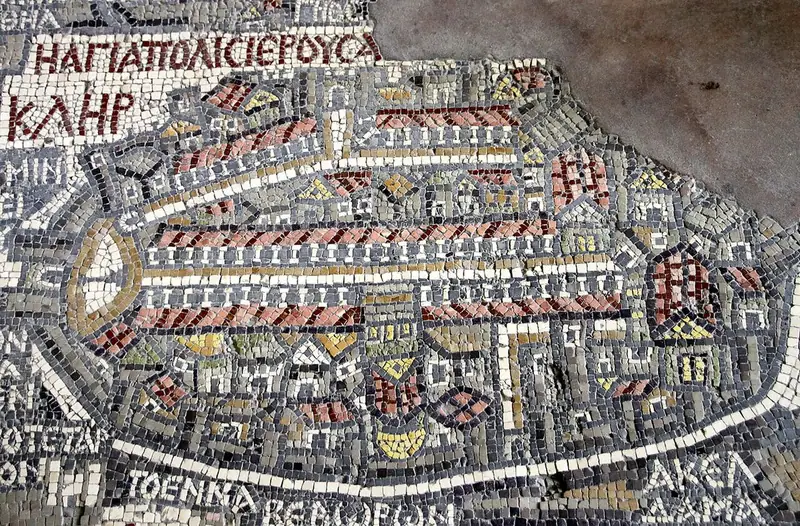 Byzantine7 stops · 6th–8th century CE
Madaba audio guide
The City of Mosaics, home of the Madaba Map, laid in the floor of the Church of St George.
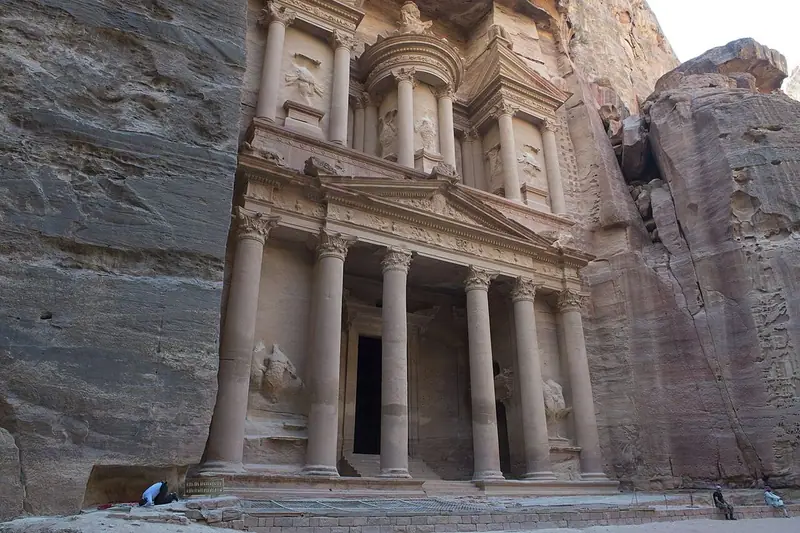 Nabataean9 stops · c. 1st century BCE – 2nd century CE
Petra audio guide
Through the narrow Siq to the Treasury, then on past the Royal Tombs to the climb up to the Monastery.
Every guide, in every country
Kerak Castle and every other guide we publish, including future ones. One payment, no subscription.