Before you start
The Amman Citadel crowns Jabal al-Qal’a, the steep hill above Downtown Amman, and the Roman Theatre sits in the valley just below it, so the two are easily combined in half a day. Most visitors take a taxi up to the Citadel entrance, since the climb from Downtown is long and steep, and then walk down to the theatre afterwards by streets and stairways, which takes around twenty minutes. The Citadel is an open site with uneven ground and little shade. This guide begins at the Temple of Hercules, looks at the remains of a colossal statue, visits the Jordan Archaeological Museum, continues to the Byzantine church, the Umayyad palace and its great cistern, and finishes in the Roman Theatre and the Odeon on the Hashemite Plaza below.
Use it as a self-guided tour of the Amman Citadel and Roman Theatre: 7 stops in visit order, each played when you’re ready, at your own pace.
 Free preview · Stop 1
Temple of Hercules
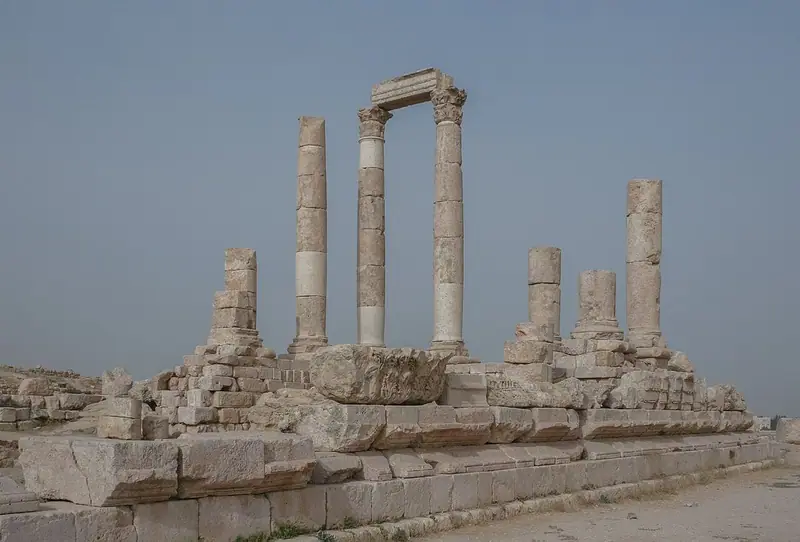
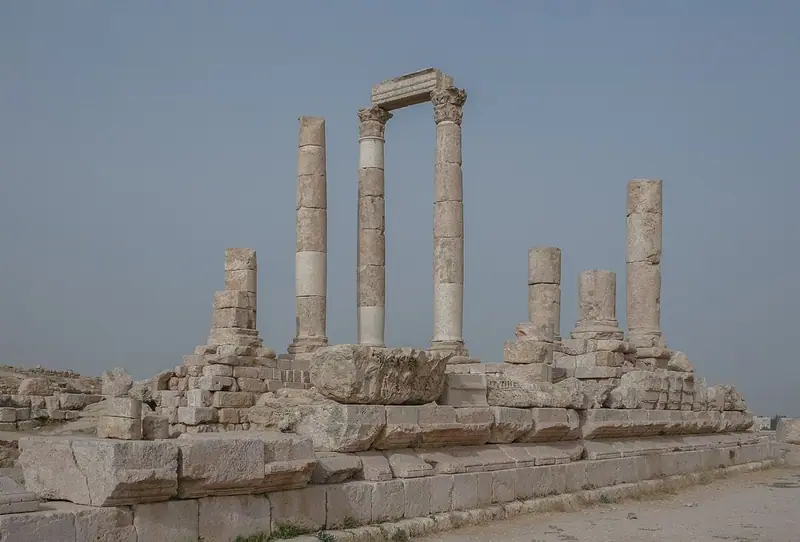
Begin at the tall columns standing at the edge of the hill, the most famous landmark of the Citadel. They belong to the Great Temple of Amman, usually called the Temple of Hercules. An inscription shows that it was built in the 160s CE, when Geminius Marcianus was governor of the Roman province of Arabia, at about the same time as the theatre below. A reconstructed inscription speaks of a sanctuary of Hercules, though some archaeologists still debate which god was worshipped here. The temple stood on a high podium, with a porch of six columns, each about thirteen and a half metres tall, but there are no traces of columns along its sides, so it may never have been finished. Look out over the city and the theatre in the valley below.
Photo: Diego Delso · CC BY-SA 3.0 · Wikimedia Commons
What to see at the Amman Citadel and Roman Theatre: 7 stops, in visit order
- 01
 Temple of HerculesThe Great Temple of AmmanFree preview
- 02
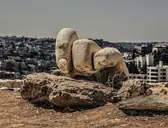 The Colossal HandFragments of a giant statueIn the guide
- 03
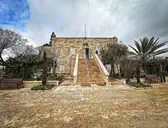 Archaeological MuseumTreasures from across JordanIn the guide
- 04
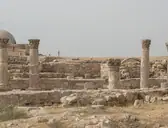 The Byzantine ChurchA sixth-century basilicaIn the guide
- 05
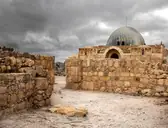 The Umayyad PalaceThe domed audience hallIn the guide
- 06
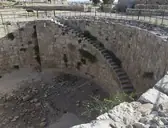 The CisternWater for the palaceIn the guide
- 07
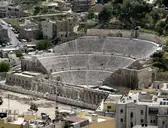 The Roman TheatreSix thousand seats in the hillsideIn the guide
Site map of the Amman Citadel and Roman Theatre
History of the Amman Citadel and Roman Theatre
Citadel Hill is among the oldest continuously inhabited places in the world. People lived here in the Neolithic period, the hill was fortified in the Bronze Age, and after about 1200 BCE it became Rabbath Ammon, capital of the kingdom of the Ammonites, known from the Bible. It later fell under the Assyrians, Babylonians and the Hellenistic kingdoms, and under the Ptolemies it was renamed Philadelphia. Rome took control of the region in the first century BCE, and Philadelphia became one of the cities of the Decapolis, rebuilt in the second century CE with temples, a theatre and colonnaded streets. It was a Christian city under the Byzantines, then from the seventh century an Umayyad governor’s seat. After the Umayyads it declined, and for centuries it was largely ruins until 1878, when the Ottomans settled Circassian refugees here, and the modern city grew around them.
Amman Citadel and Roman Theatre guide: questions
How many stops does the Amman Citadel and Roman Theatre guide have?
7 stops, in visit order: 1. Temple of Hercules; 2. The Colossal Hand; 3. Archaeological Museum; 4. The Byzantine Church; 5. The Umayyad Palace; 6. The Cistern; 7. The Roman Theatre.
Can I do a self-guided tour of the Amman Citadel and Roman Theatre with this guide?
Yes. The guide is made for a self-guided tour: 7 stops in visit order, each with a photo, a story and a voice, so you can explore the Amman Citadel and Roman Theatre at your own pace, without joining a group. Download it before you go and it works offline.
How long is each guide?
The 7 stops add up to about 5 minutes of listening in total. You play each stop when you’re ready, so you can go at your own pace.
Does the guide work offline?
Yes, once it’s downloaded. The guide is a single self-contained web page (about 6.6 MB) with the photos, text and audio built in. Download it to your phone before you go (Wi-Fi is best); after that it opens in any modern browser on iPhone or Android, with no app, account or mobile signal needed.
Does it use GPS or need my location?
No. The guide doesn’t use GPS and doesn’t know where you are: you play each stop when you reach it. It works on iPhone and Android in any modern browser, and it’s in English.
What’s included?
One self-contained HTML guide: 7 stops in visit order, each with a photo, text and a voice, plus the story of who built the site.
Who built the Amman Citadel and Roman Theatre?
Citadel Hill is among the oldest continuously inhabited places in the world. People lived here in the Neolithic period, the hill was fortified in the Bronze Age, and after about 1200 BCE it became Rabbath Ammon, capital of the kingdom of the Ammonites, known from the Bible.
Where is the Amman Citadel and Roman Theatre?
The Amman Citadel crowns Jabal al-Qal’a, the steep hill above Downtown Amman, and the Roman Theatre sits in the valley just below it, so the two are easily combined in half a day.
Is there a free audio guide to the Amman Citadel and Roman Theatre?
The first stop, Temple of Hercules, is free to read and hear on this page, so you can try the Amman Citadel and Roman Theatre audio tour before you buy. The full guide, with all 7 stops, is a one-off purchase: download it once and it’s yours to keep, working offline.
Is the Amman Citadel and Roman Theatre guide worth it?
If you’d like to know what you’re looking at, yes. For $10 you get 7 stops in visit order, each with a photo, a short history and a voice you play when you’re ready, plus a site map of the stops, and about 5 minutes of listening in all. It’s short on purpose, so you spend your time looking, not listening. It’s yours to keep, works offline and needs no app. The first stop is free on this page, so you can try it before you buy. If you’d like hours of detail, a guided tour will go deeper.
Audio guide or guided tour?
It depends how you like to visit. This guide lets you explore the Amman Citadel and Roman Theatre at your own pace, at any time, for a one-off price. A guided tour gives you a live expert you can ask questions, but at fixed times and usually for a higher price. Many people use both: a tour for the big picture, and the guide to read beforehand or to revisit the stops in their own time.
Is this the official Amman Citadel and Roman Theatre guide?
No. It’s an independent guide by The Historian Guide, not affiliated with or endorsed by the operator of the Amman Citadel and Roman Theatre. For tickets and opening hours, check the official site operator before you go.
Does the guide include entry tickets or opening hours?
No. The guide is a digital companion only. Admission to the Amman Citadel and Roman Theatre is separate, so check the official site operator for current tickets and opening hours before you go.
- Stop 1 · Temple of Hercules (also the cover): Diego Delso · CC BY-SA 3.0 · Wikimedia Commons · resized
- Stop 2 · The Colossal Hand: Mustafa Waad Saeed · CC BY-SA 4.0 · Wikimedia Commons · resized
- Stop 3 · Archaeological Museum: Allan Gluck · CC BY-SA 4.0 · Wikimedia Commons · resized
- Stop 4 · The Byzantine Church: Diego Delso · CC BY-SA 3.0 · Wikimedia Commons · resized
- Stop 5 · The Umayyad Palace: AliAbuRas · CC BY-SA 4.0 · Wikimedia Commons · resized
- Stop 6 · The Cistern: Dosseman · CC BY-SA 4.0 · Wikimedia Commons · resized
- Stop 7 · The Roman Theatre: Bernard Gagnon · CC BY-SA 4.0 · Wikimedia Commons · resized


All photographs from Wikimedia Commons under the licences shown.
More guides in Jordan
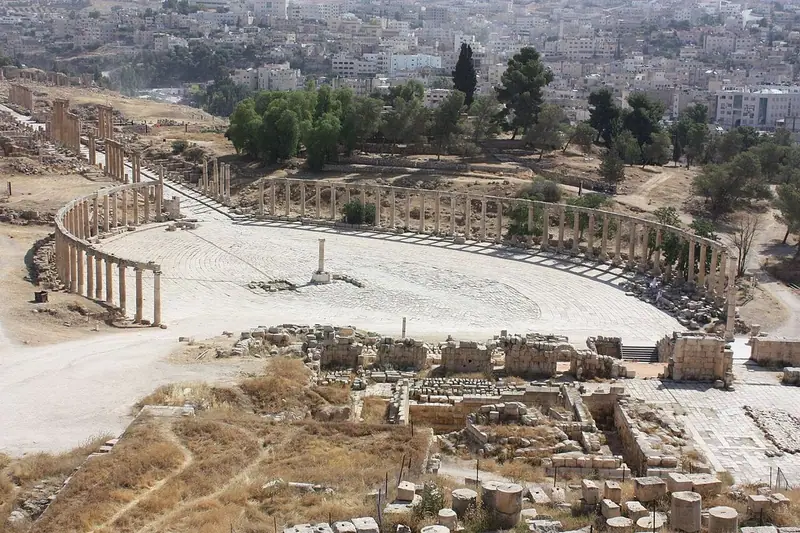 Roman8 stops · 1st–7th century CE
Jerash audio guide
Through Hadrian’s Arch to the Oval Plaza and down the colonnaded Cardo of Roman Gerasa.
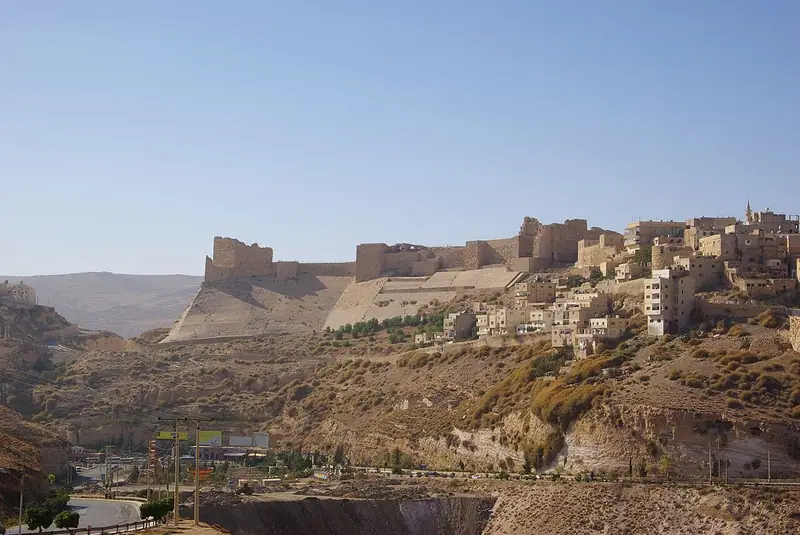 Crusader7 stops · from 1142 CE
Kerak Castle audio guide
Crusader galleries and Mamluk halls in one of the great castles of the Levant, high above the King’s Highway.
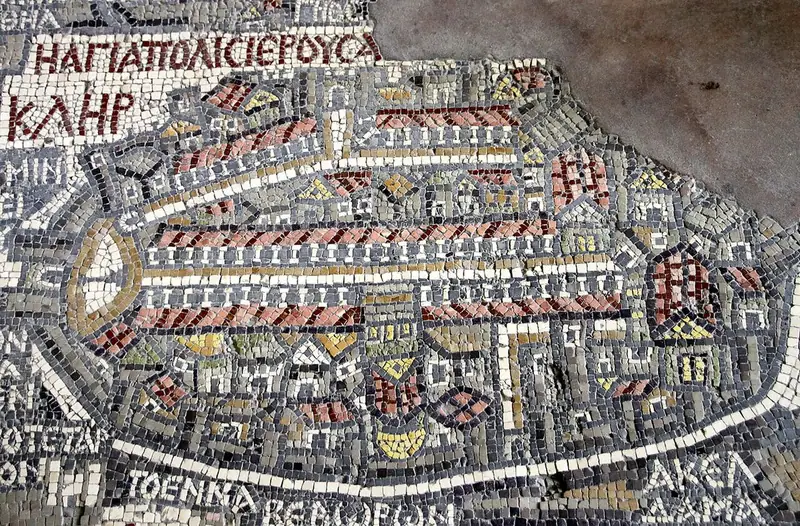 Byzantine7 stops · 6th–8th century CE
Madaba audio guide
The City of Mosaics, home of the Madaba Map, laid in the floor of the Church of St George.
 Nabataean9 stops · c. 1st century BCE – 2nd century CE
Petra audio guide
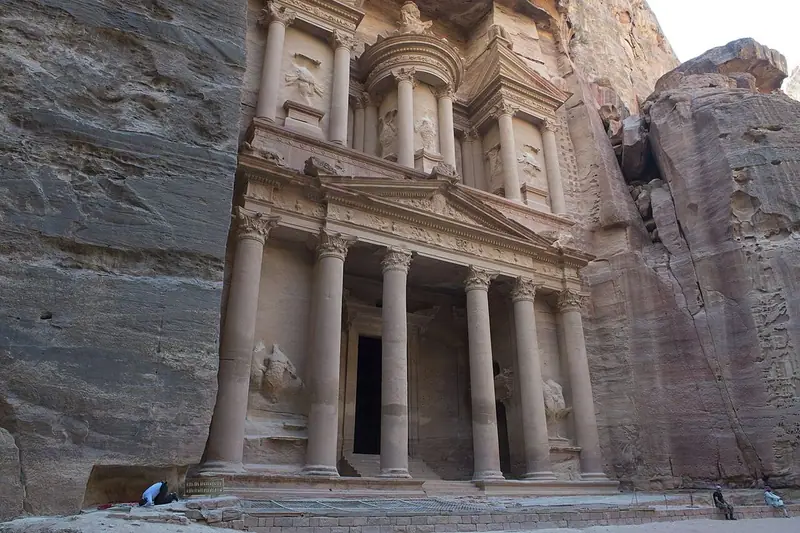
Through the narrow Siq to the Treasury, then on past the Royal Tombs to the climb up to the Monastery.
Every guide, in every country
Amman Citadel and Roman Theatre and every other guide we publish, including future ones. One payment, no subscription.