Before you start
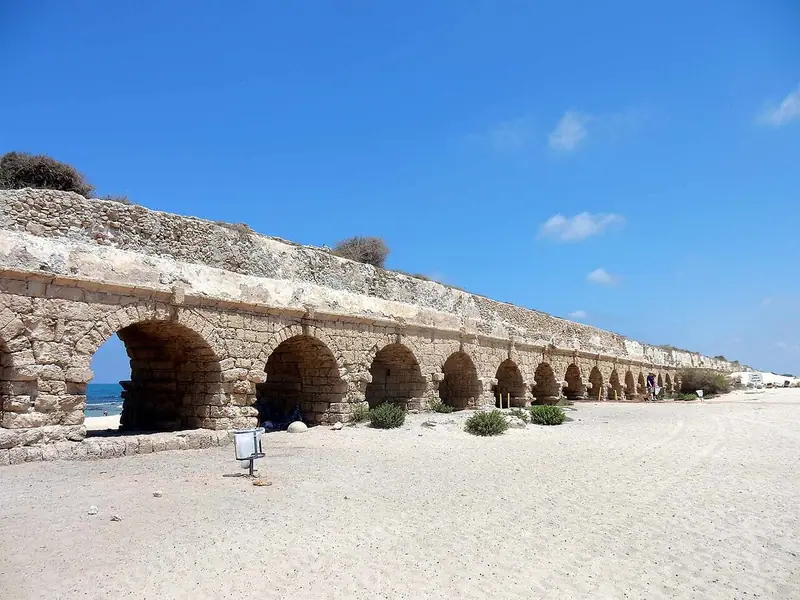
Caesarea, also known as Caesarea Maritima, is the site of an ancient port city on the Mediterranean coast of Israel, between Tel Aviv and Haifa. King Herod the Great founded it as a showpiece of Roman engineering, and for about six and a half centuries it served as the capital of the Roman, and later Byzantine, province. Its ruins also include the walls of a Crusader town. Most of the site lies within Caesarea National Park, on the shore, with the high-level aqueduct on the beach to the north. Excavations began in the 1950s and continue today, so some areas may be closed. The site is large and partly exposed to the sun, so bring water and a hat. This route starts at the Roman theatre in the south, follows the shore north past Herod’s palace, the hippodrome and the harbour, enters the Crusader town and ends at the aqueduct.
Use it as a self-guided tour of Caesarea: 6 stops in visit order, each played when you’re ready, at your own pace.
 Free preview · Stop 1
The Roman Theatre
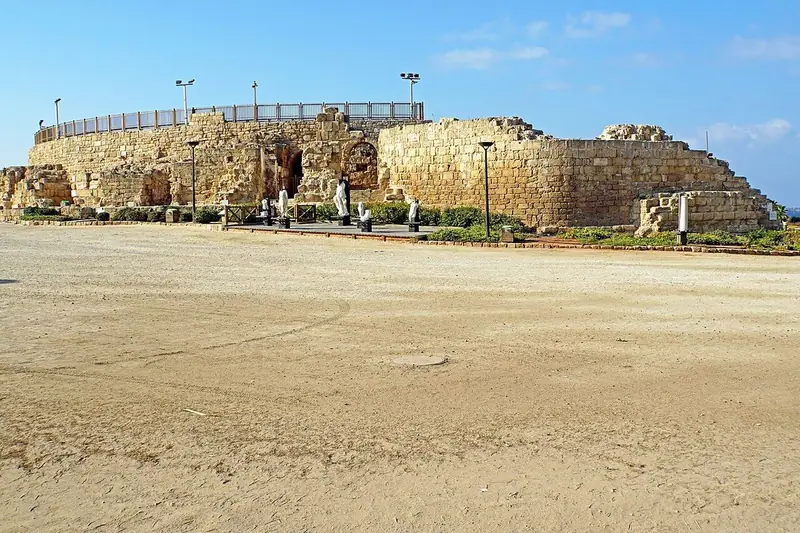
Begin at the Roman theatre, at the southern end of the national park. Herod built it as part of his new city. Its curved rows of seats face west towards the sea. The theatre was altered several times in antiquity, and later it was enclosed within a fortress, whose curved walls you can see behind it. Much of what you see has been restored, and the theatre is used for concerts and performances today. In 1961, archaeologists found a limestone block here with a Latin inscription naming Pontius Pilate as prefect of Judaea, the only inscription of its kind known to bear his name and title. The original is in the Israel Museum in Jerusalem, and a copy can be seen nearby. Then walk north along the shore.
Photo: Dennis G. Jarvis · CC BY-SA 2.0 · Wikimedia Commons
What to see at Caesarea: 6 stops, in visit order
- 01
 The Roman TheatreEntertainment by the seaFree preview
- 02
 Herod’s Promontory PalaceA palace on the wavesIn the guide
- 03
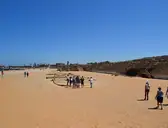 Herod’s HippodromeRaces and gamesIn the guide
- 04
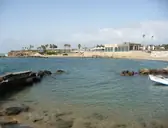 The Harbour of SebastosAn artificial port in the open seaIn the guide
- 05
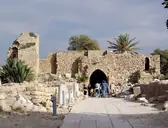 The Crusader CityWalls of a medieval portIn the guide
- 06
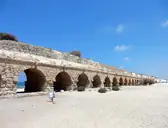 The High-Level AqueductWater from Mount CarmelIn the guide
Site map of Caesarea
History of Caesarea
Caesarea was built by Herod the Great, who ruled Judaea as a client king of Rome from 37 to 4 BCE. Near a small Phoenician harbour town known as Straton’s Tower, he built a new city in about twelve years, from around 22 to 10 or 9 BCE, and named it after the emperor Augustus. When Judaea became a Roman province in 6 CE, Caesarea became the seat of its governors, including Pontius Pilate. The city grew into one of the great cities of the eastern Mediterranean and became an important centre of early Christianity. After the Muslim conquest in 640 it declined. Crusaders captured it in 1101 and held it, with one interruption, until 1265, when the Mamluk sultan Baibars took it and destroyed its fortifications.
Caesarea guide: questions
How many stops does the Caesarea guide have?
6 stops, in visit order: 1. The Roman Theatre; 2. Herod’s Promontory Palace; 3. Herod’s Hippodrome; 4. The Harbour of Sebastos; 5. The Crusader City; 6. The High-Level Aqueduct.
Can I do a self-guided tour of Caesarea with this guide?
Yes. The guide is made for a self-guided tour: 6 stops in visit order, each with a photo, a story and a voice, so you can explore Caesarea at your own pace, without joining a group. Download it before you go and it works offline.
How long is each guide?
The 6 stops add up to about 4 minutes of listening in total. You play each stop when you’re ready, so you can go at your own pace.
Does the guide work offline?
Yes, once it’s downloaded. The guide is a single self-contained web page (about 5.8 MB) with the photos, text and audio built in. Download it to your phone before you go (Wi-Fi is best); after that it opens in any modern browser on iPhone or Android, with no app, account or mobile signal needed.
Does it use GPS or need my location?
No. The guide doesn’t use GPS and doesn’t know where you are: you play each stop when you reach it. It works on iPhone and Android in any modern browser, and it’s in English.
What’s included?
One self-contained HTML guide: 6 stops in visit order, each with a photo, text and a voice, plus the story of who built the site.
Who built Caesarea?
Caesarea was built by Herod the Great, who ruled Judaea as a client king of Rome from 37 to 4 BCE. Near a small Phoenician harbour town known as Straton’s Tower, he built a new city in about twelve years, from around 22 to 10 or 9 BCE, and named it after the emperor Augustus.
Where is Caesarea?
Caesarea, also known as Caesarea Maritima, is the site of an ancient port city on the Mediterranean coast of Israel, between Tel Aviv and Haifa.
Is there a free audio guide to Caesarea?
The first stop, The Roman Theatre, is free to read and hear on this page, so you can try the Caesarea audio tour before you buy. The full guide, with all 6 stops, is a one-off purchase: download it once and it’s yours to keep, working offline.
Is the Caesarea guide worth it?
If you’d like to know what you’re looking at, yes. For $10 you get 6 stops in visit order, each with a photo, a short history and a voice you play when you’re ready, plus a site map of the stops, and about 4 minutes of listening in all. It’s short on purpose, so you spend your time looking, not listening. It’s yours to keep, works offline and needs no app. The first stop is free on this page, so you can try it before you buy. If you’d like hours of detail, a guided tour will go deeper.
Audio guide or guided tour?
It depends how you like to visit. This guide lets you explore Caesarea at your own pace, at any time, for a one-off price. A guided tour gives you a live expert you can ask questions, but at fixed times and usually for a higher price. Many people use both: a tour for the big picture, and the guide to read beforehand or to revisit the stops in their own time.
Is this the official Caesarea guide?
No. It’s an independent guide by The Historian Guide, not affiliated with or endorsed by the operator of Caesarea. For tickets and opening hours, check the official site operator before you go.
Does the guide include entry tickets or opening hours?
No. The guide is a digital companion only. Admission to Caesarea is separate, so check the official site operator for current tickets and opening hours before you go.
- Stop 1 · The Roman Theatre: Dennis G. Jarvis · CC BY-SA 2.0 · Wikimedia Commons · resized
- Stop 2 · Herod’s Promontory Palace: Deror_avi · CC BY-SA 3.0 · Wikimedia Commons · resized
- Stop 3 · Herod’s Hippodrome: Larry Koester · CC BY 2.0 · Wikimedia Commons · resized
- Stop 4 · The Harbour of Sebastos: Immanuel Giel · CC BY-SA 4.0 · Wikimedia Commons · resized
- Stop 5 · The Crusader City: Berthold Werner · Public domain · Wikimedia Commons · resized
- Stop 6 · The High-Level Aqueduct (also the cover): FLASHPACKER TRAVELGUIDE · CC BY-SA 2.0 · Wikimedia Commons · resized


All photographs from Wikimedia Commons under the licences shown.
More guides in Israel
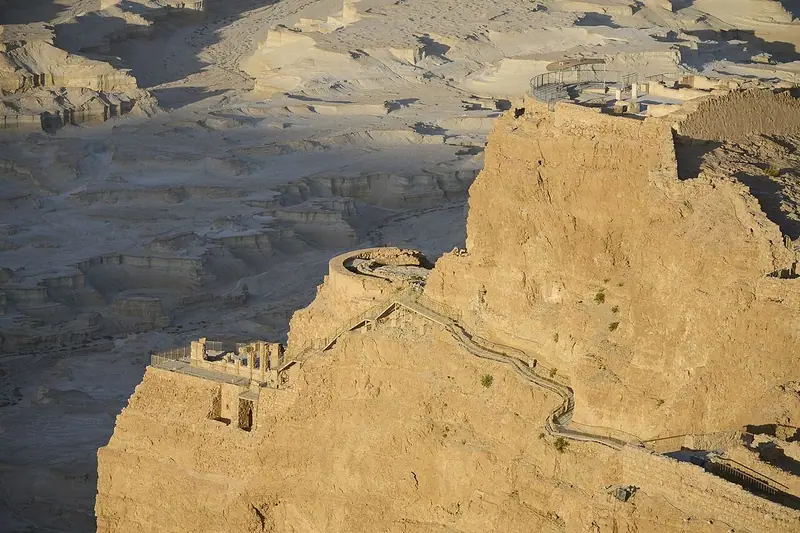 Herodian8 stops · c. 35 BCE – 74 CE
Masada audio guide
Climb to Herod’s desert fortress above the Dead Sea, from his palaces and bathhouse to the Roman siege ramp of the last Jewish rebels.
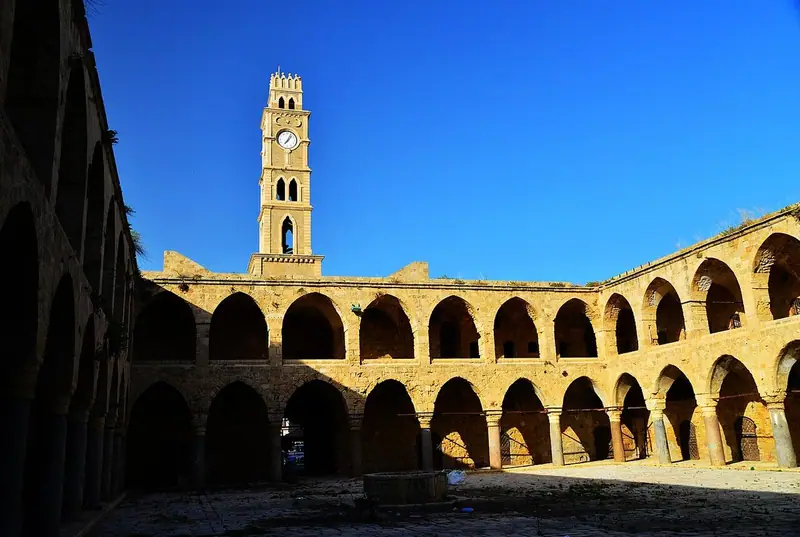 Crusader6 stops · 1104–19th century CE
Old City of Acre audio guide
Explore a walled Ottoman port built over an intact Crusader town, from the Hospitaller Fortress to the Templars’ Tunnel.
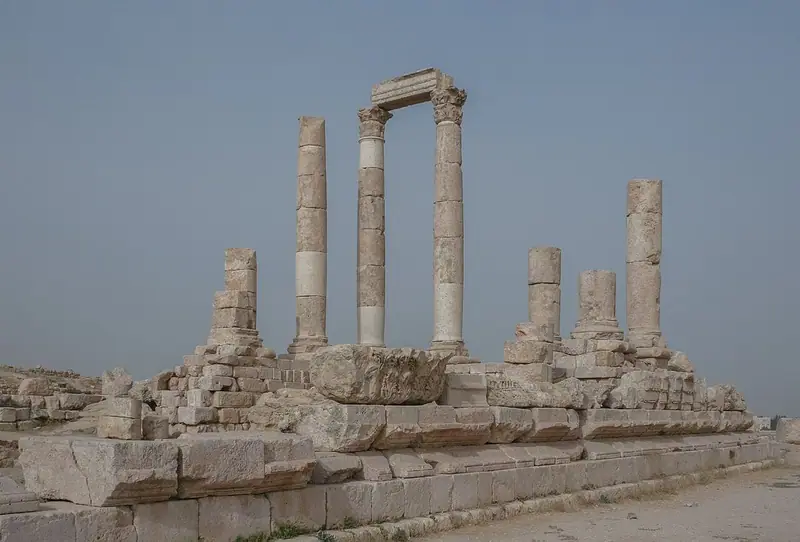 Roman7 stops · 2nd–8th century CE
Amman Citadel and Roman Theatre audio guide
From the Temple of Hercules and its colossal hand to the Umayyad palace, then down to the Roman Theatre carved into the hill.
Every guide, in every country
Caesarea and every other guide we publish, including future ones. One payment, no subscription.