Before you start
Uplistsikhe, the lord’s fortress, is a town cut into a rocky ridge above the Mtkvari River, about ten kilometres east of Gori. For well over a thousand years people carved halls, houses, temples and streets out of the soft sandstone. It became one of the great centres of the old kingdom of Kartli. This guide climbs from the riverside up the ancient main street, past the theatre and the great pillared hall, to the church on the summit, and returns through the tunnel to the river. Allow two hours, and wear shoes with a good grip.
Use it as a self-guided tour of Uplistsikhe: 7 stops in visit order, each played when you’re ready, at your own pace.
 Free preview · Stop 1
The Ridge above the River
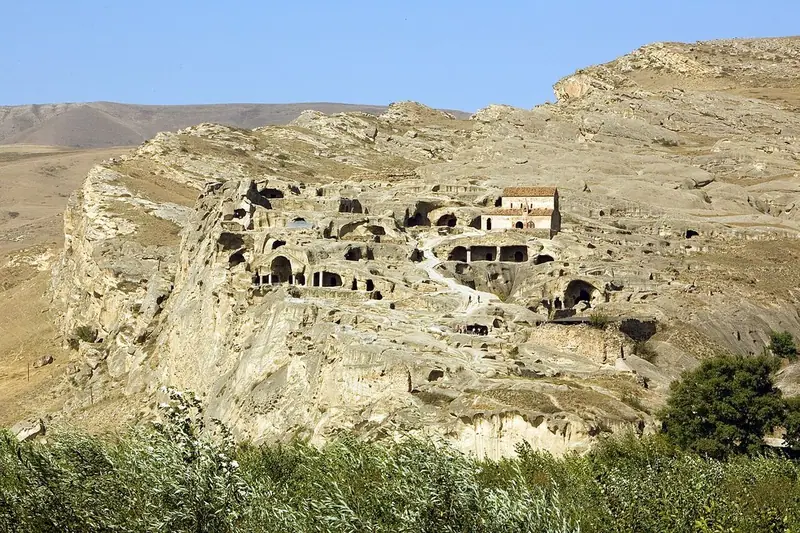
Begin on the path below the ridge and look up. The whole town was cut into this long, sloping outcrop of sandstone, high on the left bank of the Mtkvari, which flows from Turkey through Georgia to the Caspian Sea. The river guarded the town on the south. On the north and east there were moats with walls built into them, and on the west the cliff fell steeply to the water. One of the roads into the town, from the north, was cut deep into the rock between high walls. Inside, the town is usually divided into three parts, a lower, a middle and an upper town, covering about eight hectares. The middle part is the largest and holds most of the rock-cut buildings. Much of what you see was once roofed and plastered, so imagine walls, doors and timber where today there is only bare stone.
Photo: EvgenyGenkin · CC BY-SA 3.0 · Wikimedia Commons
What to see at Uplistsikhe: 7 stops, in visit order
- 01
 The Ridge above the RiverThe lord’s fortressFree preview
- 02
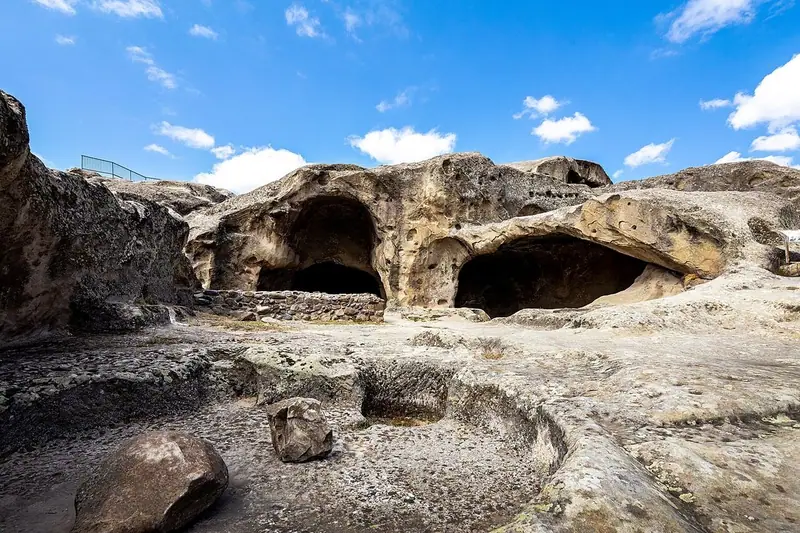
 The Lower TownHalls in the Roman mannerIn the guide
- 03
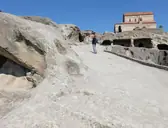 The Main StreetThrough the middle townIn the guide
- 04
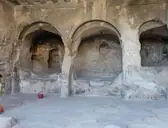 Tamar’s HallStone carved as timberIn the guide
- 05
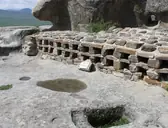 The Temples and SacrificesThe old godsIn the guide
- 06
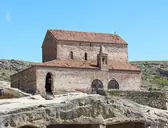 The Prince’s ChurchOn the summitIn the guide
- 07
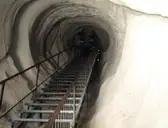 The Tunnel to the RiverThe town’s secret wayIn the guide
Site map of Uplistsikhe
History of Uplistsikhe
Uplistsikhe was a town of Kartli, the kingdom that classical writers called Iberia. People were living here by the end of the second millennium before Christ, and the oldest surviving rock-cut buildings are thought to date from the early centuries after Christ. Medieval Georgian tradition said it was founded by Uplos, grandson of Kartlos, the legendary father of the Georgians. After Kartli became Christian in the fourth century, the town lost its religious importance, but it rose again as a royal stronghold while Arab emirs held Tbilisi. The Mongol invasions finally ruined it, and by the late Middle Ages it was almost abandoned.
Uplistsikhe guide: questions
How many stops does the Uplistsikhe guide have?
7 stops, in visit order: 1. The Ridge above the River; 2. The Lower Town; 3. The Main Street; 4. Tamar’s Hall; 5. The Temples and Sacrifices; 6. The Prince’s Church; 7. The Tunnel to the River.
Can I do a self-guided tour of Uplistsikhe with this guide?
Yes. The guide is made for a self-guided tour: 7 stops in visit order, each with a photo, a story and a voice, so you can explore Uplistsikhe at your own pace, without joining a group. Download it before you go and it works offline.
How long is each guide?
The 7 stops add up to about 5 minutes of listening in total. You play each stop when you’re ready, so you can go at your own pace.
Does the guide work offline?
Yes, once it’s downloaded. The guide is a single self-contained web page (about 6.6 MB) with the photos, text and audio built in. Download it to your phone before you go (Wi-Fi is best); after that it opens in any modern browser on iPhone or Android, with no app, account or mobile signal needed.
Does it use GPS or need my location?
No. The guide doesn’t use GPS and doesn’t know where you are: you play each stop when you reach it. It works on iPhone and Android in any modern browser, and it’s in English.
What’s included?
One self-contained HTML guide: 7 stops in visit order, each with a photo, text and a voice, plus the story of who built the site.
Who built Uplistsikhe?
Uplistsikhe was a town of Kartli, the kingdom that classical writers called Iberia. People were living here by the end of the second millennium before Christ, and the oldest surviving rock-cut buildings are thought to date from the early centuries after Christ.
Is there a free audio guide to Uplistsikhe?
The first stop, The Ridge above the River, is free to read and hear on this page, so you can try the Uplistsikhe audio tour before you buy. The full guide, with all 7 stops, is a one-off purchase: download it once and it’s yours to keep, working offline.
Is the Uplistsikhe guide worth it?
If you’d like to know what you’re looking at, yes. For $10 you get 7 stops in visit order, each with a photo, a short history and a voice you play when you’re ready, plus a site map of the stops, and about 5 minutes of listening in all. It’s short on purpose, so you spend your time looking, not listening. It’s yours to keep, works offline and needs no app. The first stop is free on this page, so you can try it before you buy. If you’d like hours of detail, a guided tour will go deeper.
Audio guide or guided tour?
It depends how you like to visit. This guide lets you explore Uplistsikhe at your own pace, at any time, for a one-off price. A guided tour gives you a live expert you can ask questions, but at fixed times and usually for a higher price. Many people use both: a tour for the big picture, and the guide to read beforehand or to revisit the stops in their own time.
Is this the official Uplistsikhe guide?
No. It’s an independent guide by The Historian Guide, not affiliated with or endorsed by the operator of Uplistsikhe. For tickets and opening hours, check the official site operator before you go.
Does the guide include entry tickets or opening hours?
No. The guide is a digital companion only. Admission to Uplistsikhe is separate, so check the official site operator for current tickets and opening hours before you go.
- Stop 1 · The Ridge above the River: EvgenyGenkin · CC BY-SA 3.0 · Wikimedia Commons · resized
- Stop 2 · The Lower Town (also the cover): This Photo was taken by Supanut Arunoprayote. Feel free… · CC BY 4.0 · Wikimedia Commons · resized
- Stop 3 · The Main Street: shankar s. from Dubai, united arab emirates · CC BY 2.0 · Wikimedia Commons · resized
- Stop 4 · Tamar’s Hall: shankar s. from Dubai, united arab emirates · CC BY 2.0 · Wikimedia Commons · resized
- Stop 5 · The Temples and Sacrifices: Avisadehh · CC0 · Wikimedia Commons · resized
- Stop 6 · The Prince’s Church: Bernard Gagnon · CC BY 4.0 · Wikimedia Commons · resized
- Stop 7 · The Tunnel to the River: Jonathan Cardy · CC BY-SA 3.0 · Wikimedia Commons · resized


All photographs from Wikimedia Commons under the licences shown.
More guides in Georgia
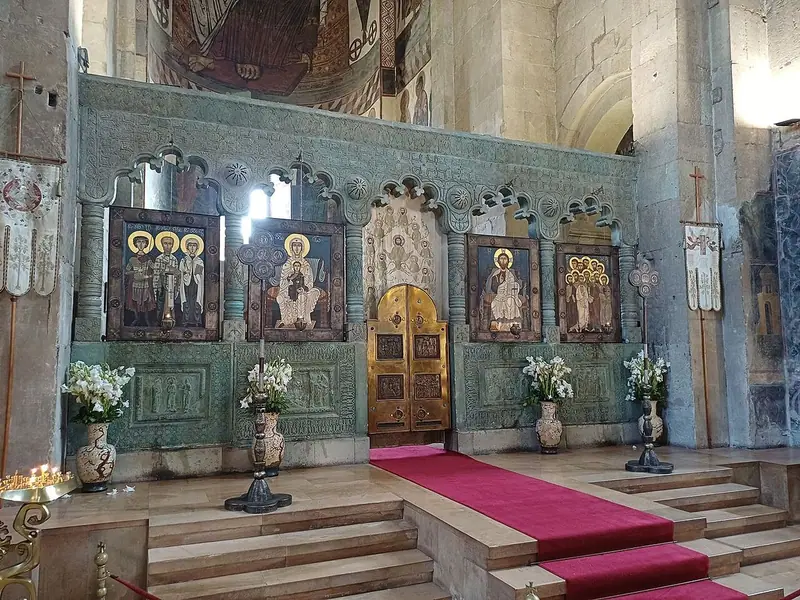 Georgian8 stops · 4th–19th century
Mtskheta audio guide
Start at Jvari Monastery on its hilltop, then cross to the cathedral and the Life-Giving Pillar in the Holy City where Georgia became Christian.
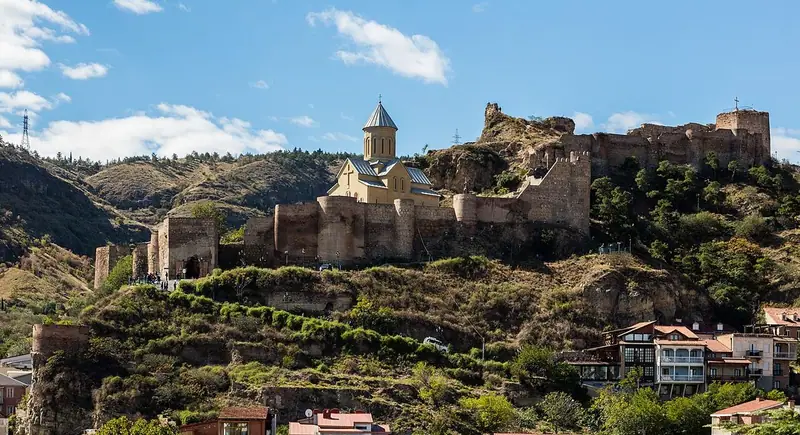 Georgian7 stops · 5th century CE – 19th century
Old Tbilisi audio guide
From Metekhi Church past the domed sulphur baths and up to Narikala Fortress, then down to Sioni Cathedral.
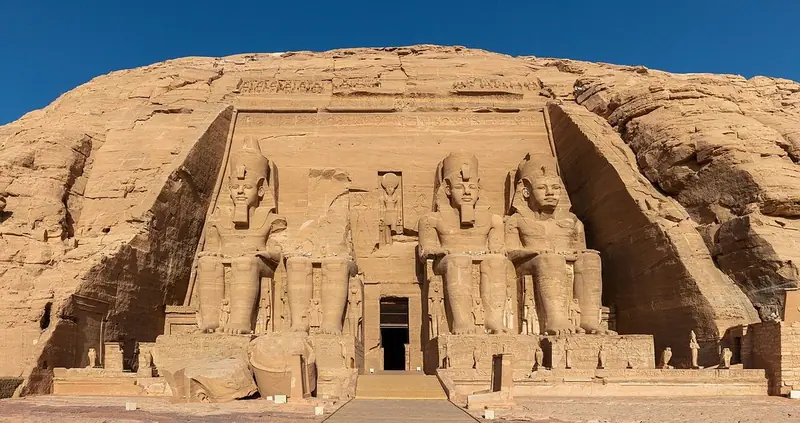 Ancient Egyptian8 stops · 13th century BCE
Abu Simbel audio guide
Ramesses II’s colossal temple façade, the Temple of Nefertari, and how both were rescued from the waters of Lake Nasser.
Every guide, in every country
Uplistsikhe and every other guide we publish, including future ones. One payment, no subscription.