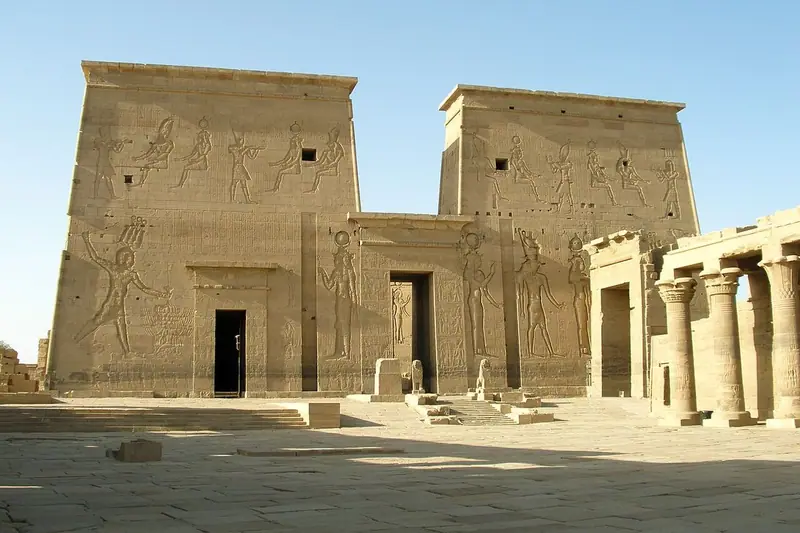
Before you start
The temples of Philae stand on Agilkia Island in the reservoir between the old Aswan Dam and the High Dam, a few kilometres south of Aswan. The only way there is by small motorboat from the landing stage at Shellal, a short and beautiful ride among granite rocks. Philae is part of the UNESCO World Heritage Site ‘Nubian Monuments from Abu Simbel to Philae’, inscribed in 1979, and is managed by Egypt’s Ministry of Tourism and Antiquities. The island is small and the paths are level, so the visit is easy on foot. This guide starts where the boats land at the southern tip, heads north through the colonnaded forecourt, with a short detour to the Kiosk of Trajan on the eastern shore, then passes through the gateways of the Temple of Isis to its sanctuary and ends at the Gate of Hadrian on the western side.
Use it as a self-guided tour of Philae Temple: 8 stops in visit order, each played when you’re ready, at your own pace.
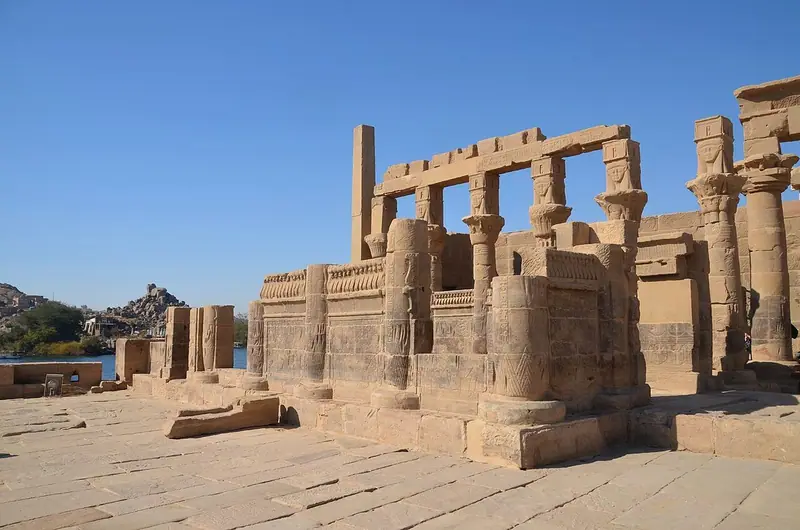 Free preview · Stop 1
Kiosk of Nectanebo
Step off the boat at the southern tip of the island, where the oldest surviving building on Philae stands: a small kiosk built by Nectanebo I, one of the last native pharaohs, in the fourth century BCE. It was originally the entrance porch of an earlier temple of Isis. Its columns have capitals carved as bundles of plants, with faces of the goddess Hathor above them, and low screen walls join them. Look out across the water. Philae Island itself, where all these temples stood for two thousand years, lies under the reservoir nearby. After the first Aswan Dam was built in 1902 the temples were flooded for much of every year, and when the High Dam threatened to submerge them for good, they were dismantled and rebuilt here on Agilkia between 1977 and 1980, in an operation led by UNESCO.
Photo: Carole Raddato from FRANKFURT, Germany · CC BY-SA 2.0 · Wikimedia Commons
What to see at Philae Temple: 8 stops, in visit order
- 01
 Kiosk of NectaneboWhere the boats landFree preview
- 02
 Outer CourtTwo long colonnadesIn the guide
- 03
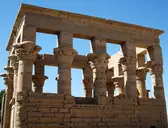 Kiosk of TrajanThe Pharaoh’s BedIn the guide
- 04
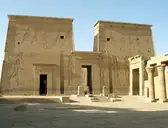 First PylonThe gateway of IsisIn the guide
- 05
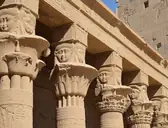 Birth HouseWhere Horus was bornIn the guide
- 06
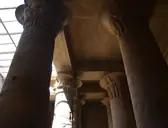 Hypostyle HallA temple that became a churchIn the guide
- 07
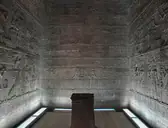 Sanctuary of IsisThe heart of the templeIn the guide
- 08
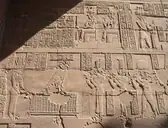 Gate of HadrianWhere the Nile was bornIn the guide
Site map of Philae Temple
History of Philae Temple
The temples were built by the ancient Egyptians in the last centuries of their civilisation, under native pharaohs, Greek-speaking Ptolemaic kings and Roman emperors. The oldest surviving parts date from Nectanebo I, one of the last native kings, in the fourth century BCE; most of the Temple of Isis was built by the Ptolemies, who ruled Egypt from 305 to 30 BCE, and Roman emperors went on adding to it. Philae was the great sanctuary of the goddess Isis, and pilgrims came from Egypt, Nubia and the wider Mediterranean world. Ancient Egyptian civilisation had begun around 3100 BCE, with the union of Upper and Lower Egypt; Egypt’s independence ended when Rome annexed it in 30 BCE, but here its religion lived on: the last known hieroglyphic inscription was carved at Philae in 394 CE, and the temple was officially closed around 537 CE under the emperor Justinian.
Philae Temple guide: questions
How many stops does the Philae Temple guide have?
8 stops, in visit order: 1. Kiosk of Nectanebo; 2. Outer Court; 3. Kiosk of Trajan; 4. First Pylon; 5. Birth House; 6. Hypostyle Hall; 7. Sanctuary of Isis; 8. Gate of Hadrian.
Can I do a self-guided tour of Philae Temple with this guide?
Yes. The guide is made for a self-guided tour: 8 stops in visit order, each with a photo, a story and a voice, so you can explore Philae Temple at your own pace, without joining a group. Download it before you go and it works offline.
How long is each guide?
The 8 stops add up to about 6 minutes of listening in total. You play each stop when you’re ready, so you can go at your own pace.
Does the guide work offline?
Yes, once it’s downloaded. The guide is a single self-contained web page (about 6.9 MB) with the photos, text and audio built in. Download it to your phone before you go (Wi-Fi is best); after that it opens in any modern browser on iPhone or Android, with no app, account or mobile signal needed.
Does it use GPS or need my location?
No. The guide doesn’t use GPS and doesn’t know where you are: you play each stop when you reach it. It works on iPhone and Android in any modern browser, and it’s in English.
What’s included?
One self-contained HTML guide: 8 stops in visit order, each with a photo, text and a voice, plus the story of who built the site.
Who built Philae Temple?
The temples were built by the ancient Egyptians in the last centuries of their civilisation, under native pharaohs, Greek-speaking Ptolemaic kings and Roman emperors. The oldest surviving parts date from Nectanebo I, one of the last native kings, in the fourth century BCE; most of the Temple of Isis was built by the Ptolemies, who ruled Egypt from 305 to 30 BCE, and Roman emperors went on adding to it.
Where is Philae Temple?
The temples of Philae stand on Agilkia Island in the reservoir between the old Aswan Dam and the High Dam, a few kilometres south of Aswan.
Is there a free audio guide to Philae Temple?
The first stop, Kiosk of Nectanebo, is free to read and hear on this page, so you can try the Philae Temple audio tour before you buy. The full guide, with all 8 stops, is a one-off purchase: download it once and it’s yours to keep, working offline.
Is the Philae Temple guide worth it?
If you’d like to know what you’re looking at, yes. For $10 you get 8 stops in visit order, each with a photo, a short history and a voice you play when you’re ready, plus a site map of the stops, and about 6 minutes of listening in all. It’s short on purpose, so you spend your time looking, not listening. It’s yours to keep, works offline and needs no app. The first stop is free on this page, so you can try it before you buy. If you’d like hours of detail, a guided tour will go deeper.
Audio guide or guided tour?
It depends how you like to visit. This guide lets you explore Philae Temple at your own pace, at any time, for a one-off price. A guided tour gives you a live expert you can ask questions, but at fixed times and usually for a higher price. Many people use both: a tour for the big picture, and the guide to read beforehand or to revisit the stops in their own time.
Is this the official Philae Temple guide?
No. It’s an independent guide by The Historian Guide, not affiliated with or endorsed by the operator of Philae Temple. For tickets and opening hours, check the official site operator before you go.
Does the guide include entry tickets or opening hours?
No. The guide is a digital companion only. Admission to Philae Temple is separate, so check the official site operator for current tickets and opening hours before you go.
- Stop 1 · Kiosk of Nectanebo: Carole Raddato from FRANKFURT, Germany · CC BY-SA 2.0 · Wikimedia Commons · resized
- Stop 2 · Outer Court: Carole Raddato from FRANKFURT, Germany · CC BY-SA 2.0 · Wikimedia Commons · resized
- Stop 3 · Kiosk of Trajan: Olaf Tausch · CC BY 3.0 · Wikimedia Commons · resized
- Stop 4 · First Pylon (also the cover): © Vyacheslav Argenberg · CC BY 4.0 · Wikimedia Commons · resized
- Stop 5 · Birth House: Carole Raddato from FRANKFURT, Germany · CC BY-SA 2.0 · Wikimedia Commons · resized
- Stop 6 · Hypostyle Hall: Carole Raddato from FRANKFURT, Germany · CC BY-SA 2.0 · Wikimedia Commons · resized
- Stop 7 · Sanctuary of Isis: Jorge Láscar from Melbourne, Australia · CC BY 2.0 · Wikimedia Commons · resized
- Stop 8 · Gate of Hadrian: Carole Raddato from FRANKFURT, Germany · CC BY-SA 2.0 · Wikimedia Commons · resized


All photographs from Wikimedia Commons under the licences shown.
More guides in Egypt
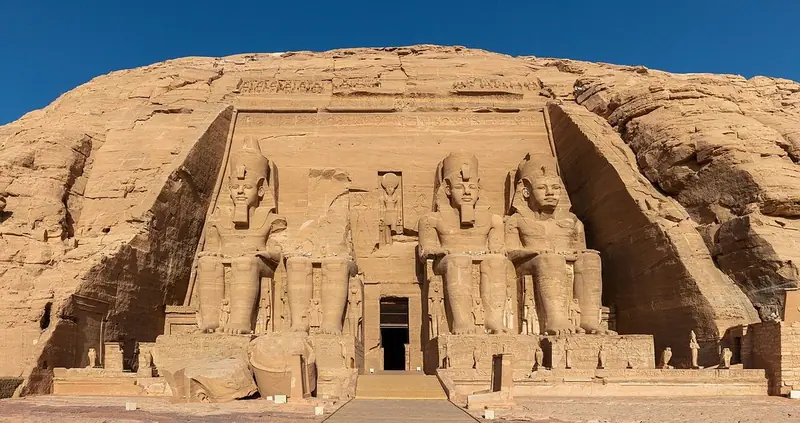 Ancient Egyptian8 stops · 13th century BCE
Abu Simbel audio guide
Ramesses II’s colossal temple façade, the Temple of Nefertari, and how both were rescued from the waters of Lake Nasser.
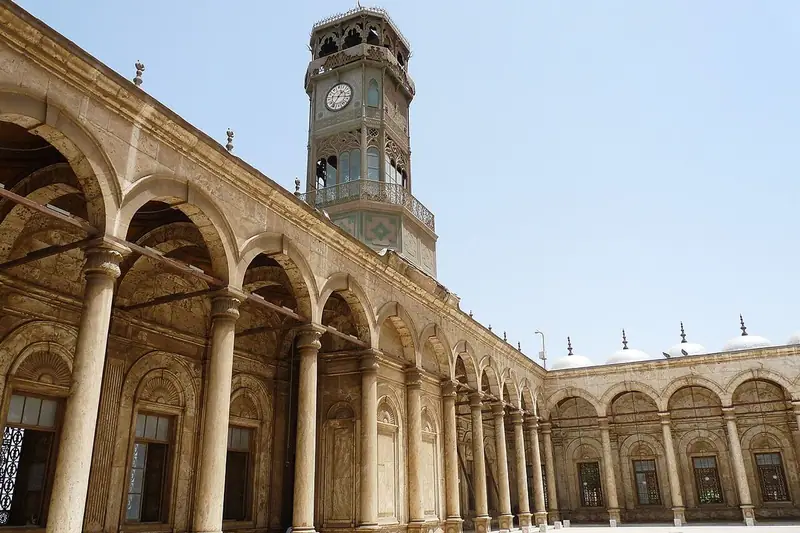 Ayyubid7 stops · from 1176 CE
Cairo Citadel audio guide
Saladin’s walls on the Muqattam Hills and the domes of Muhammad Ali’s mosque, high above the minarets of Islamic Cairo.
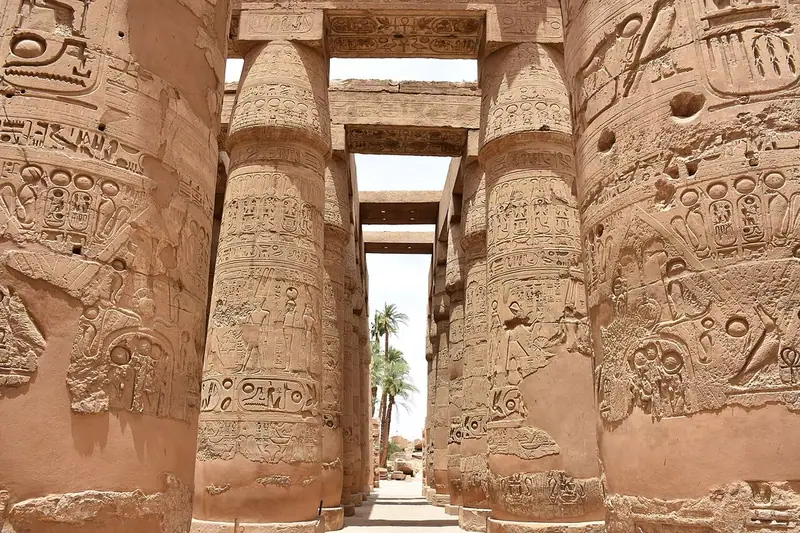 Ancient Egyptian7 stops · Middle Kingdom to Ptolemaic period
Karnak Temple audio guide
Along the Avenue of Rams into the Great Hypostyle Hall, a forest of giant columns built for Amun-Re.
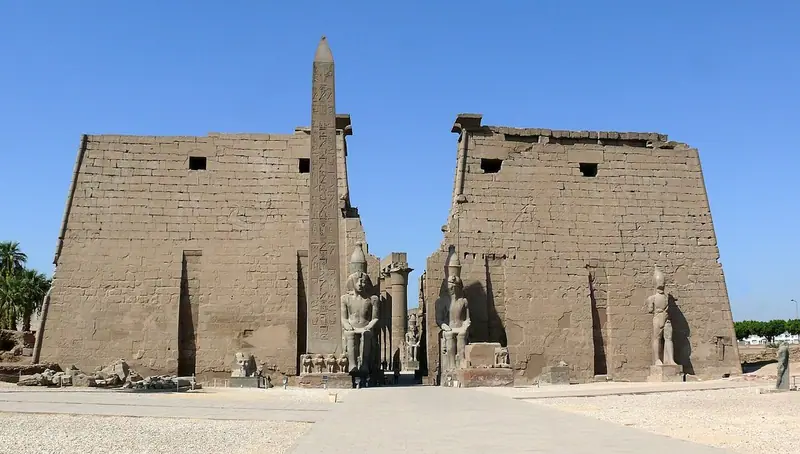 Ancient Egyptian7 stops · from c. 1390 BCE
Luxor Temple audio guide
Past Ramesses II’s pylon to Amenhotep III’s colonnade, with a Roman chapel and a shrine of Alexander within.
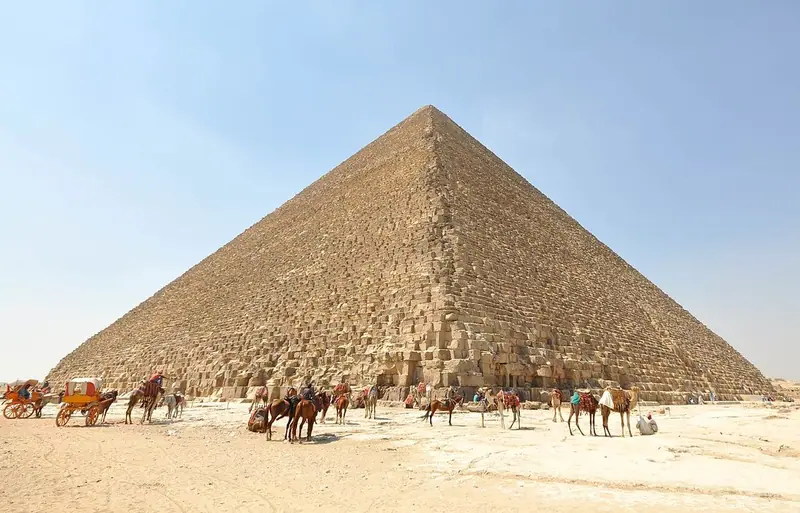 Ancient Egyptian7 stops · c. 26th century BCE
Pyramids of Giza audio guide
The Great Pyramid of Khufu, the pyramids of Khafre and Menkaure, and the Great Sphinx keeping watch.
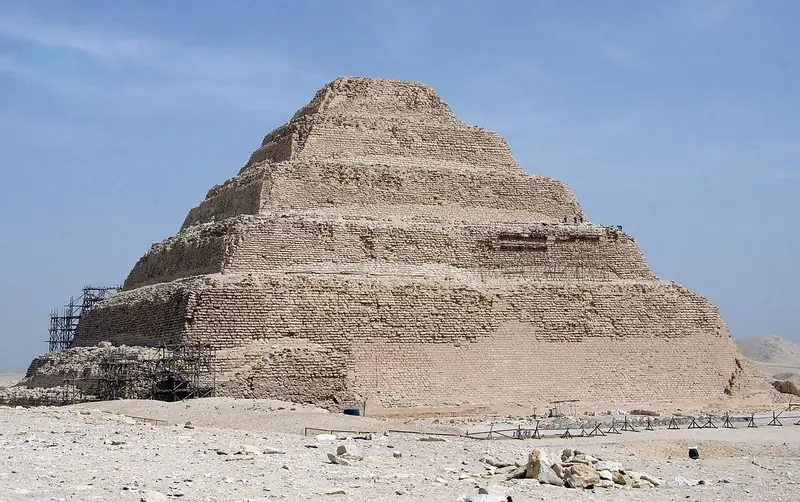 Ancient Egyptian8 stops · from c. 27th century BCE
Saqqara audio guide
Djoser’s Step Pyramid, the Pyramid of Unas, painted tombs and the vast galleries of the Serapeum.
Every guide, in every country
Philae Temple and every other guide we publish, including future ones. One payment, no subscription.