Before you start
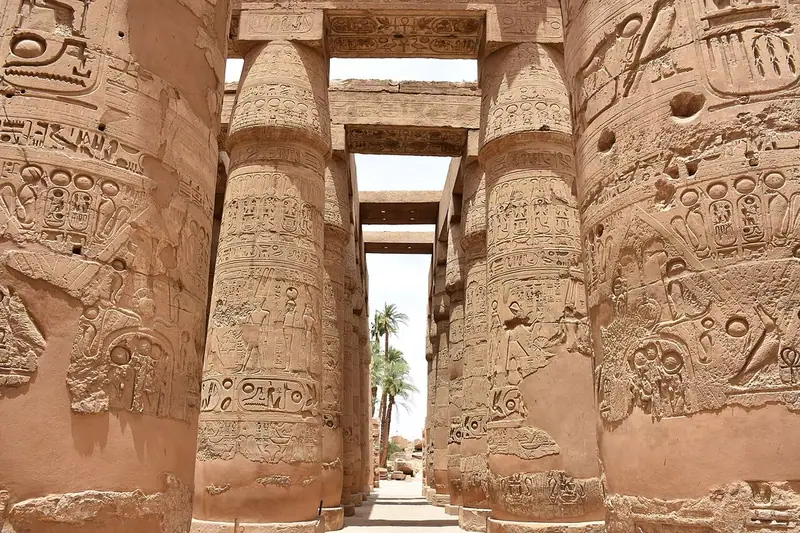
Karnak lies on the east bank of the Nile at the northern end of modern Luxor, about three kilometres from Luxor Temple, to which it is linked by the restored Avenue of Sphinxes. It is part of the UNESCO World Heritage Site ‘Ancient Thebes with its Necropolis’, inscribed in 1979, and is managed by Egypt’s Ministry of Tourism and Antiquities. Karnak is enormous, a whole city of temples, and this guide covers the central Precinct of Amun-Re, the part most visitors see. The ground is mostly flat and paved, but distances are long and there is little shade in the open courts. The route runs from the visitor centre along the avenue of rams into the Great Court, with a short detour to the Open-Air Museum on its north side, then through the Hypostyle Hall and past the obelisks to the festival hall of Thutmose III, and finishes to the south at the Sacred Lake.
Use it as a self-guided tour of Karnak Temple: 7 stops in visit order, each played when you’re ready, at your own pace.
 Free preview · Stop 1
Avenue of Rams
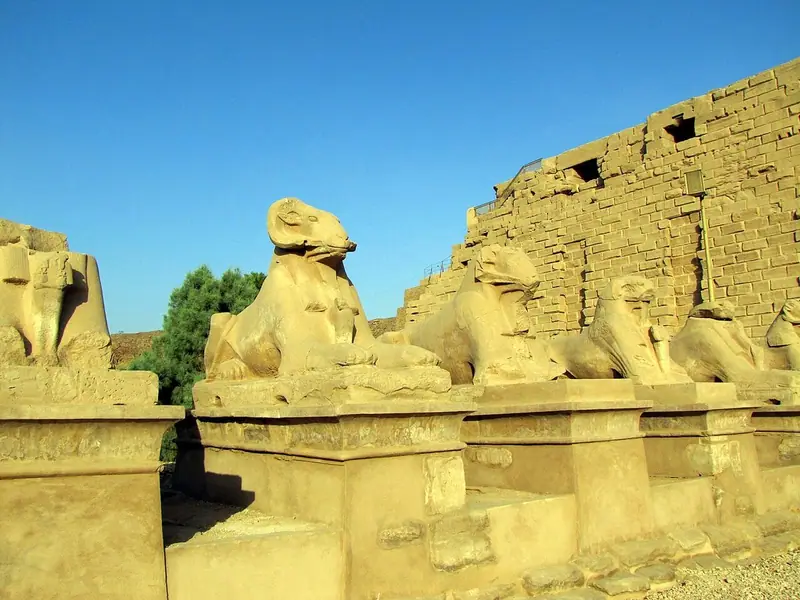
Walk from the visitor centre towards the temple and you arrive at a short avenue of sphinxes with the heads of rams, the sacred animal of Amun. Look between the front paws of each one and you will see a small standing figure of a king, sheltered by the god. These rams line the processional way that led from a quay on a canal of the Nile up to the temple’s main entrance; on festival days the statue of Amun was carried out along this route to his boat. Another, much longer avenue of sphinxes runs south from Karnak to Luxor Temple, about three kilometres away, and it was reopened in 2021 after decades of excavation. Before going in, step back and take in the scale of the gateway ahead, then notice how the avenue draws your eye straight into the heart of the temple.
Photo: David Berkowitz from New York, NY, USA · CC BY 2.0 · Wikimedia Commons
What to see at Karnak Temple: 7 stops, in visit order
- 01
 Avenue of RamsGuardians of the approachFree preview
- 02
 First Pylon and Great CourtThe gateway that was never finishedIn the guide
- 03
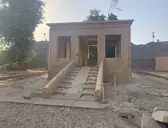 Open-Air MuseumChapels rebuilt from hidden blocksIn the guide
- 04
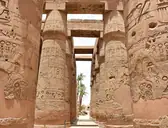 Great Hypostyle HallA forest of stone columnsIn the guide
- 05
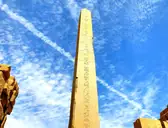 Obelisks of Thutmose I and HatshepsutNeedles of graniteIn the guide
- 06
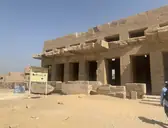 Festival Hall of Thutmose IIIThe botanical gardenIn the guide
- 07
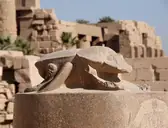 Sacred Lake and ScarabWater for the priestsIn the guide
Site map of Karnak Temple
History of Karnak Temple
Karnak was built by the ancient Egyptians as the great temple of Amun-Re, king of the gods and patron of the city of Thebes, together with his wife Mut and their son Khonsu. Building began in the Middle Kingdom, around 2000 BCE, and continued for about two thousand years, as almost every ruler added a gateway, a hall, an obelisk or a chapel. Most of what you see belongs to the New Kingdom, roughly 1550 to 1070 BCE, when Thebes was the religious capital of an empire stretching from Nubia to Syria and the temple’s priests became immensely rich. Later rulers, including the Nubian kings of the Twenty-fifth Dynasty, the last native pharaohs and the Ptolemies, kept adding to it. Ancient Egyptian civilisation itself began around 3100 BCE, with the union of Upper and Lower Egypt, and lasted as an independent kingdom until Rome annexed Egypt in 30 BCE, though its gods were worshipped for centuries more.
Karnak Temple guide: questions
How many stops does the Karnak Temple guide have?
7 stops, in visit order: 1. Avenue of Rams; 2. First Pylon and Great Court; 3. Open-Air Museum; 4. Great Hypostyle Hall; 5. Obelisks of Thutmose I and Hatshepsut; 6. Festival Hall of Thutmose III; 7. Sacred Lake and Scarab.
Can I do a self-guided tour of Karnak Temple with this guide?
Yes. The guide is made for a self-guided tour: 7 stops in visit order, each with a photo, a story and a voice, so you can explore Karnak Temple at your own pace, without joining a group. Download it before you go and it works offline.
How long is each guide?
The 7 stops add up to about 5 minutes of listening in total. You play each stop when you’re ready, so you can go at your own pace.
Does the guide work offline?
Yes, once it’s downloaded. The guide is a single self-contained web page (about 6.7 MB) with the photos, text and audio built in. Download it to your phone before you go (Wi-Fi is best); after that it opens in any modern browser on iPhone or Android, with no app, account or mobile signal needed.
Does it use GPS or need my location?
No. The guide doesn’t use GPS and doesn’t know where you are: you play each stop when you reach it. It works on iPhone and Android in any modern browser, and it’s in English.
What’s included?
One self-contained HTML guide: 7 stops in visit order, each with a photo, text and a voice, plus the story of who built the site.
Who built Karnak Temple?
Karnak was built by the ancient Egyptians as the great temple of Amun-Re, king of the gods and patron of the city of Thebes, together with his wife Mut and their son Khonsu. Building began in the Middle Kingdom, around 2000 BCE, and continued for about two thousand years, as almost every ruler added a gateway, a hall, an obelisk or a chapel.
Where is Karnak Temple?
Karnak lies on the east bank of the Nile at the northern end of modern Luxor, about three kilometres from Luxor Temple, to which it is linked by the restored Avenue of Sphinxes.
Is there a free audio guide to Karnak Temple?
The first stop, Avenue of Rams, is free to read and hear on this page, so you can try the Karnak Temple audio tour before you buy. The full guide, with all 7 stops, is a one-off purchase: download it once and it’s yours to keep, working offline.
Is the Karnak Temple guide worth it?
If you’d like to know what you’re looking at, yes. For $10 you get 7 stops in visit order, each with a photo, a short history and a voice you play when you’re ready, plus a site map of the stops, and about 5 minutes of listening in all. It’s short on purpose, so you spend your time looking, not listening. It’s yours to keep, works offline and needs no app. The first stop is free on this page, so you can try it before you buy. If you’d like hours of detail, a guided tour will go deeper.
Audio guide or guided tour?
It depends how you like to visit. This guide lets you explore Karnak Temple at your own pace, at any time, for a one-off price. A guided tour gives you a live expert you can ask questions, but at fixed times and usually for a higher price. Many people use both: a tour for the big picture, and the guide to read beforehand or to revisit the stops in their own time.
Is this the official Karnak Temple guide?
No. It’s an independent guide by The Historian Guide, not affiliated with or endorsed by the operator of Karnak Temple. For tickets and opening hours, check the official site operator before you go.
Does the guide include entry tickets or opening hours?
No. The guide is a digital companion only. Admission to Karnak Temple is separate, so check the official site operator for current tickets and opening hours before you go.
- Stop 1 · Avenue of Rams: David Berkowitz from New York, NY, USA · CC BY 2.0 · Wikimedia Commons · resized
- Stop 2 · First Pylon and Great Court: Marc Ryckaert · CC BY-SA 4.0 · Wikimedia Commons · resized
- Stop 3 · Open-Air Museum: Marsupium · CC BY 4.0 · Wikimedia Commons · resized
- Stop 4 · Great Hypostyle Hall (also the cover): MusikAnimal · CC BY-SA 4.0 · Wikimedia Commons · resized
- Stop 5 · Obelisks of Thutmose I and Hatshepsut: PirouzZ · CC BY-SA 4.0 · Wikimedia Commons · resized
- Stop 6 · Festival Hall of Thutmose III: Marsupium · CC BY 4.0 · Wikimedia Commons · resized
- Stop 7 · Sacred Lake and Scarab: Wouter Hagens · CC BY-SA 3.0 · Wikimedia Commons · resized


All photographs from Wikimedia Commons under the licences shown.
More guides in Egypt
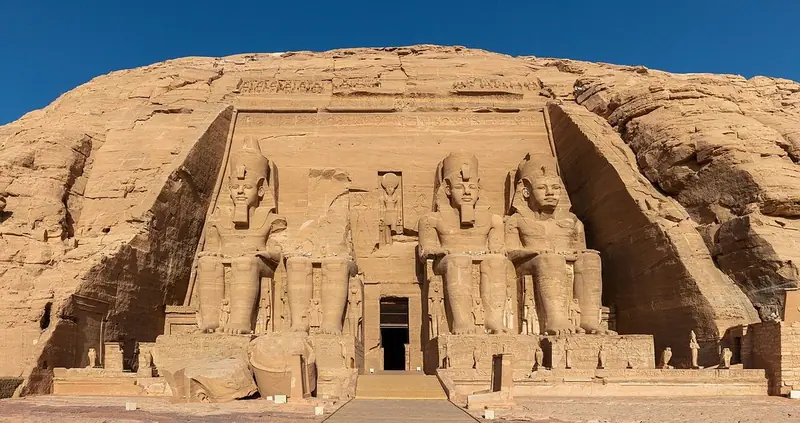 Ancient Egyptian8 stops · 13th century BCE
Abu Simbel audio guide
Ramesses II’s colossal temple façade, the Temple of Nefertari, and how both were rescued from the waters of Lake Nasser.
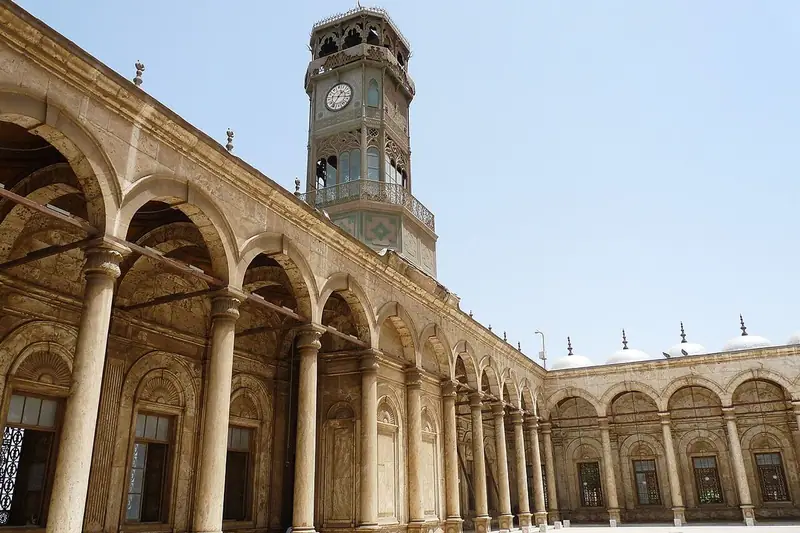 Ayyubid7 stops · from 1176 CE
Cairo Citadel audio guide
Saladin’s walls on the Muqattam Hills and the domes of Muhammad Ali’s mosque, high above the minarets of Islamic Cairo.
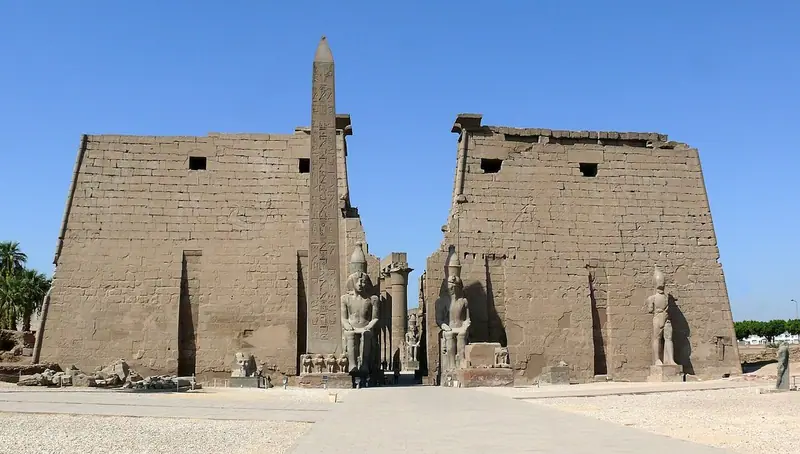 Ancient Egyptian7 stops · from c. 1390 BCE
Luxor Temple audio guide
Past Ramesses II’s pylon to Amenhotep III’s colonnade, with a Roman chapel and a shrine of Alexander within.
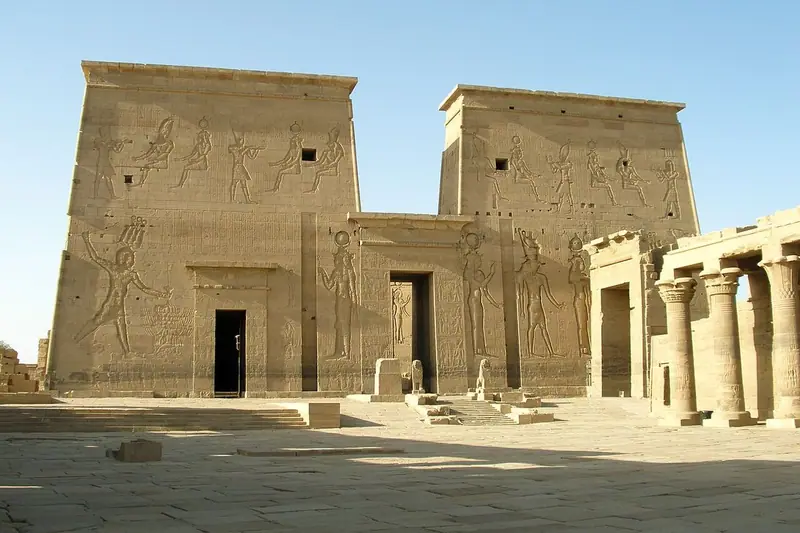 Ancient Egyptian8 stops · 3rd century BCE onwards
Philae Temple audio guide
A short boat ride to the island temple of Isis, with the Kiosk of Trajan standing at the water’s edge.
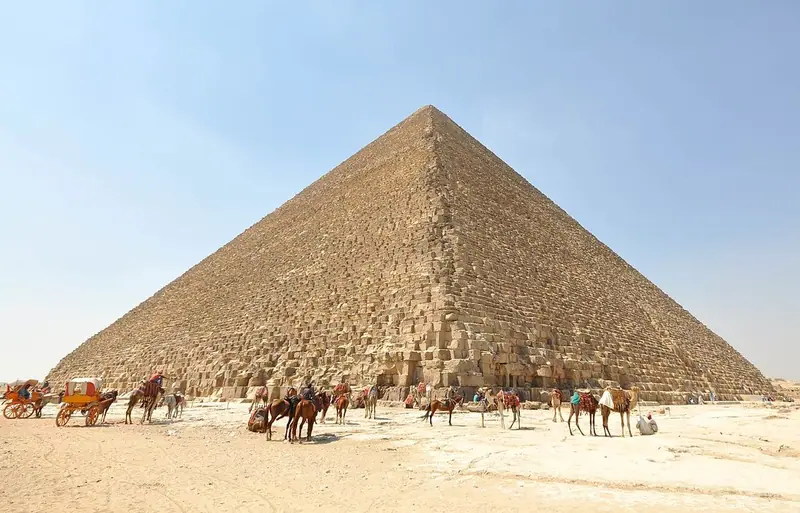 Ancient Egyptian7 stops · c. 26th century BCE
Pyramids of Giza audio guide
The Great Pyramid of Khufu, the pyramids of Khafre and Menkaure, and the Great Sphinx keeping watch.
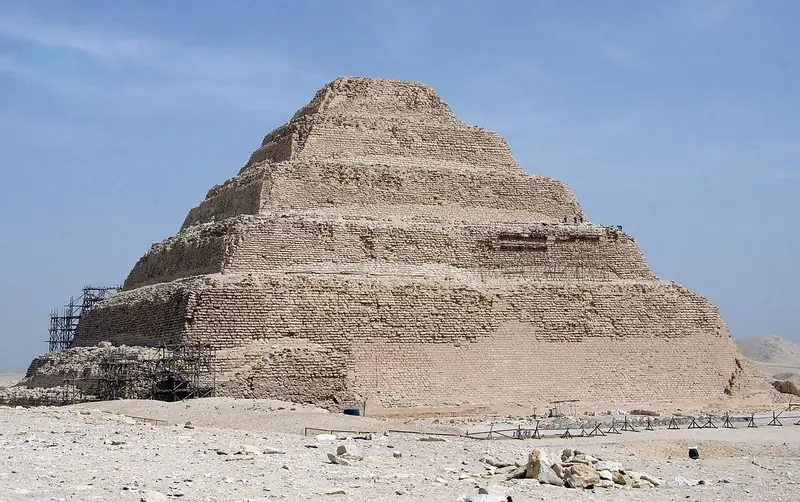 Ancient Egyptian8 stops · from c. 27th century BCE
Saqqara audio guide
Djoser’s Step Pyramid, the Pyramid of Unas, painted tombs and the vast galleries of the Serapeum.
Every guide, in every country
Karnak Temple and every other guide we publish, including future ones. One payment, no subscription.