
Before you start
Sugarloaf Mountain, Pão de Açúcar in Portuguese, rises almost four hundred metres straight from the water at the mouth of Guanabara Bay, one of the great landmarks of Rio de Janeiro. It is one of several bare granite peaks that rise from the water’s edge around the city, and it is part of the World Heritage Site of Rio’s landscapes between the mountains and the sea. This guide begins on the beach at Praia Vermelha, rides the historic cable car in two stages, by way of Morro da Urca, and then explores the views from the summit. The cable cars are often busy, so arrive early, or come in the late afternoon to watch the sunset over the city. Bring water, a hat and sun protection.
Use it as a self-guided tour of Sugarloaf Mountain: 7 stops in visit order, each played when you’re ready, at your own pace.
 Free preview · Stop 1
Praia Vermelha
Begin on the small beach of Praia Vermelha, the Red Beach, in the district of Urca, beneath the towering rock of Sugarloaf. Look up at the bare granite dome, its steep sides almost free of vegetation, rising high above the water. Geologists call peaks like this one bornhardts, rounded domes of hard rock left standing after softer rock around them has been worn away. Notice the climbers who are often visible on its cliffs. With well over two hundred and seventy climbing routes, Sugarloaf and the peaks beside it make up one of the world’s great climbing grounds inside a city. The beach is sheltered between the mountains. Look at the square behind the beach, and walk to the cable car station, at the foot of Morro da Babilônia, where the journey to the summit begins.
Photo: Wilfredor · CC0 · Wikimedia Commons
What to see at Sugarloaf Mountain: 7 stops, in visit order
- 01
 Praia VermelhaThe Red BeachFree preview
- 02
 The First Cable CarUp to Morro da UrcaIn the guide
- 03
 Morro da UrcaThe Middle StationIn the guide
- 04
 The Second Cable CarAcross to the SummitIn the guide
- 05
 Copacabana and the OceanThe Atlantic ShoreIn the guide
- 06
 Botafogo and CorcovadoThe Marvellous CityIn the guide
- 07
 The Summit PathsWildlife on the RockIn the guide
Site map of Sugarloaf Mountain
History of Sugarloaf Mountain
The name Sugarloaf was given by the Portuguese, probably in the sixteenth century, when sugar was shipped in tall conical blocks, called sugarloaves, which the shape of the mountain recalled. In 1908, the Brazilian engineer Augusto Ferreira Ramos imagined a cableway linking the peaks, and work began in 1910, with parts carried up the mountains by climbers or hauled up on cables. The cable car opened in 1912. It was the first in Brazil and only the third of its kind in the world, and it has since been rebuilt several times.
Sugarloaf Mountain guide: questions
How many stops does the Sugarloaf Mountain guide have?
7 stops, in visit order: 1. Praia Vermelha; 2. The First Cable Car; 3. Morro da Urca; 4. The Second Cable Car; 5. Copacabana and the Ocean; 6. Botafogo and Corcovado; 7. The Summit Paths.
Can I do a self-guided tour of Sugarloaf Mountain with this guide?
Yes. The guide is made for a self-guided tour: 7 stops in visit order, each with a photo, a story and a voice, so you can explore Sugarloaf Mountain at your own pace, without joining a group. Download it before you go and it works offline.
How long is each guide?
The 7 stops add up to about 5 minutes of listening in total. You play each stop when you’re ready, so you can go at your own pace.
Does the guide work offline?
Yes, once it’s downloaded. The guide is a single self-contained web page (about 6.2 MB) with the photos, text and audio built in. Download it to your phone before you go (Wi-Fi is best); after that it opens in any modern browser on iPhone or Android, with no app, account or mobile signal needed.
Does it use GPS or need my location?
No. The guide doesn’t use GPS and doesn’t know where you are: you play each stop when you reach it. It works on iPhone and Android in any modern browser, and it’s in English.
What’s included?
One self-contained HTML guide: 7 stops in visit order, each with a photo, text and a voice, plus the story of who built the site.
Who built Sugarloaf Mountain?
The name Sugarloaf was given by the Portuguese, probably in the sixteenth century, when sugar was shipped in tall conical blocks, called sugarloaves, which the shape of the mountain recalled. In 1908, the Brazilian engineer Augusto Ferreira Ramos imagined a cableway linking the peaks, and work began in 1910, with parts carried up the mountains by climbers or hauled up on cables.
Where is Sugarloaf Mountain?
Sugarloaf Mountain, Pão de Açúcar in Portuguese, rises almost four hundred metres straight from the water at the mouth of Guanabara Bay, one of the great landmarks of Rio de Janeiro.
Is there a free audio guide to Sugarloaf Mountain?
The first stop, Praia Vermelha, is free to read and hear on this page, so you can try the Sugarloaf Mountain audio tour before you buy. The full guide, with all 7 stops, is a one-off purchase: download it once and it’s yours to keep, working offline.
Is the Sugarloaf Mountain guide worth it?
If you’d like to know what you’re looking at, yes. For $10 you get 7 stops in visit order, each with a photo, a short history and a voice you play when you’re ready, plus a site map of the stops, and about 5 minutes of listening in all. It’s short on purpose, so you spend your time looking, not listening. It’s yours to keep, works offline and needs no app. The first stop is free on this page, so you can try it before you buy. If you’d like hours of detail, a guided tour will go deeper.
Audio guide or guided tour?
It depends how you like to visit. This guide lets you explore Sugarloaf Mountain at your own pace, at any time, for a one-off price. A guided tour gives you a live expert you can ask questions, but at fixed times and usually for a higher price. Many people use both: a tour for the big picture, and the guide to read beforehand or to revisit the stops in their own time.
Is this the official Sugarloaf Mountain guide?
No. It’s an independent guide by The Historian Guide, not affiliated with or endorsed by the operator of Sugarloaf Mountain. For tickets and opening hours, check the official site operator before you go.
Does the guide include entry tickets or opening hours?
No. The guide is a digital companion only. Admission to Sugarloaf Mountain is separate, so check the official site operator for current tickets and opening hours before you go.
- Stop 1 · Praia Vermelha: Wilfredor · CC0 · Wikimedia Commons · resized
- Stop 2 · The First Cable Car: Halley Pacheco de Oliveira · CC BY-SA 3.0 · Wikimedia Commons · resized
- Stop 3 · Morro da Urca: Arian Zwegers from Brussels, Belgium · CC BY 2.0 · Wikimedia Commons · resized
- Stop 4 · The Second Cable Car (also the cover): Wilfredor · CC0 · Wikimedia Commons · resized
- Stop 5 · Copacabana and the Ocean: Fwellisch · CC BY-SA 3.0 · Wikimedia Commons · resized
- Stop 6 · Botafogo and Corcovado: Wilfredor · CC0 · Wikimedia Commons · resized
- Stop 7 · The Summit Paths: Wilfredor · CC0 · Wikimedia Commons · resized


All photographs from Wikimedia Commons under the licences shown.
More guides in Brazil
 Modern7 stops · 1922–1931 CE
Christ the Redeemer audio guide
Ride up through the Tijuca Forest to the soapstone-clad statue on Corcovado, with Sugarloaf and Guanabara Bay spread out below.
 Natural wonder7 stops
Iguaçu Falls audio guide
Forest trails and walkways to the Devil’s Throat, where the Iguaçu River plunges over a curving cliff in hundreds of separate falls.
 Portuguese Colonial9 stops · 1698 – 1897
Ouro Preto audio guide
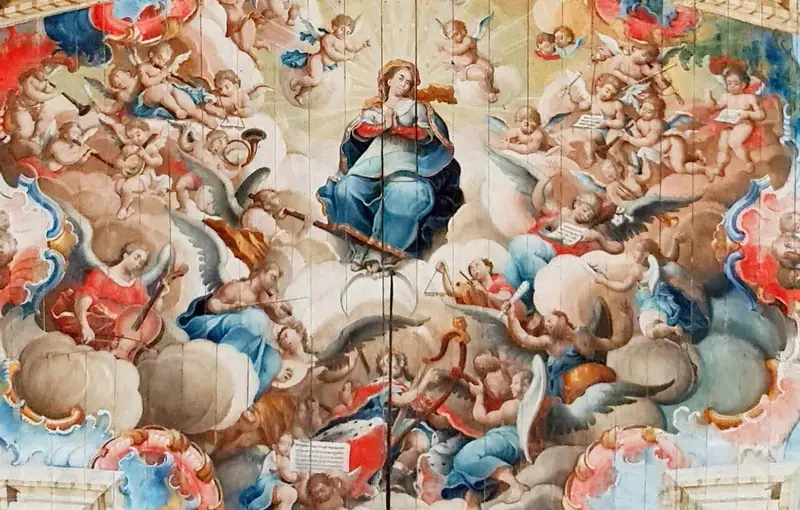
Brazil’s gold-rush capital: Praça Tiradentes, the Inconfidência museum, Aleijadinho’s São Francisco, Ataíde’s painted ceiling and the gilded churches of the Pilar and Rosário.
 Portuguese Colonial8 stops · 1549–1763 CE
Pelourinho, Salvador audio guide
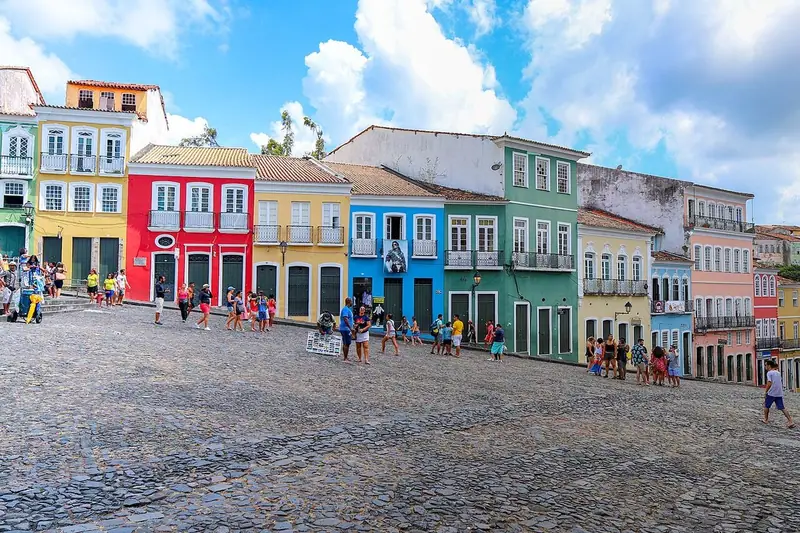
Ride the Lacerda Elevator up to Salvador’s cobbled old town, with its painted houses and some of the richest Baroque churches in the Americas.
Every guide, in every country
Sugarloaf Mountain and every other guide we publish, including future ones. One payment, no subscription.