
Before you start
High above Rio de Janeiro, on the granite summit of Corcovado, stands Christ the Redeemer, one of the most famous statues in the world and a symbol of both the city and Brazil. The mountain rises about seven hundred metres above the city, inside the Tijuca National Park, and the landscapes of Rio, between the mountains and the sea, are a World Heritage Site. This guide follows the historic rack railway up through the forest, visits the statue, and then looks out over the city from the platform at its feet. The summit is often covered in cloud, so choose a clear day if you can, and arrive early to avoid the crowds. The statue is a place of devotion as well as a viewpoint, so please be respectful.
Use it as a self-guided tour of Christ the Redeemer: 7 stops in visit order, each played when you’re ready, at your own pace.
 Free preview · Stop 1
Cosme Velho Station
Begin at the station of Cosme Velho, at the foot of the mountain, where the trains of the Corcovado Rack Railway set off for the summit. The railway was opened by Emperor Pedro II in 1884, almost forty years before work on the statue began, to carry visitors up to enjoy the view. At first the trains were pulled by steam locomotives, but in 1910 the line was electrified, the first electric railway in Brazil. Look at the track, and notice the toothed rack between the rails, which the trains grip to climb the steep slopes, up to a gradient of thirty per cent. The line is nearly four kilometres long. The present red trains, built in Switzerland, were introduced in 2019. Famous passengers have included popes, Albert Einstein and Diana, Princess of Wales. Take a seat, and enjoy the journey.
Photo: Geogast · CC BY 4.0 · Wikimedia Commons
What to see at Christ the Redeemer: 7 stops, in visit order
- 01
 Cosme Velho StationThe Rack RailwayFree preview
- 02
 Through the Tijuca ForestA Forest RebornIn the guide
- 03
 The StatueArms Open WideIn the guide
- 04
 The Face and the SoapstoneBuilt to LastIn the guide
- 05
 Sugarloaf and Guanabara BayThe Marvellous CityIn the guide
- 06
 The Lagoon and the BeachesBetween Mountains and SeaIn the guide
- 07
 The Peaks of TijucaA Mountain CityIn the guide
History of Christ the Redeemer
The idea of a Christian monument on Corcovado was first suggested in the mid-nineteenth century, but it was only in 1920 that the Catholic Circle of Rio launched a campaign for it, funded largely by donations from Brazilian Catholics. The Brazilian engineer Heitor da Silva Costa designed the statue with the artist Carlos Oswald, and the French sculptor Paul Landowski created it, with the Romanian sculptor Gheorghe Leonida, who sculpted the face. It was built between 1922 and 1931 of reinforced concrete, covered with a mosaic of soapstone, and opened on 12 October 1931.
Christ the Redeemer guide: questions
How many stops does the Christ the Redeemer guide have?
7 stops, in visit order: 1. Cosme Velho Station; 2. Through the Tijuca Forest; 3. The Statue; 4. The Face and the Soapstone; 5. Sugarloaf and Guanabara Bay; 6. The Lagoon and the Beaches; 7. The Peaks of Tijuca.
Can I do a self-guided tour of Christ the Redeemer with this guide?
Yes. The guide is made for a self-guided tour: 7 stops in visit order, each with a photo, a story and a voice, so you can explore Christ the Redeemer at your own pace, without joining a group. Download it before you go and it works offline.
How long is each guide?
The 7 stops add up to about 5 minutes of listening in total. You play each stop when you’re ready, so you can go at your own pace.
Does the guide work offline?
Yes, once it’s downloaded. The guide is a single self-contained web page (about 6.6 MB) with the photos, text and audio built in. Download it to your phone before you go (Wi-Fi is best); after that it opens in any modern browser on iPhone or Android, with no app, account or mobile signal needed.
Does it use GPS or need my location?
No. The guide doesn’t use GPS and doesn’t know where you are: you play each stop when you reach it. It works on iPhone and Android in any modern browser, and it’s in English.
What’s included?
One self-contained HTML guide: 7 stops in visit order, each with a photo, text and a voice, plus the story of who built the site.
Who built Christ the Redeemer?
The idea of a Christian monument on Corcovado was first suggested in the mid-nineteenth century, but it was only in 1920 that the Catholic Circle of Rio launched a campaign for it, funded largely by donations from Brazilian Catholics. The Brazilian engineer Heitor da Silva Costa designed the statue with the artist Carlos Oswald, and the French sculptor Paul Landowski created it, with the Romanian sculptor Gheorghe Leonida, who sculpted the face.
Where is Christ the Redeemer?
High above Rio de Janeiro, on the granite summit of Corcovado, stands Christ the Redeemer, one of the most famous statues in the world and a symbol of both the city and Brazil.
Is there a free audio guide to Christ the Redeemer?
The first stop, Cosme Velho Station, is free to read and hear on this page, so you can try the Christ the Redeemer audio tour before you buy. The full guide, with all 7 stops, is a one-off purchase: download it once and it’s yours to keep, working offline.
Is the Christ the Redeemer guide worth it?
If you’d like to know what you’re looking at, yes. For $10 you get 7 stops in visit order, each with a photo, a short history and a voice you play when you’re ready, about 5 minutes of listening in all. It’s short on purpose, so you spend your time looking, not listening. It’s yours to keep, works offline and needs no app. The first stop is free on this page, so you can try it before you buy. If you’d like hours of detail, a guided tour will go deeper.
Audio guide or guided tour?
It depends how you like to visit. This guide lets you explore Christ the Redeemer at your own pace, at any time, for a one-off price. A guided tour gives you a live expert you can ask questions, but at fixed times and usually for a higher price. Many people use both: a tour for the big picture, and the guide to read beforehand or to revisit the stops in their own time.
Is this the official Christ the Redeemer guide?
No. It’s an independent guide by The Historian Guide, not affiliated with or endorsed by the operator of Christ the Redeemer. For tickets and opening hours, check the official site operator before you go.
Does the guide include entry tickets or opening hours?
No. The guide is a digital companion only. Admission to Christ the Redeemer is separate, so check the official site operator for current tickets and opening hours before you go.
- Stop 1 · Cosme Velho Station: Geogast · CC BY 4.0 · Wikimedia Commons · resized
- Stop 2 · Through the Tijuca Forest: James G. Howes · Attribution · Wikimedia Commons · resized
- Stop 3 · The Statue (also the cover): Wilfredor · CC0 · Wikimedia Commons · resized
- Stop 4 · The Face and the Soapstone: Matthias Bethke · CC BY-SA 4.0 · Wikimedia Commons · resized
- Stop 5 · Sugarloaf and Guanabara Bay: Donatas Dabravolskas · CC BY-SA 4.0 · Wikimedia Commons · resized
- Stop 6 · The Lagoon and the Beaches: Jorge Colares · CC BY-SA 3.0 · Wikimedia Commons · resized
- Stop 7 · The Peaks of Tijuca: Halley Pacheco de Oliveira · CC BY-SA 3.0 · Wikimedia Commons · resized


All photographs from Wikimedia Commons under the licences shown.
More guides in Brazil
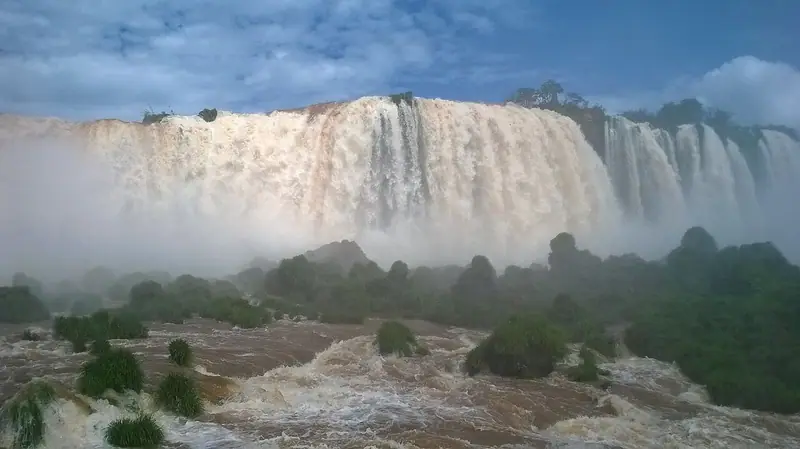 Natural wonder7 stops
Iguaçu Falls audio guide
Forest trails and walkways to the Devil’s Throat, where the Iguaçu River plunges over a curving cliff in hundreds of separate falls.
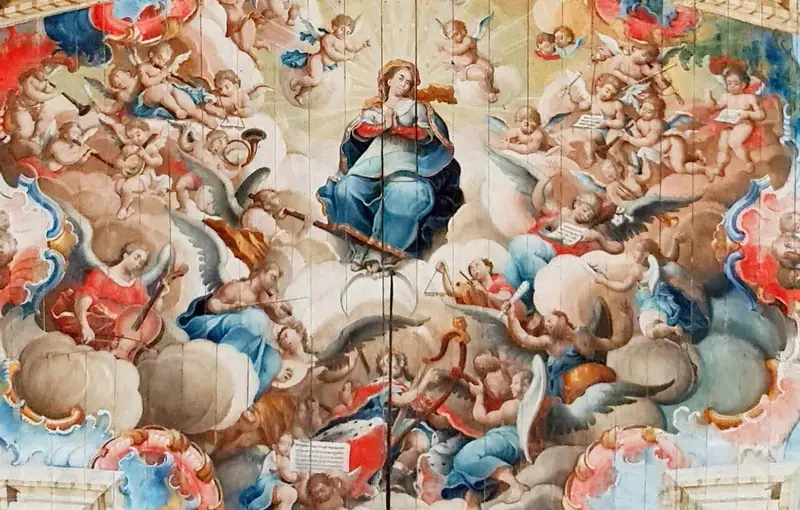 Portuguese Colonial9 stops · 1698 – 1897
Ouro Preto audio guide
Brazil’s gold-rush capital: Praça Tiradentes, the Inconfidência museum, Aleijadinho’s São Francisco, Ataíde’s painted ceiling and the gilded churches of the Pilar and Rosário.
 Portuguese Colonial8 stops · 1549–1763 CE
Pelourinho, Salvador audio guide
Ride the Lacerda Elevator up to Salvador’s cobbled old town, with its painted houses and some of the richest Baroque churches in the Americas.
 Natural wonder7 stops
Sugarloaf Mountain audio guide
Ride Brazil’s first cable car from Praia Vermelha via Morro da Urca to the granite summit above the mouth of Guanabara Bay.
Every guide, in every country
Christ the Redeemer and every other guide we publish, including future ones. One payment, no subscription.