Before you start
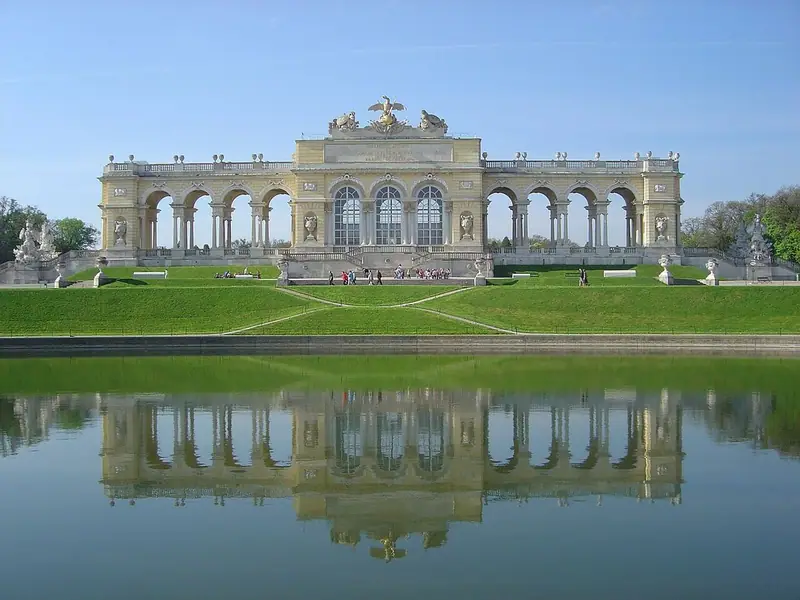
Schönbrunn Palace, on the western edge of Vienna, was the summer residence of the Habsburgs, the dynasty that ruled a vast central European empire for centuries. With more than fourteen hundred rooms and great formal gardens climbing to the Gloriette on its hill, it is the most visited sight in Austria and, with its gardens, a UNESCO World Heritage Site. This guide crosses the main courtyard, visits a few of the state rooms open on the palace tours, and then explores the gardens, climbing to the Gloriette for the view over the city. Only part of the palace is open to visitors, and tours of the state rooms use timed tickets, so book ahead in busy seasons.
Use it as a self-guided tour of Schönbrunn Palace: 8 stops in visit order, each played when you’re ready, at your own pace.
 Free preview · Stop 1
The Main Courtyard
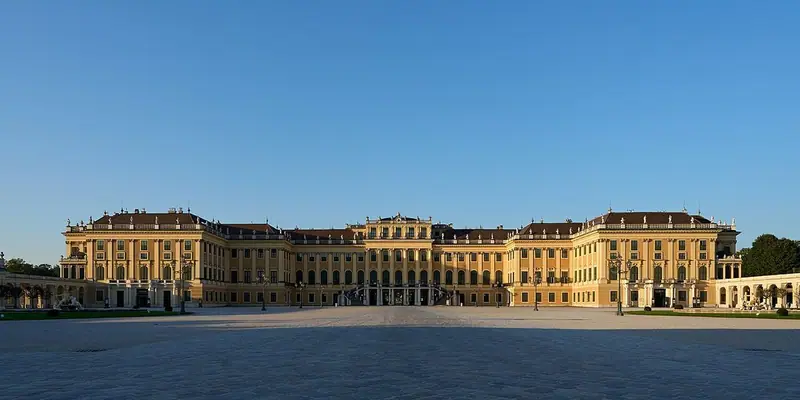
Begin in the main courtyard, the great open space in front of the palace, entered through the gates from the street. Look at the long facade, painted in the golden yellow known as Schönbrunn yellow, which became a colour used on official buildings across the Habsburg lands. The palace was rebuilt in this form for Maria Theresa by the architect Nikolaus Pacassi, and its decoration was later simplified in a more classical style. Look at the two fountains in the courtyard, and the obelisks topped with eagles at the gate, symbols of imperial power. On one side of the courtyard stands the palace theatre, still in use, and nearby the former winter riding school houses the Imperial Carriage Museum. Walk towards the central part of the palace, where the visitor entrance leads up to the state rooms.
Photo: Conny Duck · CC BY-SA 4.0 · Wikimedia Commons
What to see at Schönbrunn Palace: 8 stops, in visit order
- 01
 The Main CourtyardThe Imperial FacadeFree preview
- 02
 The Great GalleryBalls and BanquetsIn the guide
- 03
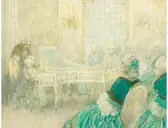 The Mirror RoomMozart at SixIn the guide
- 04
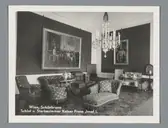 Franz Joseph’s ApartmentsThe Emperor’s RoomsIn the guide
- 05
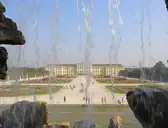 The Great ParterreThe Formal GardenIn the guide
- 06
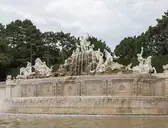 The Neptune FountainThe Sea GodIn the guide
- 07
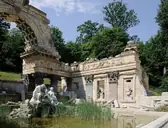 The Roman RuinA Fashionable FollyIn the guide
- 08
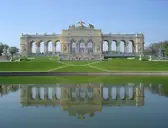 The GlorietteThe View over ViennaIn the guide
Site map of Schönbrunn Palace
History of Schönbrunn Palace
The Habsburgs ruled Austria from the late thirteenth century until 1918, and for most of that time were also Holy Roman Emperors. Emperor Maximilian the Second bought the estate as a hunting ground in 1569, and the name Schönbrunn, beautiful spring, comes from a spring on the land. After the Ottoman siege of Vienna in 1683 destroyed the earlier buildings, a new palace was begun, and in the 1740s and 1750s Empress Maria Theresa had it rebuilt in its present form. Emperor Franz Joseph was born here in 1830 and died here in 1916, two years before the empire collapsed at the end of the First World War. Since 1918 the palace has belonged to the Austrian Republic.
Schönbrunn Palace guide: questions
How many stops does the Schönbrunn Palace guide have?
8 stops, in visit order: 1. The Main Courtyard; 2. The Great Gallery; 3. The Mirror Room; 4. Franz Joseph’s Apartments; 5. The Great Parterre; 6. The Neptune Fountain; 7. The Roman Ruin; 8. The Gloriette.
Can I do a self-guided tour of Schönbrunn Palace with this guide?
Yes. The guide is made for a self-guided tour: 8 stops in visit order, each with a photo, a story and a voice, so you can explore Schönbrunn Palace at your own pace, without joining a group. Download it before you go and it works offline.
How long is each guide?
The 8 stops add up to about 5 minutes of listening in total. You play each stop when you’re ready, so you can go at your own pace.
Does the guide work offline?
Yes, once it’s downloaded. The guide is a single self-contained web page (about 6.9 MB) with the photos, text and audio built in. Download it to your phone before you go (Wi-Fi is best); after that it opens in any modern browser on iPhone or Android, with no app, account or mobile signal needed.
Does it use GPS or need my location?
No. The guide doesn’t use GPS and doesn’t know where you are: you play each stop when you reach it. It works on iPhone and Android in any modern browser, and it’s in English.
What’s included?
One self-contained HTML guide: 8 stops in visit order, each with a photo, text and a voice, plus the story of who built the site.
Who built Schönbrunn Palace?
The Habsburgs ruled Austria from the late thirteenth century until 1918, and for most of that time were also Holy Roman Emperors. Emperor Maximilian the Second bought the estate as a hunting ground in 1569, and the name Schönbrunn, beautiful spring, comes from a spring on the land.
Where is Schönbrunn Palace?
Schönbrunn Palace, on the western edge of Vienna, was the summer residence of the Habsburgs, the dynasty that ruled a vast central European empire for centuries.
Is there a free audio guide to Schönbrunn Palace?
The first stop, The Main Courtyard, is free to read and hear on this page, so you can try the Schönbrunn Palace audio tour before you buy. The full guide, with all 8 stops, is a one-off purchase: download it once and it’s yours to keep, working offline.
Is the Schönbrunn Palace guide worth it?
If you’d like to know what you’re looking at, yes. For $10 you get 8 stops in visit order, each with a photo, a short history and a voice you play when you’re ready, plus a site map of the stops, and about 5 minutes of listening in all. It’s short on purpose, so you spend your time looking, not listening. It’s yours to keep, works offline and needs no app. The first stop is free on this page, so you can try it before you buy. If you’d like hours of detail, a guided tour will go deeper.
Audio guide or guided tour?
It depends how you like to visit. This guide lets you explore Schönbrunn Palace at your own pace, at any time, for a one-off price. A guided tour gives you a live expert you can ask questions, but at fixed times and usually for a higher price. Many people use both: a tour for the big picture, and the guide to read beforehand or to revisit the stops in their own time.
Is this the official Schönbrunn Palace guide?
No. It’s an independent guide by The Historian Guide, not affiliated with or endorsed by the operator of Schönbrunn Palace. For tickets and opening hours, check the official site operator before you go.
Does the guide include entry tickets or opening hours?
No. The guide is a digital companion only. Admission to Schönbrunn Palace is separate, so check the official site operator for current tickets and opening hours before you go.
- Stop 1 · The Main Courtyard: Conny Duck · CC BY-SA 4.0 · Wikimedia Commons · resized
- Stop 2 · The Great Gallery: Dennis G. Jarvis · CC BY-SA 2.0 · Wikimedia Commons · resized
- Stop 3 · The Mirror Room: Heinrich Lefler · Public domain · Wikimedia Commons · resized
- Stop 4 · Franz Joseph’s Apartments: Rijksmuseum · CC0 · Wikimedia Commons · resized
- Stop 5 · The Great Parterre: Martin Falbisoner · CC BY-SA 4.0 · Wikimedia Commons · resized
- Stop 6 · The Neptune Fountain: Dietmar Rabich · CC BY-SA 4.0 · Wikimedia Commons · resized
- Stop 7 · The Roman Ruin: MrPanyGoff · CC BY-SA 3.0 · Wikimedia Commons · resized
- Stop 8 · The Gloriette (also the cover): David Monniaux Copyright © 2005. French translation by… · CC BY-SA 3.0 · Wikimedia Commons · resized


All photographs from Wikimedia Commons under the licences shown.
More guides in Austria
 Hallstatt culture11 stops · c. 800 – 400 BCE (Hallstatt period; mining from c. 1500 BCE)
Hallstatt audio guide
A lakeside salt town that named a prehistoric age: the world’s oldest salt mine, the Iron Age cemetery, a painted-skull ossuary and the Dachstein ice caves.
 Habsburg8 stops · 13th century – 1918 CE
Hofburg audio guide
The courtyards of the Habsburgs’ winter palace in Vienna, from the Swiss Gate and the Imperial Treasury to the Spanish Riding School.
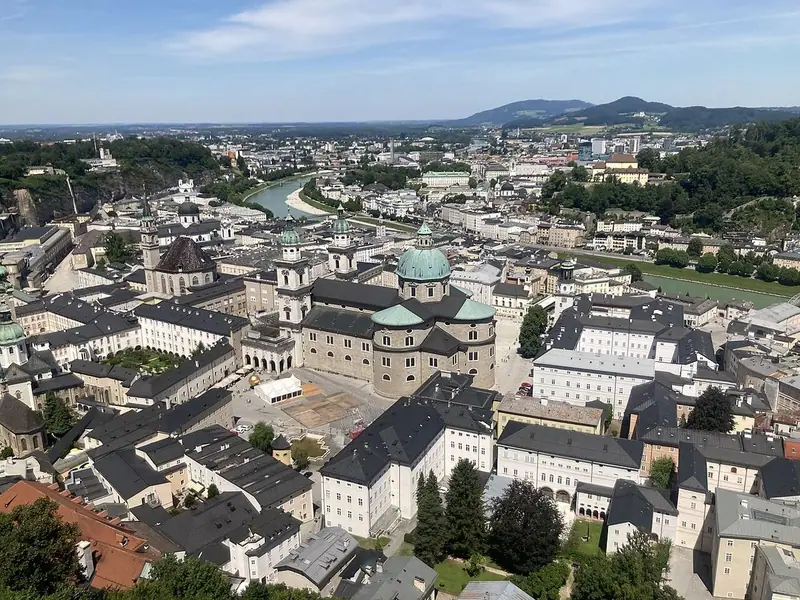 Medieval7 stops · from 1077 CE
Hohensalzburg Fortress audio guide
Ride the funicular up to the prince-archbishops’ fortress above Salzburg, through its bastions to the Golden Hall.
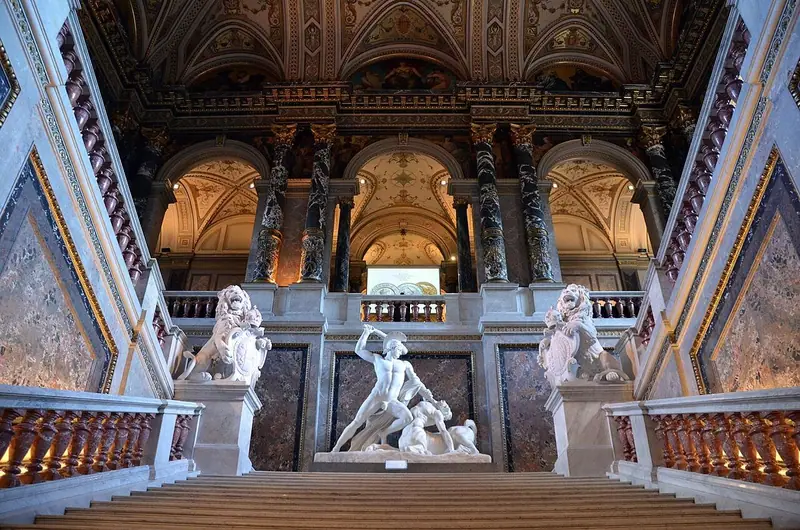 Habsburg8 stops · Ringstraße era
Kunsthistorisches Museum audio guide
Climb the grand staircase of the Habsburgs’ art museum to the Cupola Hall, the Kunstkammer and the finest collection of Bruegel in the world.
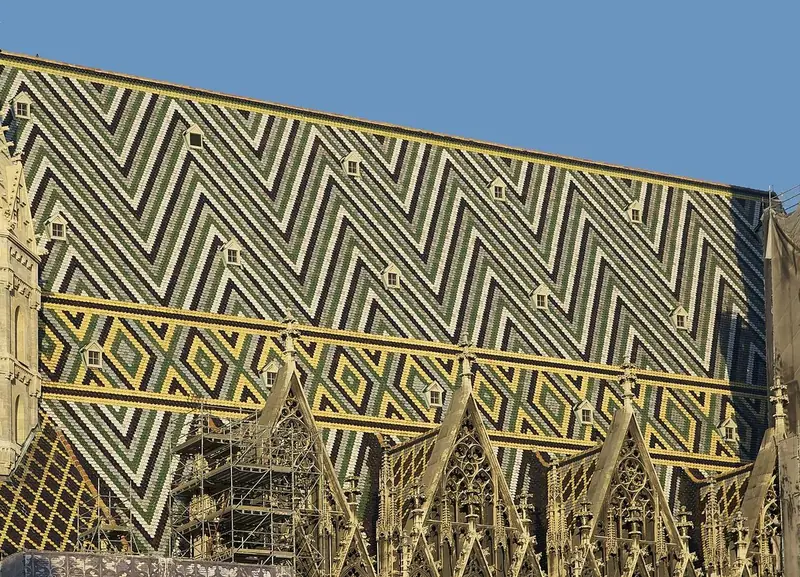 Gothic8 stops · 1147–1511 CE
St Stephen’s Cathedral audio guide
Circle the Stephansdom beneath its glittering tiled roof, from the Giant’s Door and the stone pulpit to the tomb of Frederick III and the south tower.
Every guide, in every country
Schönbrunn Palace and every other guide we publish, including future ones. One payment, no subscription.