Before you start
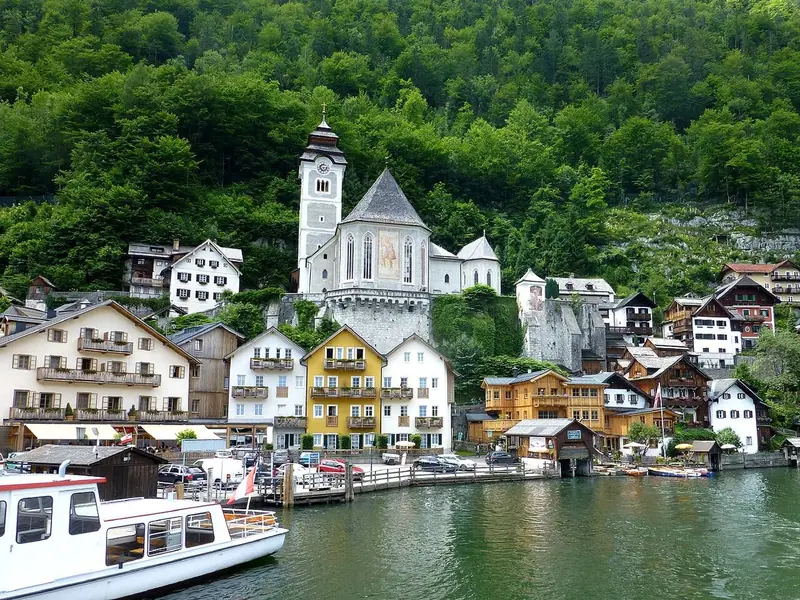
Hallstatt is a small market town squeezed between the deep waters of the Hallstätter See and the steep slopes of the Dachstein mountains, in the Salzkammergut region of Austria. Its fortune lies inside the mountain above it: salt, which has been mined here for thousands of years, and which gave its name to a whole period of European prehistory, the Hallstatt culture of the early Iron Age. UNESCO inscribed the Hallstatt-Dachstein Salzkammergut Cultural Landscape as a World Heritage Site in 1997, for its mountains, lakes and an industry that has shaped the land since prehistoric times. This guide begins in the market square, climbs past the churches and the ossuary, rises to the salt mine and the prehistoric cemetery in the high valley, and ends in the ice caves of the Dachstein above the lake.
Use it as a self-guided tour of Hallstatt: 11 stops in visit order, each played when you’re ready, at your own pace.
 Free preview · Stop 1
The Market Square
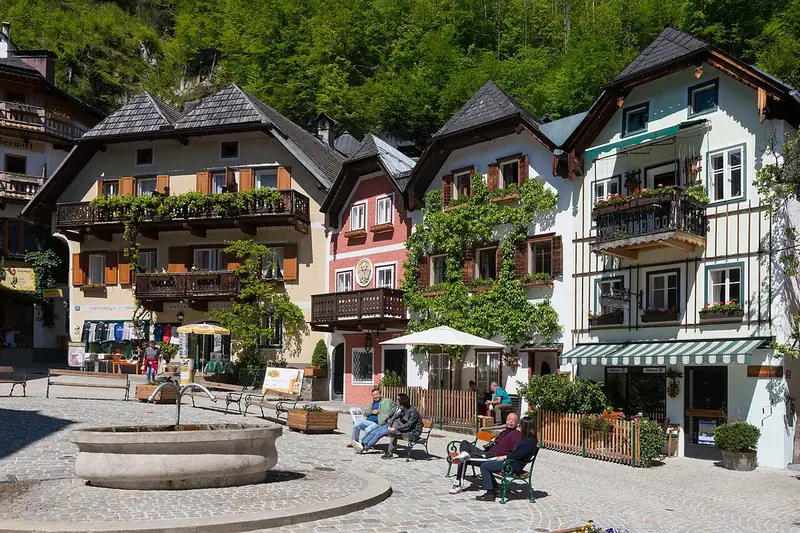
Begin in the Marktplatz, the small square at the heart of Hallstatt, with the lake on one side and the mountain rising steeply on the other. Hallstatt was a market by 1311, when it received its charter, and for centuries the square was the commercial centre of a town that lived from salt. In 1750 a great fire destroyed much of the centre, and the houses around the square, painted in soft colours with flower-filled balconies, were rebuilt afterwards. In the middle stands a stone column of the Holy Trinity, a common feature of Austrian towns after times of plague and war. Space has always been precious here: houses climb up the slope in tiers, and paths are often narrow stairways. Look up at the steep mountain behind the roofs and you will understand why gardens are tiny and every terrace is used.
Photo: Liberaler Humanist · CC BY-SA 3.0 · Wikimedia Commons
What to see at Hallstatt: 11 stops, in visit order
- 01
 The Market SquareA town rebuilt after the fireFree preview
- 02
 The Lutheran ChurchThe miners' Protestant faithIn the guide
- 03
 The Catholic Parish ChurchMaria am BergIn the guide
- 04
 The Charnel HouseA chapel of painted skullsIn the guide
- 05
 The Hallstatt MuseumSeven thousand years of saltIn the guide
- 06
 The Funicular and the SkywalkA view over the World HeritageIn the guide
- 07
 The RudolfsturmThe tower that guarded the saltIn the guide
- 08
 The Prehistoric CemeteryThe graves that named an ageIn the guide
- 09
 The Salt MineThe oldest salt mine in the worldIn the guide
- 10
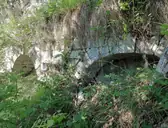 The Brine PipelineThe oldest pipeline in the worldIn the guide
- 11
 The Dachstein Ice CavesHalls of ice in the mountainIn the guide
Site map of Hallstatt
History of Hallstatt
People were working the salt of Hallstatt by the Bronze Age, around 1500 BCE, and perhaps much earlier. In the early Iron Age, from about 800 to 400 BCE, the miners grew rich, trading salt across Europe and burying their dead with bronze, gold, amber and glass in the cemetery above the town. Around 350 BCE, a huge landslide buried the high valley, and mining moved elsewhere for a time. In the Middle Ages, the salt became a monopoly of the Habsburg rulers, who fortified the valley and granted the town market rights in 1311. A fire in 1750 destroyed much of the town, which was rebuilt in the form seen today. Until a road was blasted along the shore in 1890, Hallstatt could be reached only by boat or by narrow mountain paths.
The full history continues in the guide.
Hallstatt guide: questions
How many stops does the Hallstatt guide have?
11 stops, in visit order: 1. The Market Square; 2. The Lutheran Church; 3. The Catholic Parish Church; 4. The Charnel House; 5. The Hallstatt Museum; 6. The Funicular and the Skywalk; 7. The Rudolfsturm; 8. The Prehistoric Cemetery; 9. The Salt Mine; 10. The Brine Pipeline; 11. The Dachstein Ice Caves.
Can I do a self-guided tour of Hallstatt with this guide?
Yes. The guide is made for a self-guided tour: 11 stops in visit order, each with a photo, a story and a voice, so you can explore Hallstatt at your own pace, without joining a group. Download it before you go and it works offline.
How long do you need at Hallstatt?
We suggest allowing A full day. The 11 stops add up to about 8 minutes of listening, and you play each one when you’re ready, so you can linger wherever you like.
How long is each guide?
The 11 stops add up to about 8 minutes of listening in total. You play each stop when you’re ready, so you can go at your own pace.
Does the guide work offline?
Yes, once it’s downloaded. The guide is a single self-contained web page (about 10.7 MB) with the photos, text and audio built in. Download it to your phone before you go (Wi-Fi is best); after that it opens in any modern browser on iPhone or Android, with no app, account or mobile signal needed.
Does it use GPS or need my location?
No. The guide doesn’t use GPS and doesn’t know where you are: you play each stop when you reach it. It works on iPhone and Android in any modern browser, and it’s in English.
What’s included?
One self-contained HTML guide: 11 stops in visit order, each with a photo, text and a voice, plus the story of who built the site.
Who built Hallstatt?
People were working the salt of Hallstatt by the Bronze Age, around 1500 BCE, and perhaps much earlier. In the early Iron Age, from about 800 to 400 BCE, the miners grew rich, trading salt across Europe and burying their dead with bronze, gold, amber and glass in the cemetery above the town.
Where is Hallstatt?
Hallstatt is a small market town squeezed between the deep waters of the Hallstätter See and the steep slopes of the Dachstein mountains, in the Salzkammergut region of Austria.
Is there a free audio guide to Hallstatt?
The first stop, The Market Square, is free to read and hear on this page, so you can try the Hallstatt audio tour before you buy. The full guide, with all 11 stops, is a one-off purchase: download it once and it’s yours to keep, working offline.
Is the Hallstatt guide worth it?
If you’d like to know what you’re looking at, yes. For $10 you get 11 stops in visit order, each with a photo, a short history and a voice you play when you’re ready, plus a site map of the stops, and about 8 minutes of listening in all. It’s short on purpose, so you spend your time looking, not listening. It’s yours to keep, works offline and needs no app. The first stop is free on this page, so you can try it before you buy. If you’d like hours of detail, a guided tour will go deeper.
Audio guide or guided tour?
It depends how you like to visit. This guide lets you explore Hallstatt at your own pace, at any time, for a one-off price. A guided tour gives you a live expert you can ask questions, but at fixed times and usually for a higher price. Many people use both: a tour for the big picture, and the guide to read beforehand or to revisit the stops in their own time.
Is this the official Hallstatt guide?
No. It’s an independent guide by The Historian Guide, not affiliated with or endorsed by the operator of Hallstatt. For tickets and opening hours, check the official site operator before you go.
Does the guide include entry tickets or opening hours?
No. The guide is a digital companion only. Admission to Hallstatt is separate, so check the official site operator for current tickets and opening hours before you go.
- Stop 1 · The Market Square: Liberaler Humanist · CC BY-SA 3.0 · Wikimedia Commons · resized
- Stop 2 · The Lutheran Church: Adolf Riess · CC BY-SA 3.0 · Wikimedia Commons · resized
- Stop 3 · The Catholic Parish Church (also the cover): Hiroki Ogawa · CC BY 3.0 · Wikimedia Commons · resized
- Stop 4 · The Charnel House: Wolfgang Sauber · CC BY-SA 4.0 · Wikimedia Commons · resized
- Stop 5 · The Hallstatt Museum: Gunnar Richter Namenlos.net · CC BY 3.0 · Wikimedia Commons · resized
- Stop 6 · The Funicular and the Skywalk: Oleksandr Dede · CC BY-SA 4.0 · Wikimedia Commons · resized
- Stop 7 · The Rudolfsturm: C.Stadler/Bwag · CC BY-SA 4.0 · Wikimedia Commons · resized
- Stop 8 · The Prehistoric Cemetery: Balou46 · CC BY-SA 4.0 · Wikimedia Commons · resized
- Stop 9 · The Salt Mine: Balou46 · CC BY-SA 4.0 · Wikimedia Commons · resized
- Stop 10 · The Brine Pipeline: C.Stadler/Bwag · CC BY-SA 4.0 · Wikimedia Commons · resized
- Stop 11 · The Dachstein Ice Caves: Tigerente · CC BY-SA 4.0 · Wikimedia Commons · resized


All photographs from Wikimedia Commons under the licences shown.
More guides in Austria
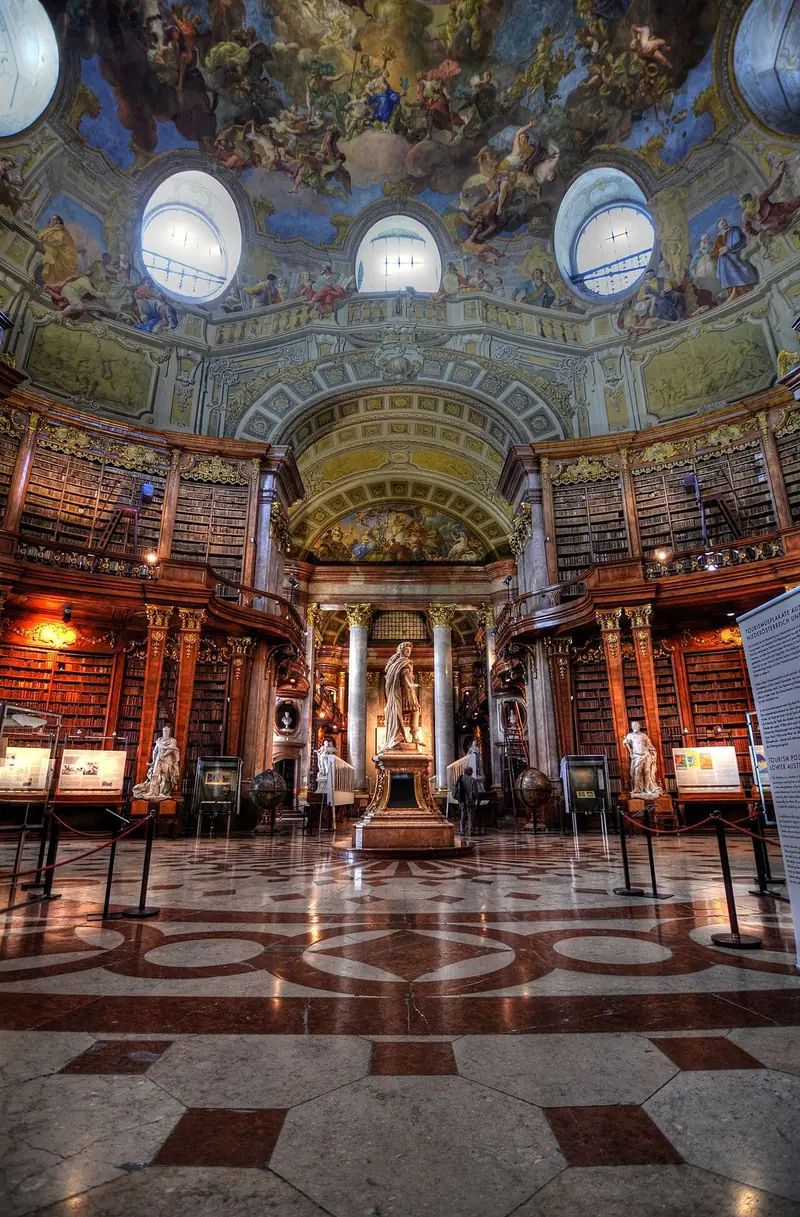 Habsburg8 stops · 13th century – 1918 CE
Hofburg audio guide
The courtyards of the Habsburgs’ winter palace in Vienna, from the Swiss Gate and the Imperial Treasury to the Spanish Riding School.
 Medieval7 stops · from 1077 CE
Hohensalzburg Fortress audio guide
Ride the funicular up to the prince-archbishops’ fortress above Salzburg, through its bastions to the Golden Hall.
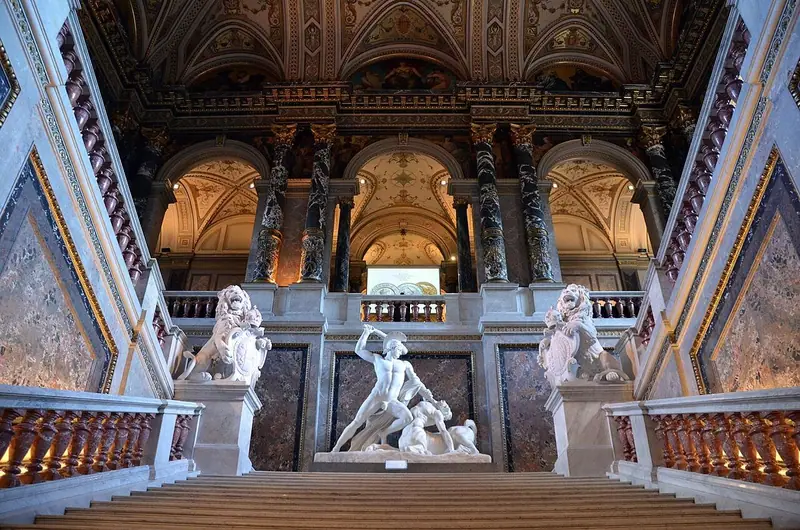 Habsburg8 stops · Ringstraße era
Kunsthistorisches Museum audio guide
Climb the grand staircase of the Habsburgs’ art museum to the Cupola Hall, the Kunstkammer and the finest collection of Bruegel in the world.
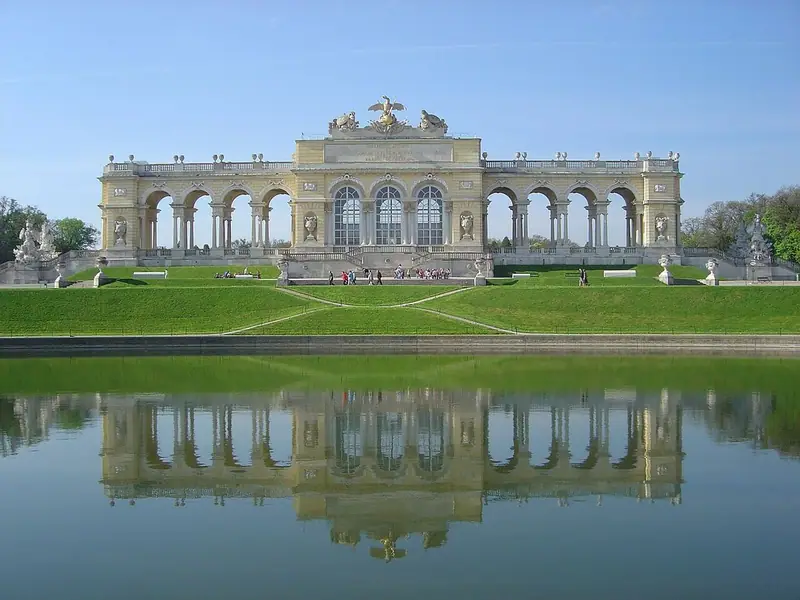 Habsburg8 stops · 1569–1918 CE
Schönbrunn Palace audio guide
Explore the Habsburgs’ summer palace from the Great Gallery and Franz Joseph’s apartments up through the gardens to the Gloriette.
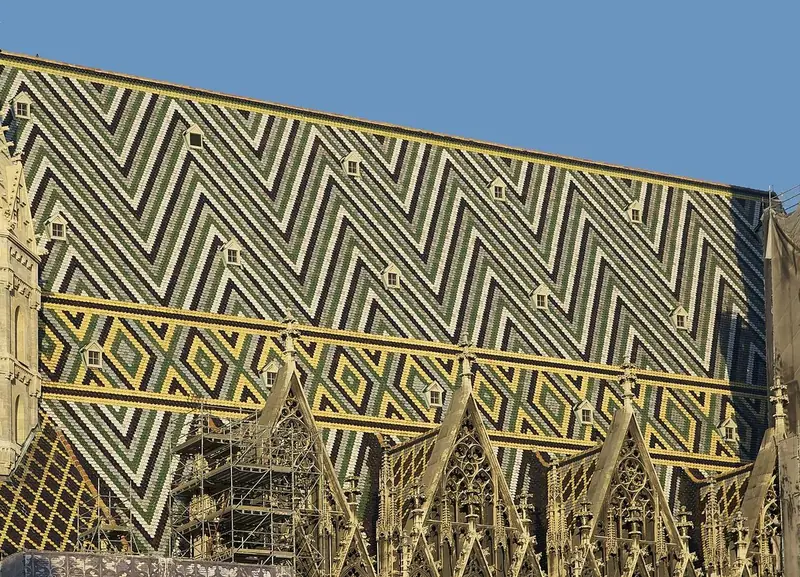 Gothic8 stops · 1147–1511 CE
St Stephen’s Cathedral audio guide
Circle the Stephansdom beneath its glittering tiled roof, from the Giant’s Door and the stone pulpit to the tomb of Frederick III and the south tower.
Every guide, in every country
Hallstatt and every other guide we publish, including future ones. One payment, no subscription.