Before you start
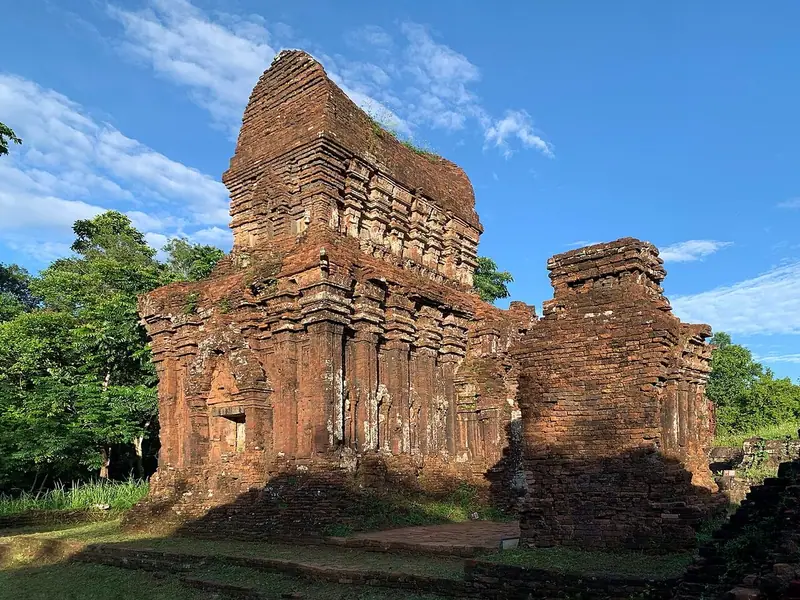
Mỹ Sơn Sanctuary is a group of ruined Hindu temples in a green valley in central Vietnam, about thirty-six kilometres from Hội An. The valley, roughly two kilometres wide, is ringed by mountains, and for centuries it was the holiest site of the kingdom of Champa. In 1999 UNESCO inscribed Mỹ Sơn as a World Heritage Site, as evidence of a vanished Asian civilisation. The temples stand in groups, labelled with letters by French scholars, and are linked by paths through the forest. Many were destroyed by bombing during the Vietnam War, and unexploded ordnance may remain in the surrounding area, so always keep to the marked paths. First visit the gallery near the entrance, which explains the site’s history. This route follows the usual circuit, from Tower K through groups E and F, G and A, and ends at the central groups B, C and D.
Use it as a self-guided tour of the Mỹ Sơn Sanctuary: 7 stops in visit order, each played when you’re ready, at your own pace.
 Free preview · Stop 1
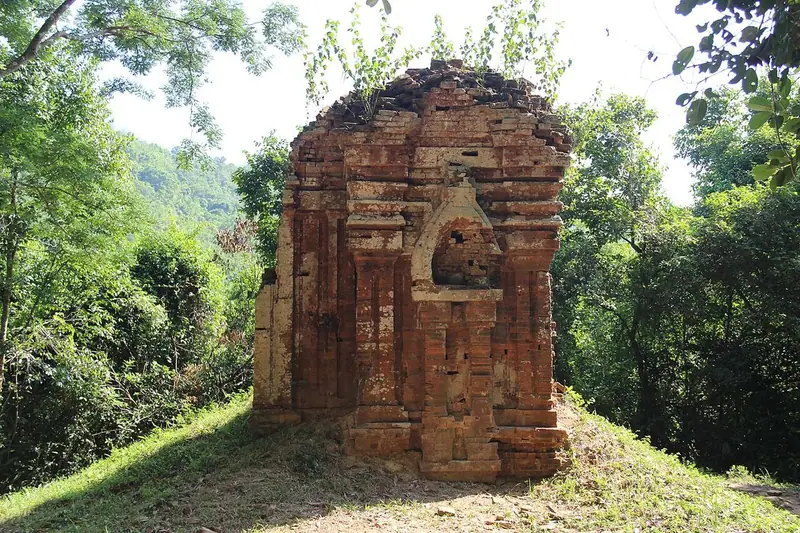
Tower K
Begin at Tower K, a single brick tower standing alone beside the path, the first temple most visitors see. It is a small kalan, the Cham word for a sanctuary tower built to house a god, with a doorway framed by carved brick. Look closely at the walls and you will notice that the Cham carved their decoration directly into the brick, rather than into stone set into the walls. Scholars have concluded that the craftsmen worked on finished walls, because the carved lines run across the joints without a break. This tower belongs to a transitional style of the eleventh and twelfth centuries. It is one of the groups recently conserved with the help of experts from the Archaeological Survey of India, as part of a project marked complete in 2022. From here, follow the path into the forest towards groups E and F.
Photo: Gary Todd · CC0 · Wikimedia Commons
What to see at the Mỹ Sơn Sanctuary: 7 stops, in visit order
- 01
 Tower KThe first temple on the pathFree preview
- 02
 Groups E and FTemples of the earliest styleIn the guide
- 03
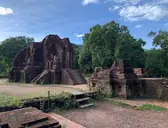 Group GRestored temples on the hillIn the guide
- 04
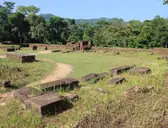 Group AThe lost masterpieceIn the guide
- 05
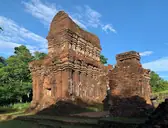 Group CThe sanctuary towerIn the guide
- 06
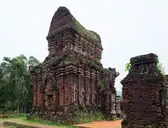 Group BShrine and treasure houseIn the guide
- 07
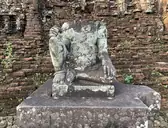 Group DHalls of sculptureIn the guide
Site map of the Mỹ Sơn Sanctuary
History of the Mỹ Sơn Sanctuary
Mỹ Sơn was built by the kings of Champa, an Indian-influenced kingdom of the Cham people, which flourished along the coast of central Vietnam from about the second century until 1832. The Cham followed Hinduism and, at times, Buddhism, wrote in Sanskrit and Cham, and grew rich on trade. Around the year 400, King Bhadravarman the First dedicated the valley to the god Shiva, worshipped here as Bhadreshvara. His wooden temple burned in the sixth century, and King Sambhuvarman rebuilt it. For the next six centuries, kings added temples in brick, and the last important inscription here dates from 1243. As the Vietnamese expanded south, the Cham lost this region, and the site was forgotten.
The full history continues in the guide.
Mỹ Sơn Sanctuary guide: questions
How many stops does the Mỹ Sơn Sanctuary guide have?
7 stops, in visit order: 1. Tower K; 2. Groups E and F; 3. Group G; 4. Group A; 5. Group C; 6. Group B; 7. Group D.
Can I do a self-guided tour of the Mỹ Sơn Sanctuary with this guide?
Yes. The guide is made for a self-guided tour: 7 stops in visit order, each with a photo, a story and a voice, so you can explore the Mỹ Sơn Sanctuary at your own pace, without joining a group. Download it before you go and it works offline.
How long is each guide?
The 7 stops add up to about 5 minutes of listening in total. You play each stop when you’re ready, so you can go at your own pace.
Does the guide work offline?
Yes, once it’s downloaded. The guide is a single self-contained web page (about 7.9 MB) with the photos, text and audio built in. Download it to your phone before you go (Wi-Fi is best); after that it opens in any modern browser on iPhone or Android, with no app, account or mobile signal needed.
Does it use GPS or need my location?
No. The guide doesn’t use GPS and doesn’t know where you are: you play each stop when you reach it. It works on iPhone and Android in any modern browser, and it’s in English.
What’s included?
One self-contained HTML guide: 7 stops in visit order, each with a photo, text and a voice, plus the story of who built the site.
Who built the Mỹ Sơn Sanctuary?
Mỹ Sơn was built by the kings of Champa, an Indian-influenced kingdom of the Cham people, which flourished along the coast of central Vietnam from about the second century until 1832. The Cham followed Hinduism and, at times, Buddhism, wrote in Sanskrit and Cham, and grew rich on trade.
Where is the Mỹ Sơn Sanctuary?
Mỹ Sơn Sanctuary is a group of ruined Hindu temples in a green valley in central Vietnam, about thirty-six kilometres from Hội An.
Is there a free audio guide to the Mỹ Sơn Sanctuary?
The first stop, Tower K, is free to read and hear on this page, so you can try the Mỹ Sơn Sanctuary audio tour before you buy. The full guide, with all 7 stops, is a one-off purchase: download it once and it’s yours to keep, working offline.
Is the Mỹ Sơn Sanctuary guide worth it?
If you’d like to know what you’re looking at, yes. For $10 you get 7 stops in visit order, each with a photo, a short history and a voice you play when you’re ready, plus a site map of the stops, and about 5 minutes of listening in all. It’s short on purpose, so you spend your time looking, not listening. It’s yours to keep, works offline and needs no app. The first stop is free on this page, so you can try it before you buy. If you’d like hours of detail, a guided tour will go deeper.
Audio guide or guided tour?
It depends how you like to visit. This guide lets you explore the Mỹ Sơn Sanctuary at your own pace, at any time, for a one-off price. A guided tour gives you a live expert you can ask questions, but at fixed times and usually for a higher price. Many people use both: a tour for the big picture, and the guide to read beforehand or to revisit the stops in their own time.
Is this the official Mỹ Sơn Sanctuary guide?
No. It’s an independent guide by The Historian Guide, not affiliated with or endorsed by the operator of the Mỹ Sơn Sanctuary. For tickets and opening hours, check the official site operator before you go.
Does the guide include entry tickets or opening hours?
No. The guide is a digital companion only. Admission to the Mỹ Sơn Sanctuary is separate, so check the official site operator for current tickets and opening hours before you go.
- Stop 1 · Tower K: Gary Todd · CC0 · Wikimedia Commons · resized
- Stop 2 · Groups E and F: Gary Todd · CC0 · Wikimedia Commons · resized
- Stop 3 · Group G: Chainwit. · CC BY 4.0 · Wikimedia Commons · resized
- Stop 4 · Group A: Gary Todd · CC0 · Wikimedia Commons · resized
- Stop 5 · Group C (also the cover): Chainwit. · CC BY 4.0 · Wikimedia Commons · resized
- Stop 6 · Group B: [Tycho] talk , http://shansov.net · CC BY 3.0 · Wikimedia Commons · resized
- Stop 7 · Group D: Chainwit. · CC BY 4.0 · Wikimedia Commons · resized


All photographs from Wikimedia Commons under the licences shown.
More guides in Vietnam
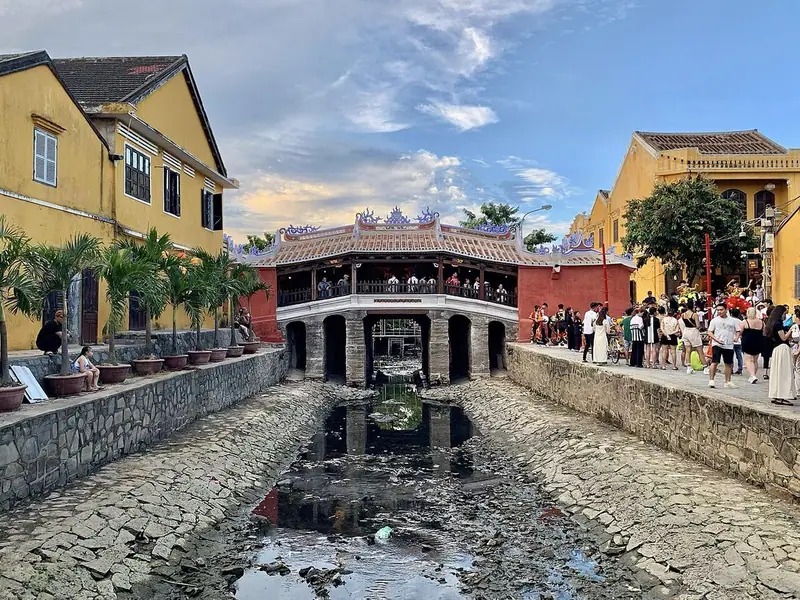 Vietnamese6 stops · 16th–19th century CE
Hội An Ancient Town audio guide
A riverside trading port of merchant houses and assembly halls, from the Japanese Covered Bridge to the Fujian Assembly Hall.
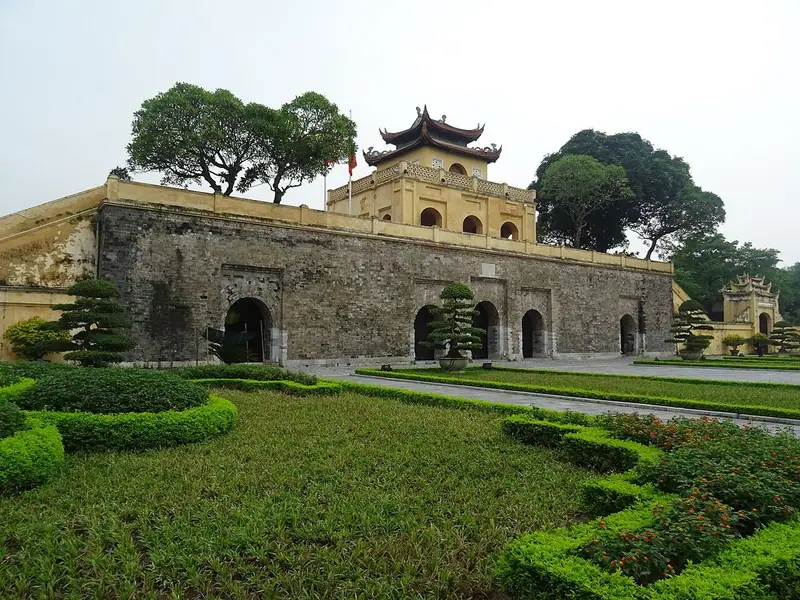 Vietnamese7 stops · 1010–1802 CE
Imperial Citadel of Thăng Long audio guide
Explore the seat of Vietnamese kings for almost eight centuries in central Hà Nội, from the Flag Tower and Đoan Môn to the Dragon Steps.
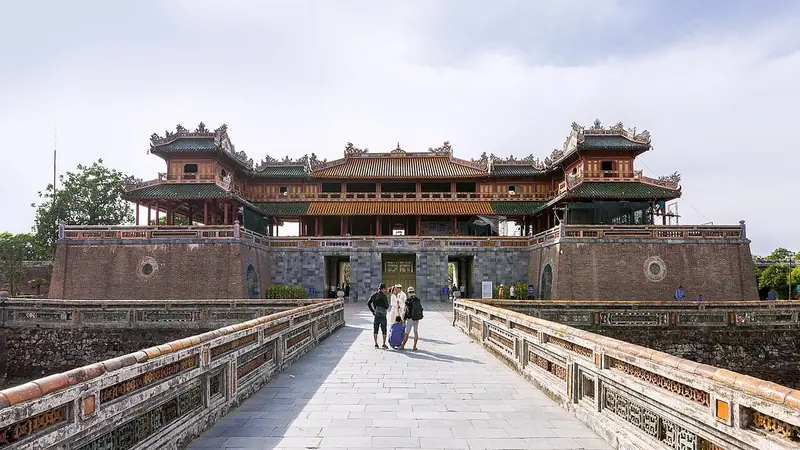 Nguyễn7 stops · 1802–1945 CE
Imperial City of Huế audio guide
Pass the Meridian Gate into the walled palace of Vietnam’s last emperors, to the Hall of Supreme Harmony and the Purple Forbidden City.
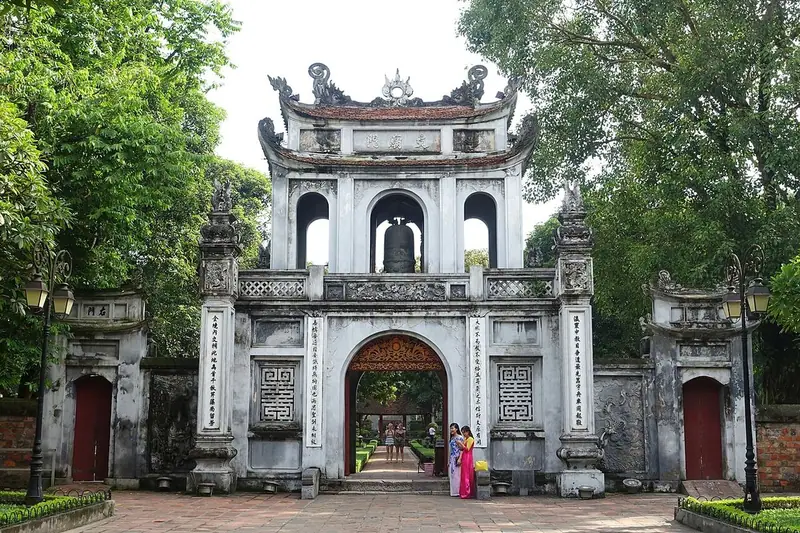 Vietnamese6 stops · 1070–1779 CE
Temple of Literature audio guide
Pass through the courtyards of Vietnam’s first university to the Constellation of Literature Pavilion and the stelae of the doctors.
Every guide, in every country
Mỹ Sơn Sanctuary and every other guide we publish, including future ones. One payment, no subscription.