Before you start
Qasr Al Hosn, the palace fort, stands in the heart of Abu Dhabi, surrounded by the towers of the modern city. It began as a watchtower in the eighteenth century, and is the oldest stone building in the city. For generations it was the home of Abu Dhabi’s ruling family and the seat of government. This guide leads round the Al Hosn site, through the inner fort and the outer palace, to the National Consultative Council building and the House of Artisans, where traditional crafts are kept alive. Much of the site is in the open, so in the hotter months it is best visited early or late in the day.
Use it as a self-guided tour of Qasr Al Hosn: 7 stops in visit order, each played when you’re ready, at your own pace.
 Free preview · Stop 1
The Al Hosn Site
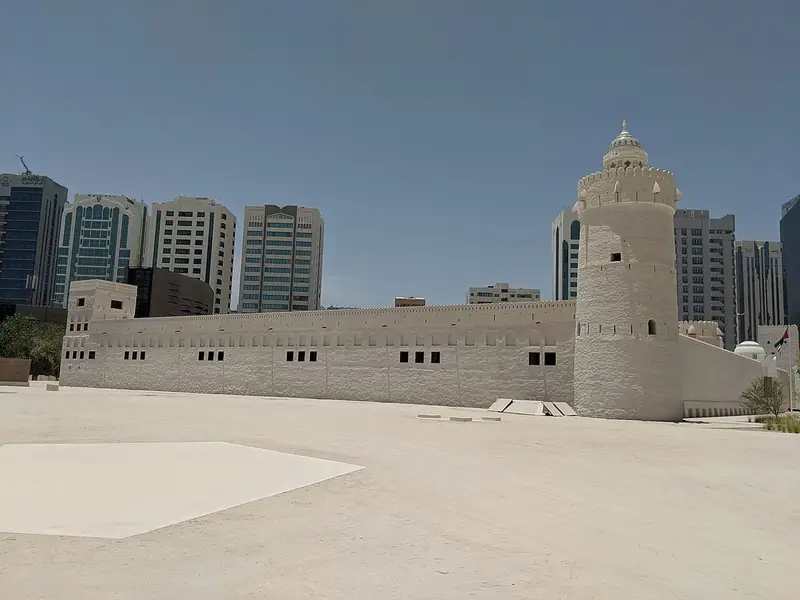
Begin in the open gardens around the fort. Look at the low white and sand-coloured walls of Qasr Al Hosn, with its towers, standing among lawns and paved squares, and around it the skyscrapers of modern Abu Dhabi. For a long time this fort was one of the very few stone buildings on the island, and around it was a town of palm-frond houses and a few buildings of stone, by the sea. Abu Dhabi grew rich from pearling, and by the late nineteenth century its people had some four hundred pearling boats, more than anywhere else in the Gulf. Then, in the twentieth century, oil changed everything, and the city you see around you was built within living memory. The Al Hosn site includes the fort, the National Consultative Council building, the Cultural Foundation and the House of Artisans.
Photo: Peturrunar · CC BY-SA 4.0 · Wikimedia Commons
What to see at Qasr Al Hosn: 7 stops, in visit order
- 01
 The Al Hosn SiteAn old fort in a new cityFree preview
- 02
 The WatchtowerWhere it all beganIn the guide
- 03
 The Inner FortThe seat of the rulersIn the guide
- 04
 The Outer PalaceBuilt with oil moneyIn the guide
- 05
 Pearls and the SeaDivers and merchantsIn the guide
- 06
 The Consultative CouncilBirthplace of a nationIn the guide
- 07
 The House of ArtisansWeaving and palm craftsIn the guide
History of Qasr Al Hosn
For centuries the Bani Yas, a confederation of Arab tribes, lived in the Liwa Oasis, deep in the desert to the south. In the eighteenth century, according to tradition, some of them found fresh water on the island of Abu Dhabi, and a settlement grew up there, living by fishing and pearling. From the 1790s the island became the seat of the Al Nahyan family, who have ruled Abu Dhabi ever since. In the nineteenth century Abu Dhabi signed treaties with Britain, and became one of the Trucial States. Oil was found in the twentieth century, and in 1971 Abu Dhabi joined the new United Arab Emirates, with Abu Dhabi city as its capital.
Qasr Al Hosn guide: questions
How many stops does the Qasr Al Hosn guide have?
7 stops, in visit order: 1. The Al Hosn Site; 2. The Watchtower; 3. The Inner Fort; 4. The Outer Palace; 5. Pearls and the Sea; 6. The Consultative Council; 7. The House of Artisans.
Can I do a self-guided tour of Qasr Al Hosn with this guide?
Yes. The guide is made for a self-guided tour: 7 stops in visit order, each with a photo, a story and a voice, so you can explore Qasr Al Hosn at your own pace, without joining a group. Download it before you go and it works offline.
How long is each guide?
The 7 stops add up to about 5 minutes of listening in total. You play each stop when you’re ready, so you can go at your own pace.
Does the guide work offline?
Yes, once it’s downloaded. The guide is a single self-contained web page (about 6.3 MB) with the photos, text and audio built in. Download it to your phone before you go (Wi-Fi is best); after that it opens in any modern browser on iPhone or Android, with no app, account or mobile signal needed.
Does it use GPS or need my location?
No. The guide doesn’t use GPS and doesn’t know where you are: you play each stop when you reach it. It works on iPhone and Android in any modern browser, and it’s in English.
What’s included?
One self-contained HTML guide: 7 stops in visit order, each with a photo, text and a voice, plus the story of who built the site.
Who built Qasr Al Hosn?
For centuries the Bani Yas, a confederation of Arab tribes, lived in the Liwa Oasis, deep in the desert to the south. In the eighteenth century, according to tradition, some of them found fresh water on the island of Abu Dhabi, and a settlement grew up there, living by fishing and pearling.
Where is Qasr Al Hosn?
Qasr Al Hosn, the palace fort, stands in the heart of Abu Dhabi, surrounded by the towers of the modern city.
Is there a free audio guide to Qasr Al Hosn?
The first stop, The Al Hosn Site, is free to read and hear on this page, so you can try the Qasr Al Hosn audio tour before you buy. The full guide, with all 7 stops, is a one-off purchase: download it once and it’s yours to keep, working offline.
Is the Qasr Al Hosn guide worth it?
If you’d like to know what you’re looking at, yes. For $10 you get 7 stops in visit order, each with a photo, a short history and a voice you play when you’re ready, about 5 minutes of listening in all. It’s short on purpose, so you spend your time looking, not listening. It’s yours to keep, works offline and needs no app. The first stop is free on this page, so you can try it before you buy. If you’d like hours of detail, a guided tour will go deeper.
Audio guide or guided tour?
It depends how you like to visit. This guide lets you explore Qasr Al Hosn at your own pace, at any time, for a one-off price. A guided tour gives you a live expert you can ask questions, but at fixed times and usually for a higher price. Many people use both: a tour for the big picture, and the guide to read beforehand or to revisit the stops in their own time.
Is this the official Qasr Al Hosn guide?
No. It’s an independent guide by The Historian Guide, not affiliated with or endorsed by the operator of Qasr Al Hosn. For tickets and opening hours, check the official site operator before you go.
Does the guide include entry tickets or opening hours?
No. The guide is a digital companion only. Admission to Qasr Al Hosn is separate, so check the official site operator for current tickets and opening hours before you go.
- Stop 1 · The Al Hosn Site: Peturrunar · CC BY-SA 4.0 · Wikimedia Commons · resized
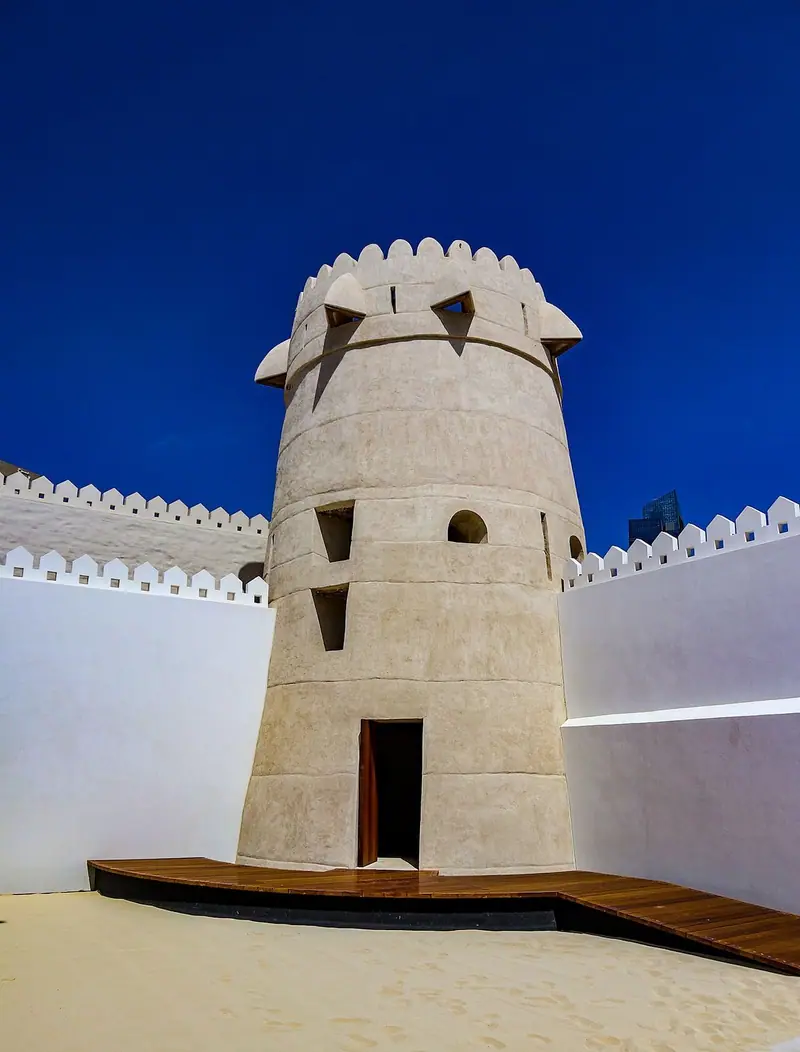
- Stop 2 · The Watchtower (also the cover): Aeroid · CC BY-SA 4.0 · Wikimedia Commons · resized
- Stop 3 · The Inner Fort: Aeroid · CC BY-SA 4.0 · Wikimedia Commons · resized
- Stop 4 · The Outer Palace: Radosław Botev · CC BY 3.0 pl · Wikimedia Commons · resized
- Stop 5 · Pearls and the Sea: Aeroid · CC BY-SA 4.0 · Wikimedia Commons · resized
- Stop 6 · The Consultative Council: Aeroid · CC BY-SA 4.0 · Wikimedia Commons · resized
- Stop 7 · The House of Artisans: Radosław Botev · CC BY 3.0 pl · Wikimedia Commons · resized


All photographs from Wikimedia Commons under the licences shown.
More guides in United Arab Emirates
 Emirati7 stops · 1891–1971
Al Ain Oasis and Forts audio guide
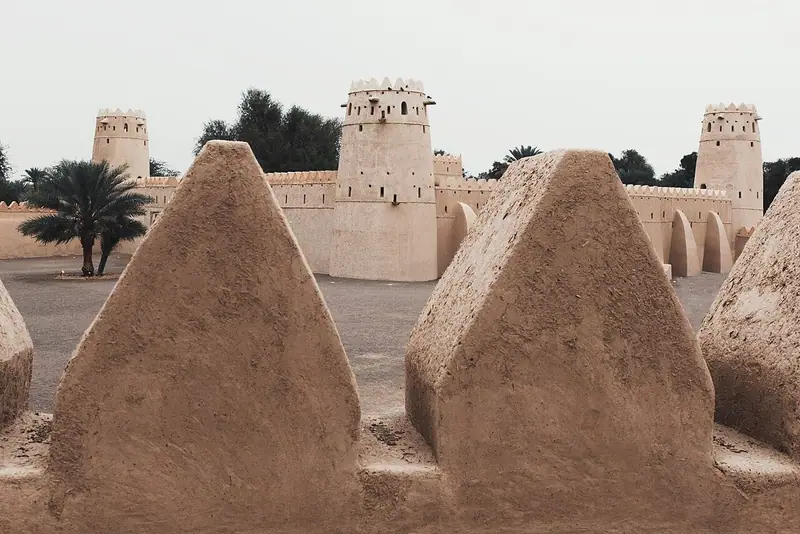
Explore the Garden City’s springs and palm groves, from the Sultan Fort and the falaj channels of the oasis to Al Jahili Fort.
 Emirati8 stops · late 18th – mid 20th century
Old Dubai and the Creek audio guide
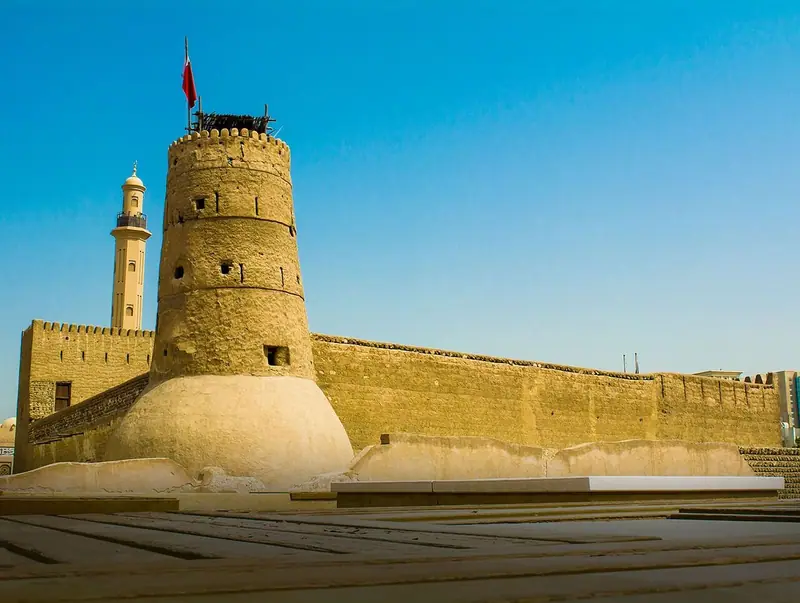
The wind-tower lanes of Al Fahidi and the old fort, then an abra across Dubai Creek to the spice and gold souks.
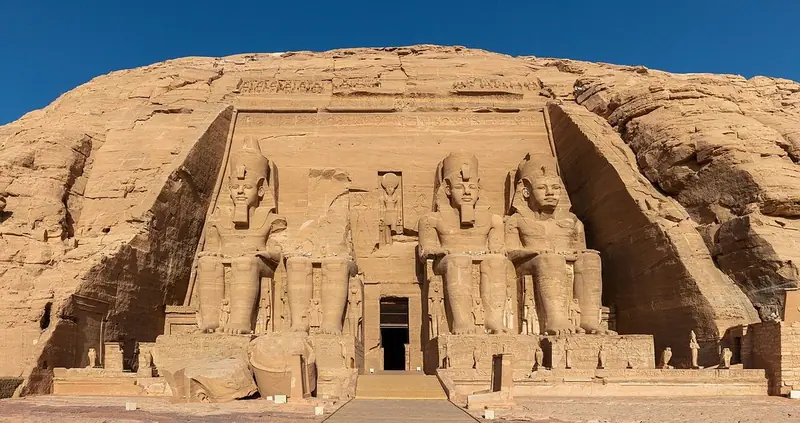 Ancient Egyptian8 stops · 13th century BCE
Abu Simbel audio guide
Ramesses II’s colossal temple façade, the Temple of Nefertari, and how both were rescued from the waters of Lake Nasser.
Every guide, in every country
Qasr Al Hosn and every other guide we publish, including future ones. One payment, no subscription.