Before you start
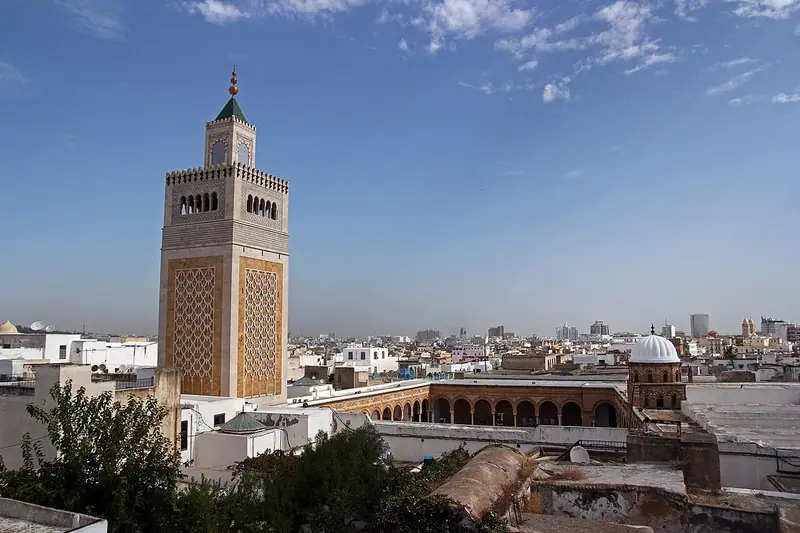
The Medina of Tunis, the old walled city at the heart of the Tunisian capital, is a maze of covered markets, narrow lanes, mosques, palaces and fountains. Founded at the end of the seventh century, it is one of the first Arab Muslim towns of North Africa. From the twelfth to the sixteenth century, under the Almohads and then the Hafsids, Tunis counted among the richest and grandest cities in the Islamic world, and later rulers added palaces, mosques and religious schools. In 1979 UNESCO inscribed the Medina of Tunis as a World Heritage Site, noting some seven hundred historic monuments. This guide explores the souks, mosques, palaces and mausoleums of the medina.
Use it as a self-guided tour of the Medina of Tunis: 9 stops in visit order, each played when you’re ready, at your own pace.
 Free preview · Stop 1
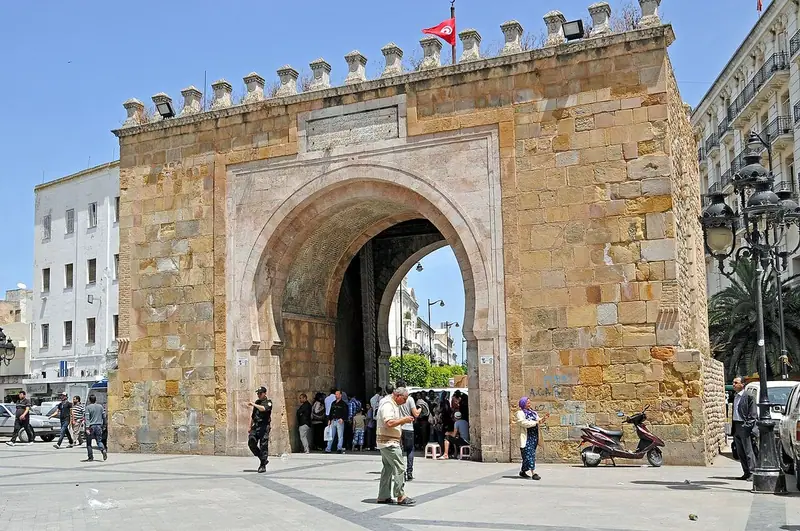
Bab el Bhar
Begin at Bab el Bhar, the Sea Gate, on the eastern edge of the medina. Its name is often said to recall the time when the waters of the lagoon of Tunis came close to the walls on this side. During the French protectorate it was also known as the Porte de France, and it marks the boundary between the old medina and the European city built in the nineteenth and twentieth centuries, whose broad avenue stretches away to the east. The gate has been altered many times and is now a free-standing archway topped by a crenellated parapet. Step through it into Place de la Victoire and look for the two lanes that lead uphill into the medina. Take the lane of Jamaa ez Zitouna, which climbs gently through stalls of souvenirs, leather and brass towards the great mosque. Keep your belongings close in the crowds.
Photo: Dennis G. Jarvis · CC BY-SA 2.0 · Wikimedia Commons
What to see at the Medina of Tunis: 9 stops, in visit order
- 01
 Bab el BharThe Sea GateFree preview
- 02
 The Al-Zaytuna MosqueThe Mosque of the OliveIn the guide
- 03
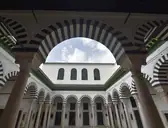 The Madrasa SlimaniaA school of the beysIn the guide
- 04
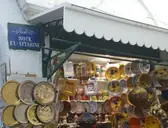 Souk el AttarineThe perfume marketIn the guide
- 05
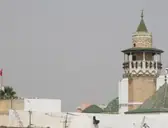 Souk ech ChaouachiaThe makers of the red capIn the guide
- 06
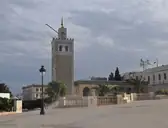 The KasbahMosque and palaceIn the guide
- 07
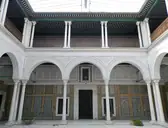 Dar HusseinA palace of princesIn the guide
- 08
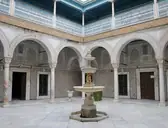 Dar Ben AbdallahA merchant’s homeIn the guide
- 09
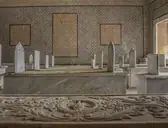 The Tourbet el BeyTombs of the beysIn the guide
Site map of the Medina of Tunis
History of the Medina of Tunis
Arab armies founded Tunis near the ruins of ancient Carthage, and by the early eighth century it had its great mosque, Al-Zaytuna. In the thirteenth century the Hafsid dynasty made Tunis its capital, building the Kasbah Mosque and organising the souks around the great mosque. After 1574 Tunis became part of the empire ruled from Istanbul, governed by deys and later by hereditary beys, first of the Muradid and then of the Husainid dynasty, who built mosques with octagonal minarets, religious schools and grand houses. The medina also welcomed Muslims and Jews expelled from Spain. Under the French protectorate, from 1881, a new European city grew up outside the walls, which helped preserve the old town.
Medina of Tunis guide: questions
How many stops does the Medina of Tunis guide have?
9 stops, in visit order: 1. Bab el Bhar; 2. The Al-Zaytuna Mosque; 3. The Madrasa Slimania; 4. Souk el Attarine; 5. Souk ech Chaouachia; 6. The Kasbah; 7. Dar Hussein; 8. Dar Ben Abdallah; 9. The Tourbet el Bey.
Can I do a self-guided tour of the Medina of Tunis with this guide?
Yes. The guide is made for a self-guided tour: 9 stops in visit order, each with a photo, a story and a voice, so you can explore the Medina of Tunis at your own pace, without joining a group. Download it before you go and it works offline.
How long do you need at the Medina of Tunis?
We suggest allowing about half a day. The 9 stops add up to about 7 minutes of listening, and you play each one when you’re ready, so you can linger wherever you like.
How long is each guide?
The 9 stops add up to about 7 minutes of listening in total. You play each stop when you’re ready, so you can go at your own pace.
Does the guide work offline?
Yes, once it’s downloaded. The guide is a single self-contained web page (about 7.7 MB) with the photos, text and audio built in. Download it to your phone before you go (Wi-Fi is best); after that it opens in any modern browser on iPhone or Android, with no app, account or mobile signal needed.
Does it use GPS or need my location?
No. The guide doesn’t use GPS and doesn’t know where you are: you play each stop when you reach it. It works on iPhone and Android in any modern browser, and it’s in English.
What’s included?
One self-contained HTML guide: 9 stops in visit order, each with a photo, text and a voice, plus the story of who built the site.
Who built the Medina of Tunis?
Arab armies founded Tunis near the ruins of ancient Carthage, and by the early eighth century it had its great mosque, Al-Zaytuna. In the thirteenth century the Hafsid dynasty made Tunis its capital, building the Kasbah Mosque and organising the souks around the great mosque.
Where is the Medina of Tunis?
The Medina of Tunis, the old walled city at the heart of the Tunisian capital, is a maze of covered markets, narrow lanes, mosques, palaces and fountains.
Is there a free audio guide to the Medina of Tunis?
The first stop, Bab el Bhar, is free to read and hear on this page, so you can try the Medina of Tunis audio tour before you buy. The full guide, with all 9 stops, is a one-off purchase: download it once and it’s yours to keep, working offline.
Is the Medina of Tunis guide worth it?
If you’d like to know what you’re looking at, yes. For $10 you get 9 stops in visit order, each with a photo, a short history and a voice you play when you’re ready, plus a site map of the stops, and about 7 minutes of listening in all. It’s short on purpose, so you spend your time looking, not listening. It’s yours to keep, works offline and needs no app. The first stop is free on this page, so you can try it before you buy. If you’d like hours of detail, a guided tour will go deeper.
Audio guide or guided tour?
It depends how you like to visit. This guide lets you explore the Medina of Tunis at your own pace, at any time, for a one-off price. A guided tour gives you a live expert you can ask questions, but at fixed times and usually for a higher price. Many people use both: a tour for the big picture, and the guide to read beforehand or to revisit the stops in their own time.
Is this the official Medina of Tunis guide?
No. It’s an independent guide by The Historian Guide, not affiliated with or endorsed by the operator of the Medina of Tunis. For tickets and opening hours, check the official site operator before you go.
Does the guide include entry tickets or opening hours?
No. The guide is a digital companion only. Admission to the Medina of Tunis is separate, so check the official site operator for current tickets and opening hours before you go.
- Stop 1 · Bab el Bhar: Dennis G. Jarvis · CC BY-SA 2.0 · Wikimedia Commons · resized
- Stop 2 · The Al-Zaytuna Mosque (also the cover): grolli77 from Berlin, Germany · CC BY-SA 2.0 · Wikimedia Commons · resized
- Stop 3 · The Madrasa Slimania: Noomen9 · CC BY-SA 4.0 · Wikimedia Commons · resized
- Stop 4 · Souk el Attarine: Cimoi · CC BY-SA 3.0 · Wikimedia Commons · resized
- Stop 5 · Souk ech Chaouachia: Alan Lew · CC BY-SA 2.0 · Wikimedia Commons · resized
- Stop 6 · The Kasbah: Noomen9 · CC BY-SA 4.0 · Wikimedia Commons · resized
- Stop 7 · Dar Hussein: Brahim Guedich · CC BY-SA 4.0 · Wikimedia Commons · resized
- Stop 8 · Dar Ben Abdallah: Citizen59 · CC BY-SA 3.0 · Wikimedia Commons · resized
- Stop 9 · The Tourbet el Bey: IssamBarhoumi · CC BY-SA 4.0 · Wikimedia Commons · resized


All photographs from Wikimedia Commons under the licences shown.
More guides in Tunisia
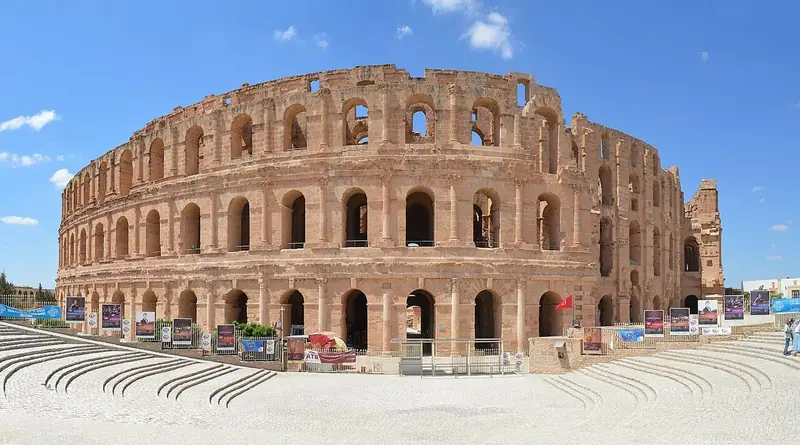 Roman8 stops · 3rd century CE
Amphitheatre of El Jem audio guide
Stand in the arena of one of the largest and best preserved amphitheatres of the Roman world, built for the town of Thysdrus and its thirty-five thousand spectators.
 Roman8 stops · 2nd century BCE – 7th century CE
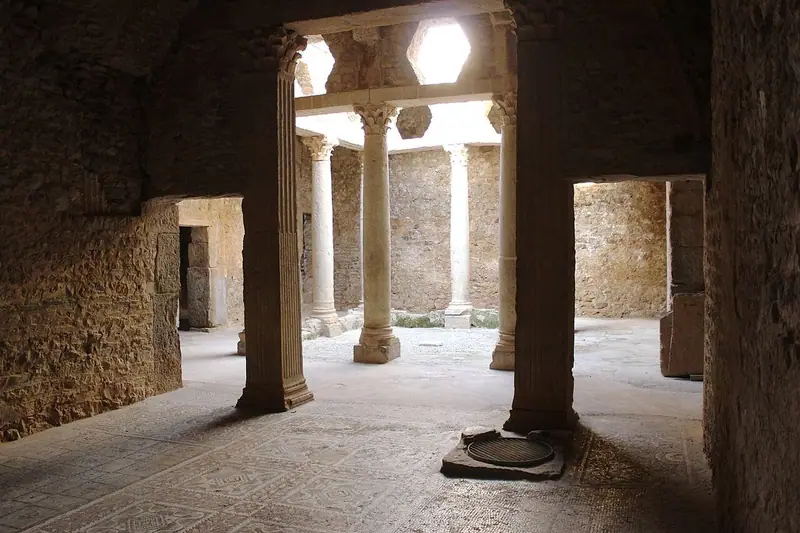
Bulla Regia audio guide
The royal Numidian town where Romans lived underground: villas with a whole storey below the street and their mosaics still in place.
 Phoenician8 stops · 9th century BCE – 7th century CE
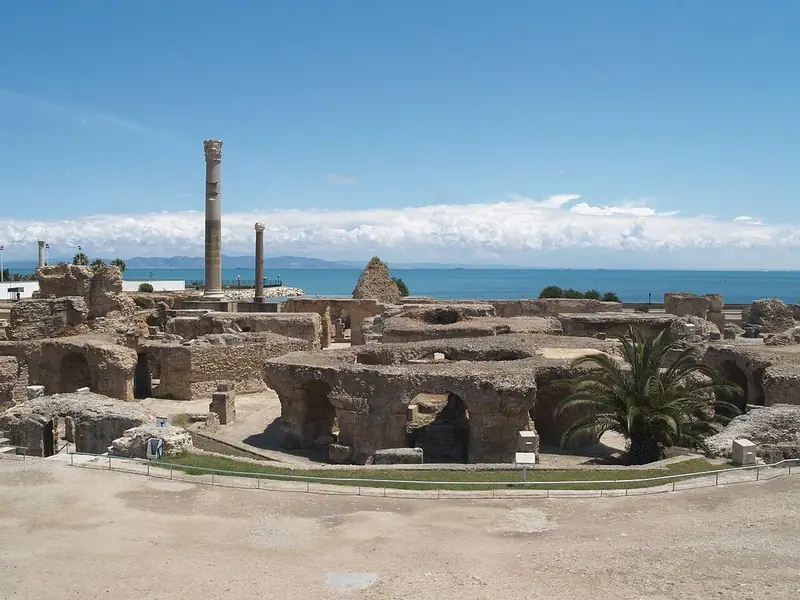
Carthage audio guide
Trace the great Phoenician rival of Rome from Byrsa Hill and the Punic ports to the Antonine Baths of the Roman city that rose from its ruins.
 Roman8 stops · 2nd century BCE – late antiquity
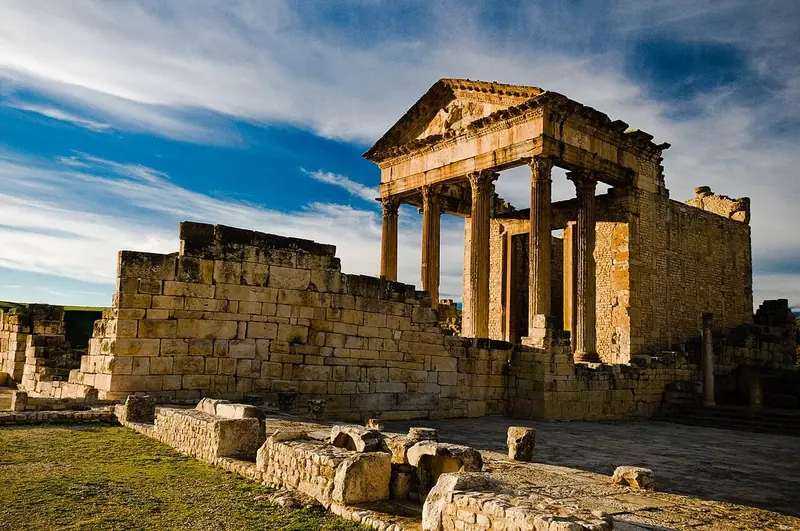
Dougga audio guide
Explore the best-preserved Roman small town in North Africa, its theatre, Capitol and baths standing in open countryside above olive groves.
 Aghlabid8 stops · 670–11th century CE
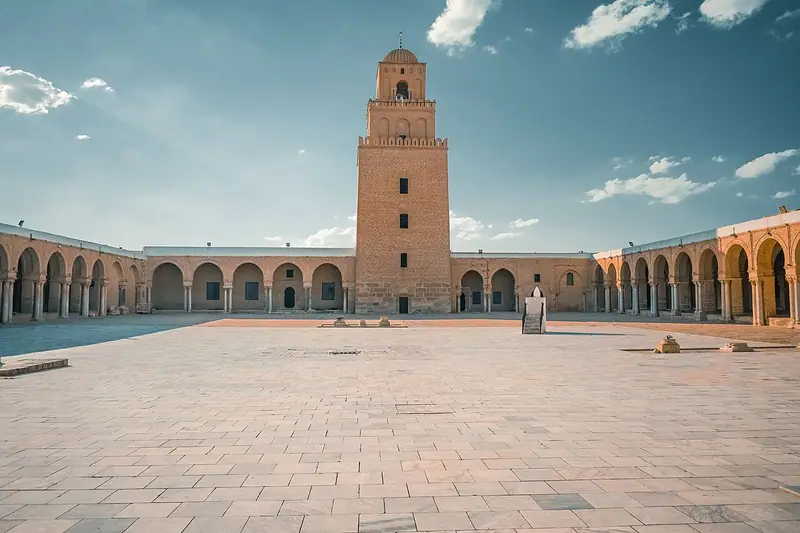
Kairouan audio guide
From the Aghlabid Basins to the Great Mosque of the first great Islamic city of North Africa, revered as one of the holy cities of Islam.
 Aghlabid9 stops · 8th–11th century
Medina of Sousse audio guide
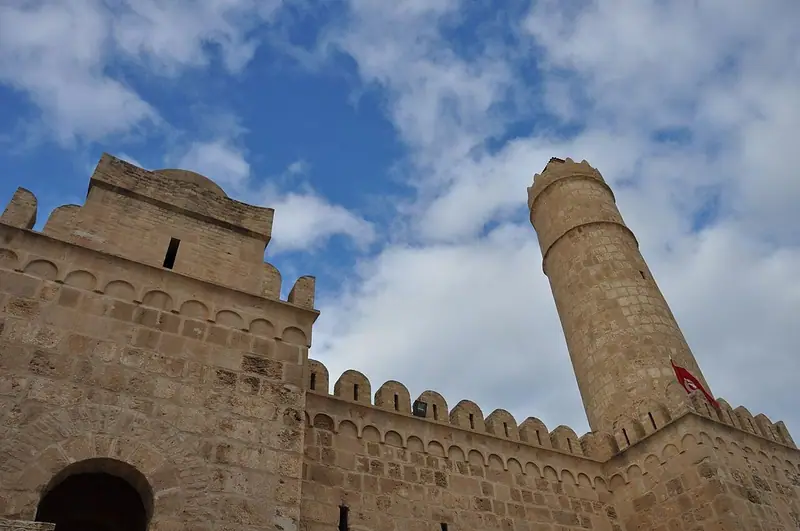
The fortified seaport of the Aghlabids: the ribat and its watchtower, the fortress-like Great Mosque, the souks and the mosaics of the kasbah museum.
Every guide, in every country
Medina of Tunis and every other guide we publish, including future ones. One payment, no subscription.