Before you start
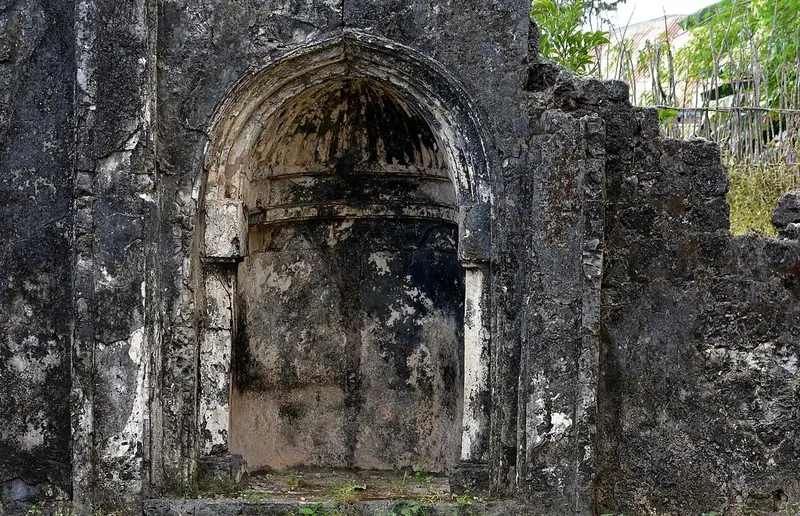
Kilwa Kisiwani is a small island off the southern coast of Tanzania, about three hundred kilometres south of Dar es Salaam, a short boat ride from the town of Kilwa Masoko. Its name means Kilwa on the island. Here lie the coral-stone ruins of one of the great medieval trading cities of the Swahili coast, which the traveller Ibn Battuta called one of the most beautiful cities in the world. This guide takes you from the landing place and the old fort, through the Great Mosque and the ruined town, to the cliff-top palace of Husuni Kubwa. There is little shade. Allow around three hours.
Use it as a self-guided tour of Kilwa Kisiwani: 7 stops in visit order, each played when you’re ready, at your own pace.
 Free preview · Stop 1
The Landing
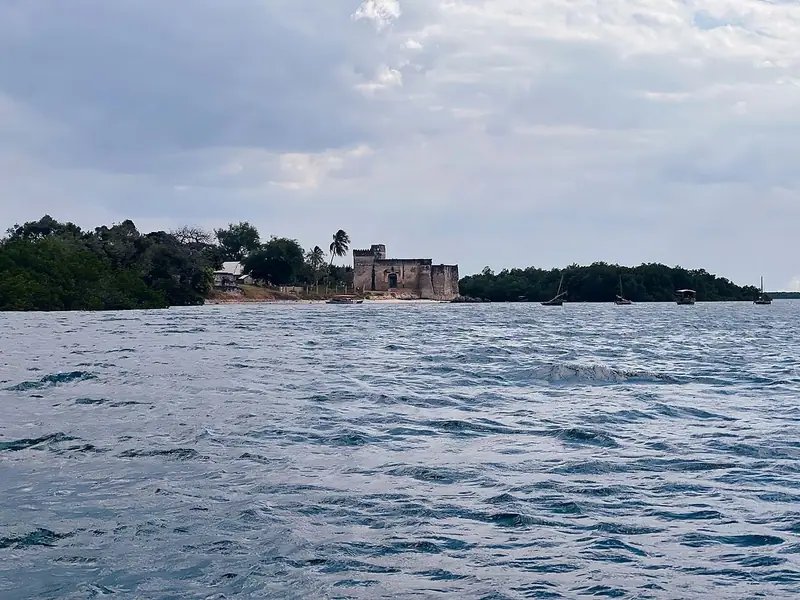
Begin at the shore where the boats from Kilwa Masoko land. Visitors need a permit, arranged on the mainland before crossing, and a guide from the antiquities office usually comes with you. Look back across the channel to the mainland. Kilwa’s wealth came from the sea. Every year the monsoon winds reversed, blowing ships down the coast from Arabia and India in one season and carrying them home in the next. Merchants who came here traded in gold, ivory, silver, pearls, perfumes, Persian pottery and Chinese porcelain, and for a time much of the trade of the western Indian Ocean passed through Kilwa’s hands. Today the island is quiet, with a small village, fishing boats and baobab trees growing among the ruins. Much of the old city still lies unexcavated beneath your feet, so keep to the paths.
Photo: Khalidsalewa · CC BY-SA 4.0 · Wikimedia Commons
What to see at Kilwa Kisiwani: 7 stops, in visit order
- 01
 The LandingCrossing to the islandFree preview
- 02
 The GerezaA fort by the waterIn the guide
- 03
 The Great MosqueThe oldest on the coastIn the guide
- 04
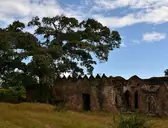 The Great DomeDomes and porcelainIn the guide
- 05
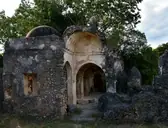 The Old TownCoins and coral housesIn the guide
- 06
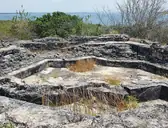 Husuni KubwaThe palace on the cliffIn the guide
- 07
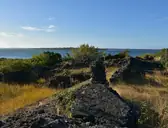 Husuni NdogoA building with a mysteryIn the guide
Site map of Kilwa Kisiwani
History of Kilwa Kisiwani
Kilwa was built by the Swahili, the Muslim peoples of the East African coast, whose culture grew from African roots and centuries of contact across the Indian Ocean with Arabia, Persia and India. Excavations show that the town was founded around the start of the ninth century. Its rulers claimed descent from a prince of Shiraz in Persia, and from the thirteenth century the city grew rich on gold brought from the south. It was at its height in the thirteenth and fourteenth centuries. In 1505 a Portuguese fleet sacked the city and built a fort, and Kilwa never fully recovered, though people still live on the island today.
Kilwa Kisiwani guide: questions
How many stops does the Kilwa Kisiwani guide have?
7 stops, in visit order: 1. The Landing; 2. The Gereza; 3. The Great Mosque; 4. The Great Dome; 5. The Old Town; 6. Husuni Kubwa; 7. Husuni Ndogo.
Can I do a self-guided tour of Kilwa Kisiwani with this guide?
Yes. The guide is made for a self-guided tour: 7 stops in visit order, each with a photo, a story and a voice, so you can explore Kilwa Kisiwani at your own pace, without joining a group. Download it before you go and it works offline.
How long is each guide?
The 7 stops add up to about 5 minutes of listening in total. You play each stop when you’re ready, so you can go at your own pace.
Does the guide work offline?
Yes, once it’s downloaded. The guide is a single self-contained web page (about 7.3 MB) with the photos, text and audio built in. Download it to your phone before you go (Wi-Fi is best); after that it opens in any modern browser on iPhone or Android, with no app, account or mobile signal needed.
Does it use GPS or need my location?
No. The guide doesn’t use GPS and doesn’t know where you are: you play each stop when you reach it. It works on iPhone and Android in any modern browser, and it’s in English.
What’s included?
One self-contained HTML guide: 7 stops in visit order, each with a photo, text and a voice, plus the story of who built the site.
Who built Kilwa Kisiwani?
Kilwa was built by the Swahili, the Muslim peoples of the East African coast, whose culture grew from African roots and centuries of contact across the Indian Ocean with Arabia, Persia and India. Excavations show that the town was founded around the start of the ninth century.
Where is Kilwa Kisiwani?
Kilwa Kisiwani is a small island off the southern coast of Tanzania, about three hundred kilometres south of Dar es Salaam, a short boat ride from the town of Kilwa Masoko.
Is there a free audio guide to Kilwa Kisiwani?
The first stop, The Landing, is free to read and hear on this page, so you can try the Kilwa Kisiwani audio tour before you buy. The full guide, with all 7 stops, is a one-off purchase: download it once and it’s yours to keep, working offline.
Is the Kilwa Kisiwani guide worth it?
If you’d like to know what you’re looking at, yes. For $10 you get 7 stops in visit order, each with a photo, a short history and a voice you play when you’re ready, plus a site map of the stops, and about 5 minutes of listening in all. It’s short on purpose, so you spend your time looking, not listening. It’s yours to keep, works offline and needs no app. The first stop is free on this page, so you can try it before you buy. If you’d like hours of detail, a guided tour will go deeper.
Audio guide or guided tour?
It depends how you like to visit. This guide lets you explore Kilwa Kisiwani at your own pace, at any time, for a one-off price. A guided tour gives you a live expert you can ask questions, but at fixed times and usually for a higher price. Many people use both: a tour for the big picture, and the guide to read beforehand or to revisit the stops in their own time.
Is this the official Kilwa Kisiwani guide?
No. It’s an independent guide by The Historian Guide, not affiliated with or endorsed by the operator of Kilwa Kisiwani. For tickets and opening hours, check the official site operator before you go.
Does the guide include entry tickets or opening hours?
No. The guide is a digital companion only. Admission to Kilwa Kisiwani is separate, so check the official site operator for current tickets and opening hours before you go.
- Stop 1 · The Landing: Khalidsalewa · CC BY-SA 4.0 · Wikimedia Commons · resized
- Stop 2 · The Gereza: Robin Chew · CC BY-SA 4.0 · Wikimedia Commons · resized
- Stop 3 · The Great Mosque (also the cover): Richard Mortel from Riyadh, Saudi Arabia · CC BY 2.0 · Wikimedia Commons · resized
- Stop 4 · The Great Dome: Richard Mortel from Riyadh, Saudi Arabia · CC BY 2.0 · Wikimedia Commons · resized
- Stop 5 · The Old Town: Richard Mortel from Riyadh, Saudi Arabia · CC BY 2.0 · Wikimedia Commons · resized
- Stop 6 · Husuni Kubwa: Veronika Berdnikova · CC BY-SA 4.0 · Wikimedia Commons · resized
- Stop 7 · Husuni Ndogo: Richard Mortel from Riyadh, Saudi Arabia · CC BY 2.0 · Wikimedia Commons · resized


All photographs from Wikimedia Commons under the licences shown.
More guides in Tanzania
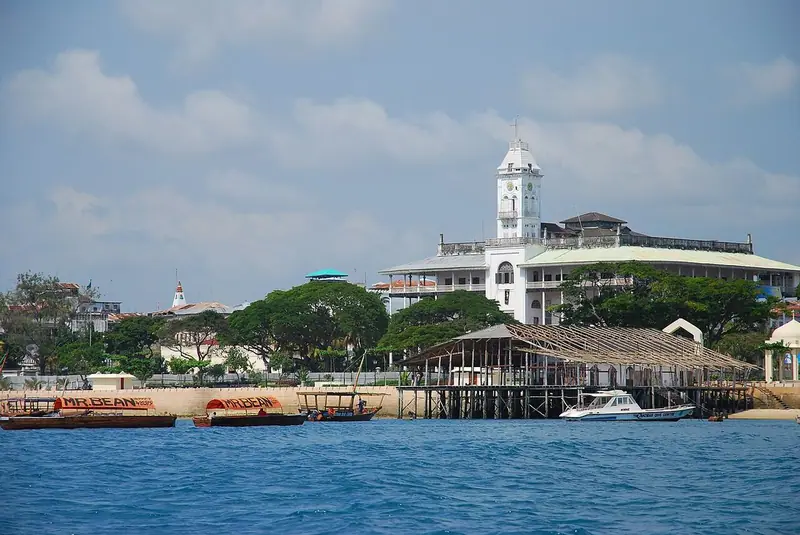 Swahili9 stops · 19th century
Stone Town, Zanzibar audio guide
The narrow lanes and carved wooden doors of Stone Town, from the Old Fort and the House of Wonders to the Darajani Market.
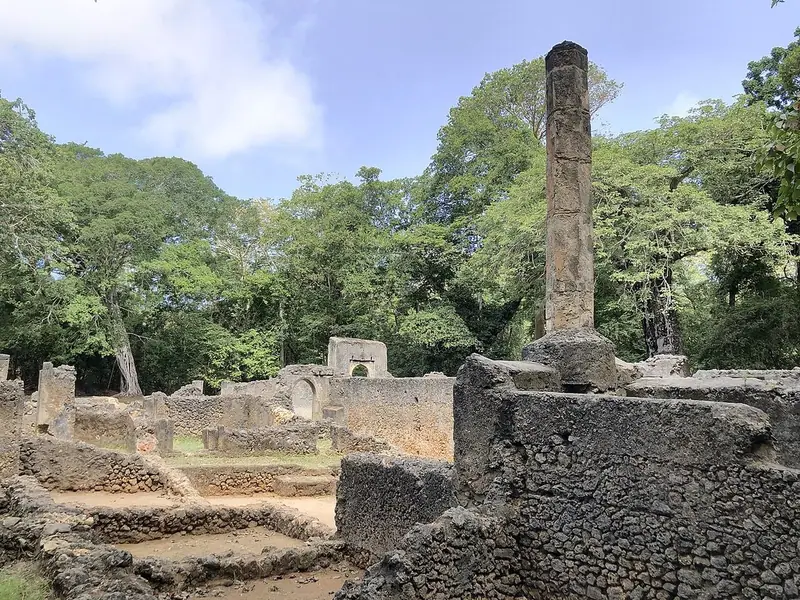 Swahili7 stops · 11th–17th century
The Ruins of Gedi audio guide
Follow paths through the coastal forest to a Swahili town of coral stone, its Great Mosque, palace and houses wrapped in great trees.
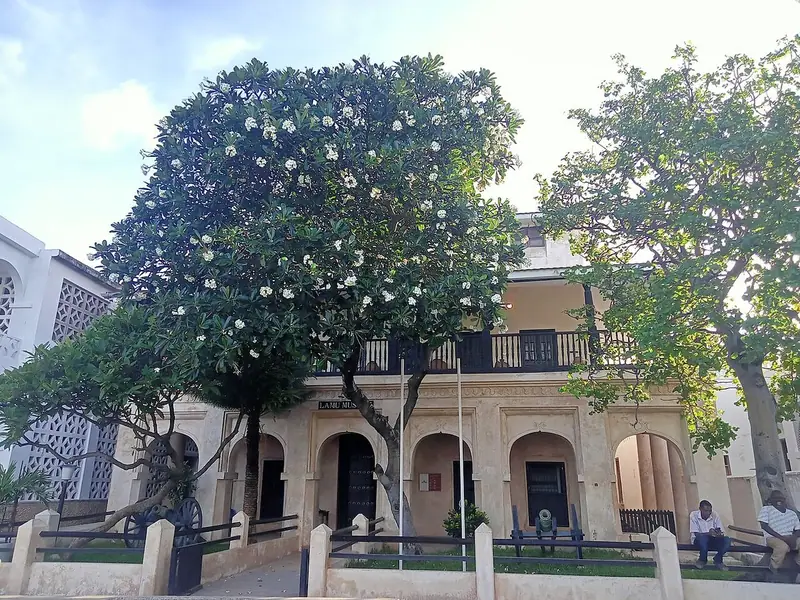 Swahili7 stops · 14th–19th century
Lamu Old Town audio guide
The oldest and best-preserved Swahili town in East Africa, with dhows on the waterfront, the fort, coral-stone lanes and carved doors, and the Riyadha Mosque.
Every guide, in every country
Kilwa Kisiwani and every other guide we publish, including future ones. One payment, no subscription.