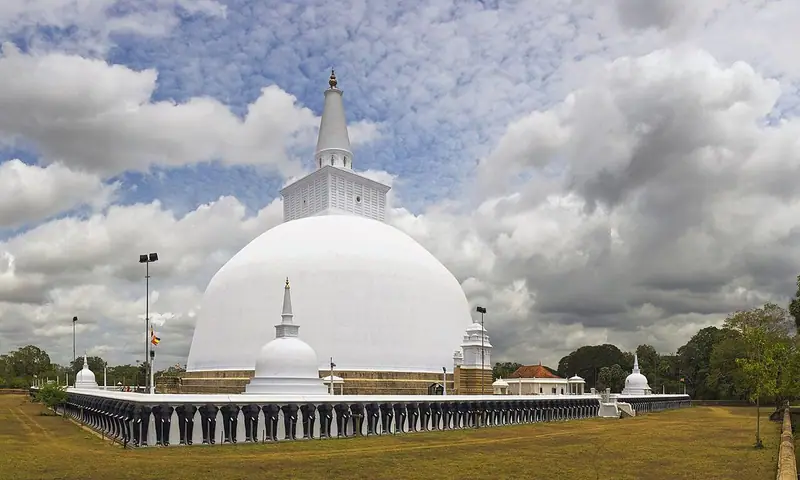
Before you start
Anuradhapura, in the dry plains of north central Sri Lanka, was the island’s capital for well over a thousand years, and its sacred city remains one of the holiest places of Buddhism. Great white and brick stupas, called dagobas, rise above the trees, and pilgrims dressed in white come to worship at the sacred Bo tree. The ruins are spread over a wide area, so most visitors combine walking with a bicycle, tuk-tuk or car. This guide begins at the sacred tree and the great stupas in the south, then heads north to the vast Jetavana and the monastery of Abhayagiri. These are living places of worship: dress modestly, covering shoulders and knees, remove shoes and hats at the shrines, and never pose with your back to a Buddha image.
Use it as a self-guided tour of Anuradhapura: 9 stops in visit order, each played when you’re ready, at your own pace.
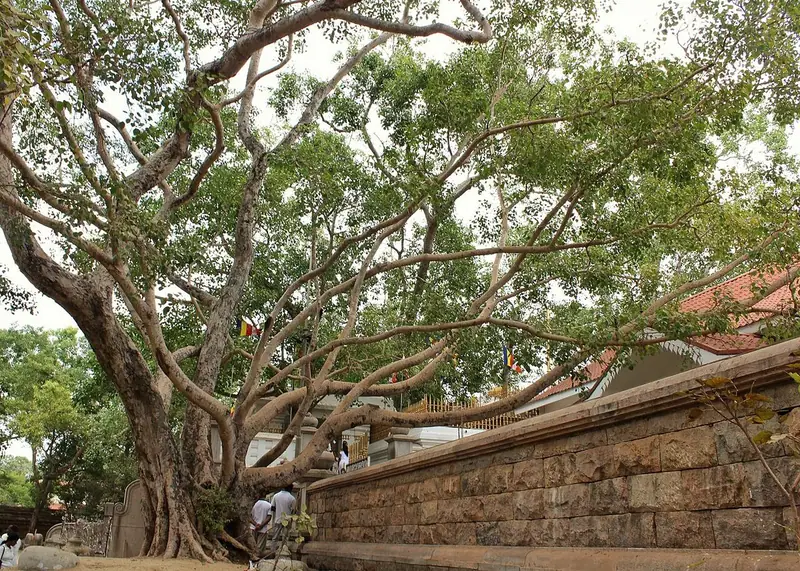 Free preview · Stop 1
Sri Maha Bodhi
Begin at the Sri Maha Bodhi, the most sacred place in Anuradhapura. According to tradition, this fig tree grew from a cutting of the very tree at Bodh Gaya in India under which the Buddha attained enlightenment, brought to Sri Lanka in the third century BCE by the nun Sanghamitta, a daughter of the emperor Ashoka. If so, it is the oldest living tree in the world planted by people with a known date. The ancient tree stands on a high terrace, supported by metal crutches and surrounded by lower terraces with younger Bo trees that protect it. Access to the top terrace is restricted. Watch the pilgrims laying flowers, lighting oil lamps and tying prayer flags. On full moon days the crowds are vast, and the air is filled with chanting.
Photo: Hirushini Dematagoda · CC BY-SA 4.0 · Wikimedia Commons
What to see at Anuradhapura: 9 stops, in visit order
- 01
 Sri Maha BodhiThe Sacred Bo TreeFree preview
- 02
 LovamahapayaThe Brazen PalaceIn the guide
- 03
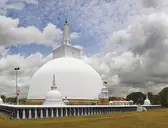 RuwanwelisayaThe Great StupaIn the guide
- 04
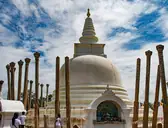 ThuparamayaThe First StupaIn the guide
- 05
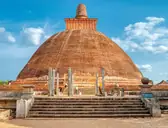 JetavanaramayaThe Brick GiantIn the guide
- 06
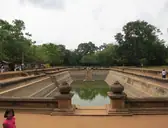 Kuttam PokunaThe Twin PondsIn the guide
- 07
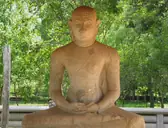 Samadhi BuddhaThe Buddha in MeditationIn the guide
- 08
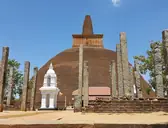 Abhayagiri DagobaThe Northern MonasteryIn the guide
- 09
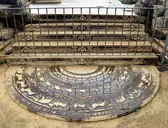 The MoonstoneThe Cycle of RebirthIn the guide
Site map of Anuradhapura
History of Anuradhapura
Anuradhapura was the capital of the Anuradhapura Kingdom, the Sinhalese kingdom which by tradition was founded by King Pandukabhaya in 437 BCE and lasted until the Chola conquest of 1017. In the third century BCE, according to the chronicles, the monk Mahinda, son of the Indian emperor Ashoka, brought Buddhism to King Devanampiya Tissa, and the city became a great centre of Buddhist learning. Its kings built immense stupas, monasteries and reservoirs, and its monastic fraternities, the Mahavihara, Abhayagiri and Jetavana, competed for royal favour. The city was repeatedly attacked from South India, and after the Chola conquest the capital moved to Polonnaruwa. The ruins were overgrown by forest until the nineteenth century, when restoration and archaeological work began.
Anuradhapura guide: questions
How many stops does the Anuradhapura guide have?
9 stops, in visit order: 1. Sri Maha Bodhi; 2. Lovamahapaya; 3. Ruwanwelisaya; 4. Thuparamaya; 5. Jetavanaramaya; 6. Kuttam Pokuna; 7. Samadhi Buddha; 8. Abhayagiri Dagoba; 9. The Moonstone.
Can I do a self-guided tour of Anuradhapura with this guide?
Yes. The guide is made for a self-guided tour: 9 stops in visit order, each with a photo, a story and a voice, so you can explore Anuradhapura at your own pace, without joining a group. Download it before you go and it works offline.
How long is each guide?
The 9 stops add up to about 6 minutes of listening in total. You play each stop when you’re ready, so you can go at your own pace.
Does the guide work offline?
Yes, once it’s downloaded. The guide is a single self-contained web page (about 8.2 MB) with the photos, text and audio built in. Download it to your phone before you go (Wi-Fi is best); after that it opens in any modern browser on iPhone or Android, with no app, account or mobile signal needed.
Does it use GPS or need my location?
No. The guide doesn’t use GPS and doesn’t know where you are: you play each stop when you reach it. It works on iPhone and Android in any modern browser, and it’s in English.
What’s included?
One self-contained HTML guide: 9 stops in visit order, each with a photo, text and a voice, plus the story of who built the site.
Who built Anuradhapura?
Anuradhapura was the capital of the Anuradhapura Kingdom, the Sinhalese kingdom which by tradition was founded by King Pandukabhaya in 437 BCE and lasted until the Chola conquest of 1017. In the third century BCE, according to the chronicles, the monk Mahinda, son of the Indian emperor Ashoka, brought Buddhism to King Devanampiya Tissa, and the city became a great centre of Buddhist learning.
Where is Anuradhapura?
Anuradhapura, in the dry plains of north central Sri Lanka, was the island’s capital for well over a thousand years, and its sacred city remains one of the holiest places of Buddhism.
Is there a free audio guide to Anuradhapura?
The first stop, Sri Maha Bodhi, is free to read and hear on this page, so you can try the Anuradhapura audio tour before you buy. The full guide, with all 9 stops, is a one-off purchase: download it once and it’s yours to keep, working offline.
Is the Anuradhapura guide worth it?
If you’d like to know what you’re looking at, yes. For $10 you get 9 stops in visit order, each with a photo, a short history and a voice you play when you’re ready, plus a site map of the stops, and about 6 minutes of listening in all. It’s short on purpose, so you spend your time looking, not listening. It’s yours to keep, works offline and needs no app. The first stop is free on this page, so you can try it before you buy. If you’d like hours of detail, a guided tour will go deeper.
Audio guide or guided tour?
It depends how you like to visit. This guide lets you explore Anuradhapura at your own pace, at any time, for a one-off price. A guided tour gives you a live expert you can ask questions, but at fixed times and usually for a higher price. Many people use both: a tour for the big picture, and the guide to read beforehand or to revisit the stops in their own time.
Is this the official Anuradhapura guide?
No. It’s an independent guide by The Historian Guide, not affiliated with or endorsed by the operator of Anuradhapura. For tickets and opening hours, check the official site operator before you go.
Does the guide include entry tickets or opening hours?
No. The guide is a digital companion only. Admission to Anuradhapura is separate, so check the official site operator for current tickets and opening hours before you go.
- Stop 1 · Sri Maha Bodhi: Hirushini Dematagoda · CC BY-SA 4.0 · Wikimedia Commons · resized
- Stop 2 · Lovamahapaya: Z thomas · CC BY-SA 4.0 · Wikimedia Commons · resized
- Stop 3 · Ruwanwelisaya (also the cover): KennyOMG · CC BY-SA 4.0 · Wikimedia Commons · resized
- Stop 4 · Thuparamaya: Exploreslk · CC BY-SA 4.0 · Wikimedia Commons · resized
- Stop 5 · Jetavanaramaya: Wimukthi Bandara · CC BY-SA 4.0 · Wikimedia Commons · resized
- Stop 6 · Kuttam Pokuna: Saqib Qayyum · CC BY-SA 3.0 · Wikimedia Commons · resized
- Stop 7 · Samadhi Buddha: Naveen sandeepa sdnsk · CC BY-SA 4.0 · Wikimedia Commons · resized
- Stop 8 · Abhayagiri Dagoba: Nicolas Chadeville · CC BY 4.0 · Wikimedia Commons · resized
- Stop 9 · The Moonstone: Michael Gunther · CC BY-SA 4.0 · Wikimedia Commons · resized


All photographs from Wikimedia Commons under the licences shown.
More guides in Sri Lanka
 Sinhalese7 stops · 1st century BCE – 18th century CE
Dambulla Cave Temple audio guide
Climb a granite rock to five caves crowded with statues of the Buddha beneath brilliantly painted ceilings.
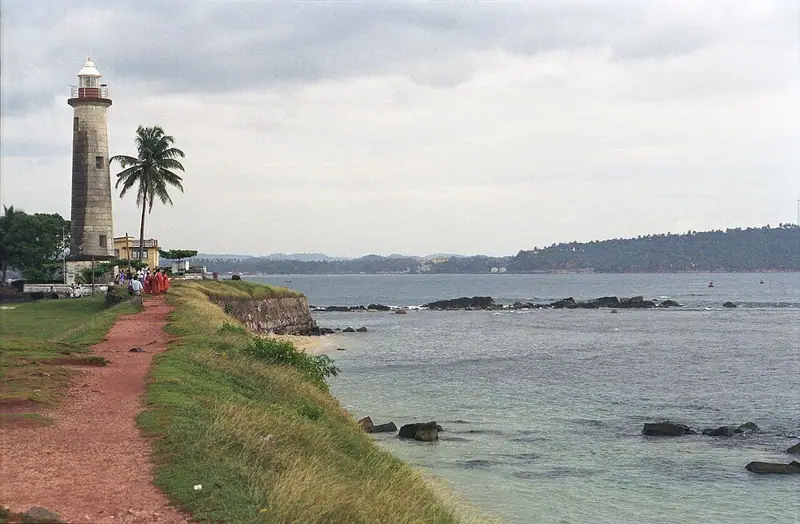 Dutch Colonial8 stops · 1640–1796 CE
Galle Fort audio guide
The ramparts and street grid of the Dutch-built fort on its rocky peninsula, from the Main Gate to the lighthouse and Flag Rock.
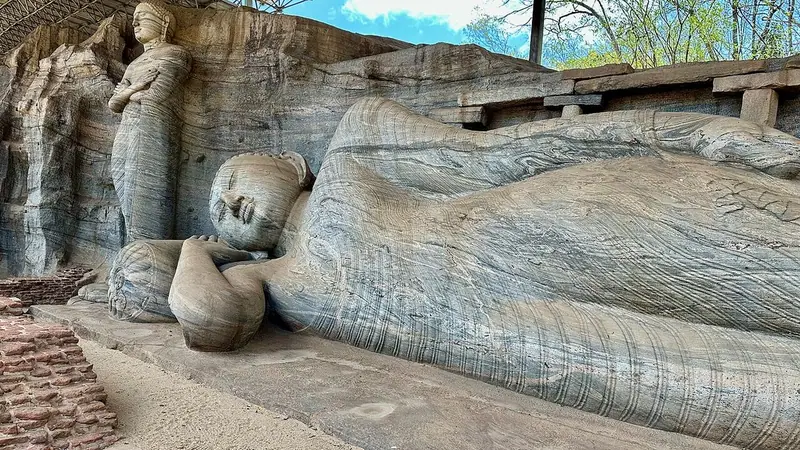 Sinhalese8 stops · 1070–1232 CE
Polonnaruwa audio guide
Explore Sri Lanka’s royal capital of the eleventh to thirteenth centuries, from Parakramabahu’s palace to the sacred quadrangle and the rock-cut Buddhas of Gal Vihara.
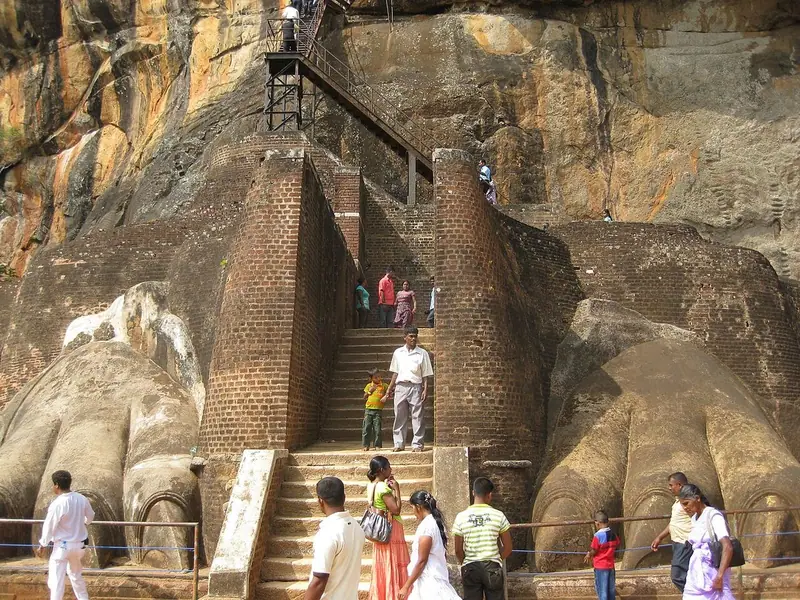 Sinhalese8 stops · 477–495 CE
Sigiriya audio guide
Climb from the water gardens past the painted maidens and the Mirror Wall, through the Lion Gate to the ruined palace on top of the rock.
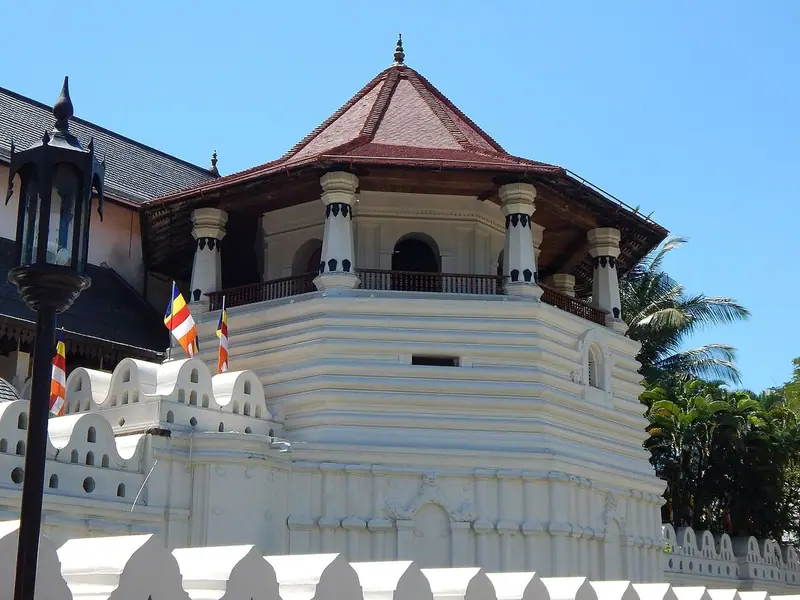 Sinhalese8 stops · early 18th century – 1815 CE
Temple of the Tooth audio guide
Join the pilgrims bringing flowers to the tooth of the Buddha in the lakeside temple and palace of Sri Lanka’s last kings at Kandy.
Every guide, in every country
Anuradhapura and every other guide we publish, including future ones. One payment, no subscription.