Before you start
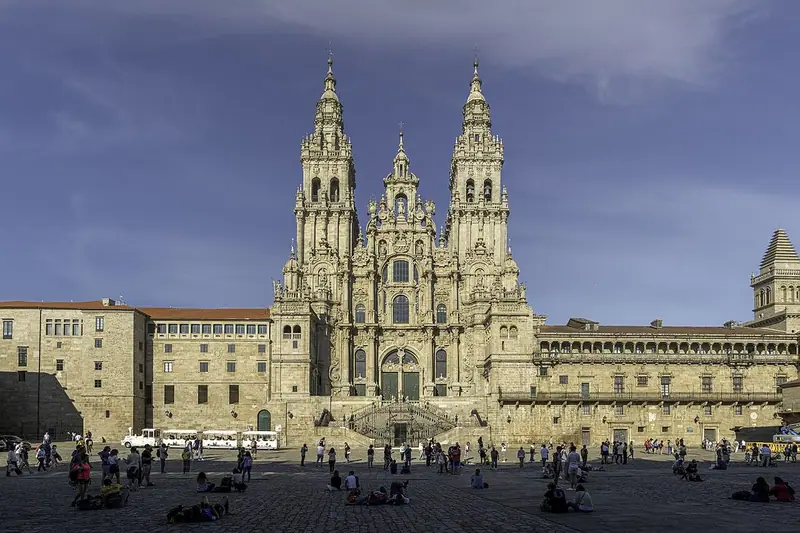
Santiago de Compostela Cathedral stands at the heart of the old town of Santiago de Compostela, the capital of Galicia, in the north-west of Spain. It is the goal of the Way of Saint James, the great pilgrimage route, and pilgrims arrive here every day, many of them on foot. UNESCO listed the old town as a World Heritage Site in 1985. The city has an airport and a railway station, both outside the old town, with buses and taxis to the centre. This guide goes through the cathedral and around the squares that surround it, ending at the Holy Door. The cathedral is free to enter, but the Portico of Glory, the museum and the roof tours need tickets. The cathedral is still a place of worship, so dress modestly and be considerate during services.
Use it as a self-guided tour of Santiago de Compostela Cathedral: 8 stops in visit order, each played when you’re ready, at your own pace.
 Free preview · Stop 1
The Obradoiro Square
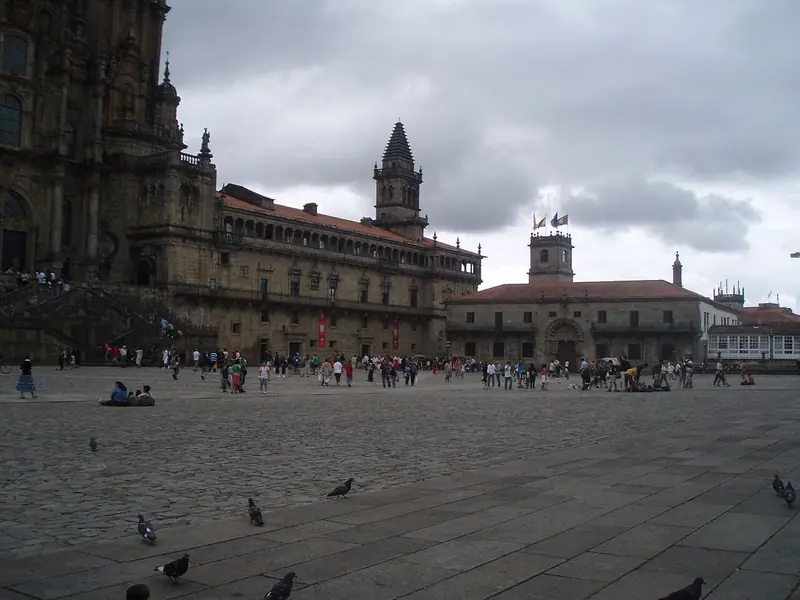
Begin in the Obradoiro Square, the great square in front of the cathedral, where pilgrims gather at the end of their journey. Stand in the centre, near the scallop shell set into the paving, and turn slowly around. Behind you is the long, classical facade of the Pazo de Raxoi, built in the eighteenth century, which now houses the city council and the presidency of the Galician government. To the left is the Hostal dos Reis Católicos, founded by Ferdinand and Isabella around 1500 as a royal hospital for pilgrims, and now a hotel. To the right is the College of San Xerome, part of the university. In front of you rises the cathedral. The name Obradoiro means workshop, and it probably recalls the stonemasons who worked here while the cathedral was being built. Take your time to watch the arriving pilgrims.
Photo: Lancastermerrin88 · CC BY-SA 4.0 · Wikimedia Commons
What to see at Santiago de Compostela Cathedral: 8 stops, in visit order
- 01
 The Obradoiro SquareThe pilgrims’ goalFree preview
- 02
 The Obradoiro FacadeBaroque in graniteIn the guide
- 03
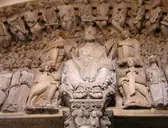 The Portico of GloryMaster Mateo’s masterpieceIn the guide
- 04
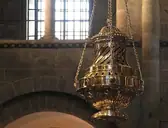 The Nave and the BotafumeiroA giant censerIn the guide
- 05
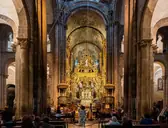 The High AltarEmbracing the apostleIn the guide
- 06
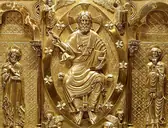 The Tomb of Saint JamesThe heart of the pilgrimageIn the guide
- 07
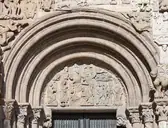 The Platerías SquareThe Romanesque facadeIn the guide
- 08
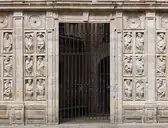 The Quintana SquareThe Holy DoorIn the guide
History of Santiago de Compostela Cathedral
The cathedral was begun in 1075, in the medieval Christian kingdom of León, which had grown from the earlier kingdom of Asturias. The kingdom of León began in 910, and it was finally united with the kingdom of Castile in 1230. According to tradition, the tomb of Saint James the Apostle was discovered here in the ninth century, and a church was built over it. The present Romanesque cathedral replaced earlier churches on the site, and it was consecrated in 1211. Its building was led by bishops of Santiago, above all Diego Gelmírez, the first archbishop. Later centuries added cloisters, towers and chapels, and in the eighteenth century the great Baroque facade.
Santiago de Compostela Cathedral guide: questions
How many stops does the Santiago de Compostela Cathedral guide have?
8 stops, in visit order: 1. The Obradoiro Square; 2. The Obradoiro Facade; 3. The Portico of Glory; 4. The Nave and the Botafumeiro; 5. The High Altar; 6. The Tomb of Saint James; 7. The Platerías Square; 8. The Quintana Square.
Can I do a self-guided tour of Santiago de Compostela Cathedral with this guide?
Yes. The guide is made for a self-guided tour: 8 stops in visit order, each with a photo, a story and a voice, so you can explore Santiago de Compostela Cathedral at your own pace, without joining a group. Download it before you go and it works offline.
How long is each guide?
The 8 stops add up to about 6 minutes of listening in total. You play each stop when you’re ready, so you can go at your own pace.
Does the guide work offline?
Yes, once it’s downloaded. The guide is a single self-contained web page (about 7.3 MB) with the photos, text and audio built in. Download it to your phone before you go (Wi-Fi is best); after that it opens in any modern browser on iPhone or Android, with no app, account or mobile signal needed.
Does it use GPS or need my location?
No. The guide doesn’t use GPS and doesn’t know where you are: you play each stop when you reach it. It works on iPhone and Android in any modern browser, and it’s in English.
What’s included?
One self-contained HTML guide: 8 stops in visit order, each with a photo, text and a voice, plus the story of who built the site.
Who built Santiago de Compostela Cathedral?
The cathedral was begun in 1075, in the medieval Christian kingdom of León, which had grown from the earlier kingdom of Asturias. The kingdom of León began in 910, and it was finally united with the kingdom of Castile in 1230.
Where is Santiago de Compostela Cathedral?
Santiago de Compostela Cathedral stands at the heart of the old town of Santiago de Compostela, the capital of Galicia, in the north-west of Spain.
Is there a free audio guide to Santiago de Compostela Cathedral?
The first stop, The Obradoiro Square, is free to read and hear on this page, so you can try the Santiago de Compostela Cathedral audio tour before you buy. The full guide, with all 8 stops, is a one-off purchase: download it once and it’s yours to keep, working offline.
Is the Santiago de Compostela Cathedral guide worth it?
If you’d like to know what you’re looking at, yes. For $10 you get 8 stops in visit order, each with a photo, a short history and a voice you play when you’re ready, about 6 minutes of listening in all. It’s short on purpose, so you spend your time looking, not listening. It’s yours to keep, works offline and needs no app. The first stop is free on this page, so you can try it before you buy. If you’d like hours of detail, a guided tour will go deeper.
Audio guide or guided tour?
It depends how you like to visit. This guide lets you explore Santiago de Compostela Cathedral at your own pace, at any time, for a one-off price. A guided tour gives you a live expert you can ask questions, but at fixed times and usually for a higher price. Many people use both: a tour for the big picture, and the guide to read beforehand or to revisit the stops in their own time.
Is this the official Santiago de Compostela Cathedral guide?
No. It’s an independent guide by The Historian Guide, not affiliated with or endorsed by the operator of Santiago de Compostela Cathedral. For tickets and opening hours, check the official site operator before you go.
Does the guide include entry tickets or opening hours?
No. The guide is a digital companion only. Admission to Santiago de Compostela Cathedral is separate, so check the official site operator for current tickets and opening hours before you go.
- Stop 1 · The Obradoiro Square: Lancastermerrin88 · CC BY-SA 4.0 · Wikimedia Commons · resized
- Stop 2 · The Obradoiro Facade: Xuars · CC0 · Wikimedia Commons · resized
- Stop 3 · The Portico of Glory: pedronchi · CC BY 2.0 · Wikimedia Commons · resized
- Stop 4 · The Nave and the Botafumeiro: Luis Miguel Bugallo Sánchez (Lmbuga Commons)(Lmbuga Galipedia) · CC BY-SA 3.0 · Wikimedia Commons · resized
- Stop 5 · The High Altar: Diego Delso · CC BY-SA 4.0 · Wikimedia Commons · resized
- Stop 6 · The Tomb of Saint James: Le Galicien · Public domain · Wikimedia Commons · resized
- Stop 7 · The Platerías Square: Luis Miguel Bugallo Sánchez (Lmbuga) · CC BY 3.0 · Wikimedia Commons · resized
- Stop 8 · The Quintana Square: Luis Miguel Bugallo Sánchez · CC BY-SA 4.0 · Wikimedia Commons · resized
- Cover: Fernando Pascullo · CC BY-SA 4.0 · Wikimedia Commons · resized


All photographs from Wikimedia Commons under the licences shown.
More guides in Spain
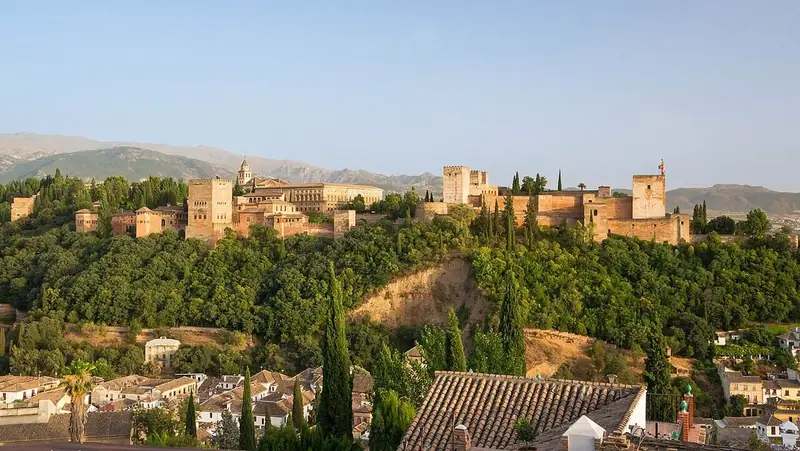 Nasrid9 stops · 13th–15th century CE
Alhambra audio guide
Climb to the Nasrid royal city above Granada, from the Alcazaba through the Court of the Myrtles and the Court of the Lions to the gardens of the Generalife.
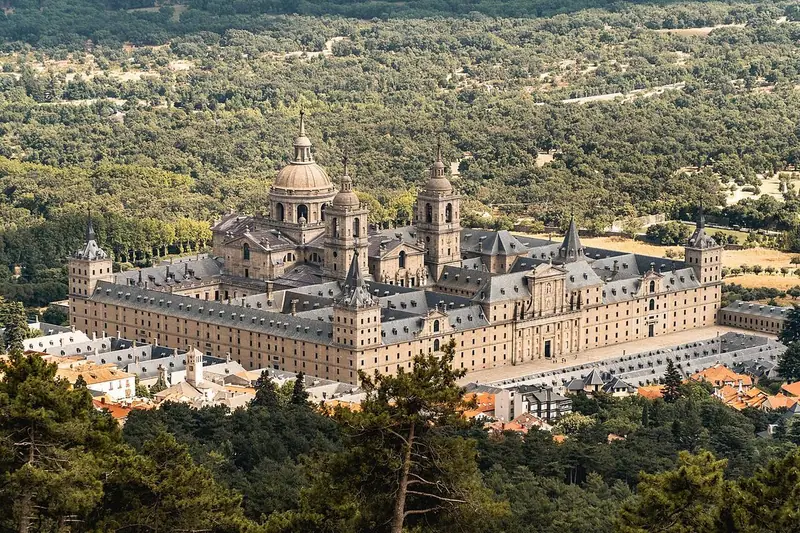 Habsburg7 stops · from 1563 CE
El Escorial audio guide
Explore Philip II’s monastery-palace at the foot of the Guadarrama, from the royal pantheon and the basilica to the painted library.
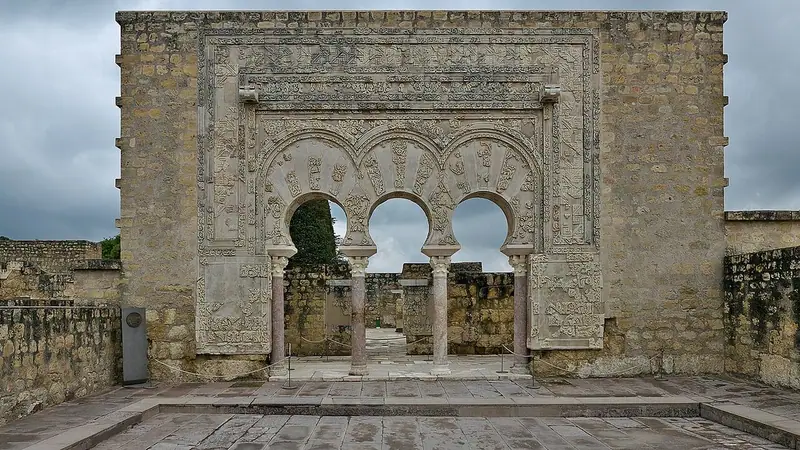 Umayyad9 stops · 936 – 1013 CE
Medina Azahara audio guide
The palace-city of the caliphs of Córdoba on the slopes of the Sierra Morena: the North Gate, the royal house, the House of Ja’far, the great portico, the Salón Rico and the caliph’s mosque.
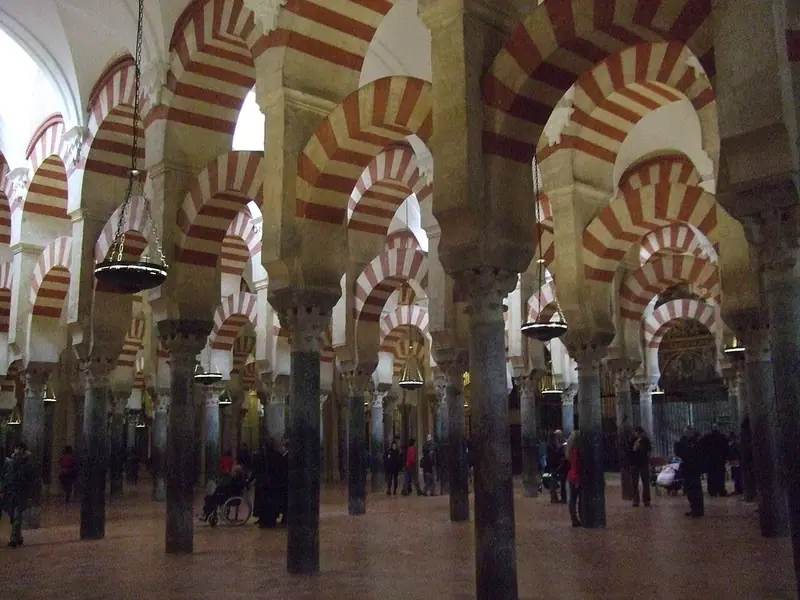 Umayyad8 stops · c. 785–1236 CE
Mosque-Cathedral of Córdoba audio guide
From the Court of the Orange Trees into a forest of columns and arches to the mihrab of the Umayyad mosque that became a cathedral.
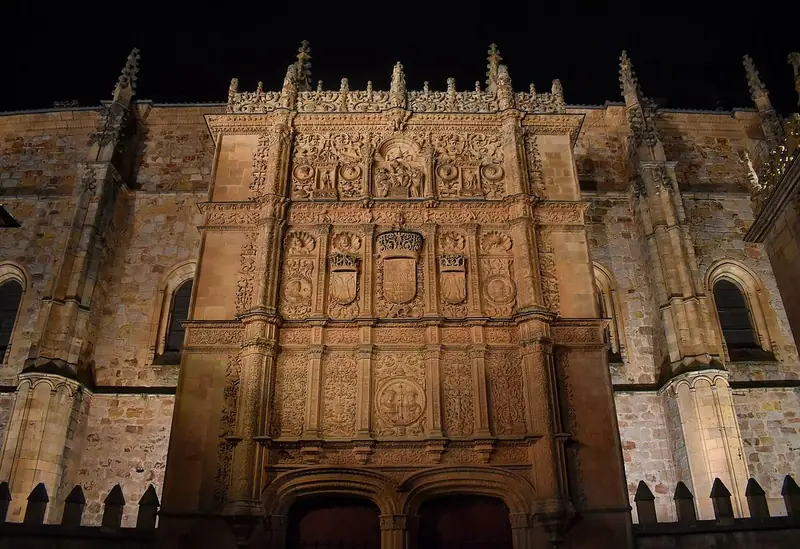 Renaissance11 stops · 1218 – 1755 (university founded to Plaza Mayor completed)
Old City of Salamanca audio guide
A golden-stone university city: the Plateresque university façade, two cathedrals side by side, the House of Shells, the Roman bridge and a Baroque Plaza Mayor.
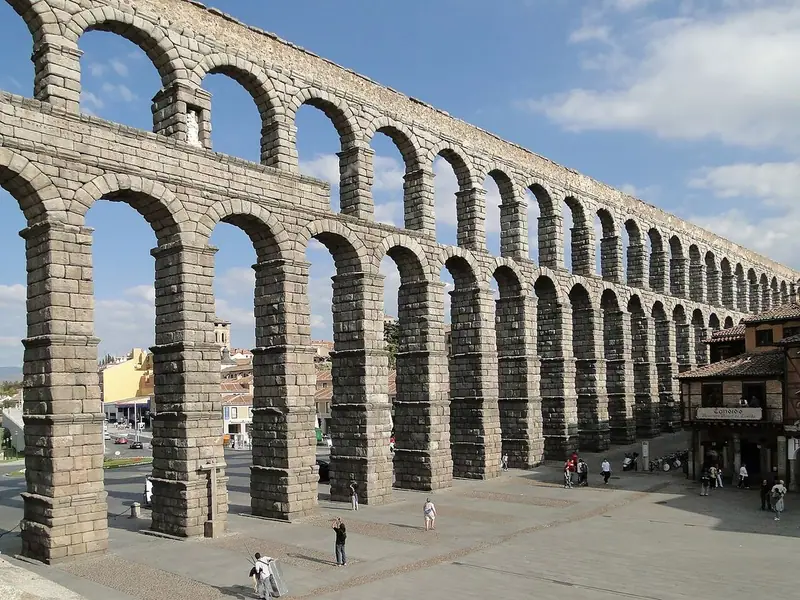 Roman8 stops · c. 100 CE – 16th century
Old Town of Segovia audio guide
From the soaring Roman aqueduct through the Plaza Mayor to the cathedral and the Alcázar on the rocky ridge.
Every guide, in every country
Santiago de Compostela Cathedral and every other guide we publish, including future ones. One payment, no subscription.