Before you start
Gorée is a small island just off Dakar, the capital of Senegal, reached by a passenger ferry from the city’s port in about half an hour. There are no cars, and its sandy lanes are lined with colonial houses painted ochre, pink and red, draped with bougainvillea. Behind this charm lies a painful history: for centuries, Gorée was a European trading post, and it has become one of the world’s most powerful symbols of the Atlantic slave trade. It was among the first places to be inscribed as a UNESCO World Heritage Site, in 1978. This guide starts at the harbour, goes north to Fort d’Estrées, visits the House of Slaves, and climbs to the Castel, the island’s highest point.
Use it as a self-guided tour of Gorée Island: 7 stops in visit order, each played when you’re ready, at your own pace.
 Free preview · Stop 1
The Harbour
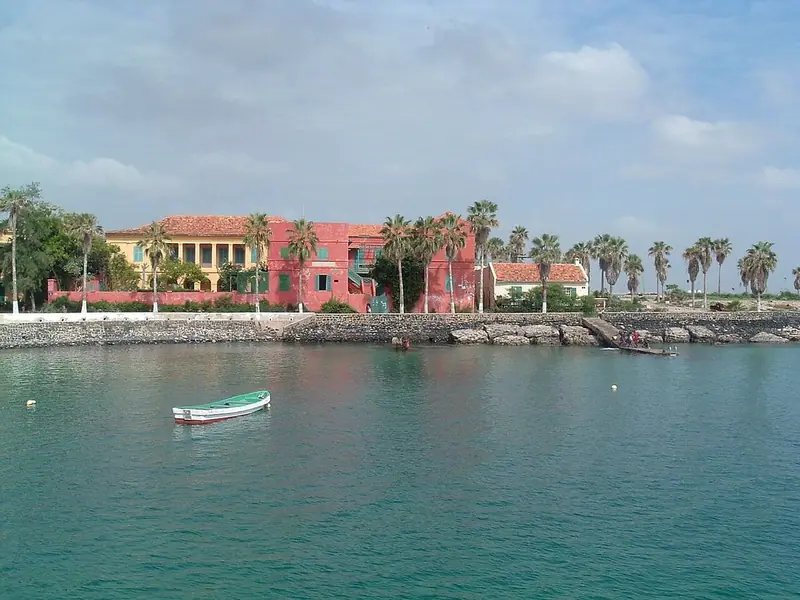
Begin at the little harbour where the ferry from Dakar arrives, beside a small sandy beach where local children swim. As you step ashore, look back across the water at the skyline of Dakar, only a few kilometres away, and then ahead at the colourful houses of the island. Gorée is tiny, less than a kilometre long and a few hundred metres wide, and it is easy to explore on foot. Its sheltered anchorage, protected by the Cap-Vert peninsula, made it valuable to European traders as a base for commerce along the coast. Every year, swimmers take part in a long-distance race across the water between Dakar and Gorée. Walk up from the jetty into the small square, where you will find cafés, restaurants and stalls, and register with the official guides if you wish to hire one.
Photo: Initsogan · CC BY-SA 3.0 · Wikimedia Commons
What to see at Gorée Island: 7 stops, in visit order
- 01
 The HarbourArriving by seaFree preview
- 02
 Fort d’EstréesThe history museumIn the guide
- 03
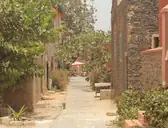 The Signares’ IslandLanes and housesIn the guide
- 04
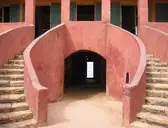 The House of SlavesA place of memoryIn the guide
- 05
 Door of No ReturnFacing the oceanIn the guide
- 06
 Church and MosqueFaiths side by sideIn the guide
- 07
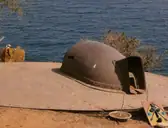 The CastelThe island’s summitIn the guide
Site map of Gorée Island
History of Gorée Island
The island had little fresh water and no permanent settlement before Europeans arrived. The Portuguese reached it in the 1440s, and the Dutch, who gave it its name, built a fort here in the seventeenth century. In 1677 the French captured Gorée, and apart from brief periods of British occupation, it remained French until Senegal’s independence in 1960. Enslaved people were held and shipped from the island, though historians debate how many, and more were shipped through larger ports such as Saint-Louis and the Gambia River. A prosperous community of merchants grew here, including the signares, women of mixed African and European descent, who owned property and ships.
Gorée Island guide: questions
How many stops does the Gorée Island guide have?
7 stops, in visit order: 1. The Harbour; 2. Fort d’Estrées; 3. The Signares’ Island; 4. The House of Slaves; 5. Door of No Return; 6. Church and Mosque; 7. The Castel.
Can I do a self-guided tour of Gorée Island with this guide?
Yes. The guide is made for a self-guided tour: 7 stops in visit order, each with a photo, a story and a voice, so you can explore Gorée Island at your own pace, without joining a group. Download it before you go and it works offline.
How long is each guide?
The 7 stops add up to about 5 minutes of listening in total. You play each stop when you’re ready, so you can go at your own pace.
Does the guide work offline?
Yes, once it’s downloaded. The guide is a single self-contained web page (about 6.3 MB) with the photos, text and audio built in. Download it to your phone before you go (Wi-Fi is best); after that it opens in any modern browser on iPhone or Android, with no app, account or mobile signal needed.
Does it use GPS or need my location?
No. The guide doesn’t use GPS and doesn’t know where you are: you play each stop when you reach it. It works on iPhone and Android in any modern browser, and it’s in English.
What’s included?
One self-contained HTML guide: 7 stops in visit order, each with a photo, text and a voice, plus the story of who built the site.
Who built Gorée Island?
The island had little fresh water and no permanent settlement before Europeans arrived. The Portuguese reached it in the 1440s, and the Dutch, who gave it its name, built a fort here in the seventeenth century.
Where is Gorée Island?
Gorée is a small island just off Dakar, the capital of Senegal, reached by a passenger ferry from the city’s port in about half an hour.
Is there a free audio guide to Gorée Island?
The first stop, The Harbour, is free to read and hear on this page, so you can try the Gorée Island audio tour before you buy. The full guide, with all 7 stops, is a one-off purchase: download it once and it’s yours to keep, working offline.
Is the Gorée Island guide worth it?
If you’d like to know what you’re looking at, yes. For $10 you get 7 stops in visit order, each with a photo, a short history and a voice you play when you’re ready, plus a site map of the stops, and about 5 minutes of listening in all. It’s short on purpose, so you spend your time looking, not listening. It’s yours to keep, works offline and needs no app. The first stop is free on this page, so you can try it before you buy. If you’d like hours of detail, a guided tour will go deeper.
Audio guide or guided tour?
It depends how you like to visit. This guide lets you explore Gorée Island at your own pace, at any time, for a one-off price. A guided tour gives you a live expert you can ask questions, but at fixed times and usually for a higher price. Many people use both: a tour for the big picture, and the guide to read beforehand or to revisit the stops in their own time.
Is this the official Gorée Island guide?
No. It’s an independent guide by The Historian Guide, not affiliated with or endorsed by the operator of Gorée Island. For tickets and opening hours, check the official site operator before you go.
Does the guide include entry tickets or opening hours?
No. The guide is a digital companion only. Admission to Gorée Island is separate, so check the official site operator for current tickets and opening hours before you go.
- Stop 1 · The Harbour: Initsogan · CC BY-SA 3.0 · Wikimedia Commons · resized
- Stop 2 · Fort d’Estrées: HaguardDuNord · CC BY-SA 3.0 · Wikimedia Commons · resized
- Stop 3 · The Signares’ Island: Issiaga0 · CC BY-SA 4.0 · Wikimedia Commons · resized
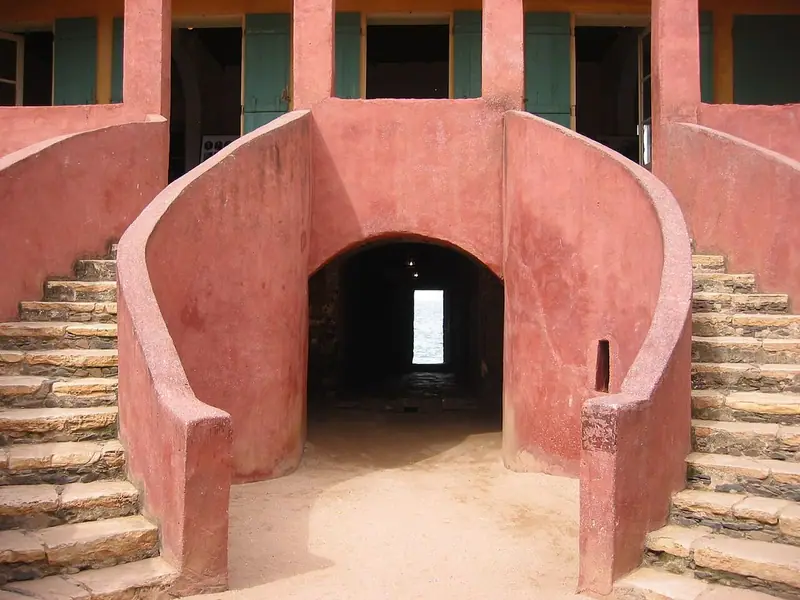
- Stop 4 · The House of Slaves (also the cover): Robin Elaine · CC BY 2.0 · Wikimedia Commons · resized
- Stop 5 · Door of No Return: Younness Hamiddine · CC BY-SA 4.0 · Wikimedia Commons · resized
- Stop 6 · Church and Mosque: HaguardDuNord · CC BY-SA 3.0 · Wikimedia Commons · resized
- Stop 7 · The Castel: HaguardDuNord · CC BY-SA 3.0 · Wikimedia Commons · resized


All photographs from Wikimedia Commons under the licences shown.
More guides in Senegal
 Lebu and French West Africa8 stops · 1857–1960
Dakar Plateau audio guide
The Plateau, old colonial heart of the capital of French West Africa, from the Place de l’Indépendance to the Grand Mosque.
 French Colonial7 stops · 1659–1960
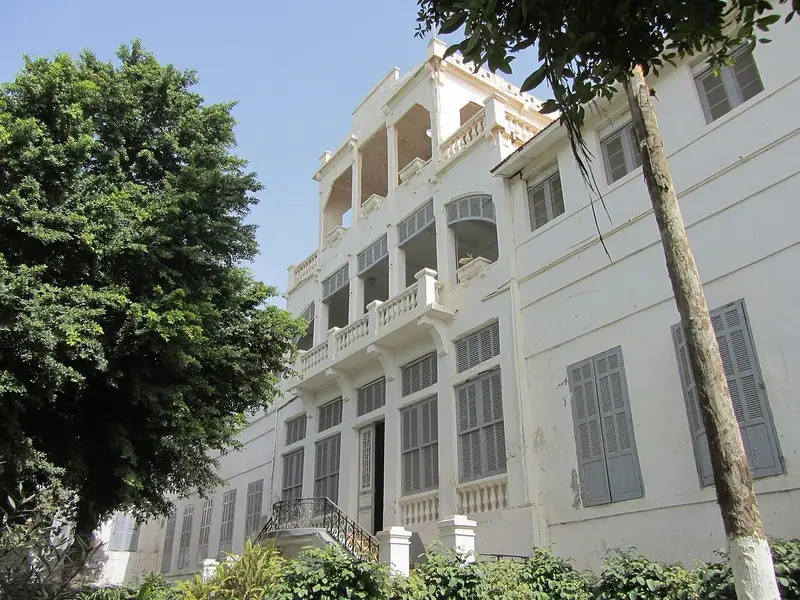
Saint-Louis audio guide
Cross the Faidherbe Bridge onto a narrow island in the Senegal River, to an old colonial town of balconies and shutters and the fishing quarter of Guet Ndar.
 French Colonial8 stops · 1713–1758
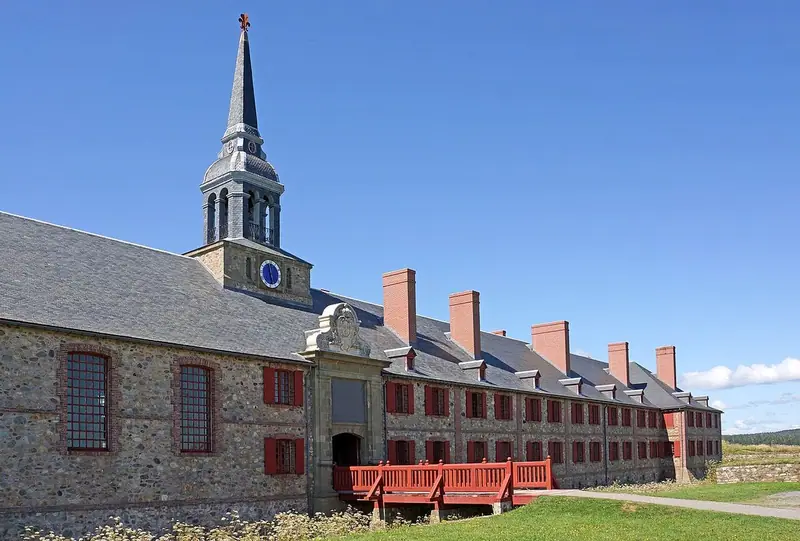
Fortress of Louisbourg audio guide
Step into the summer of 1744 in a rebuilt French fortified town on Cape Breton’s Atlantic shore, from the Dauphin Gate to the King’s Bastion.
Every guide, in every country
Gorée Island and every other guide we publish, including future ones. One payment, no subscription.