Before you start
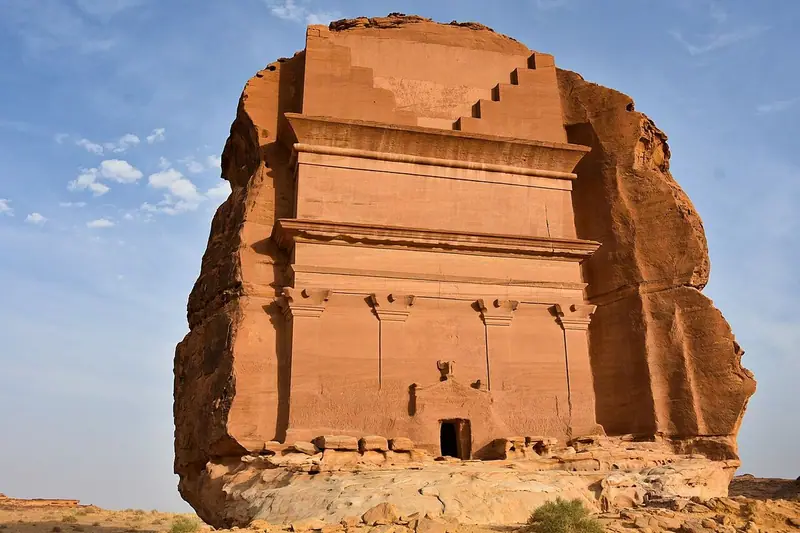
Hegra, also known as Mada’in Salih or Al-Hijr, lies in the desert near AlUla in north-western Saudi Arabia. It was the second city of the Nabataean kingdom after Petra, and it is famous for more than a hundred monumental tombs carved into outcrops of golden sandstone. In 2008 it became Saudi Arabia’s first UNESCO World Heritage Site. Visitors cannot drive themselves around the site: you explore it on a booked tour, by coach, four-wheel drive or horse carriage, with short walks at each stop. This guide follows the main stops of the standard tours, though the order may vary; listen to each section as you arrive.
Use it as a self-guided tour of Hegra: 6 stops in visit order, each played when you’re ready, at your own pace.
 Free preview · Stop 1
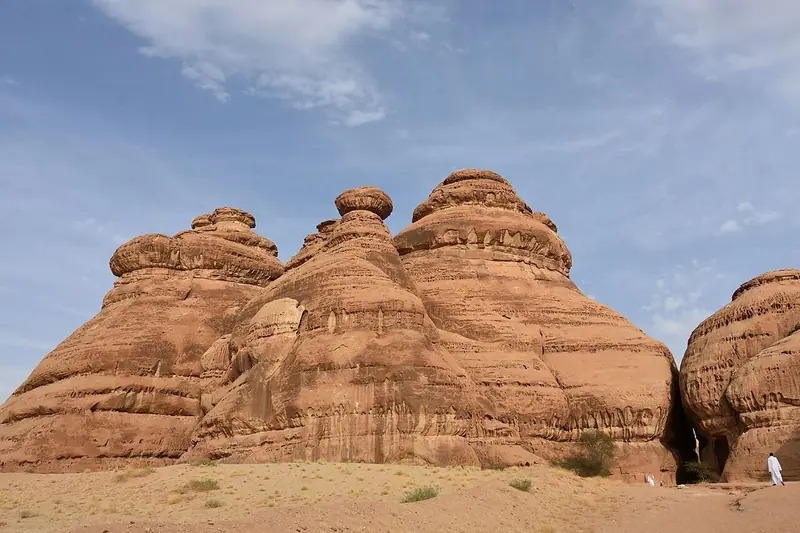
Jabal Ithlib
Tours usually begin at Jabal Ithlib, a great mass of weathered sandstone on the north-east side of the site, which is thought to have been a sacred area of the Nabataeans, probably dedicated to their chief god, Dushara. Walk into the narrow corridor between the high rock walls, about forty metres long, which recalls the famous Siq at Petra on a much smaller scale. As you go, look for small niches and carved panels cut into the rock faces, some of them bearing inscriptions. These were small shrines, where worshippers could leave offerings or represent their gods, often as simple blocks of stone rather than human figures. The silence and the shade of the passage make it easy to imagine processions of worshippers walking this way. Keep to the marked paths, and do not touch or climb on the carved surfaces.
Photo: Prof. Mortel · CC BY 2.0 · Wikimedia Commons
What to see at Hegra: 6 stops, in visit order
- 01
 Jabal IthlibThe narrow passageFree preview
- 02
 The DiwanA hall for feastsIn the guide
- 03
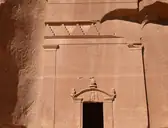 Jabal AlBanatTombs of womenIn the guide
- 04
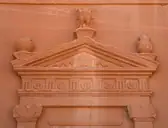 Reading the FaçadesEagles and stepsIn the guide
- 05
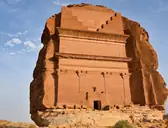 Tomb of Lihyan son of KuzaThe lonely castleIn the guide
- 06
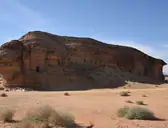 Jabal AlAhmarThe red mountainIn the guide
Site map of Hegra
History of Hegra
The Nabataeans were an Arab people who grew rich from the caravan trade in incense, myrrh and spices that passed through north-western Arabia. Their capital was Petra, in present-day Jordan, and Hegra became their great city in the south, flourishing in the first century CE under King Aretas IV. The tombs were carved for the city’s leading families, while the houses, built of mud brick on the plain, have almost vanished. In 106 CE the kingdom was annexed by Rome, and Roman soldiers were stationed here. Later, Hegra lay on the pilgrim route to Mecca, and in the early twentieth century the Ottoman Hejaz Railway was built past the site.
Hegra guide: questions
How many stops does the Hegra guide have?
6 stops, in visit order: 1. Jabal Ithlib; 2. The Diwan; 3. Jabal AlBanat; 4. Reading the Façades; 5. Tomb of Lihyan son of Kuza; 6. Jabal AlAhmar.
Can I do a self-guided tour of Hegra with this guide?
Yes. The guide is made for a self-guided tour: 6 stops in visit order, each with a photo, a story and a voice, so you can explore Hegra at your own pace, without joining a group. Download it before you go and it works offline.
How long is each guide?
The 6 stops add up to about 4 minutes of listening in total. You play each stop when you’re ready, so you can go at your own pace.
Does the guide work offline?
Yes, once it’s downloaded. The guide is a single self-contained web page (about 5.6 MB) with the photos, text and audio built in. Download it to your phone before you go (Wi-Fi is best); after that it opens in any modern browser on iPhone or Android, with no app, account or mobile signal needed.
Does it use GPS or need my location?
No. The guide doesn’t use GPS and doesn’t know where you are: you play each stop when you reach it. It works on iPhone and Android in any modern browser, and it’s in English.
What’s included?
One self-contained HTML guide: 6 stops in visit order, each with a photo, text and a voice, plus the story of who built the site.
Who built Hegra?
The Nabataeans were an Arab people who grew rich from the caravan trade in incense, myrrh and spices that passed through north-western Arabia. Their capital was Petra, in present-day Jordan, and Hegra became their great city in the south, flourishing in the first century CE under King Aretas IV.
Where is Hegra?
Hegra, also known as Mada’in Salih or Al-Hijr, lies in the desert near AlUla in north-western Saudi Arabia.
Is there a free audio guide to Hegra?
The first stop, Jabal Ithlib, is free to read and hear on this page, so you can try the Hegra audio tour before you buy. The full guide, with all 6 stops, is a one-off purchase: download it once and it’s yours to keep, working offline.
Is the Hegra guide worth it?
If you’d like to know what you’re looking at, yes. For $10 you get 6 stops in visit order, each with a photo, a short history and a voice you play when you’re ready, plus a site map of the stops, and about 4 minutes of listening in all. It’s short on purpose, so you spend your time looking, not listening. It’s yours to keep, works offline and needs no app. The first stop is free on this page, so you can try it before you buy. If you’d like hours of detail, a guided tour will go deeper.
Audio guide or guided tour?
It depends how you like to visit. This guide lets you explore Hegra at your own pace, at any time, for a one-off price. A guided tour gives you a live expert you can ask questions, but at fixed times and usually for a higher price. Many people use both: a tour for the big picture, and the guide to read beforehand or to revisit the stops in their own time.
Is this the official Hegra guide?
No. It’s an independent guide by The Historian Guide, not affiliated with or endorsed by the operator of Hegra. For tickets and opening hours, check the official site operator before you go.
Does the guide include entry tickets or opening hours?
No. The guide is a digital companion only. Admission to Hegra is separate, so check the official site operator for current tickets and opening hours before you go.
- Stop 1 · Jabal Ithlib: Prof. Mortel · CC BY 2.0 · Wikimedia Commons · resized
- Stop 2 · The Diwan: Carole Raddato from FRANKFURT, Germany · CC BY-SA 2.0 · Wikimedia Commons · resized
- Stop 3 · Jabal AlBanat: Following Hadrian · CC BY-SA 2.0 · Wikimedia Commons · resized
- Stop 4 · Reading the Façades: Following Hadrian · CC BY-SA 2.0 · Wikimedia Commons · resized
- Stop 5 · Tomb of Lihyan son of Kuza (also the cover): Prof. Mortel · CC BY 2.0 · Wikimedia Commons · resized
- Stop 6 · Jabal AlAhmar: Following Hadrian · CC BY-SA 2.0 · Wikimedia Commons · resized


All photographs from Wikimedia Commons under the licences shown.
More guides in Saudi Arabia
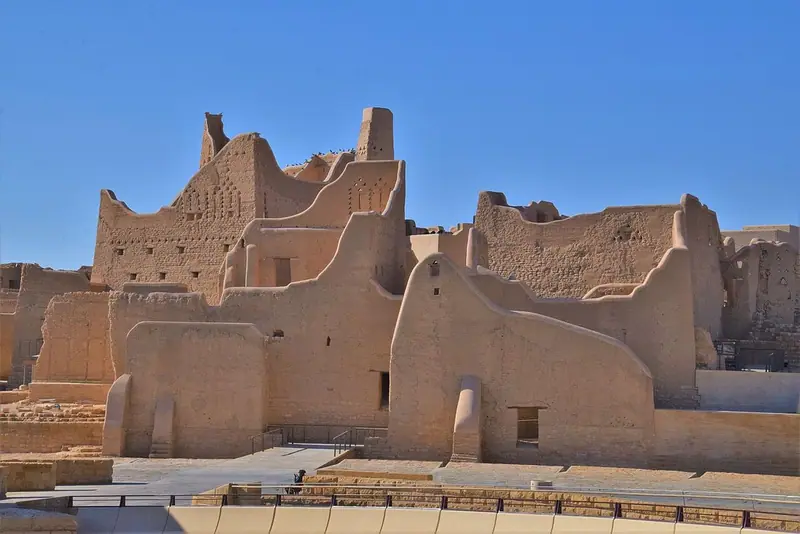 First Saudi State8 stops · 1727–1818
Diriyah and At-Turaif audio guide
The mud-brick palaces and mosques of At-Turaif above Wadi Hanifa, capital of the First Saudi State and home of the House of Saud.
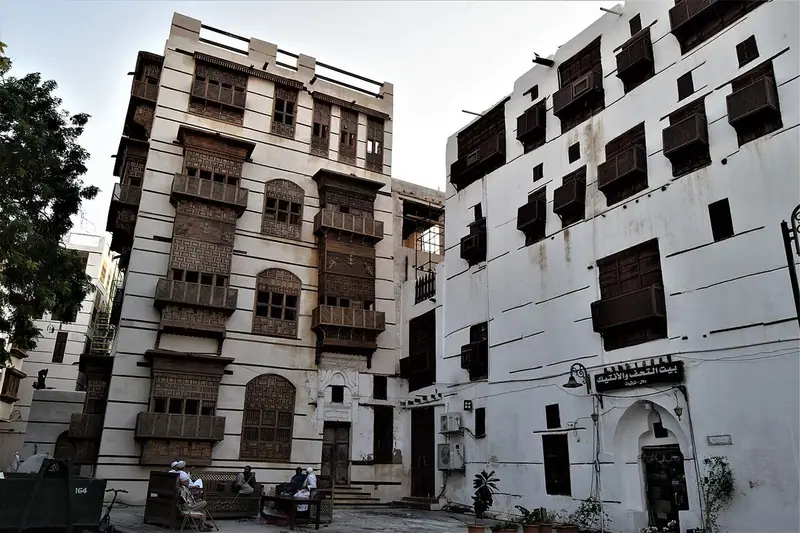 Hejazi7 stops · 647–1925
Historic Jeddah, Al-Balad audio guide
Enter Al-Balad by the Makkah Gate and follow the old market street past coral-stone houses with great wooden bay windows to Bayt Nasseef.
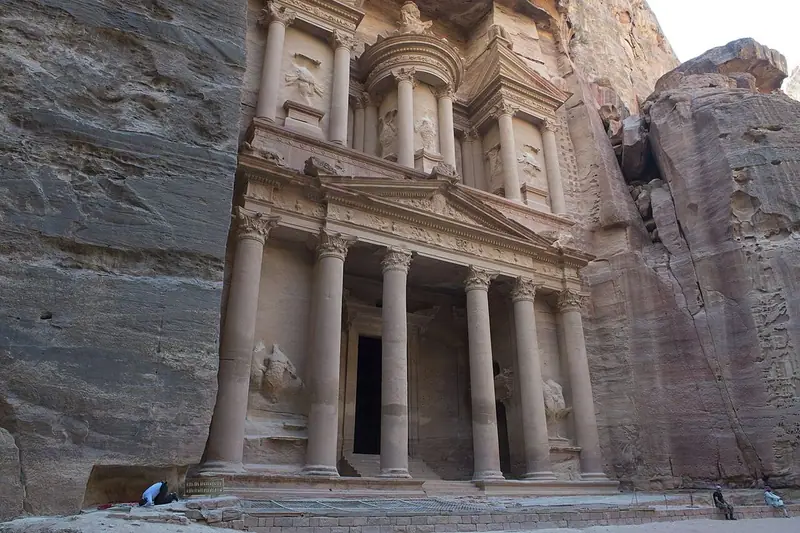 Nabataean9 stops · c. 1st century BCE – 2nd century CE
Petra audio guide
Through the narrow Siq to the Treasury, then on past the Royal Tombs to the climb up to the Monastery.
Every guide, in every country
Hegra and every other guide we publish, including future ones. One payment, no subscription.