Before you start
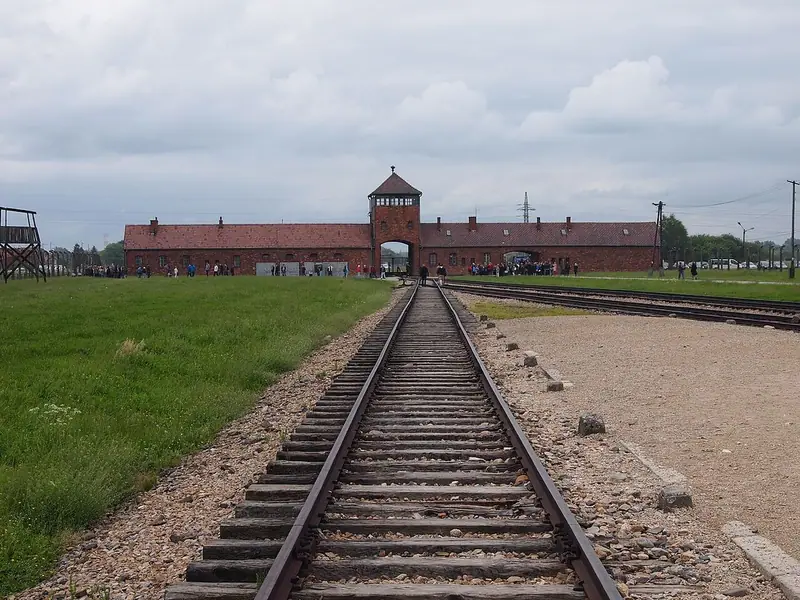
Auschwitz was the largest of the German Nazi concentration and extermination camps. Between 1940 and 1945, about one point one million people were murdered here, around a million of them Jews, together with Poles, Roma and Sinti, Soviet prisoners of war and others. Today the Auschwitz-Birkenau State Museum preserves the site as a memorial and a place of remembrance and education. This guide follows the usual route, through the main camp, Auschwitz I, and then the much larger Birkenau, about three kilometres away. Entry is by an entry pass, for an individual or guided visit, booked in advance, and at busy times the main camp may only be visited with a museum educator. Please behave with quiet respect, dress appropriately, and do not take photographs where signs forbid it. The museum does not recommend visits by children under fourteen.
Use it as a self-guided tour of Auschwitz-Birkenau: 9 stops in visit order, each played when you’re ready, at your own pace.
 Free preview · Stop 1
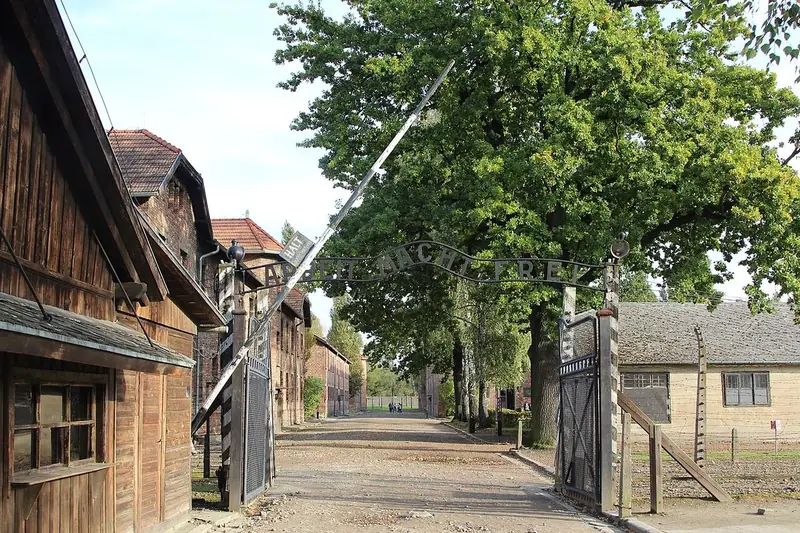
The Main Gate
The visit begins at the gate of the main camp, Auschwitz I, beneath the iron words Arbeit macht frei, meaning ‘work sets you free’. The sign was made in the camp workshops by prisoners, and the slogan was a cruel deception, for work here was a means of destroying people. Each day, prisoners marched through this gate to forced labour and back again, often carrying the bodies of those who had died during the day, while a camp orchestra of prisoners was made to play nearby. The sign was stolen in 2009 and later recovered, and a copy now hangs in its place. Pass through the gate in silence. Ahead lie the rows of two-storey brick blocks, built as barracks for the Polish army before the war, and surrounded by a double fence of barbed wire.
Photo: Fallaner · CC BY-SA 4.0 · Wikimedia Commons
What to see at Auschwitz-Birkenau: 9 stops, in visit order
- 01
 The Main GateAuschwitz IFree preview
- 02
 The Death WallBlock 11In the guide
- 03
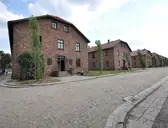 The BlocksThe EvidenceIn the guide
- 04
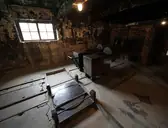 Gas Chamber and Crematorium IThe First Gas ChamberIn the guide
- 05
 The Gate of DeathAuschwitz II-BirkenauIn the guide
- 06
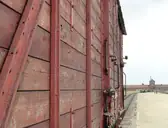 The RampSelectionIn the guide
- 07
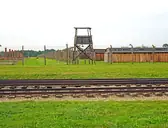 The BarracksLife in BirkenauIn the guide
- 08
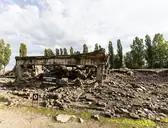 The CrematoriaThe RuinsIn the guide
- 09
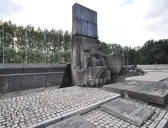 The International MonumentRemembranceIn the guide
Site map of Auschwitz-Birkenau
History of Auschwitz-Birkenau
Auschwitz was built and run by the SS of Nazi Germany in the part of occupied Poland annexed to the German Reich after the invasion of 1939. The SS turned former Polish army barracks in the town of Oświęcim into a concentration camp in 1940, at first mainly for Polish political prisoners. From 1941 they built Birkenau, and from 1942 trains brought Jews from all over occupied Europe to its gas chambers, as part of the Holocaust, the Nazi plan to murder the Jews of Europe. Soviet troops liberated the camp on 27 January 1945, now International Holocaust Remembrance Day, and in 1947 the Polish state created the museum.
Auschwitz-Birkenau guide: questions
How many stops does the Auschwitz-Birkenau guide have?
9 stops, in visit order: 1. The Main Gate; 2. The Death Wall; 3. The Blocks; 4. Gas Chamber and Crematorium I; 5. The Gate of Death; 6. The Ramp; 7. The Barracks; 8. The Crematoria; 9. The International Monument.
Can I do a self-guided tour of Auschwitz-Birkenau with this guide?
Yes. The guide is made for a self-guided tour: 9 stops in visit order, each with a photo, a story and a voice, so you can explore Auschwitz-Birkenau at your own pace, without joining a group. Download it before you go and it works offline.
How long is each guide?
The 9 stops add up to about 6 minutes of listening in total. You play each stop when you’re ready, so you can go at your own pace.
Does the guide work offline?
Yes, once it’s downloaded. The guide is a single self-contained web page (about 8.4 MB) with the photos, text and audio built in. Download it to your phone before you go (Wi-Fi is best); after that it opens in any modern browser on iPhone or Android, with no app, account or mobile signal needed.
Does it use GPS or need my location?
No. The guide doesn’t use GPS and doesn’t know where you are: you play each stop when you reach it. It works on iPhone and Android in any modern browser, and it’s in English.
What’s included?
One self-contained HTML guide: 9 stops in visit order, each with a photo, text and a voice, plus the story of who built the site.
Who built Auschwitz-Birkenau?
Auschwitz was built and run by the SS of Nazi Germany in the part of occupied Poland annexed to the German Reich after the invasion of 1939. The SS turned former Polish army barracks in the town of Oświęcim into a concentration camp in 1940, at first mainly for Polish political prisoners.
Is there a free audio guide to Auschwitz-Birkenau?
The first stop, The Main Gate, is free to read and hear on this page, so you can try the Auschwitz-Birkenau audio tour before you buy. The full guide, with all 9 stops, is a one-off purchase: download it once and it’s yours to keep, working offline.
Is the Auschwitz-Birkenau guide worth it?
If you’d like to know what you’re looking at, yes. For $10 you get 9 stops in visit order, each with a photo, a short history and a voice you play when you’re ready, plus a site map of the stops, and about 6 minutes of listening in all. It’s short on purpose, so you spend your time looking, not listening. It’s yours to keep, works offline and needs no app. The first stop is free on this page, so you can try it before you buy. If you’d like hours of detail, a guided tour will go deeper.
Audio guide or guided tour?
It depends how you like to visit. This guide lets you explore Auschwitz-Birkenau at your own pace, at any time, for a one-off price. A guided tour gives you a live expert you can ask questions, but at fixed times and usually for a higher price. Many people use both: a tour for the big picture, and the guide to read beforehand or to revisit the stops in their own time.
Is this the official Auschwitz-Birkenau guide?
No. It’s an independent guide by The Historian Guide, not affiliated with or endorsed by the operator of Auschwitz-Birkenau. For tickets and opening hours, check the official site operator before you go.
Does the guide include entry tickets or opening hours?
No. The guide is a digital companion only. Admission to Auschwitz-Birkenau is separate, so check the official site operator for current tickets and opening hours before you go.
- Stop 1 · The Main Gate: Fallaner · CC BY-SA 4.0 · Wikimedia Commons · resized
- Stop 2 · The Death Wall: Fallaner · CC BY-SA 4.0 · Wikimedia Commons · resized
- Stop 3 · The Blocks: Jorge Láscar from Australia · CC BY 2.0 · Wikimedia Commons · resized
- Stop 4 · Gas Chamber and Crematorium I: Oleg Yunakov · CC BY-SA 4.0 · Wikimedia Commons · resized
- Stop 5 · The Gate of Death (also the cover): Paul Arps from The Netherlands · CC BY 2.0 · Wikimedia Commons · resized
- Stop 6 · The Ramp: Cor2701 · CC BY 3.0 · Wikimedia Commons · resized
- Stop 7 · The Barracks: Dennis G. Jarvis · CC BY-SA 2.0 · Wikimedia Commons · resized
- Stop 8 · The Crematoria: Ciprian Lazar · CC BY-SA 4.0 · Wikimedia Commons · resized
- Stop 9 · The International Monument: Jorge Láscar from Australia · CC BY 2.0 · Wikimedia Commons · resized


All photographs from Wikimedia Commons under the licences shown.
More guides in Poland
 Polish–Lithuanian Commonwealth8 stops · Polish Enlightenment
Łazienki Park audio guide
From the Chopin monument past the Old Orangery to the Palace on the Isle, summer retreat of Poland’s last king.
 Jagiellonian8 stops · 1257–1590s CE
Kraków Old Town audio guide
From the Barbican to the Main Market Square, laid out in the thirteenth century, where the hejnał sounds from St Mary’s tower.
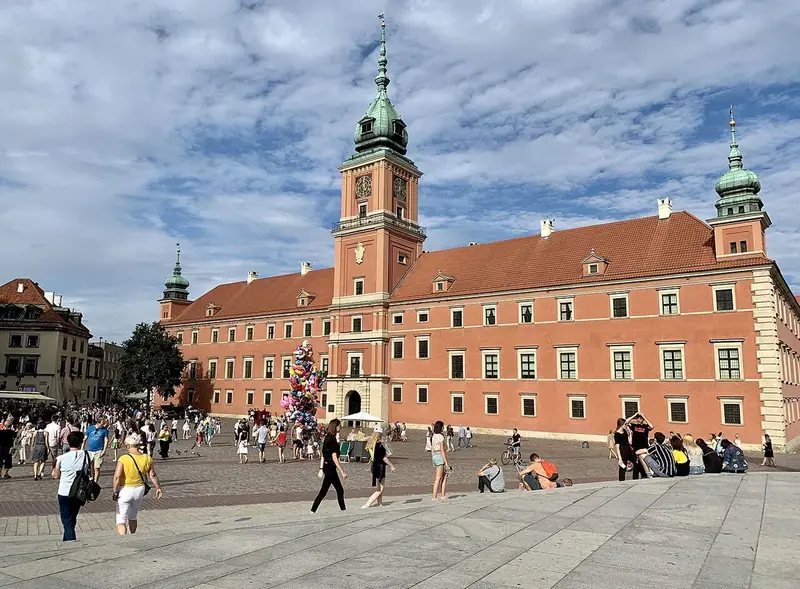 Polish–Lithuanian Commonwealth8 stops · Early modern Poland
Royal Castle, Warsaw audio guide
From Sigismund’s Column into the rebuilt home of Polish kings, where the Constitution of 3 May 1791 was drafted, to the Canaletto Room and the Ballroom.
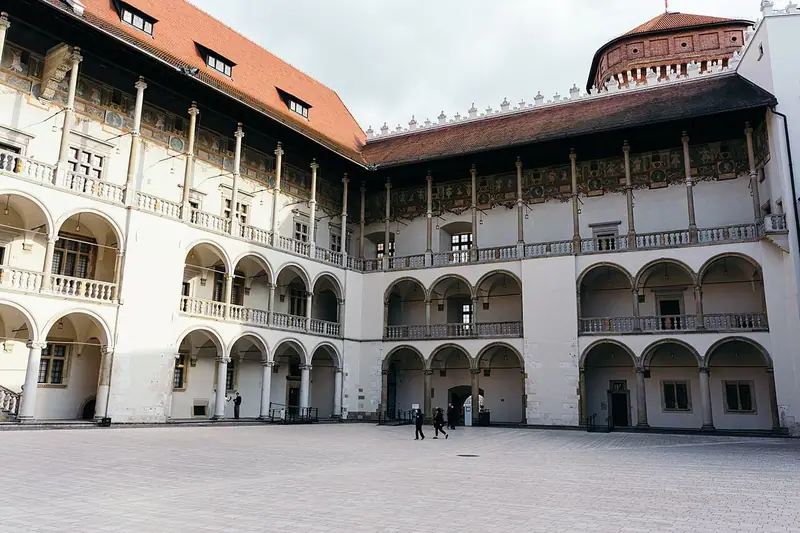 Jagiellonian8 stops · 11th–16th century CE
Wawel Royal Castle audio guide
Climb Wawel Hill to the cathedral, the Sigismund Bell and the royal crypts, then the Renaissance arcaded courtyard of Poland’s kings.
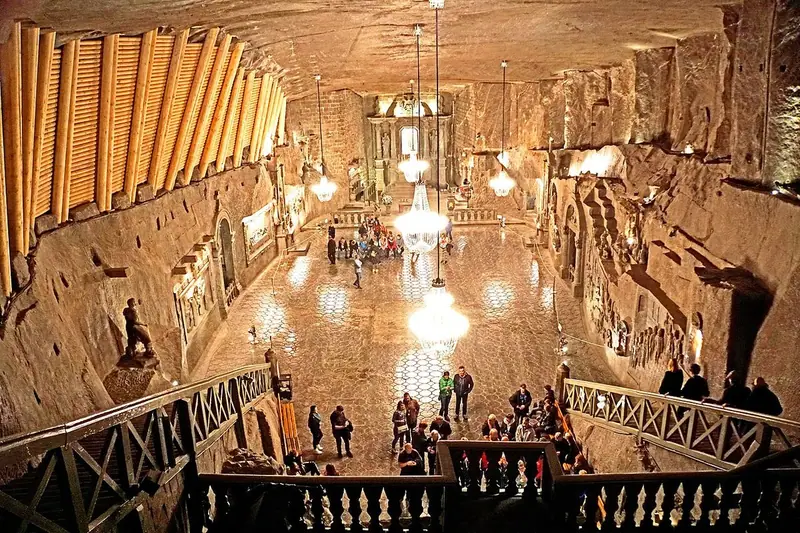 Medieval8 stops · 13th century – 1996 CE
Wieliczka Salt Mine audio guide
Descend into an underground world of chambers, lakes and chapels carved from rock salt, to the vast Chapel of St Kinga.
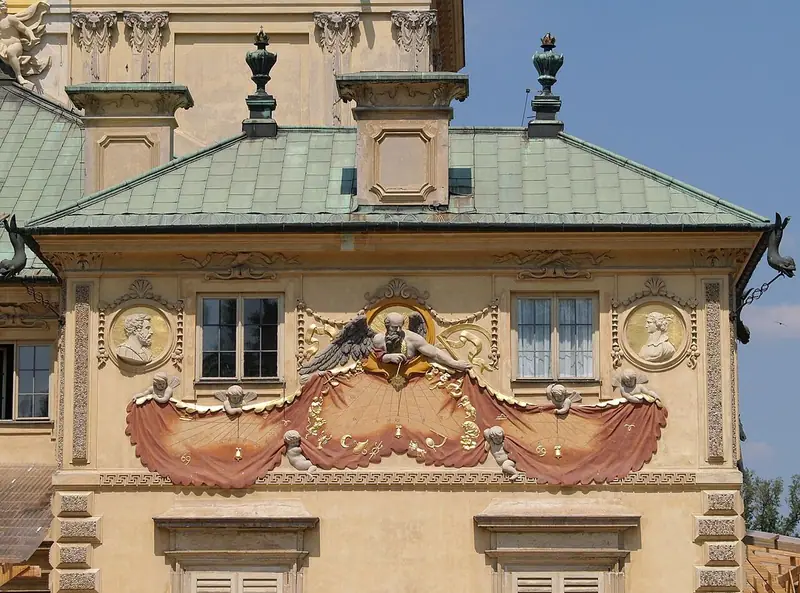 Polish–Lithuanian Commonwealth7 stops · Polish Baroque
Wilanów Palace audio guide
Tour the baroque summer palace of King John III Sobieski, from its sundial façade and royal rooms to the gardens by the lake.
Every guide, in every country
Auschwitz-Birkenau and every other guide we publish, including future ones. One payment, no subscription.