Before you start
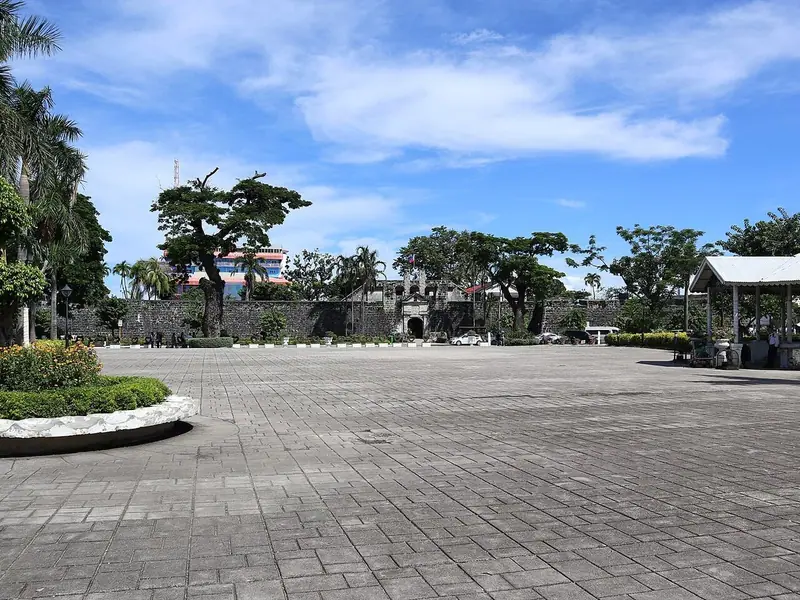
Cebu City is the oldest Spanish city in the Philippines, and its old downtown holds the story of the first meeting between Europeans and Filipinos, and of the colony that followed. The route starts at Fort San Pedro by the harbour and crosses Plaza Independencia to Magellan’s Cross, the Basilica of the Santo Niño and the cathedral. It then follows Colon Street north into the old Parian district, ending at its monument and its old houses. The distances are short, but the streets are busy and hot, so allow half a day.
Use it as a self-guided tour of Historic Cebu: 8 stops in visit order, each played when you’re ready, at your own pace.
 Free preview · Stop 1
Fort San Pedro
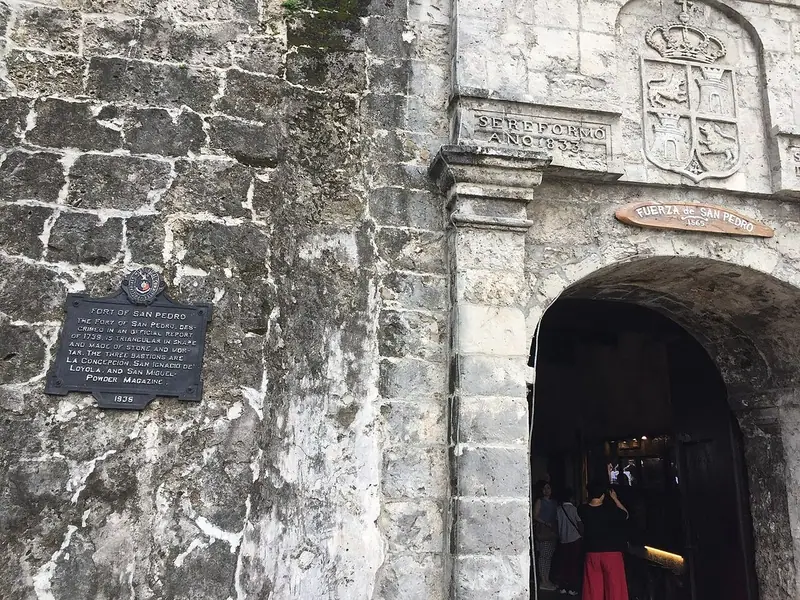
Begin at Fort San Pedro, by the harbour. Legazpi broke ground for a fort here in 1565, and the first one was made of wood. When the stone fort was built is uncertain, but the gate bears the date 1738 with the arms of Castile and León. It is a triangle, with two sides facing the sea and the third the town, and bastions at the three corners. The walls are about six metres high and more than two metres thick, and many old cannon remain in place. In 1898 the Spanish surrendered it to Cebuano revolutionaries. Later it served as a barracks, a school, a wartime hospital and a zoo. By 1968 it was in ruins; it was restored with coral stone from the sea, and today it houses a small museum. It has been damaged several times since, most recently by the earthquake of 2025.
Photo: Carlo Joseph Moskito · CC BY-SA 4.0 · Wikimedia Commons
What to see at Historic Cebu: 8 stops, in visit order
- 01
 Fort San PedroThe triangle by the seaFree preview
- 02
 Plaza IndependenciaThe old parade groundIn the guide
- 03
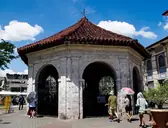 Magellan’s CrossWhere the faith arrivedIn the guide
- 04
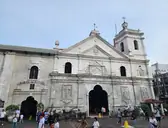 The Basilica of the Santo NiñoThe oldest church in the islandsIn the guide
- 05
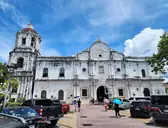 Cebu Metropolitan CathedralSaint VitalisIn the guide
- 06
 Colon StreetThe oldest street?In the guide
- 07
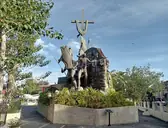 The Heritage of Cebu MonumentThe old ParianIn the guide
- 08
 The Yap-San Diego HouseCoral stone and hardwoodIn the guide
Site map of Historic Cebu
History of Historic Cebu
Before the Spanish came, Cebu, or Sugbo, was a trading port ruled by Rajah Humabon. In April 1521 the expedition of Ferdinand Magellan arrived, and Humabon and many of his people were baptised; a few weeks later Magellan was killed on nearby Mactan by the warriors of Lapulapu. In 1565 a second expedition under Miguel López de Legazpi took Cebu and founded the first Spanish settlement in the islands. Spain ruled for over three centuries, until the revolution of 1898. Chinese merchants and their mestizo descendants, settled in the Parian, shaped the city as much as the friars and soldiers did.
Historic Cebu guide: questions
How many stops does the Historic Cebu guide have?
8 stops, in visit order: 1. Fort San Pedro; 2. Plaza Independencia; 3. Magellan’s Cross; 4. The Basilica of the Santo Niño; 5. Cebu Metropolitan Cathedral; 6. Colon Street; 7. The Heritage of Cebu Monument; 8. The Yap-San Diego House.
Can I do a self-guided tour of Historic Cebu with this guide?
Yes. The guide is made for a self-guided tour: 8 stops in visit order, each with a photo, a story and a voice, so you can explore Historic Cebu at your own pace, without joining a group. Download it before you go and it works offline.
How long is each guide?
The 8 stops add up to about 6 minutes of listening in total. You play each stop when you’re ready, so you can go at your own pace.
Does the guide work offline?
Yes, once it’s downloaded. The guide is a single self-contained web page (about 8.3 MB) with the photos, text and audio built in. Download it to your phone before you go (Wi-Fi is best); after that it opens in any modern browser on iPhone or Android, with no app, account or mobile signal needed.
Does it use GPS or need my location?
No. The guide doesn’t use GPS and doesn’t know where you are: you play each stop when you reach it. It works on iPhone and Android in any modern browser, and it’s in English.
What’s included?
One self-contained HTML guide: 8 stops in visit order, each with a photo, text and a voice, plus the story of who built the site.
Who built Historic Cebu?
Before the Spanish came, Cebu, or Sugbo, was a trading port ruled by Rajah Humabon. In April 1521 the expedition of Ferdinand Magellan arrived, and Humabon and many of his people were baptised; a few weeks later Magellan was killed on nearby Mactan by the warriors of Lapulapu.
Where is Historic Cebu?
Cebu City is the oldest Spanish city in the Philippines, and its old downtown holds the story of the first meeting between Europeans and Filipinos, and of the colony that followed.
Is there a free audio guide to Historic Cebu?
The first stop, Fort San Pedro, is free to read and hear on this page, so you can try the Historic Cebu audio tour before you buy. The full guide, with all 8 stops, is a one-off purchase: download it once and it’s yours to keep, working offline.
Is the Historic Cebu guide worth it?
If you’d like to know what you’re looking at, yes. For $10 you get 8 stops in visit order, each with a photo, a short history and a voice you play when you’re ready, plus a site map of the stops, and about 6 minutes of listening in all. It’s short on purpose, so you spend your time looking, not listening. It’s yours to keep, works offline and needs no app. The first stop is free on this page, so you can try it before you buy. If you’d like hours of detail, a guided tour will go deeper.
Audio guide or guided tour?
It depends how you like to visit. This guide lets you explore Historic Cebu at your own pace, at any time, for a one-off price. A guided tour gives you a live expert you can ask questions, but at fixed times and usually for a higher price. Many people use both: a tour for the big picture, and the guide to read beforehand or to revisit the stops in their own time.
Is this the official Historic Cebu guide?
No. It’s an independent guide by The Historian Guide, not affiliated with or endorsed by the operator of Historic Cebu. For tickets and opening hours, check the official site operator before you go.
Does the guide include entry tickets or opening hours?
No. The guide is a digital companion only. Admission to Historic Cebu is separate, so check the official site operator for current tickets and opening hours before you go.
- Stop 1 · Fort San Pedro: Carlo Joseph Moskito · CC BY-SA 4.0 · Wikimedia Commons · resized
- Stop 2 · Plaza Independencia (also the cover): Patrickroque01 · CC BY-SA 4.0 · Wikimedia Commons · resized
- Stop 3 · Magellan’s Cross: Elmer B. Domingo · CC BY-SA 4.0 · Wikimedia Commons · resized
- Stop 4 · The Basilica of the Santo Niño: LMP 2001 · CC BY-SA 4.0 · Wikimedia Commons · resized
- Stop 5 · Cebu Metropolitan Cathedral: LMP 2001 · CC BY-SA 4.0 · Wikimedia Commons · resized
- Stop 6 · Colon Street: Patrickroque01 · CC BY-SA 4.0 · Wikimedia Commons · resized
- Stop 7 · The Heritage of Cebu Monument: Ralff Nestor Nacor · CC BY-SA 4.0 · Wikimedia Commons · resized
- Stop 8 · The Yap-San Diego House: Subhashish Panigrahi · CC BY-SA 4.0 · Wikimedia Commons · resized


All photographs from Wikimedia Commons under the licences shown.
More guides in Philippines
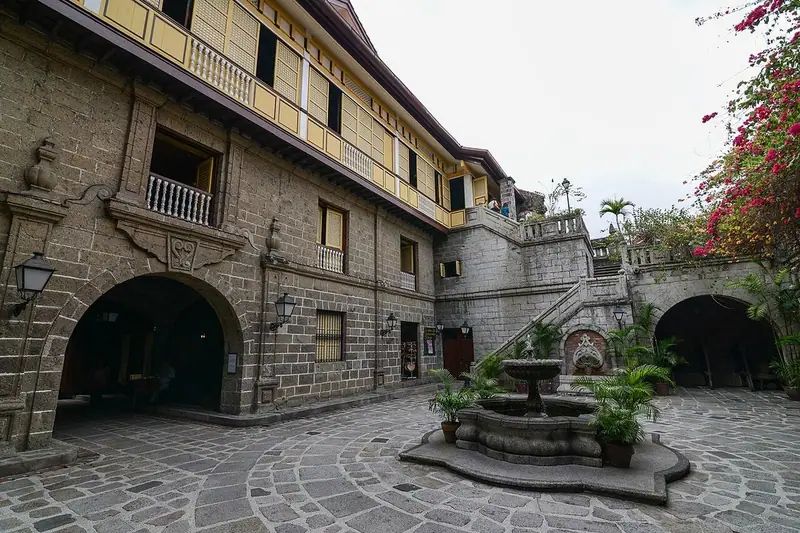 Spanish Colonial8 stops · 1571–1898
Intramuros audio guide
The walls of old Manila, from Fort Santiago and the Rizal Shrine to Manila Cathedral and San Agustin Church.
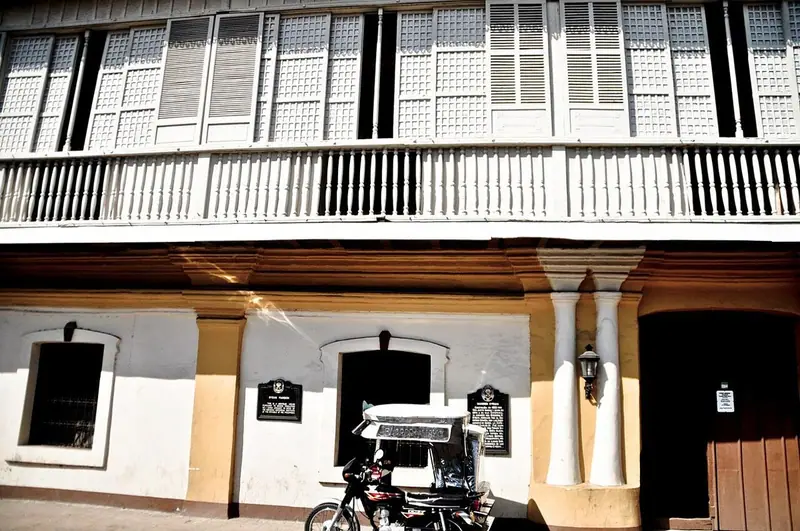 Spanish Colonial7 stops · 1572–1898
Vigan audio guide
Calle Crisologo and the stone mansions of the best-preserved Spanish colonial town in Asia, then the Burnay potters.
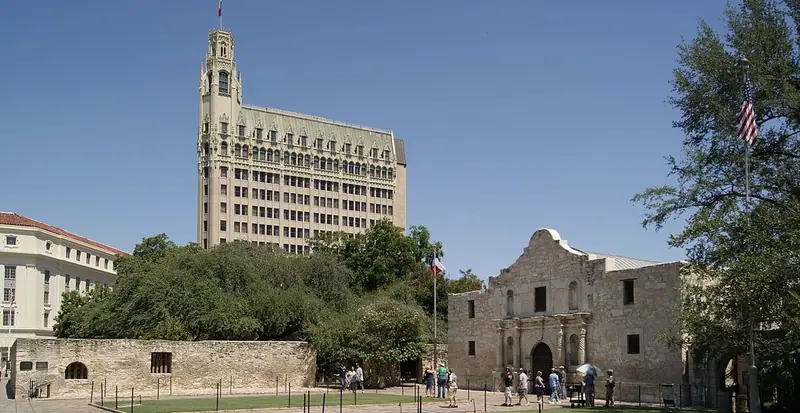 Spanish Colonial7 stops · 1718–1782
Alamo and San Antonio Missions audio guide
From the battle-scarred Alamo to Mission San José and the Espada Aqueduct, the five missions that made San Antonio.
Every guide, in every country
Historic Cebu and every other guide we publish, including future ones. One payment, no subscription.