Before you start
Tongariro National Park lies at the heart of the North Island, south of Lake Taupō, where the three volcanic mountains of Ruapehu, Ngauruhoe and Tongariro rise from the high plateau. It is New Zealand’s oldest national park, and it was founded on a gift: in 1887 the paramount chief of Ngāti Tūwharetoa conveyed the summits to the Crown so that they would be protected. UNESCO inscribed the park as a World Heritage Site in 1990 for its natural features, and in 1993 it became the first property on the list to be recognised as a cultural landscape, for the spiritual significance of the mountains to Māori. This guide begins at Whakapapa Village and ends at Tangiwai, just south of the park. The places are spread over many kilometres and are linked by road and by tramping tracks.
Use it as a self-guided tour of Tongariro National Park: 9 stops in visit order, each played when you’re ready, at your own pace.
 Free preview · Stop 1
Whakapapa Village
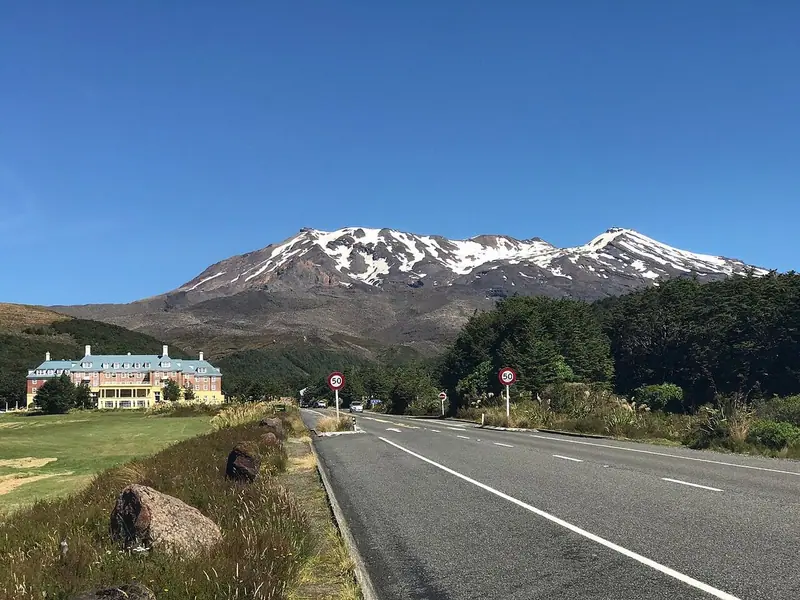
Begin at Whakapapa Village, on the western slopes of Ruapehu, the main entrance to the park, at an altitude of almost twelve hundred metres. At the visitor centre a sculpture and plaque commemorate the gift of the mountains by Te Heuheu Tūkino the Fourth. Visitors were few until the main trunk railway between Auckland and Wellington opened in 1908; roads followed in the 1920s, and the first motor vehicle reached the village in 1925. That early tourism explains why a permanent village and ski fields lie within a national park. Nearby stands the Chateau Tongariro, a grand hotel of 1929, designed by Herbert Hall, who modelled it on the resort at Lake Louise in Canada. It closed in 2023, largely because of the building’s earthquake risk. Around the village grows forest dominated by mountain beech, with tussock grassland.
Photo: Neil Rickards · CC BY 2.0 · Wikimedia Commons
What to see at Tongariro National Park: 9 stops, in visit order
- 01
 Whakapapa VillageThe gateway to the parkFree preview
- 02
 Ngātoro-i-rangiThe sacred fireIn the guide
- 03
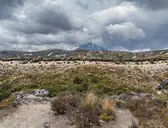 The Tapu MountainsSummits that were not to be climbedIn the guide
- 04
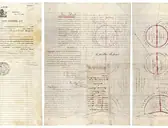 The Gift of 1887Horonuku’s deedIn the guide
- 05
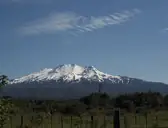 RuapehuThe pit of noiseIn the guide
- 06
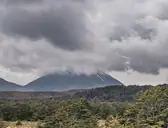 NgauruhoeThe youngest coneIn the guide
- 07
 The Tama LakesWhere Taranaki once stoodIn the guide
- 08
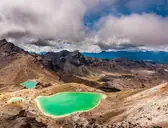 The Emerald LakesNgā RotopounamuIn the guide
- 09
 TangiwaiThe night of the laharIn the guide
History of Tongariro National Park
The park lies within the rohe, the tribal lands, of two main iwi: Ngāti Tūwharetoa, whose lands take in the north and west of the park as far as the summit of Ruapehu, and Ngāti Rangi, whose lands include the southern flanks of the mountain. For Ngāti Tūwharetoa the mountains are tūpuna, ancestors, and their peaks are tapu, sacred. The volcanoes themselves are among the most active in the world, standing above a chain of volcanic activity that runs north-east to Whakaari, White Island. The park was created by Act of Parliament in 1894, covering about 252 square kilometres; today it covers almost 800. Today it is cared for by the Department of Conservation, and its summits and sacred lakes are places where visitors are asked to show respect.
Tongariro National Park guide: questions
How many stops does the Tongariro National Park guide have?
9 stops, in visit order: 1. Whakapapa Village; 2. Ngātoro-i-rangi; 3. The Tapu Mountains; 4. The Gift of 1887; 5. Ruapehu; 6. Ngauruhoe; 7. The Tama Lakes; 8. The Emerald Lakes; 9. Tangiwai.
Can I do a self-guided tour of Tongariro National Park with this guide?
Yes. The guide is made for a self-guided tour: 9 stops in visit order, each with a photo, a story and a voice, so you can explore Tongariro National Park at your own pace, without joining a group. Download it before you go and it works offline.
How long do you need at Tongariro National Park?
We suggest allowing A full day. The 9 stops add up to about 7 minutes of listening, and you play each one when you’re ready, so you can linger wherever you like.
How long is each guide?
The 9 stops add up to about 7 minutes of listening in total. You play each stop when you’re ready, so you can go at your own pace.
Does the guide work offline?
Yes, once it’s downloaded. The guide is a single self-contained web page (about 8.4 MB) with the photos, text and audio built in. Download it to your phone before you go (Wi-Fi is best); after that it opens in any modern browser on iPhone or Android, with no app, account or mobile signal needed.
Does it use GPS or need my location?
No. The guide doesn’t use GPS and doesn’t know where you are: you play each stop when you reach it. It works on iPhone and Android in any modern browser, and it’s in English.
What’s included?
One self-contained HTML guide: 9 stops in visit order, each with a photo, text and a voice, plus the story of who built the site.
Who built Tongariro National Park?
The park lies within the rohe, the tribal lands, of two main iwi: Ngāti Tūwharetoa, whose lands take in the north and west of the park as far as the summit of Ruapehu, and Ngāti Rangi, whose lands include the southern flanks of the mountain. For Ngāti Tūwharetoa the mountains are tūpuna, ancestors, and their peaks are tapu, sacred.
Is there a free audio guide to Tongariro National Park?
The first stop, Whakapapa Village, is free to read and hear on this page, so you can try the Tongariro National Park audio tour before you buy. The full guide, with all 9 stops, is a one-off purchase: download it once and it’s yours to keep, working offline.
Is the Tongariro National Park guide worth it?
If you’d like to know what you’re looking at, yes. For $10 you get 9 stops in visit order, each with a photo, a short history and a voice you play when you’re ready, about 7 minutes of listening in all. It’s short on purpose, so you spend your time looking, not listening. It’s yours to keep, works offline and needs no app. The first stop is free on this page, so you can try it before you buy. If you’d like hours of detail, a guided tour will go deeper.
Audio guide or guided tour?
It depends how you like to visit. This guide lets you explore Tongariro National Park at your own pace, at any time, for a one-off price. A guided tour gives you a live expert you can ask questions, but at fixed times and usually for a higher price. Many people use both: a tour for the big picture, and the guide to read beforehand or to revisit the stops in their own time.
Is this the official Tongariro National Park guide?
No. It’s an independent guide by The Historian Guide, not affiliated with or endorsed by the operator of Tongariro National Park. For tickets and opening hours, check the official site operator before you go.
Does the guide include entry tickets or opening hours?
No. The guide is a digital companion only. Admission to Tongariro National Park is separate, so check the official site operator for current tickets and opening hours before you go.
- Stop 1 · Whakapapa Village: Neil Rickards · CC BY 2.0 · Wikimedia Commons · resized
- Stop 2 · Ngātoro-i-rangi: Phillip Capper from Wellington, New Zealand · CC BY 2.0 · Wikimedia Commons · resized
- Stop 3 · The Tapu Mountains: Krzysztof Golik · CC BY-SA 4.0 · Wikimedia Commons · resized
- Stop 4 · The Gift of 1887: Archives New Zealand from New Zealand · CC BY-SA 2.0 · Wikimedia Commons · resized
- Stop 5 · Ruapehu: Rangataua huntaway · CC BY-SA 3.0 · Wikimedia Commons · resized
- Stop 6 · Ngauruhoe: Krzysztof Golik · CC BY-SA 4.0 · Wikimedia Commons · resized
- Stop 7 · The Tama Lakes: Pavel Špindler · CC BY 3.0 · Wikimedia Commons · resized
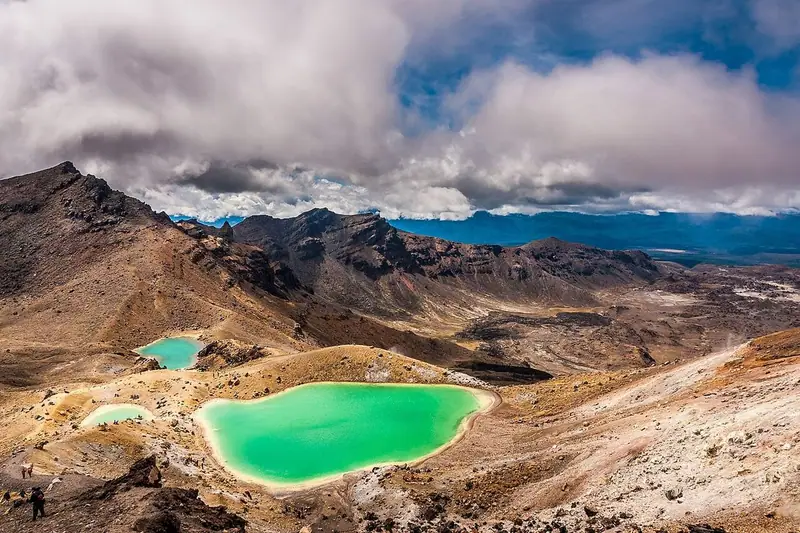
- Stop 8 · The Emerald Lakes (also the cover): Marcus Holland-Moritz · CC BY-SA 2.0 · Wikimedia Commons · resized
- Stop 9 · Tangiwai: Genet (Diskussion) · CC BY-SA 4.0 · Wikimedia Commons · resized


All photographs from Wikimedia Commons under the licences shown.
More guides in New Zealand
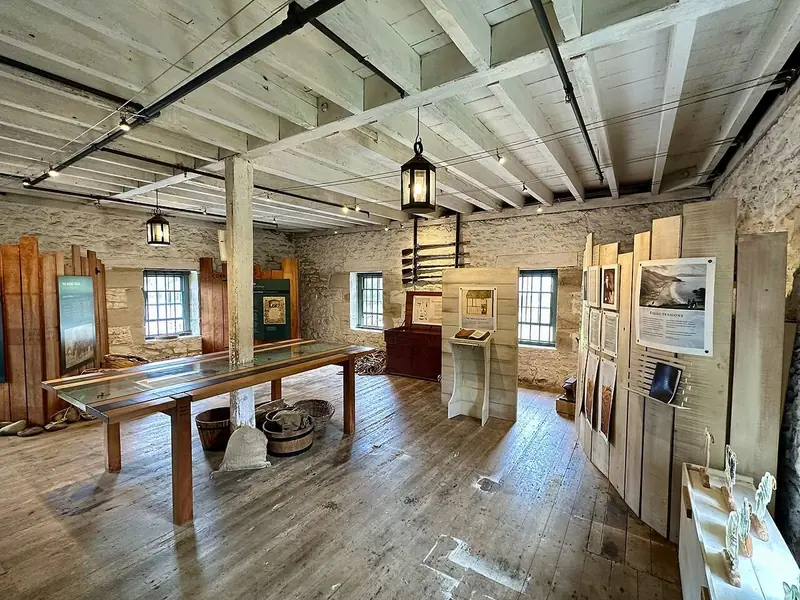 Māori7 stops · 1819–1848
Kerikeri Mission Station audio guide
Visit New Zealand’s two oldest European buildings, the Mission House and the Stone Store, beneath Hongi Hika’s Kororipo Pā.
 Modern9 stops · 1931 – 1938 (rebuilding after the Hawke’s Bay earthquake)
Napier audio guide
The Art Deco city rebuilt after the 1931 Hawke’s Bay earthquake: Marine Parade, Pania of the Reef, the Veronica Sunbay, Māori patterns on the former Bank of New Zealand and the National Tobacco Company Building.
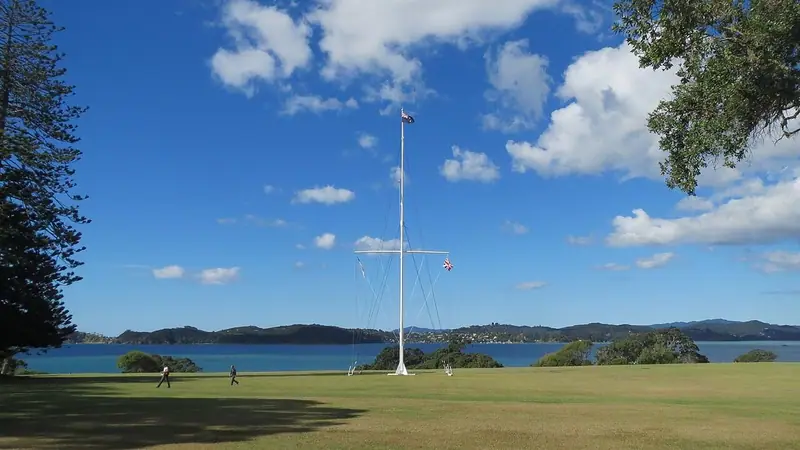 Māori6 stops · 1833–1840 (Treaty House and signing); 1940 (whare and waka)
Waitangi Treaty Grounds audio guide
From the Treaty museum to the Treaty House and flagstaff where the Treaty of Waitangi was first signed, then the carved meeting house and great waka.
Every guide, in every country
Tongariro National Park and every other guide we publish, including future ones. One payment, no subscription.