Before you start
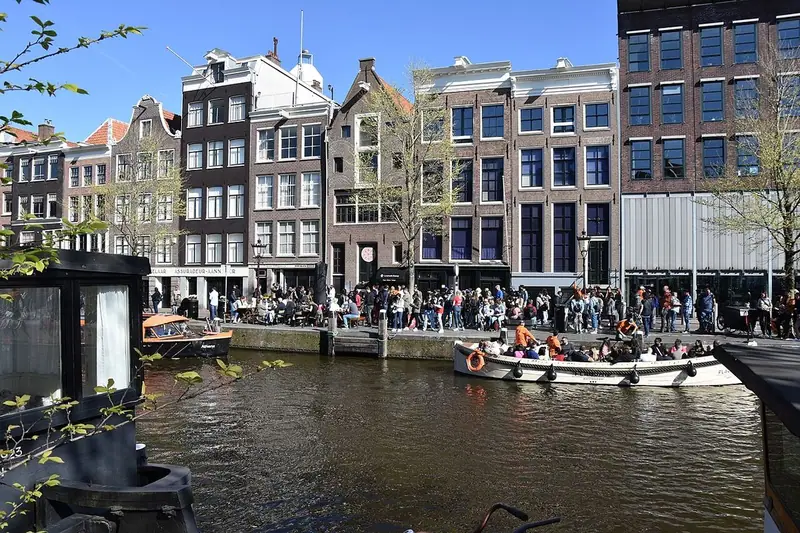
The Anne Frank House, on the Prinsengracht canal in the centre of Amsterdam, preserves the hiding place where Anne Frank, her family and four others hid from Nazi persecution for more than two years during the Second World War. Anne’s diary, written here, has become one of the most widely read books in the world, and the house is now a museum about her life and times. Entry is by timed ticket booked online in advance, as places are limited and the house is very popular, and photography is not allowed inside. This guide begins outside, by the Westerkerk and along the canal, then follows the route through the house, from the front offices into the Secret Annex. The rooms are small, the stairs are steep and narrow, and the mood is quiet and reflective, so please listen before you go in or move gently.
Use it as a self-guided tour of the Anne Frank House: 7 stops in visit order, each played when you’re ready, at your own pace.
 Free preview · Stop 1
The Westerkerk
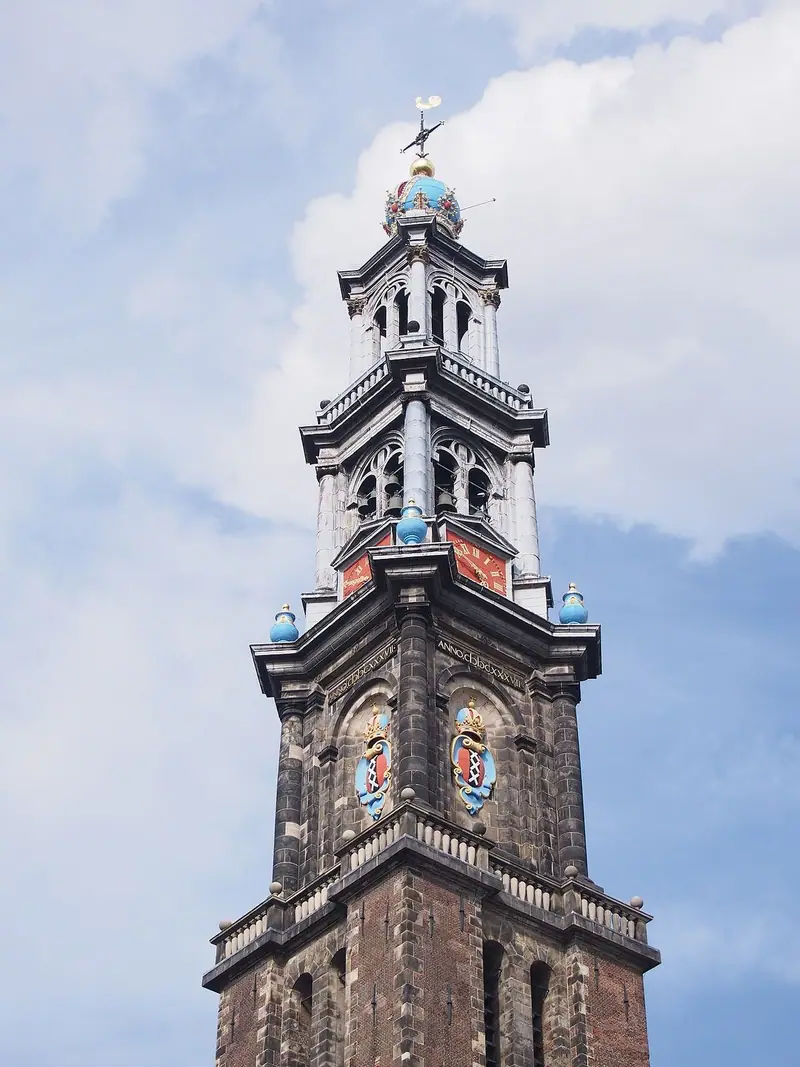
Begin by the Westerkerk, the great church at the corner of the Prinsengracht, and look up at its tower, the Westertoren, about eighty-seven metres tall and topped with the imperial crown of Maximilian I. The church was designed by Hendrick de Keyser and completed in 1631, one of the first churches built for Protestant worship in Amsterdam, and the painter Rembrandt was buried here in 1669, though the place of his grave is unknown. From her hiding place close by, Anne Frank could hear the bells of the tower chime every quarter of an hour. Soon after the family went into hiding, she wrote that the others could not get used to the sound, but that she had liked it from the start. Listen now, and you may hear the same chimes ring out above the canal.
Photo: C messier · CC BY-SA 4.0 · Wikimedia Commons
What to see at the Anne Frank House: 7 stops, in visit order
- 01
 The WesterkerkThe Clock Anne HeardFree preview
- 02
 Prinsengracht 263The House on the CanalIn the guide
- 03
 The Front HouseThe Warehouse and the OfficesIn the guide
- 04
 The BookcaseThe Hidden EntranceIn the guide
- 05
 Anne’s RoomPictures on the WallIn the guide
- 06
 The Van Pels RoomLiving in SilenceIn the guide
- 07
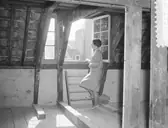 The AtticThe Chestnut TreeIn the guide
History of the Anne Frank House
The canal house at Prinsengracht 263 was built in 1635, in the Dutch Republic of the seventeenth century, when Amsterdam was one of the richest cities in the world, and its front was renewed in 1740. Behind it stands the achterhuis, or back house, a rear building of a kind common in Amsterdam. In 1940 Otto Frank moved the offices of his businesses, Opekta and Pectacon, here, and in July 1942, during the German occupation of the Netherlands, his family went into hiding in the rear building, supported by a small group of his staff. After the war, when the building faced demolition, the Anne Frank Foundation was set up in 1957 to save it, and the museum opened in 1960.
Anne Frank House guide: questions
How many stops does the Anne Frank House guide have?
7 stops, in visit order: 1. The Westerkerk; 2. Prinsengracht 263; 3. The Front House; 4. The Bookcase; 5. Anne’s Room; 6. The Van Pels Room; 7. The Attic.
Can I do a self-guided tour of the Anne Frank House with this guide?
Yes. The guide is made for a self-guided tour: 7 stops in visit order, each with a photo, a story and a voice, so you can explore the Anne Frank House at your own pace, without joining a group. Download it before you go and it works offline.
How long is each guide?
The 7 stops add up to about 5 minutes of listening in total. You play each stop when you’re ready, so you can go at your own pace.
Does the guide work offline?
Yes, once it’s downloaded. The guide is a single self-contained web page (about 6.6 MB) with the photos, text and audio built in. Download it to your phone before you go (Wi-Fi is best); after that it opens in any modern browser on iPhone or Android, with no app, account or mobile signal needed.
Does it use GPS or need my location?
No. The guide doesn’t use GPS and doesn’t know where you are: you play each stop when you reach it. It works on iPhone and Android in any modern browser, and it’s in English.
What’s included?
One self-contained HTML guide: 7 stops in visit order, each with a photo, text and a voice, plus the story of who built the site.
Who built the Anne Frank House?
The canal house at Prinsengracht 263 was built in 1635, in the Dutch Republic of the seventeenth century, when Amsterdam was one of the richest cities in the world, and its front was renewed in 1740. Behind it stands the achterhuis, or back house, a rear building of a kind common in Amsterdam.
Where is the Anne Frank House?
The Anne Frank House, on the Prinsengracht canal in the centre of Amsterdam, preserves the hiding place where Anne Frank, her family and four others hid from Nazi persecution for more than two years during the Second World War.
Is there a free audio guide to the Anne Frank House?
The first stop, The Westerkerk, is free to read and hear on this page, so you can try the Anne Frank House audio tour before you buy. The full guide, with all 7 stops, is a one-off purchase: download it once and it’s yours to keep, working offline.
Is the Anne Frank House guide worth it?
If you’d like to know what you’re looking at, yes. For $10 you get 7 stops in visit order, each with a photo, a short history and a voice you play when you’re ready, about 5 minutes of listening in all. It’s short on purpose, so you spend your time looking, not listening. It’s yours to keep, works offline and needs no app. The first stop is free on this page, so you can try it before you buy. If you’d like hours of detail, a guided tour will go deeper.
Audio guide or guided tour?
It depends how you like to visit. This guide lets you explore the Anne Frank House at your own pace, at any time, for a one-off price. A guided tour gives you a live expert you can ask questions, but at fixed times and usually for a higher price. Many people use both: a tour for the big picture, and the guide to read beforehand or to revisit the stops in their own time.
Is this the official Anne Frank House guide?
No. It’s an independent guide by The Historian Guide, not affiliated with or endorsed by the operator of the Anne Frank House. For tickets and opening hours, check the official site operator before you go.
Does the guide include entry tickets or opening hours?
No. The guide is a digital companion only. Admission to the Anne Frank House is separate, so check the official site operator for current tickets and opening hours before you go.
- Stop 1 · The Westerkerk: C messier · CC BY-SA 4.0 · Wikimedia Commons · resized
- Stop 2 · Prinsengracht 263 (also the cover): Lệ Xuân · CC BY-SA 4.0 · Wikimedia Commons · resized
- Stop 3 · The Front House: Alexisrael · CC BY-SA 3.0 · Wikimedia Commons · resized
- Stop 4 · The Bookcase: Dennis G. Jarvis · CC BY-SA 2.0 · Wikimedia Commons · resized
- Stop 5 · Anne’s Room: Henk Lindeboom/ Anefo · CC0 · Wikimedia Commons · resized
- Stop 6 · The Van Pels Room: Wim van Rossem for Anefo · CC0 · Wikimedia Commons · resized
- Stop 7 · The Attic: Henk Lindeboom/ Anefo · CC0 · Wikimedia Commons · resized


All photographs from Wikimedia Commons under the licences shown.
More guides in Netherlands
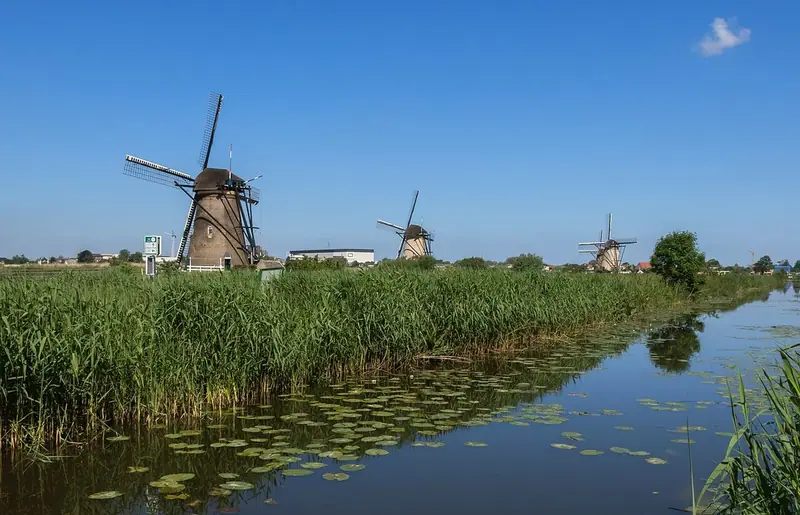 Dutch Republic7 stops · 1360s–1868 CE
Kinderdijk audio guide
Dikes across a low polder between rows of windmills built in 1738 and 1740 to lift the water in stages, the largest group of old mills in the Netherlands.
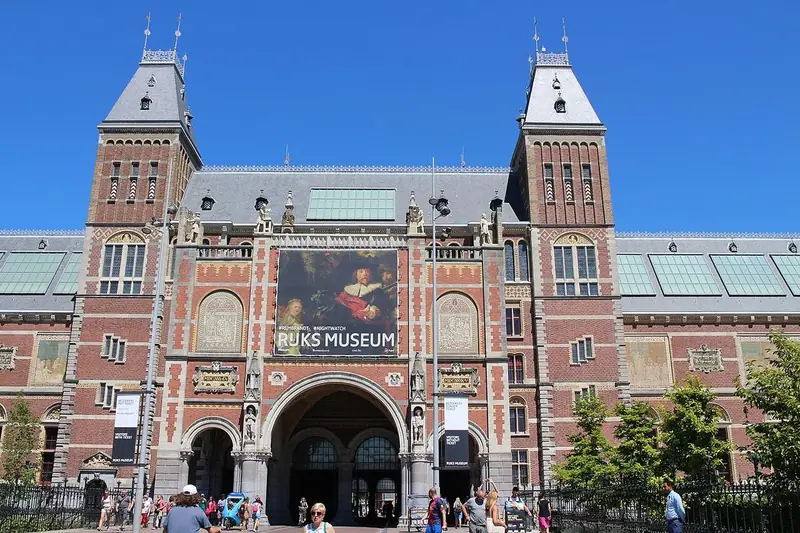 Dutch Republic8 stops · 17th century; museum 1798
Rijksmuseum audio guide
From the Great Hall down the Gallery of Honour to The Milkmaid and The Night Watch, the treasures of the Dutch Golden Age.
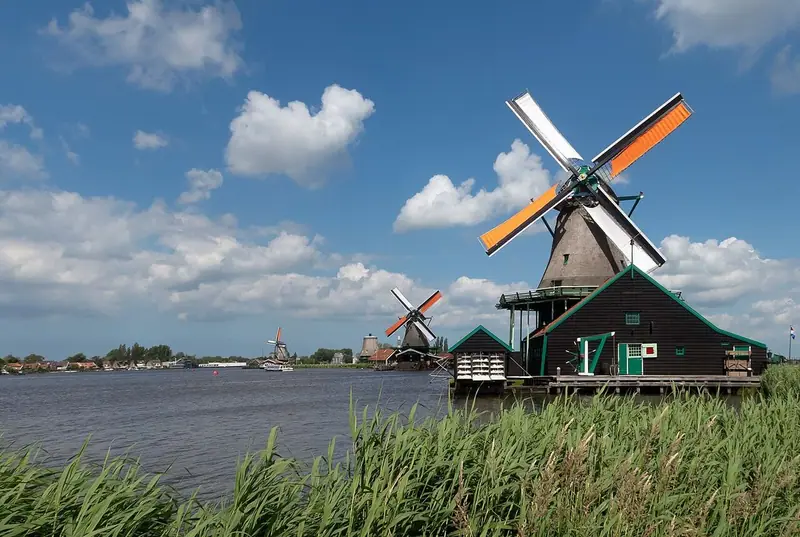 Dutch Republic7 stops · 17th–18th century CE
Zaanse Schans audio guide
The green wooden houses and working windmills of the Zaan, one of the earliest industrial regions in Europe.
Every guide, in every country
Anne Frank House and every other guide we publish, including future ones. One payment, no subscription.