Before you start
Cetinje sits on a small high plain among limestone mountains at the foot of Mount Lovćen. For more than four centuries it was the heart of Montenegro, the seat of its prince-bishops, princes and its one king. The route begins at the monastery and the old court church, visits the great relief map and the Biljarda, the king’s palace and Government House, and the old embassies. It ends at the little Vlach Church. The town is small and flat, so allow half a day, with extra time for the museums.
Use it as a self-guided tour of Cetinje, the Old Royal Capital: 8 stops in visit order, each played when you’re ready, at your own pace.
 Free preview · Stop 1
Cetinje Monastery
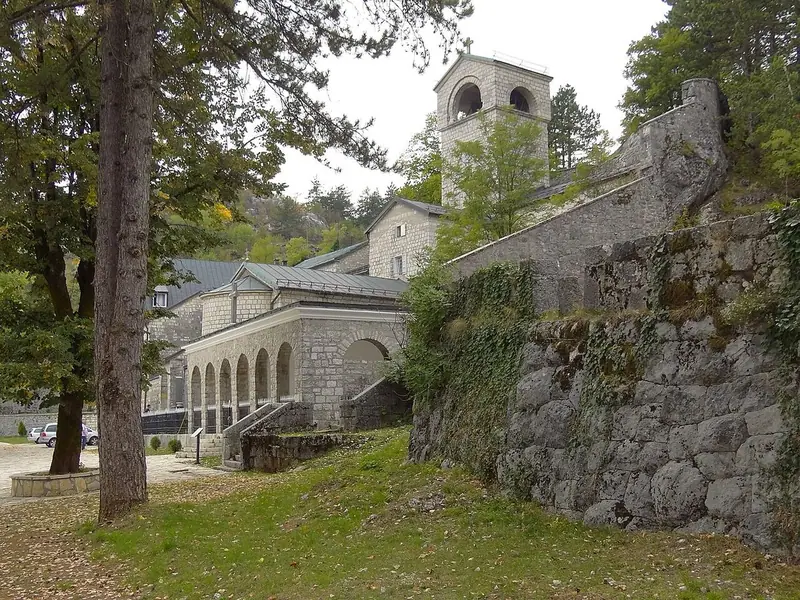
Begin at the monastery on the edge of the town, under the hillside. The first monastery was founded by Ivan Crnojević in 1484, on the nearby site of Ćipur. In 1692, in a war between Venice and the Ottomans, it was destroyed. The Venetian garrison mined it as they left, and the blast killed many of the Ottoman soldiers who rushed in. Prince-Bishop Danilo rebuilt it here at the start of the eighteenth century, on the site of Ivan’s old court and with stone from the ruins. It was sacked again in 1785 and rebuilt several times, and its present appearance dates from 1927. It is still the seat of the Orthodox metropolitan. Among its relics are the remains of Saint Peter of Cetinje and what is venerated as the right hand of John the Baptist. This is a working monastery, so dress modestly.
Photo: Adam Jones, Ph.D. · CC BY-SA 3.0 · Wikimedia Commons
What to see at Cetinje, the Old Royal Capital: 8 stops, in visit order
- 01
 Cetinje MonasteryThe heart of the old stateFree preview
- 02
 The Court Church at ĆipurWhere the founder liesIn the guide
- 03
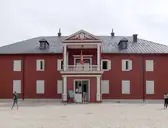 King Nikola’s PalaceA modest royal courtIn the guide
- 04
 The Relief MapMontenegro in miniatureIn the guide
- 05
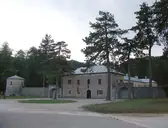 The BiljardaThe poet-bishop’s houseIn the guide
- 06
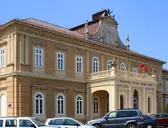 Government HouseA capital’s ambitionIn the guide
- 07
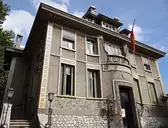 The Old EmbassiesDiplomats in the mountainsIn the guide
- 08
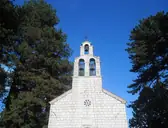 The Vlach ChurchA fence of riflesIn the guide
Site map of Cetinje, the Old Royal Capital
History of Cetinje, the Old Royal Capital
Cetinje was founded in 1482 by Ivan Crnojević, ruler of Zeta, who moved his court here into the mountains to escape the advancing Ottomans. After his dynasty fell, the town declined, and in the 1690s it was sacked. From 1697 the Petrović-Njegoš family revived it. For a century and a half they ruled as prince-bishops, heads of both church and state. In 1852 Danilo the First became a secular prince, and under his nephew Nikola, Montenegro’s independence was recognised in 1878. It became a kingdom in 1910.
The full history continues in the guide.
Cetinje, the Old Royal Capital guide: questions
How many stops does the Cetinje, the Old Royal Capital guide have?
8 stops, in visit order: 1. Cetinje Monastery; 2. The Court Church at Ćipur; 3. King Nikola’s Palace; 4. The Relief Map; 5. The Biljarda; 6. Government House; 7. The Old Embassies; 8. The Vlach Church.
Can I do a self-guided tour of Cetinje, the Old Royal Capital with this guide?
Yes. The guide is made for a self-guided tour: 8 stops in visit order, each with a photo, a story and a voice, so you can explore Cetinje, the Old Royal Capital at your own pace, without joining a group. Download it before you go and it works offline.
How long is each guide?
The 8 stops add up to about 6 minutes of listening in total. You play each stop when you’re ready, so you can go at your own pace.
Does the guide work offline?
Yes, once it’s downloaded. The guide is a single self-contained web page (about 7.6 MB) with the photos, text and audio built in. Download it to your phone before you go (Wi-Fi is best); after that it opens in any modern browser on iPhone or Android, with no app, account or mobile signal needed.
Does it use GPS or need my location?
No. The guide doesn’t use GPS and doesn’t know where you are: you play each stop when you reach it. It works on iPhone and Android in any modern browser, and it’s in English.
What’s included?
One self-contained HTML guide: 8 stops in visit order, each with a photo, text and a voice, plus the story of who built the site.
Who built Cetinje, the Old Royal Capital?
Cetinje was founded in 1482 by Ivan Crnojević, ruler of Zeta, who moved his court here into the mountains to escape the advancing Ottomans. After his dynasty fell, the town declined, and in the 1690s it was sacked.
Where is Cetinje, the Old Royal Capital?
Cetinje sits on a small high plain among limestone mountains at the foot of Mount Lovćen.
Is there a free audio guide to Cetinje, the Old Royal Capital?
The first stop, Cetinje Monastery, is free to read and hear on this page, so you can try the Cetinje, the Old Royal Capital audio tour before you buy. The full guide, with all 8 stops, is a one-off purchase: download it once and it’s yours to keep, working offline.
Is the Cetinje, the Old Royal Capital guide worth it?
If you’d like to know what you’re looking at, yes. For $10 you get 8 stops in visit order, each with a photo, a short history and a voice you play when you’re ready, plus a site map of the stops, and about 6 minutes of listening in all. It’s short on purpose, so you spend your time looking, not listening. It’s yours to keep, works offline and needs no app. The first stop is free on this page, so you can try it before you buy. If you’d like hours of detail, a guided tour will go deeper.
Audio guide or guided tour?
It depends how you like to visit. This guide lets you explore Cetinje, the Old Royal Capital at your own pace, at any time, for a one-off price. A guided tour gives you a live expert you can ask questions, but at fixed times and usually for a higher price. Many people use both: a tour for the big picture, and the guide to read beforehand or to revisit the stops in their own time.
Is this the official Cetinje, the Old Royal Capital guide?
No. It’s an independent guide by The Historian Guide, not affiliated with or endorsed by the operator of Cetinje, the Old Royal Capital. For tickets and opening hours, check the official site operator before you go.
Does the guide include entry tickets or opening hours?
No. The guide is a digital companion only. Admission to Cetinje, the Old Royal Capital is separate, so check the official site operator for current tickets and opening hours before you go.
- Stop 1 · Cetinje Monastery: Adam Jones, Ph.D. · CC BY-SA 3.0 · Wikimedia Commons · resized
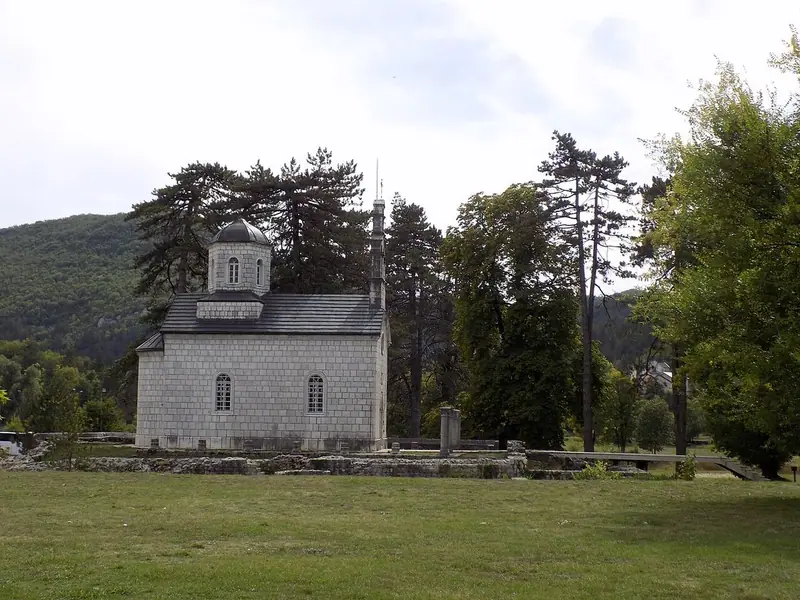
- Stop 2 · The Court Church at Ćipur (also the cover): Milica Buha · CC BY-SA 4.0 · Wikimedia Commons · resized
- Stop 3 · King Nikola’s Palace: Milica Buha · CC BY-SA 4.0 · Wikimedia Commons · resized
- Stop 4 · The Relief Map: Sailko · CC BY 3.0 · Wikimedia Commons · resized
- Stop 5 · The Biljarda: Steve Moses · CC BY 2.0 · Wikimedia Commons · resized
- Stop 6 · Government House: Photo: Marcin Konsek / Wikimedia Commons · CC BY-SA 4.0 · Wikimedia Commons · resized
- Stop 7 · The Old Embassies: Adam Jones, Ph.D. · CC BY-SA 3.0 · Wikimedia Commons · resized
- Stop 8 · The Vlach Church: August Dominus · CC BY-SA 4.0 · Wikimedia Commons · resized


All photographs from Wikimedia Commons under the licences shown.
More guides in Montenegro
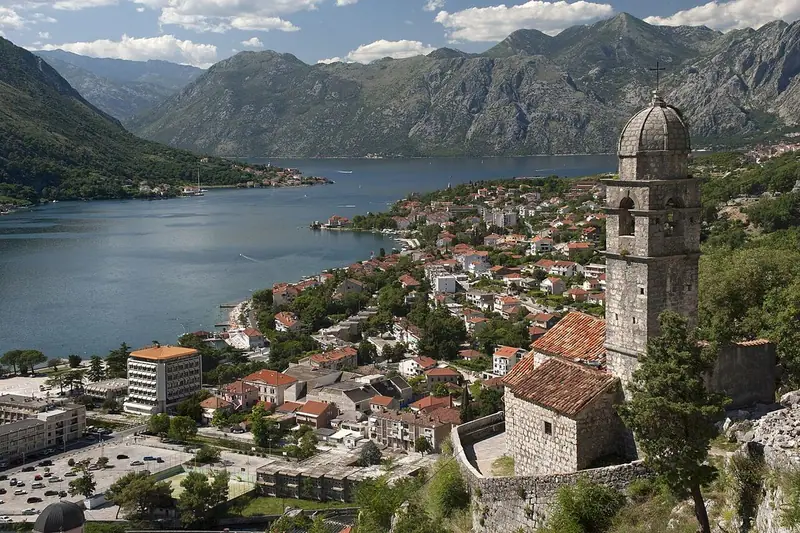 Venetian7 stops · 9th–18th century
Kotor Old Town audio guide
Enter by the Sea Gate into Kotor’s marble-paved lanes, then climb the zigzagging walls to the Fortress of St John above the bay.
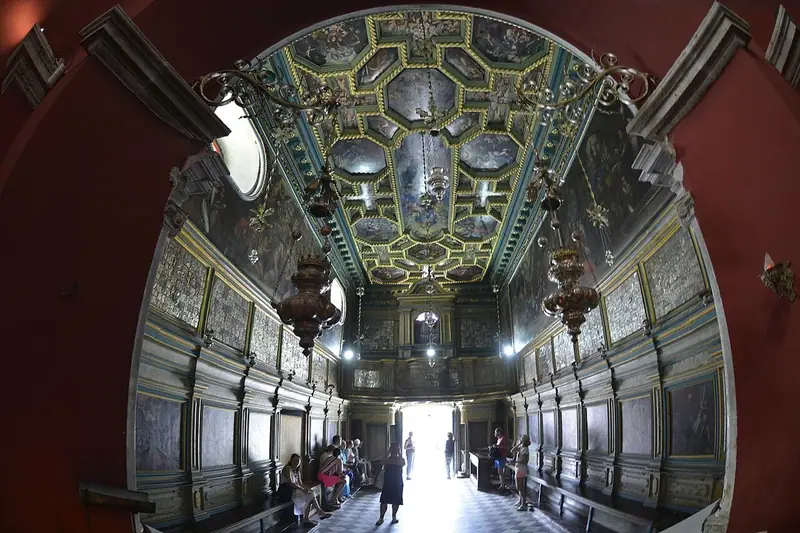 Venetian7 stops · 1420–1797
Perast and Our Lady of the Rocks audio guide
The Baroque waterfront of Perast, then a short boat ride to Our Lady of the Rocks, an island made by hand.
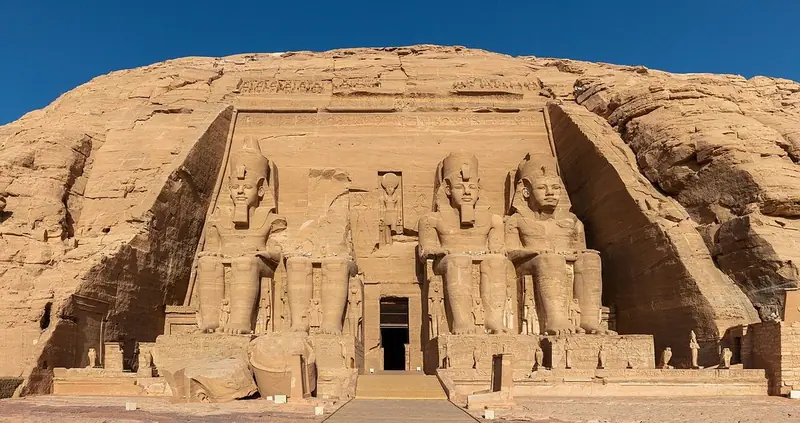 Ancient Egyptian8 stops · 13th century BCE
Abu Simbel audio guide
Ramesses II’s colossal temple façade, the Temple of Nefertari, and how both were rescued from the waters of Lake Nasser.
Every guide, in every country
Cetinje, the Old Royal Capital and every other guide we publish, including future ones. One payment, no subscription.