Before you start
Vilnius, the capital of Lithuania, lies among wooded hills where the River Vilnia meets the Neris. From the fourteenth to the end of the eighteenth century it was the political centre of the Grand Duchy of Lithuania, at one time the largest state in Europe, and its old town of Gothic, Renaissance, Baroque and classical buildings, set along medieval streets, is one of the largest in northern Europe. UNESCO inscribed the Vilnius Historic Centre as a World Heritage Site in 1994. This guide climbs to the castle hill, descends through the cathedral and the university to the Town Hall and the Gate of Dawn, and ends in the riverside district of Uzupis.
Use it as a self-guided tour of Vilnius: 9 stops in visit order, each played when you’re ready, at your own pace.
 Free preview · Stop 1
Gediminas’s Tower
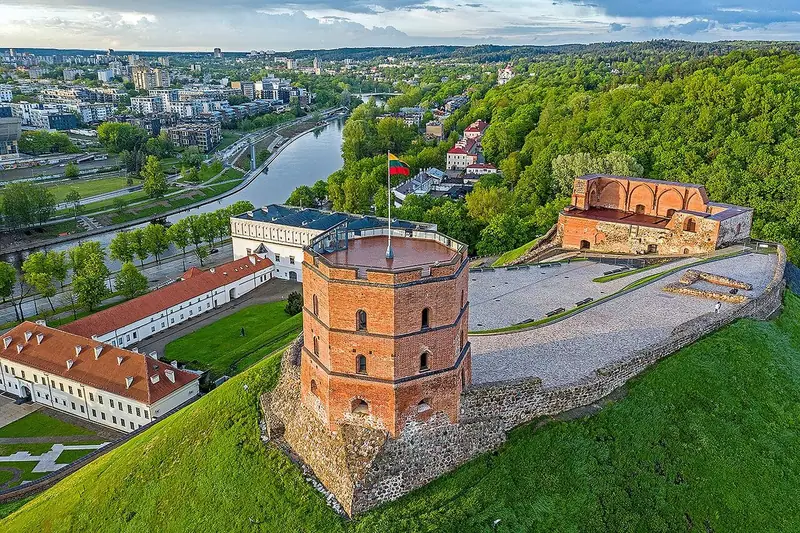
Begin by climbing, or taking the funicular, to the top of Gediminas Hill, where a red brick tower is all that remains of the Upper Castle. The first wooden fortifications here are traditionally linked to Grand Duke Gediminas, and the first brick castle was completed in 1409 by Grand Duke Vytautas. The tower was rebuilt in the 1930s and houses a museum. According to legend, Gediminas fell asleep here after a hunt and dreamed of an iron wolf howling on the hill; his priest told him that it meant he should build a great city here, whose fame would echo like the howl of a hundred wolves. The tower is a national symbol, and in 1988 the Lithuanian tricolour was raised here again, a step towards independence. From the viewing platform, look out over the red roofs and church towers of the old town.
Photo: BigHead · CC BY-SA 4.0 · Wikimedia Commons
What to see at Vilnius: 9 stops, in visit order
- 01
 Gediminas’s TowerThe castle on the hillFree preview
- 02
 The Palace of the Grand DukesA royal residence rebuiltIn the guide
- 03
 Vilnius CathedralWhere grand dukes were crownedIn the guide
- 04
 Pilies StreetThe road from castle to Town HallIn the guide
- 05
 Vilnius UniversityThirteen courtyardsIn the guide
- 06
 The Town HallA classical heartIn the guide
- 07
 The Gate of DawnA chapel above the gateIn the guide
- 08
 St Anne’s ChurchA Gothic jewelIn the guide
- 09
 UzupisA republic beyond the riverIn the guide
Site map of Vilnius
History of Vilnius
A wooden castle stood on the hill above the rivers by around the year 1000, but Vilnius first appears in writing in 1323, in letters of Grand Duke Gediminas, who made it his capital. Lithuania was the last pagan state in Europe, and accepted Christianity only in 1387, under Jogaila, who had become King of Poland and granted the city its town rights. In the following centuries, as part of the union of Poland and Lithuania, Vilnius flourished as a royal and cultural centre, with Italian architects shaping its churches and palaces and Jesuits founding its university in 1579. It was a city of many peoples, Lithuanians, Poles, Jews, Russians and others, and before the Holocaust it was one of Europe’s great centres of Jewish learning. After Russian, Polish, German and Soviet rule, it became the capital of independent Lithuania again in 1990.
Vilnius guide: questions
How many stops does the Vilnius guide have?
9 stops, in visit order: 1. Gediminas’s Tower; 2. The Palace of the Grand Dukes; 3. Vilnius Cathedral; 4. Pilies Street; 5. Vilnius University; 6. The Town Hall; 7. The Gate of Dawn; 8. St Anne’s Church; 9. Uzupis.
Can I do a self-guided tour of Vilnius with this guide?
Yes. The guide is made for a self-guided tour: 9 stops in visit order, each with a photo, a story and a voice, so you can explore Vilnius at your own pace, without joining a group. Download it before you go and it works offline.
How long do you need at Vilnius?
We suggest allowing A full day. The 9 stops add up to about 7 minutes of listening, and you play each one when you’re ready, so you can linger wherever you like.
How long is each guide?
The 9 stops add up to about 7 minutes of listening in total. You play each stop when you’re ready, so you can go at your own pace.
Does the guide work offline?
Yes, once it’s downloaded. The guide is a single self-contained web page (about 8.3 MB) with the photos, text and audio built in. Download it to your phone before you go (Wi-Fi is best); after that it opens in any modern browser on iPhone or Android, with no app, account or mobile signal needed.
Does it use GPS or need my location?
No. The guide doesn’t use GPS and doesn’t know where you are: you play each stop when you reach it. It works on iPhone and Android in any modern browser, and it’s in English.
What’s included?
One self-contained HTML guide: 9 stops in visit order, each with a photo, text and a voice, plus the story of who built the site.
Who built Vilnius?
A wooden castle stood on the hill above the rivers by around the year 1000, but Vilnius first appears in writing in 1323, in letters of Grand Duke Gediminas, who made it his capital. Lithuania was the last pagan state in Europe, and accepted Christianity only in 1387, under Jogaila, who had become King of Poland and granted the city its town rights.
Where is Vilnius?
Vilnius, the capital of Lithuania, lies among wooded hills where the River Vilnia meets the Neris.
Is there a free audio guide to Vilnius?
The first stop, Gediminas’s Tower, is free to read and hear on this page, so you can try the Vilnius audio tour before you buy. The full guide, with all 9 stops, is a one-off purchase: download it once and it’s yours to keep, working offline.
Is the Vilnius guide worth it?
If you’d like to know what you’re looking at, yes. For $10 you get 9 stops in visit order, each with a photo, a short history and a voice you play when you’re ready, plus a site map of the stops, and about 7 minutes of listening in all. It’s short on purpose, so you spend your time looking, not listening. It’s yours to keep, works offline and needs no app. The first stop is free on this page, so you can try it before you buy. If you’d like hours of detail, a guided tour will go deeper.
Audio guide or guided tour?
It depends how you like to visit. This guide lets you explore Vilnius at your own pace, at any time, for a one-off price. A guided tour gives you a live expert you can ask questions, but at fixed times and usually for a higher price. Many people use both: a tour for the big picture, and the guide to read beforehand or to revisit the stops in their own time.
Is this the official Vilnius guide?
No. It’s an independent guide by The Historian Guide, not affiliated with or endorsed by the operator of Vilnius. For tickets and opening hours, check the official site operator before you go.
Does the guide include entry tickets or opening hours?
No. The guide is a digital companion only. Admission to Vilnius is separate, so check the official site operator for current tickets and opening hours before you go.
- Stop 1 · Gediminas’s Tower: BigHead · CC BY-SA 4.0 · Wikimedia Commons · resized
- Stop 2 · The Palace of the Grand Dukes: Pofka · CC BY-SA 4.0 · Wikimedia Commons · resized
- Stop 3 · Vilnius Cathedral: Diliff · CC BY-SA 3.0 · Wikimedia Commons · resized
- Stop 4 · Pilies Street: Diliff · CC BY-SA 3.0 · Wikimedia Commons · resized
- Stop 5 · Vilnius University: Vilnius University · CC BY-SA 4.0 · Wikimedia Commons · resized
- Stop 6 · The Town Hall: Augustas Didžgalvis · CC BY-SA 4.0 · Wikimedia Commons · resized
- Stop 7 · The Gate of Dawn: Radosław Botev · CC BY 3.0 pl · Wikimedia Commons · resized
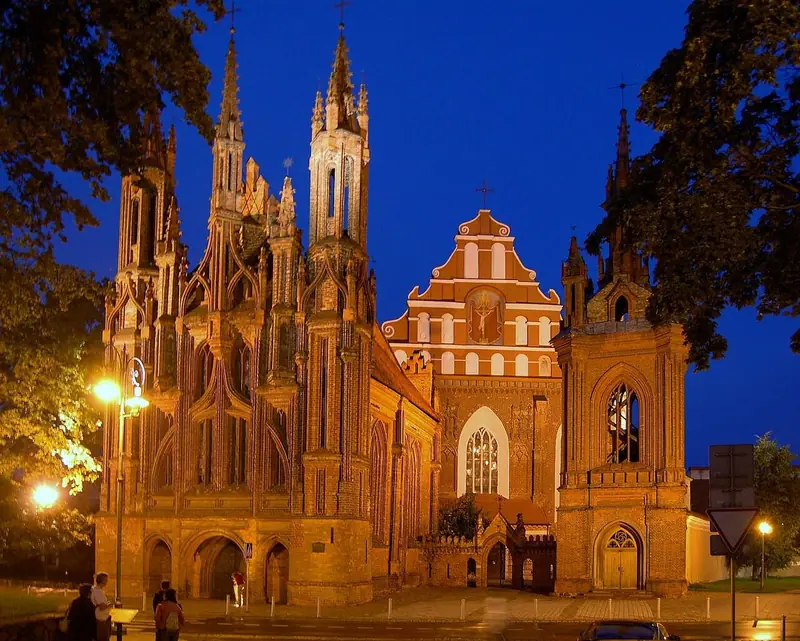
- Stop 8 · St Anne’s Church (also the cover): Bahnfrend · CC BY-SA 4.0 · Wikimedia Commons · resized
- Stop 9 · Uzupis: Suicasmo · CC BY-SA 4.0 · Wikimedia Commons · resized


All photographs from Wikimedia Commons under the licences shown.
More guides
 Polish–Lithuanian Commonwealth8 stops · Polish Enlightenment
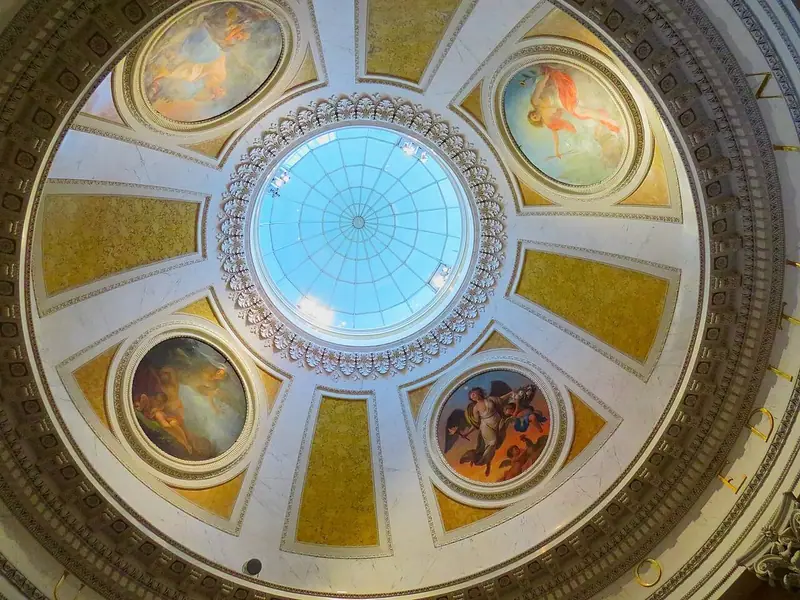
Łazienki Park audio guide
From the Chopin monument past the Old Orangery to the Palace on the Isle, summer retreat of Poland’s last king.
 Polish–Lithuanian Commonwealth8 stops · Early modern Poland
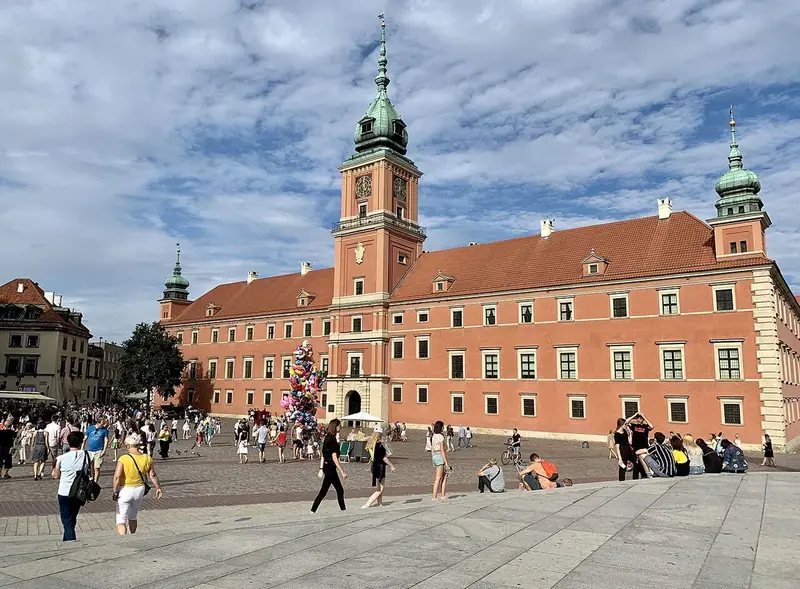
Royal Castle, Warsaw audio guide
From Sigismund’s Column into the rebuilt home of Polish kings, where the Constitution of 3 May 1791 was drafted, to the Canaletto Room and the Ballroom.
 Polish–Lithuanian Commonwealth7 stops · Polish Baroque
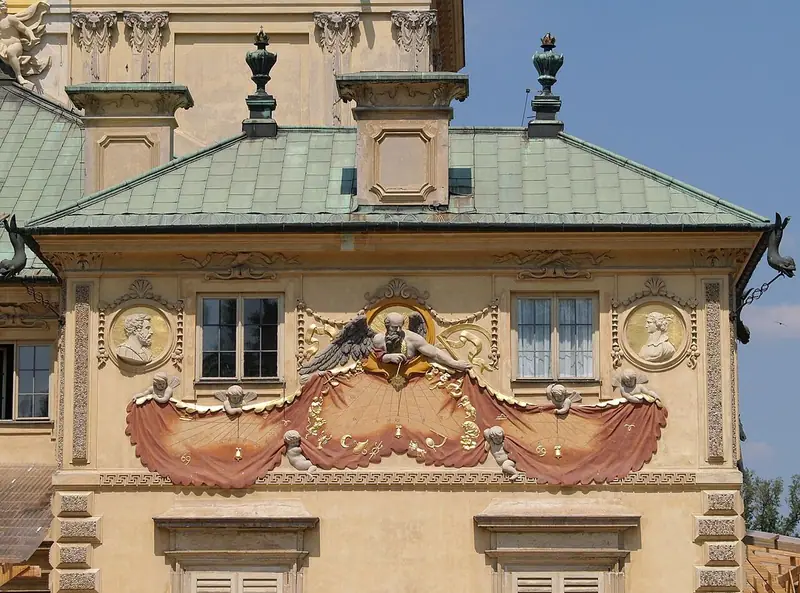
Wilanów Palace audio guide
Tour the baroque summer palace of King John III Sobieski, from its sundial façade and royal rooms to the gardens by the lake.
Every guide, in every country
Vilnius and every other guide we publish, including future ones. One payment, no subscription.