Before you start
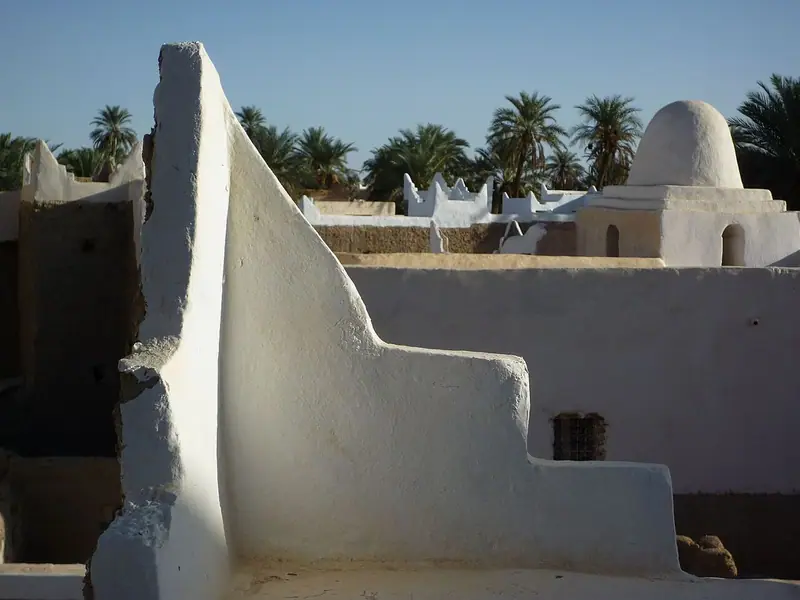
The old town of Ghadames lies in an oasis on the edge of the Sahara, between the great sand sea of the Erg and the stony plateau of the Hamada el-Hamra, close to where the borders of Libya, Tunisia and Algeria meet. Arab writers called it the Pearl of the Desert, and it was inscribed as a World Heritage Site in 1986. It was on UNESCO’s List of World Heritage in Danger from 2016, but in July 2025 the World Heritage Committee removed it from that list, after restoration of houses damaged by heavy rain, action to protect the palm groves and other conservation work. Families moved to the new town outside the walls from the 1970s, but they still gather in and use the old houses, so enter homes only when invited, and dress modestly. Take a torch for the darker passages. The route begins at the spring, passes through the covered streets to a mosque, a house and the rooftops, and ends in the palm gardens.
Use it as a self-guided tour of Ghadames: 7 stops in visit order, each played when you’re ready, at your own pace.
 Free preview · Stop 1
Ain al-Faras
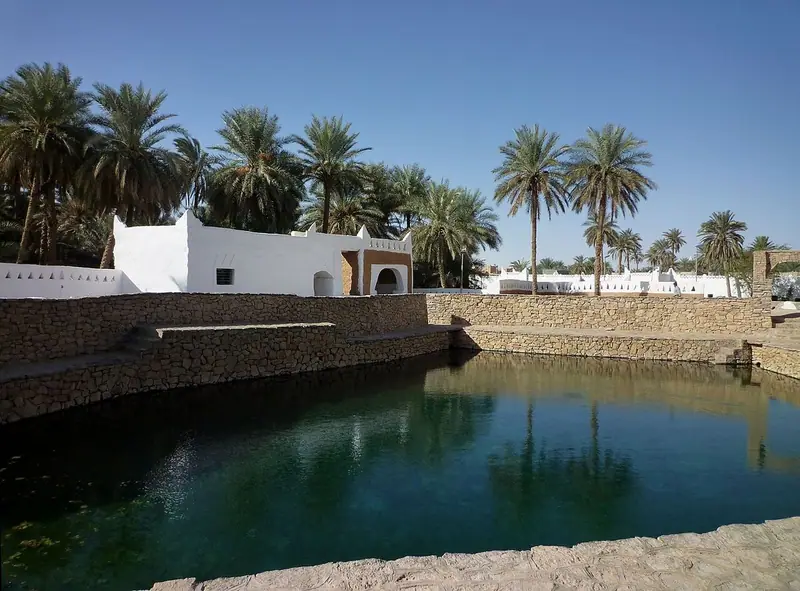
Begin at Ain al-Faras, the spring at the heart of the old town, known locally as ghusuf. Everything in Ghadames grew around this water. Its name means the spring of the mare, and a local legend tells how a thirsty mare stamped on the ground until water gushed from beneath her hooves. From here channels carried water through the town, past the mosques for washing before prayer, and out to the gardens of the oasis. Water was precious, so it was shared out not by volume but by time. Traditionally a small perforated bowl, the qadus, measured each family’s turn, and the rules were kept by the community and recorded in manuscripts. UNESCO notes that the round shape of the town itself was shaped by the management of this water. The historic water system is still maintained and used today.
Photo: Franzfoto · CC BY-SA 3.0 · Wikimedia Commons
What to see at Ghadames: 7 stops, in visit order
- 01
 Ain al-FarasThe spring of the mareFree preview
- 02
 The Covered StreetsShade beneath the housesIn the guide
- 03
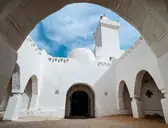 The Mosque of JarasanPrayer at the heart of the quarterIn the guide
- 04
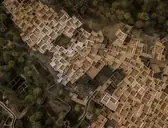 The Seven QuartersA town of clansIn the guide
- 05
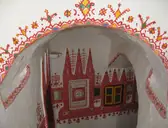 A Ghadamsi HouseLight and colour withinIn the guide
- 06
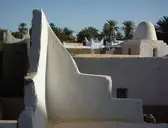 The Rooftop PathsA second town aboveIn the guide
- 07
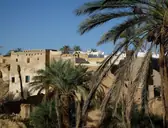 The Palm GardensShade and sustenanceIn the guide
History of Ghadames
Ghadames was built by the Amazigh, or Berber, people of the oasis, whose own language, Ghadamsi, is still spoken here. Amazigh peoples have lived across North Africa since prehistoric times, and their languages and traditions run from the Atlantic to the Egyptian desert. UNESCO notes that people called the Phazanii lived here by the late first millennium BCE; the Romans, who reached the oasis in the late first century BCE, called it Cydamus. In the sixth century the oasis had a bishop, and after the Arab conquest of the seventh century its people became Muslim. For more than a thousand years Ghadames was a hub of the caravan trade across the Sahara, linking the Mediterranean with West Africa, until that trade declined in the early twentieth century. Italian and then French forces controlled the town before it became part of independent Libya.
Ghadames guide: questions
How many stops does the Ghadames guide have?
7 stops, in visit order: 1. Ain al-Faras; 2. The Covered Streets; 3. The Mosque of Jarasan; 4. The Seven Quarters; 5. A Ghadamsi House; 6. The Rooftop Paths; 7. The Palm Gardens.
Can I do a self-guided tour of Ghadames with this guide?
Yes. The guide is made for a self-guided tour: 7 stops in visit order, each with a photo, a story and a voice, so you can explore Ghadames at your own pace, without joining a group. Download it before you go and it works offline.
How long do you need at Ghadames?
We suggest allowing 3 hours. The 7 stops add up to about 5 minutes of listening, and you play each one when you’re ready, so you can linger wherever you like.
How long is each guide?
The 7 stops add up to about 5 minutes of listening in total. You play each stop when you’re ready, so you can go at your own pace.
Does the guide work offline?
Yes, once it’s downloaded. The guide is a single self-contained web page (about 6.0 MB) with the photos, text and audio built in. Download it to your phone before you go (Wi-Fi is best); after that it opens in any modern browser on iPhone or Android, with no app, account or mobile signal needed.
Does it use GPS or need my location?
No. The guide doesn’t use GPS and doesn’t know where you are: you play each stop when you reach it. It works on iPhone and Android in any modern browser, and it’s in English.
What’s included?
One self-contained HTML guide: 7 stops in visit order, each with a photo, text and a voice, plus the story of who built the site.
Who built Ghadames?
Ghadames was built by the Amazigh, or Berber, people of the oasis, whose own language, Ghadamsi, is still spoken here. Amazigh peoples have lived across North Africa since prehistoric times, and their languages and traditions run from the Atlantic to the Egyptian desert.
Where is Ghadames?
The old town of Ghadames lies in an oasis on the edge of the Sahara, between the great sand sea of the Erg and the stony plateau of the Hamada el-Hamra, close to where the borders of Libya, Tunisia and Algeria meet.
Is there a free audio guide to Ghadames?
The first stop, Ain al-Faras, is free to read and hear on this page, so you can try the Ghadames audio tour before you buy. The full guide, with all 7 stops, is a one-off purchase: download it once and it’s yours to keep, working offline.
Is the Ghadames guide worth it?
If you’d like to know what you’re looking at, yes. For $10 you get 7 stops in visit order, each with a photo, a short history and a voice you play when you’re ready, about 5 minutes of listening in all. It’s short on purpose, so you spend your time looking, not listening. It’s yours to keep, works offline and needs no app. The first stop is free on this page, so you can try it before you buy. If you’d like hours of detail, a guided tour will go deeper.
Audio guide or guided tour?
It depends how you like to visit. This guide lets you explore Ghadames at your own pace, at any time, for a one-off price. A guided tour gives you a live expert you can ask questions, but at fixed times and usually for a higher price. Many people use both: a tour for the big picture, and the guide to read beforehand or to revisit the stops in their own time.
Is this the official Ghadames guide?
No. It’s an independent guide by The Historian Guide, not affiliated with or endorsed by the operator of Ghadames. For tickets and opening hours, check the official site operator before you go.
Does the guide include entry tickets or opening hours?
No. The guide is a digital companion only. Admission to Ghadames is separate, so check the official site operator for current tickets and opening hours before you go.
- Stop 1 · Ain al-Faras: Franzfoto · CC BY-SA 3.0 · Wikimedia Commons · resized
- Stop 2 · The Covered Streets: giomodica · CC BY 3.0 · Wikimedia Commons · resized
- Stop 3 · The Mosque of Jarasan: Elias sharfedin · CC BY-SA 4.0 · Wikimedia Commons · resized
- Stop 4 · The Seven Quarters: Mohamed alazrak · CC BY-SA 4.0 · Wikimedia Commons · resized
- Stop 5 · A Ghadamsi House: Teogomez (assumed) · Public domain · Wikimedia Commons · resized
- Stop 6 · The Rooftop Paths (also the cover): Franzfoto · CC BY-SA 3.0 · Wikimedia Commons · resized
- Stop 7 · The Palm Gardens: Franzfoto · CC BY-SA 3.0 · Wikimedia Commons · resized


All photographs from Wikimedia Commons under the licences shown.
More guides in Libya
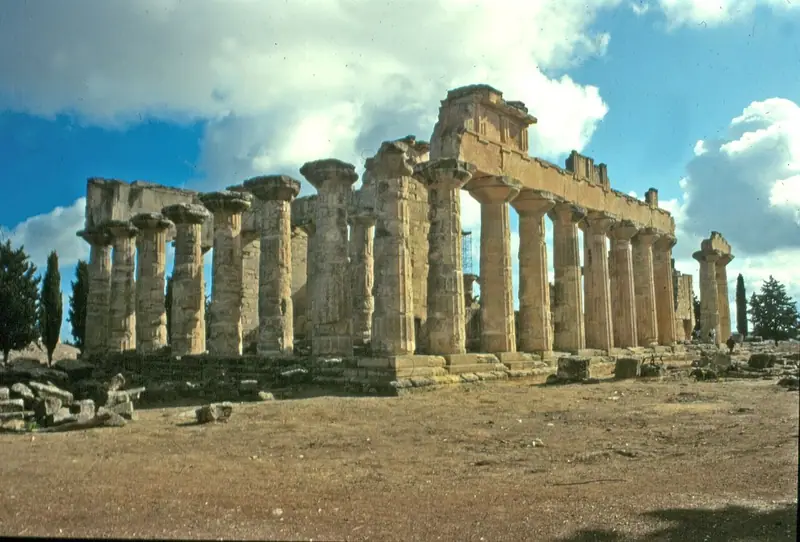 Greek8 stops · c. 631 BCE – 4th century CE
Cyrene audio guide
One of the great cities of the Greek world on the Jebel Akhdar: the Temple of Zeus, the agora, the Sanctuary of Apollo and its spring, the Greek theatre and a vast necropolis.
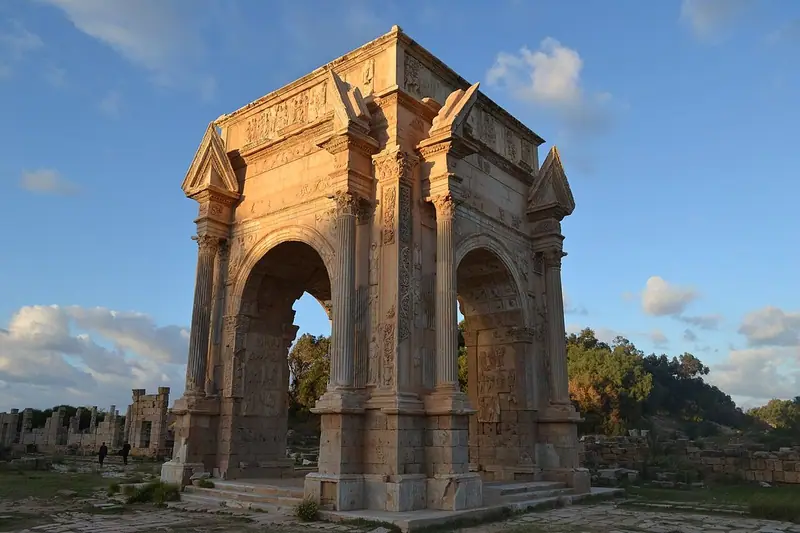 Roman8 stops · 7th century BCE – 7th century CE
Leptis Magna audio guide
The home town of the emperor Septimius Severus on the Libyan shore: his four-way arch, the Hadrianic Baths, the Severan Forum and Basilica, the market, the theatre and the amphitheatre.
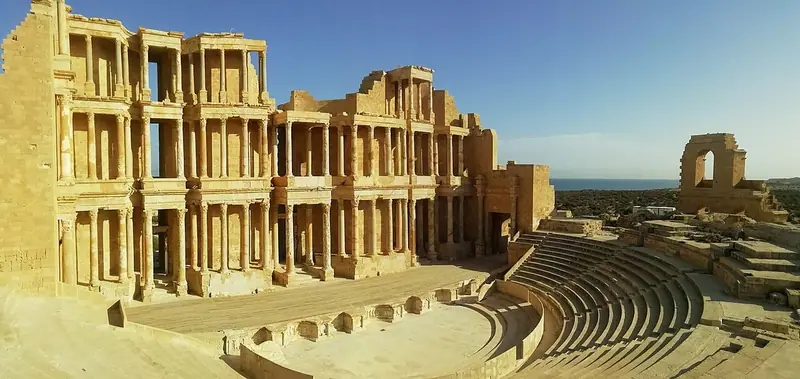 Roman8 stops · 5th century BCE – 7th century CE
Sabratha audio guide
A Punic port turned Roman city by the sea: the towering Punic Mausoleum B, the forum and basilicas, the seaward baths, the three-storey theatre stage and the Temple of Isis.
Every guide, in every country
Ghadames and every other guide we publish, including future ones. One payment, no subscription.