Before you start
The Valley of the Temples lies just below the modern city of Agrigento on the south coast of Sicily, Italy. Despite its name, it is really a ridge, where the temples of ancient Akragas stood along the southern edge of the city walls. It has been a UNESCO World Heritage Site since 1997, as the Archaeological Area of Agrigento, and is managed by the Parco Archeologico e Paesaggistico della Valle dei Templi. This guide follows the ridge from east to west: from the Temple of Juno past the Temple of Concordia to the Temple of Heracles, then across to the fallen Temple of Olympian Zeus, the Temple of Castor and Pollux, and the Kolymbethra Garden, ending at the archaeological museum.
Use it as a self-guided tour of the Valley of the Temples: 7 stops in visit order, each played when you’re ready, at your own pace.
 Free preview · Stop 1
Temple of Juno
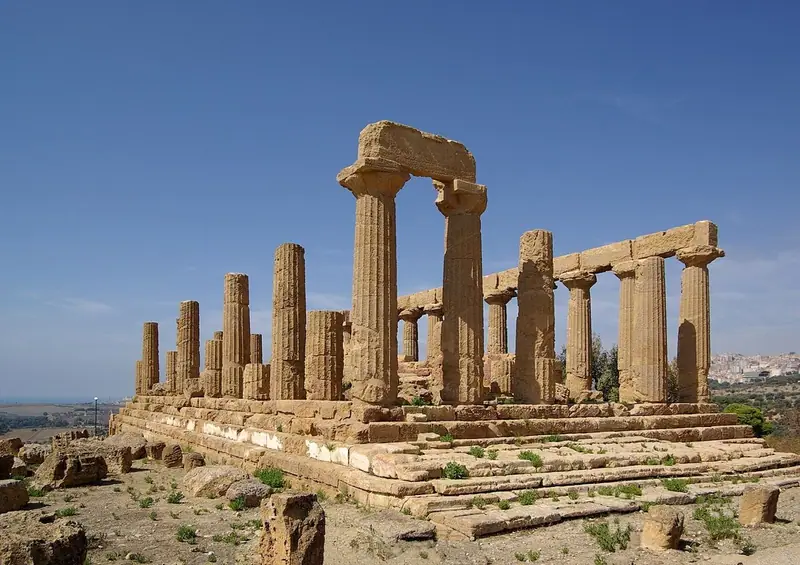
Start at the eastern end of the ridge, at the Temple of Juno, perched on the highest point with wide views over the valley and the sea. It was built around 450 BCE and is traditionally linked with Juno, the Roman name for Hera, though we cannot be sure who was worshipped here. Thirty of its thirty-four columns still stand. Look closely at the stone: the reddish marks are often said to be traces of the fire that swept through the temple when the Carthaginians sacked the city in 406 BCE. The golden stone is a local limestone, soft and full of fossil shells, which was originally covered in white stucco to look like marble. In front of the temple, to the east, stands a large altar where sacrifices were made. From here, look west along the ridge to the Temple of Concordia.
Photo: Berthold Werner · CC BY-SA 3.0 · Wikimedia Commons
What to see at the Valley of the Temples: 7 stops, in visit order
- 01
 Temple of JunoTempio di GiunoneFree preview
- 02
 Temple of ConcordiaTempio della ConcordiaIn the guide
- 03
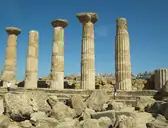 Temple of HeraclesTempio di ErcoleIn the guide
- 04
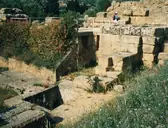 Temple of Olympian ZeusTempio di Zeus OlimpioIn the guide
- 05
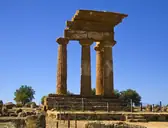 Temple of Castor and PolluxTempio dei DioscuriIn the guide
- 06
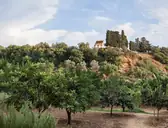 Kolymbethra GardenGiardino della KolymbethraIn the guide
- 07
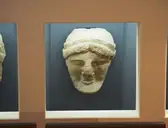 Archaeological MuseumMuseo Archeologico Pietro GriffoIn the guide
Site map of the Valley of the Temples
History of the Valley of the Temples
The temples were built by Greek colonists in Sicily. Greek civilisation itself had deep roots. The Bronze Age palaces of Minoan Crete and Mycenaean Greece flourished from around 2000 to 1200 BCE; after a period of decline, the Greek world revived in the eighth century BCE, when the alphabet was adopted and Greek cities began founding colonies across the Mediterranean. Southern Italy and Sicily were settled so densely that the Romans later called them Magna Graecia, ‘Great Greece’. The Classical age followed in the fifth and fourth centuries BCE, then the Hellenistic world created by Alexander the Great, until Rome absorbed the Greek states in the second and first centuries BCE; Greek language and culture lived on in the Byzantine Empire until 1453. Akragas was founded around 580 BCE by settlers from Gela, a nearby Greek colony whose own founders had come from Rhodes and Crete.
The full history continues in the guide.
Valley of the Temples guide: questions
How many stops does the Valley of the Temples guide have?
7 stops, in visit order: 1. Temple of Juno; 2. Temple of Concordia; 3. Temple of Heracles; 4. Temple of Olympian Zeus; 5. Temple of Castor and Pollux; 6. Kolymbethra Garden; 7. Archaeological Museum.
Can I do a self-guided tour of the Valley of the Temples with this guide?
Yes. The guide is made for a self-guided tour: 7 stops in visit order, each with a photo, a story and a voice, so you can explore the Valley of the Temples at your own pace, without joining a group. Download it before you go and it works offline.
How long is each guide?
The 7 stops add up to about 6 minutes of listening in total. You play each stop when you’re ready, so you can go at your own pace.
Does the guide work offline?
Yes, once it’s downloaded. The guide is a single self-contained web page (about 7.2 MB) with the photos, text and audio built in. Download it to your phone before you go (Wi-Fi is best); after that it opens in any modern browser on iPhone or Android, with no app, account or mobile signal needed.
Does it use GPS or need my location?
No. The guide doesn’t use GPS and doesn’t know where you are: you play each stop when you reach it. It works on iPhone and Android in any modern browser, and it’s in English.
What’s included?
One self-contained HTML guide: 7 stops in visit order, each with a photo, text and a voice, plus the story of who built the site.
Who built the Valley of the Temples?
The temples were built by Greek colonists in Sicily. Greek civilisation itself had deep roots.
Where is the Valley of the Temples?
The Valley of the Temples lies just below the modern city of Agrigento on the south coast of Sicily, Italy.
Is there a free audio guide to the Valley of the Temples?
The first stop, Temple of Juno, is free to read and hear on this page, so you can try the Valley of the Temples audio tour before you buy. The full guide, with all 7 stops, is a one-off purchase: download it once and it’s yours to keep, working offline.
Is the Valley of the Temples guide worth it?
If you’d like to know what you’re looking at, yes. For $10 you get 7 stops in visit order, each with a photo, a short history and a voice you play when you’re ready, plus a site map of the stops, and about 6 minutes of listening in all. It’s short on purpose, so you spend your time looking, not listening. It’s yours to keep, works offline and needs no app. The first stop is free on this page, so you can try it before you buy. If you’d like hours of detail, a guided tour will go deeper.
Audio guide or guided tour?
It depends how you like to visit. This guide lets you explore the Valley of the Temples at your own pace, at any time, for a one-off price. A guided tour gives you a live expert you can ask questions, but at fixed times and usually for a higher price. Many people use both: a tour for the big picture, and the guide to read beforehand or to revisit the stops in their own time.
Is this the official Valley of the Temples guide?
No. It’s an independent guide by The Historian Guide, not affiliated with or endorsed by the operator of the Valley of the Temples. For tickets and opening hours, check the official site operator before you go.
Does the guide include entry tickets or opening hours?
No. The guide is a digital companion only. Admission to the Valley of the Temples is separate, so check the official site operator for current tickets and opening hours before you go.
- Stop 1 · Temple of Juno: Berthold Werner · CC BY-SA 3.0 · Wikimedia Commons · resized
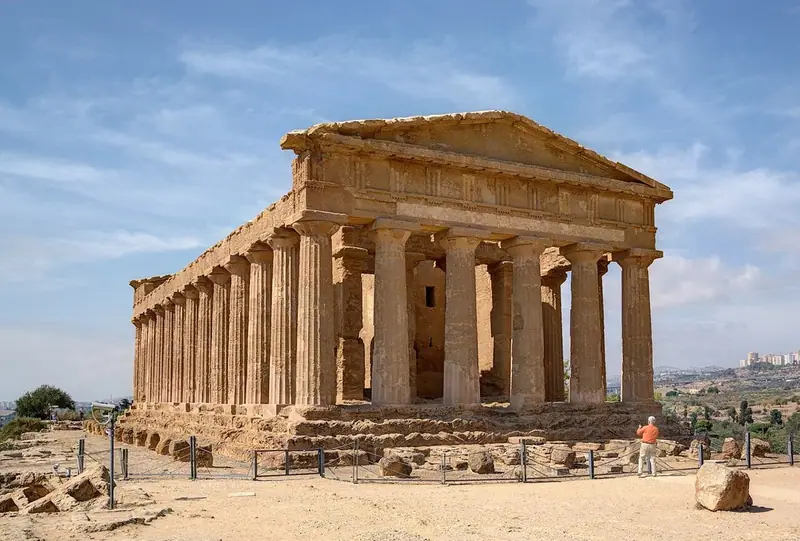
- Stop 2 · Temple of Concordia (also the cover): Berthold Werner · CC BY-SA 3.0 · Wikimedia Commons · resized
- Stop 3 · Temple of Heracles: Zde · CC BY-SA 4.0 · Wikimedia Commons · resized
- Stop 4 · Temple of Olympian Zeus: Michael Gunther · CC BY-SA 4.0 · Wikimedia Commons · resized
- Stop 5 · Temple of Castor and Pollux: trolvag · CC BY-SA 3.0 · Wikimedia Commons · resized
- Stop 6 · Kolymbethra Garden: Vincenzo Cammarata, 2013 © FAI - Fondo per l'Ambiente Italiano · CC BY-SA 4.0 · Wikimedia Commons · resized
- Stop 7 · Archaeological Museum: Zde · CC BY-SA 4.0 · Wikimedia Commons · resized


All photographs from Wikimedia Commons under the licences shown.
More guides in Italy
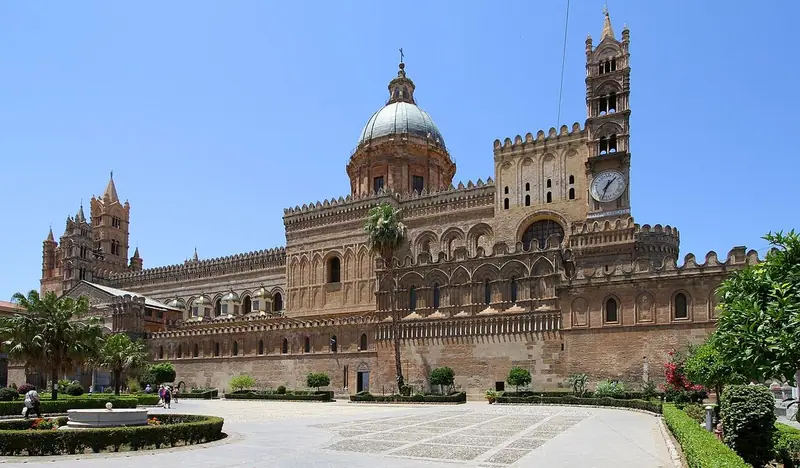 Arab-Norman11 stops · 1130 – 1194 (Norman kings of Sicily)
Arab-Norman Palermo, Monreale and Cefalù audio guide
Norman kings, Byzantine mosaicists and Arab craftsmen together: the Palatine Chapel, red-domed churches, the Zisa palace and the golden cathedrals of Monreale and Cefalù.
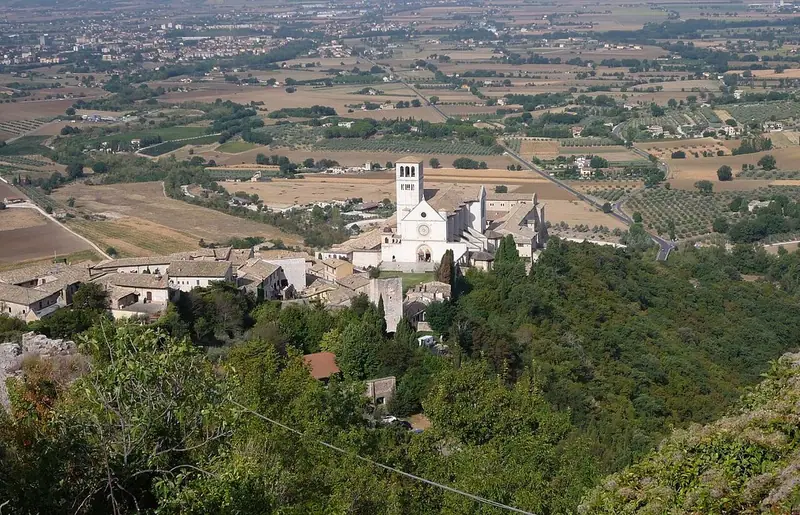 Franciscan10 stops · 1182 – 1253 (lives of Francis and Clare; basilica begun 1228)
Assisi audio guide
The hill town of Saint Francis: the double basilica with Giotto’s frescoes, his tomb, Santa Chiara, San Damiano and a Roman temple on the main square.
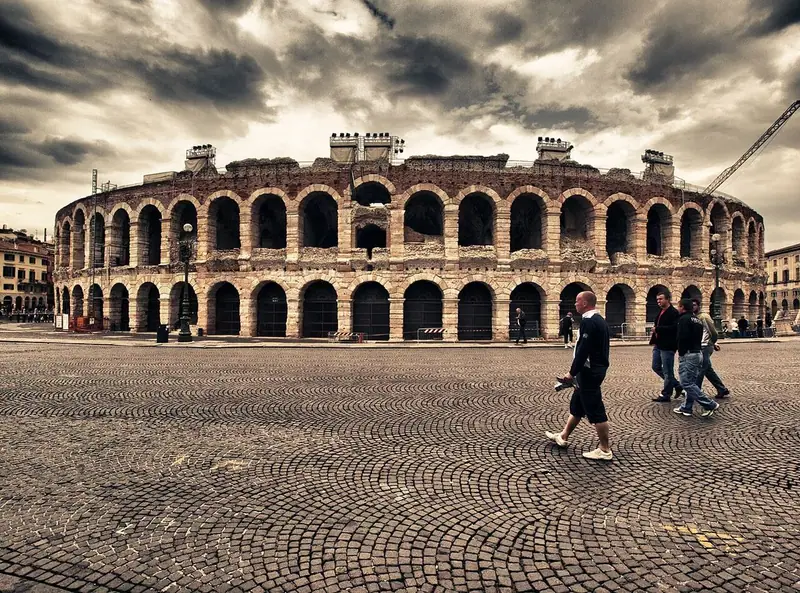 Roman11 stops · 1st c. BCE – 1797 (Roman colony to the end of Venetian rule)
City of Verona audio guide
A Roman arena still used for opera, the towers and tombs of the della Scala lords, and the Romanesque splendour of San Zeno, in a bend of the Adige.
 Roman7 stops · 70–80 CE
Colosseum audio guide
From the outer façade into the corridors and seating, then down to the arena floor and the hypogeum beneath it.
 Etruscan9 stops · 9th – 3rd century BCE
Etruscan Necropolises of Cerveteri and Tarquinia audio guide
The Etruscan cities of the dead: the tumuli and tomb streets of the Banditaccia at Cerveteri, the Tomb of the Reliefs, and the painted tombs of Tarquinia’s Monterozzi necropolis.
 Renaissance7 stops · 1296–1436
Florence Duomo audio guide
The Gates of Paradise, Giotto’s Campanile and Brunelleschi’s dome, the great monument of Renaissance Florence.
Every guide, in every country
Valley of the Temples and every other guide we publish, including future ones. One payment, no subscription.