Before you start
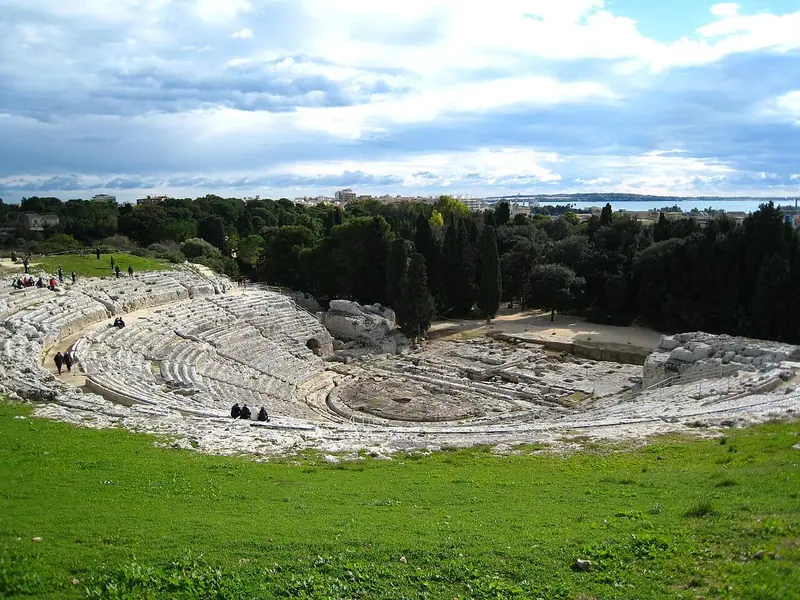
Syracuse, on the south-east coast of Sicily, was founded by Greek colonists in the eighth century BCE and grew into one of the largest and most powerful cities of the Greek world, which Cicero called the greatest and most beautiful of all Greek cities. Its heart is Ortygia, a small island inhabited for some three thousand years, where a Greek temple still stands inside the cathedral. On the mainland, the archaeological park of the Neapolis holds the great theatre, the quarries and the Roman amphitheatre. Inland, the gorge of Pantalica holds thousands of tombs cut into the rock between the thirteenth and seventh centuries BCE. UNESCO inscribed Syracuse and the Rocky Necropolis of Pantalica as a World Heritage Site in 2005. This guide begins on Ortygia, continues through the Neapolis to the fortress of Euryalus, and ends among the rock tombs of Pantalica.
Use it as a self-guided tour of Syracuse and Pantalica: 10 stops in visit order, each played when you’re ready, at your own pace.
 Free preview · Stop 1
Castello Maniace
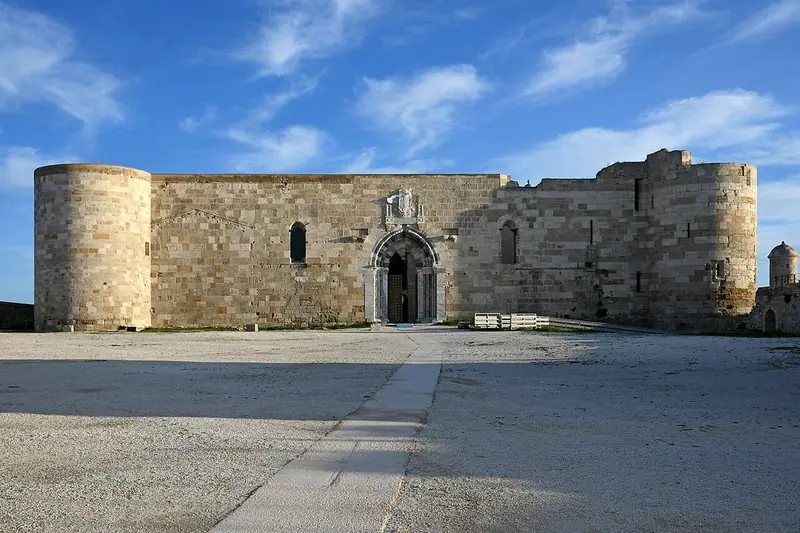
Begin at the southern tip of Ortygia, the small island at the heart of Syracuse, at Castello Maniace, a square fortress guarding the entrance to the Great Harbour. It takes its name from George Maniakes, the Byzantine general who briefly retook Syracuse from the Arabs in 1038 and built a fort here. The present castle was built between 1232 and 1240 for the Emperor Frederick II, King of Sicily, as one of a chain of castles around his kingdom. Its massive walls, with round towers at the corners, enclose what was once a great hall of vaults on columns, and its Gothic doorway, framed by coloured marble, is one of the finest of its time. In later centuries the castle became a barracks and powder store, and an explosion in 1704 destroyed part of it. From its walls there is a fine view over the harbour where Athens lost its fleet.
Photo: Phyrexian · CC BY-SA 4.0 · Wikimedia Commons
What to see at Syracuse and Pantalica: 10 stops, in visit order
- 01
 Castello ManiaceThe emperor’s castleFree preview
- 02
 The Fountain of ArethusaA nymph from GreeceIn the guide
- 03
 The Cathedral and the Temple of AthenaA temple inside a churchIn the guide
- 04
 The Temple of ApolloThe oldest Doric temple in the WestIn the guide
- 05
 The Roman AmphitheatreGames for a Roman cityIn the guide
- 06
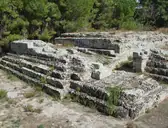 The Altar of Hieron IIThe largest altar of antiquityIn the guide
- 07
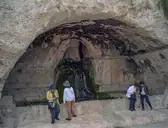 The Ear of DionysiusA cave with a tyrant’s legendIn the guide
- 08
 The Greek TheatreWhere Aeschylus staged his playsIn the guide
- 09
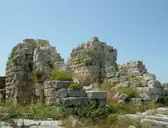 The Castle of EuryalusThe fortress of DionysiusIn the guide
- 10
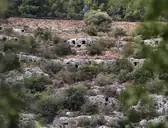 The Necropolis of PantalicaThousands of tombs in the cliffsIn the guide
Site map of Syracuse and Pantalica
History of Syracuse and Pantalica
Before the Greeks came, the Sicels and earlier peoples lived in the hills; the princes buried at Pantalica belonged to this world. According to the historian Thucydides, colonists from Corinth led by Archias landed on Ortygia in 733 BCE and drove out the Sicels. Under a series of powerful tyrants, Gelon, Hiero I, Dionysius I and Hiero II, Syracuse defeated Carthage and, in 413 BCE, destroyed a great Athenian invasion force; the poets Aeschylus and Pindar and the philosopher Plato all came to its court. In 212 BCE the Romans took the city after a long siege, despite the inventions of its most famous citizen, Archimedes. Syracuse was later Byzantine, then fell to the Arabs in 878 and to the Normans in 1086. After a devastating earthquake in 1693, much of Ortygia was rebuilt in the Baroque style that now frames its ancient remains.
Syracuse and Pantalica guide: questions
How many stops does the Syracuse and Pantalica guide have?
10 stops, in visit order: 1. Castello Maniace; 2. The Fountain of Arethusa; 3. The Cathedral and the Temple of Athena; 4. The Temple of Apollo; 5. The Roman Amphitheatre; 6. The Altar of Hieron II; 7. The Ear of Dionysius; 8. The Greek Theatre; 9. The Castle of Euryalus; 10. The Necropolis of Pantalica.
Can I do a self-guided tour of Syracuse and Pantalica with this guide?
Yes. The guide is made for a self-guided tour: 10 stops in visit order, each with a photo, a story and a voice, so you can explore Syracuse and Pantalica at your own pace, without joining a group. Download it before you go and it works offline.
How long do you need at Syracuse and Pantalica?
We suggest allowing two days. The 10 stops add up to about 8 minutes of listening, and you play each one when you’re ready, so you can linger wherever you like.
How long is each guide?
The 10 stops add up to about 8 minutes of listening in total. You play each stop when you’re ready, so you can go at your own pace.
Does the guide work offline?
Yes, once it’s downloaded. The guide is a single self-contained web page (about 9.9 MB) with the photos, text and audio built in. Download it to your phone before you go (Wi-Fi is best); after that it opens in any modern browser on iPhone or Android, with no app, account or mobile signal needed.
Does it use GPS or need my location?
No. The guide doesn’t use GPS and doesn’t know where you are: you play each stop when you reach it. It works on iPhone and Android in any modern browser, and it’s in English.
What’s included?
One self-contained HTML guide: 10 stops in visit order, each with a photo, text and a voice, plus the story of who built the site.
Who built Syracuse and Pantalica?
Before the Greeks came, the Sicels and earlier peoples lived in the hills; the princes buried at Pantalica belonged to this world. According to the historian Thucydides, colonists from Corinth led by Archias landed on Ortygia in 733 BCE and drove out the Sicels.
Where is Syracuse and Pantalica?
Syracuse, on the south-east coast of Sicily, was founded by Greek colonists in the eighth century BCE and grew into one of the largest and most powerful cities of the Greek world, which Cicero called the greatest and most beautiful of all Greek cities.
Is there a free audio guide to Syracuse and Pantalica?
The first stop, Castello Maniace, is free to read and hear on this page, so you can try the Syracuse and Pantalica audio tour before you buy. The full guide, with all 10 stops, is a one-off purchase: download it once and it’s yours to keep, working offline.
Is the Syracuse and Pantalica guide worth it?
If you’d like to know what you’re looking at, yes. For $10 you get 10 stops in visit order, each with a photo, a short history and a voice you play when you’re ready, plus a site map of the stops, and about 8 minutes of listening in all. It’s short on purpose, so you spend your time looking, not listening. It’s yours to keep, works offline and needs no app. The first stop is free on this page, so you can try it before you buy. If you’d like hours of detail, a guided tour will go deeper.
Audio guide or guided tour?
It depends how you like to visit. This guide lets you explore Syracuse and Pantalica at your own pace, at any time, for a one-off price. A guided tour gives you a live expert you can ask questions, but at fixed times and usually for a higher price. Many people use both: a tour for the big picture, and the guide to read beforehand or to revisit the stops in their own time.
Is this the official Syracuse and Pantalica guide?
No. It’s an independent guide by The Historian Guide, not affiliated with or endorsed by the operator of Syracuse and Pantalica. For tickets and opening hours, check the official site operator before you go.
Does the guide include entry tickets or opening hours?
No. The guide is a digital companion only. Admission to Syracuse and Pantalica is separate, so check the official site operator for current tickets and opening hours before you go.
- Stop 1 · Castello Maniace: Phyrexian · CC BY-SA 4.0 · Wikimedia Commons · resized
- Stop 2 · The Fountain of Arethusa: Cayambe · CC BY 4.0 · Wikimedia Commons · resized
- Stop 3 · The Cathedral and the Temple of Athena: Dario Giannobile · CC BY-SA 4.0 · Wikimedia Commons · resized
- Stop 4 · The Temple of Apollo: Pymouss · CC BY-SA 4.0 · Wikimedia Commons · resized
- Stop 5 · The Roman Amphitheatre: Madmartigand · CC BY-SA 2.0 · Wikimedia Commons · resized
- Stop 6 · The Altar of Hieron II: Zde · CC BY-SA 4.0 · Wikimedia Commons · resized
- Stop 7 · The Ear of Dionysius: Jerzy Strzelecki · CC BY-SA 3.0 · Wikimedia Commons · resized
- Stop 8 · The Greek Theatre (also the cover): Andrew Malone · CC BY 2.0 · Wikimedia Commons · resized
- Stop 9 · The Castle of Euryalus: Clemensfranz · CC BY 2.5 · Wikimedia Commons · resized
- Stop 10 · The Necropolis of Pantalica: dom fellowes · CC BY 2.0 · Wikimedia Commons · resized


All photographs from Wikimedia Commons under the licences shown.
More guides in Italy
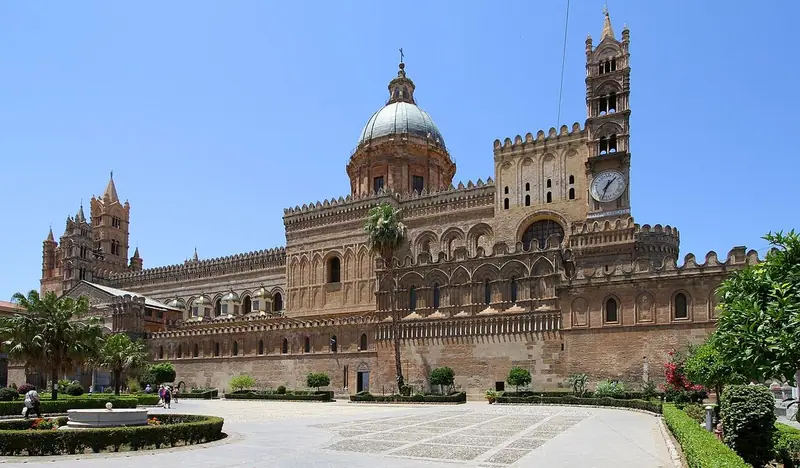 Arab-Norman11 stops · 1130 – 1194 (Norman kings of Sicily)
Arab-Norman Palermo, Monreale and Cefalù audio guide
Norman kings, Byzantine mosaicists and Arab craftsmen together: the Palatine Chapel, red-domed churches, the Zisa palace and the golden cathedrals of Monreale and Cefalù.
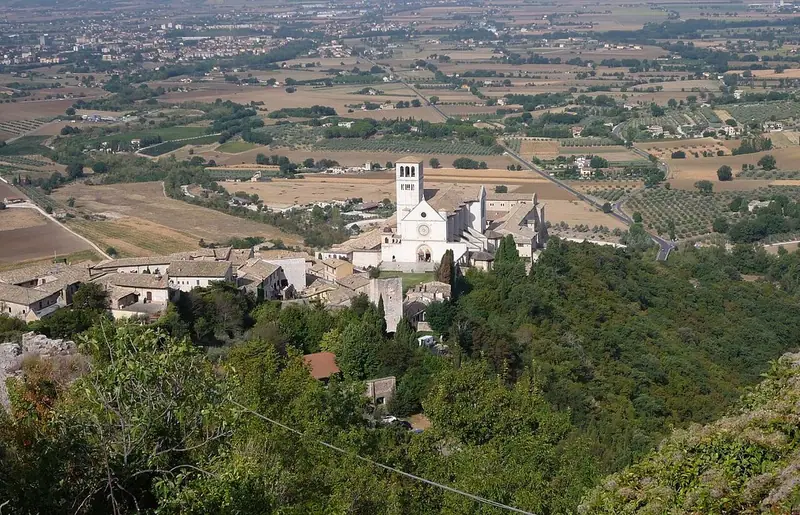 Franciscan10 stops · 1182 – 1253 (lives of Francis and Clare; basilica begun 1228)
Assisi audio guide
The hill town of Saint Francis: the double basilica with Giotto’s frescoes, his tomb, Santa Chiara, San Damiano and a Roman temple on the main square.
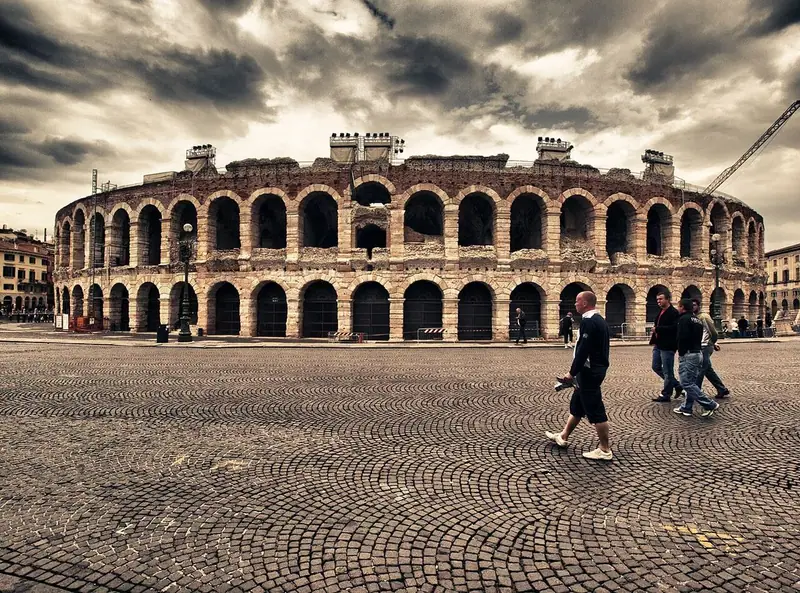 Roman11 stops · 1st c. BCE – 1797 (Roman colony to the end of Venetian rule)
City of Verona audio guide
A Roman arena still used for opera, the towers and tombs of the della Scala lords, and the Romanesque splendour of San Zeno, in a bend of the Adige.
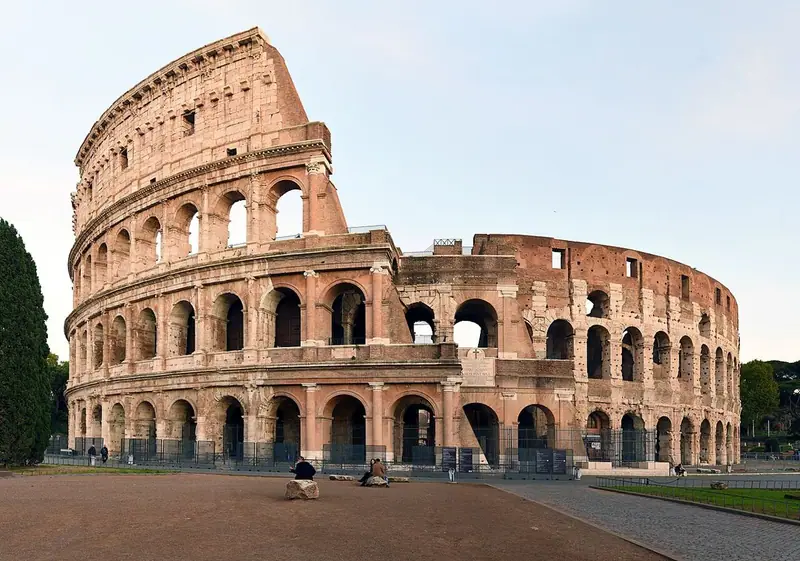 Roman7 stops · 70–80 CE
Colosseum audio guide
From the outer façade into the corridors and seating, then down to the arena floor and the hypogeum beneath it.
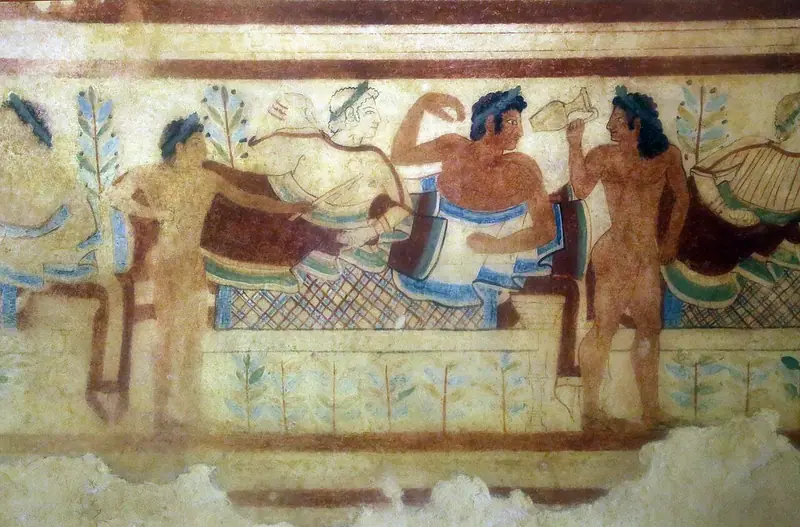 Etruscan9 stops · 9th – 3rd century BCE
Etruscan Necropolises of Cerveteri and Tarquinia audio guide
The Etruscan cities of the dead: the tumuli and tomb streets of the Banditaccia at Cerveteri, the Tomb of the Reliefs, and the painted tombs of Tarquinia’s Monterozzi necropolis.
 Renaissance7 stops · 1296–1436
Florence Duomo audio guide
The Gates of Paradise, Giotto’s Campanile and Brunelleschi’s dome, the great monument of Renaissance Florence.
Every guide, in every country
Syracuse and Pantalica and every other guide we publish, including future ones. One payment, no subscription.