Before you start
The Roman Forum and the Palatine Hill lie side by side in the heart of Rome, Italy, between the Colosseum and the Capitoline Hill. Both are part of the Historic Centre of Rome, a UNESCO World Heritage Site since 1980, and are managed by the Parco archeologico del Colosseo. This guide follows a classic route: in from the Colosseum side under the Arch of Titus, along the Sacred Way past the Basilica of Maxentius, the Temple of Vesta and the Temple of Caesar, to the Senate House and the Arch of Septimius Severus, then up onto the Palatine to the imperial palaces and the view over the Circus Maximus.
Use it as a self-guided tour of the Roman Forum: 8 stops in visit order, each played when you’re ready, at your own pace.
 Free preview · Stop 1
Arch of Titus
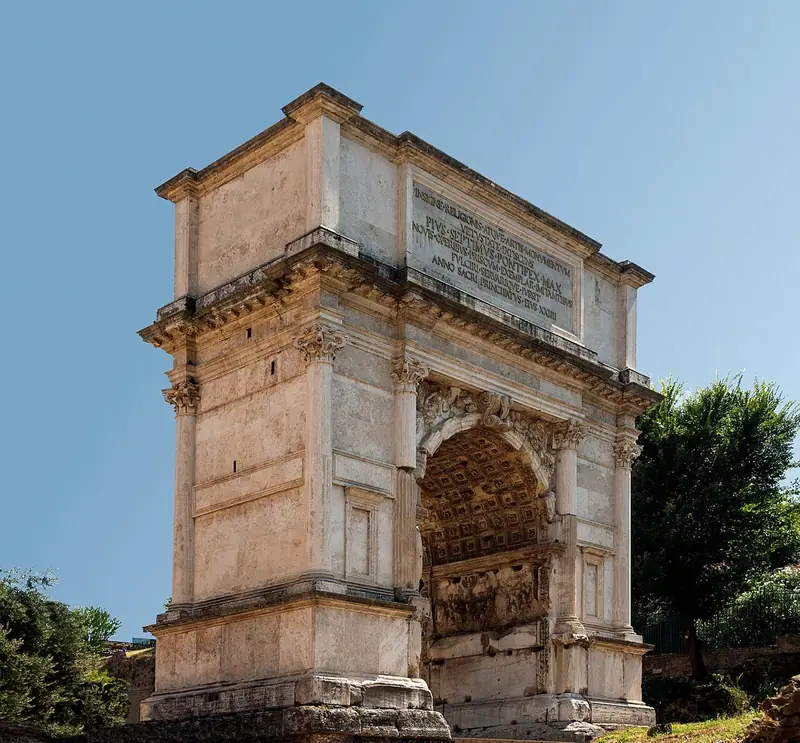
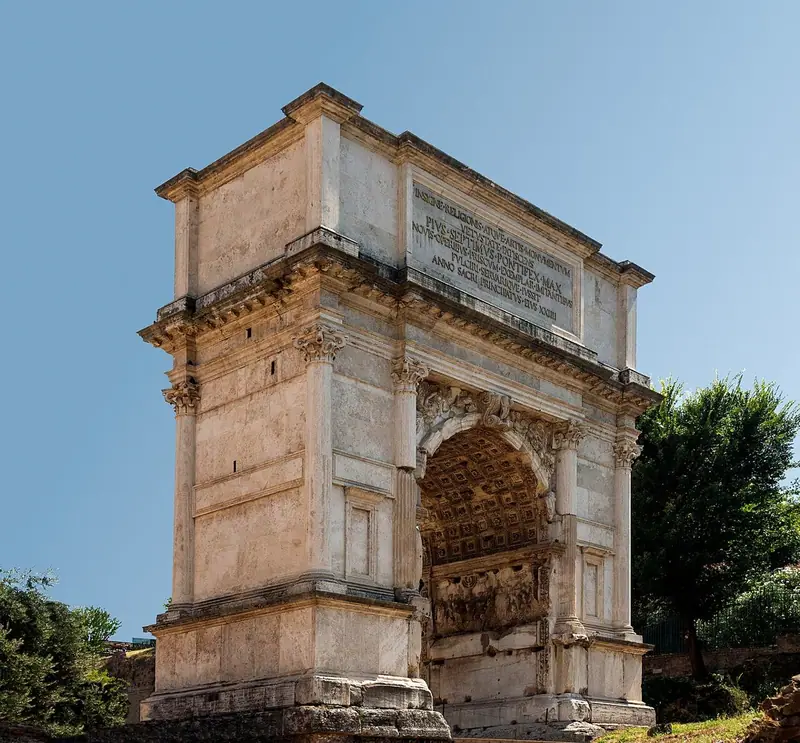
Enter from the Colosseum side and walk up to the Arch of Titus, one of the oldest surviving triumphal arches in Rome. It was erected by the emperor Domitian shortly after 81 CE, in memory of his brother Titus, who had been deified after his death. Look inside the passageway at the two great relief panels. On one side, Titus rides in his triumphal chariot, crowned by Victory. On the other, soldiers carry spoils from the Temple in Jerusalem, sacked by Titus’s forces in 70 CE, including the great seven-branched menorah. For centuries the arch was built into a medieval fortress, which helped it survive. In the early nineteenth century the architect Giuseppe Valadier restored it, using travertine instead of marble for the new parts, so you can tell the original sections from the repairs.
Photo: Jebulon · CC0 · Wikimedia Commons
What to see at the Roman Forum: 8 stops, in visit order
- 01
 Arch of TitusArco di TitoFree preview
- 02
 Basilica of MaxentiusBasilica di MassenzioIn the guide
- 03
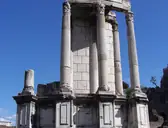 Temple of VestaTempio di VestaIn the guide
- 04
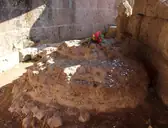 Temple of CaesarTempio del Divo GiulioIn the guide
- 05
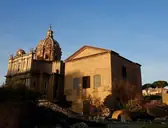 Curia JuliaCuria IuliaIn the guide
- 06
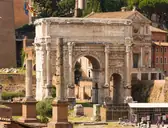 Arch of Septimius SeverusArco di Settimio SeveroIn the guide
- 07
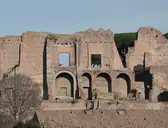 Imperial PalacesDomus Flavia e Domus AugustanaIn the guide
- 08
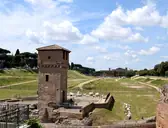 Circus Maximus ViewBelvedere sul Circo MassimoIn the guide
Site map of the Roman Forum
History of the Roman Forum
The Forum and the Palatine were built by the Romans over more than a thousand years. Roman civilisation itself spanned well over two thousand years. Tradition dates the founding of Rome to 753 BCE; kings ruled until about 509 BCE, when the Republic was established; after a century of civil wars, Augustus became the first emperor in 27 BCE; the Empire reached its greatest extent under Trajan in 117 CE; the Western Empire ended in 476 CE, while the Eastern Roman, or Byzantine, Empire endured until the fall of Constantinople in 1453. The Palatine is where Roman legend places Romulus’s founding of the city, and archaeologists have found traces of Iron Age huts there from around the eighth century BCE. The valley below was drained, perhaps in the seventh or sixth century BCE, and became the Forum, the political, religious and commercial heart of the Republic, filled with temples, basilicas and the Senate House.
The full history continues in the guide.
Roman Forum guide: questions
How many stops does the Roman Forum guide have?
8 stops, in visit order: 1. Arch of Titus; 2. Basilica of Maxentius; 3. Temple of Vesta; 4. Temple of Caesar; 5. Curia Julia; 6. Arch of Septimius Severus; 7. Imperial Palaces; 8. Circus Maximus View.
Can I do a self-guided tour of the Roman Forum with this guide?
Yes. The guide is made for a self-guided tour: 8 stops in visit order, each with a photo, a story and a voice, so you can explore the Roman Forum at your own pace, without joining a group. Download it before you go and it works offline.
How long is each guide?
The 8 stops add up to about 7 minutes of listening in total. You play each stop when you’re ready, so you can go at your own pace.
Does the guide work offline?
Yes, once it’s downloaded. The guide is a single self-contained web page (about 8.6 MB) with the photos, text and audio built in. Download it to your phone before you go (Wi-Fi is best); after that it opens in any modern browser on iPhone or Android, with no app, account or mobile signal needed.
Does it use GPS or need my location?
No. The guide doesn’t use GPS and doesn’t know where you are: you play each stop when you reach it. It works on iPhone and Android in any modern browser, and it’s in English.
What’s included?
One self-contained HTML guide: 8 stops in visit order, each with a photo, text and a voice, plus the story of who built the site.
Who built the Roman Forum?
The Forum and the Palatine were built by the Romans over more than a thousand years. Roman civilisation itself spanned well over two thousand years.
Where is the Roman Forum?
The Roman Forum and the Palatine Hill lie side by side in the heart of Rome, Italy, between the Colosseum and the Capitoline Hill.
Is there a free audio guide to the Roman Forum?
The first stop, Arch of Titus, is free to read and hear on this page, so you can try the Roman Forum audio tour before you buy. The full guide, with all 8 stops, is a one-off purchase: download it once and it’s yours to keep, working offline.
Is the Roman Forum guide worth it?
If you’d like to know what you’re looking at, yes. For $10 you get 8 stops in visit order, each with a photo, a short history and a voice you play when you’re ready, plus a site map of the stops, and about 7 minutes of listening in all. It’s short on purpose, so you spend your time looking, not listening. It’s yours to keep, works offline and needs no app. The first stop is free on this page, so you can try it before you buy. If you’d like hours of detail, a guided tour will go deeper.
Audio guide or guided tour?
It depends how you like to visit. This guide lets you explore the Roman Forum at your own pace, at any time, for a one-off price. A guided tour gives you a live expert you can ask questions, but at fixed times and usually for a higher price. Many people use both: a tour for the big picture, and the guide to read beforehand or to revisit the stops in their own time.
Is this the official Roman Forum guide?
No. It’s an independent guide by The Historian Guide, not affiliated with or endorsed by the operator of the Roman Forum. For tickets and opening hours, check the official site operator before you go.
Does the guide include entry tickets or opening hours?
No. The guide is a digital companion only. Admission to the Roman Forum is separate, so check the official site operator for current tickets and opening hours before you go.
- Stop 1 · Arch of Titus (also the cover): Jebulon · CC0 · Wikimedia Commons · resized
- Stop 2 · Basilica of Maxentius: Jebulon · CC0 · Wikimedia Commons · resized
- Stop 3 · Temple of Vesta: Wknight94 · CC BY-SA 3.0 · Wikimedia Commons · resized
- Stop 4 · Temple of Caesar: Gary Todd from Xinzheng, China · Public domain · Wikimedia Commons · resized
- Stop 5 · Curia Julia: Sonse · CC BY 2.0 · Wikimedia Commons · resized
- Stop 6 · Arch of Septimius Severus: Jebulon · CC0 · Wikimedia Commons · resized
- Stop 7 · Imperial Palaces: Livioandronico2013 · CC BY-SA 4.0 · Wikimedia Commons · resized
- Stop 8 · Circus Maximus View: Rabax63 · CC BY-SA 4.0 · Wikimedia Commons · resized


All photographs from Wikimedia Commons under the licences shown.
More guides in Italy
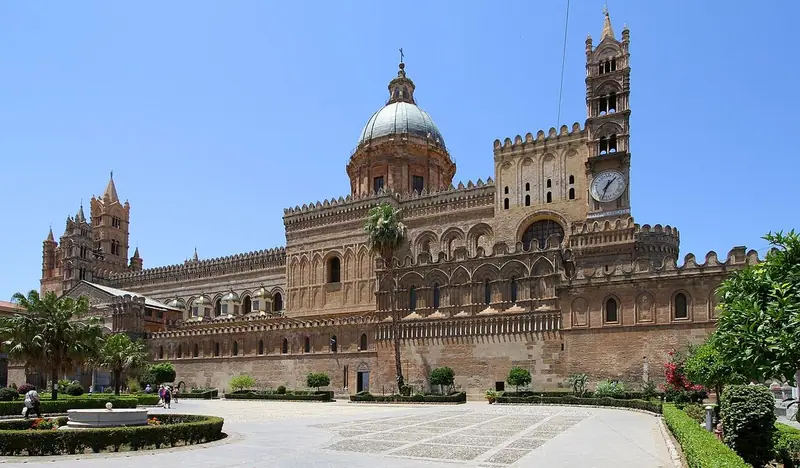 Arab-Norman11 stops · 1130 – 1194 (Norman kings of Sicily)
Arab-Norman Palermo, Monreale and Cefalù audio guide
Norman kings, Byzantine mosaicists and Arab craftsmen together: the Palatine Chapel, red-domed churches, the Zisa palace and the golden cathedrals of Monreale and Cefalù.
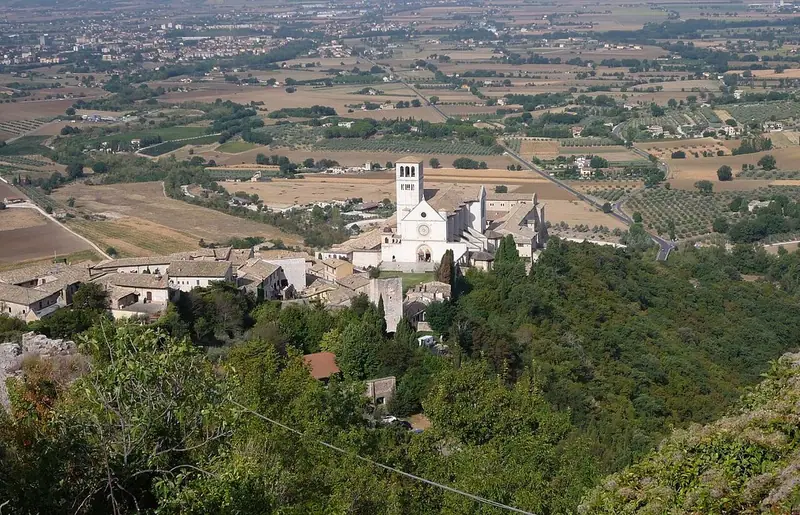 Franciscan10 stops · 1182 – 1253 (lives of Francis and Clare; basilica begun 1228)
Assisi audio guide
The hill town of Saint Francis: the double basilica with Giotto’s frescoes, his tomb, Santa Chiara, San Damiano and a Roman temple on the main square.
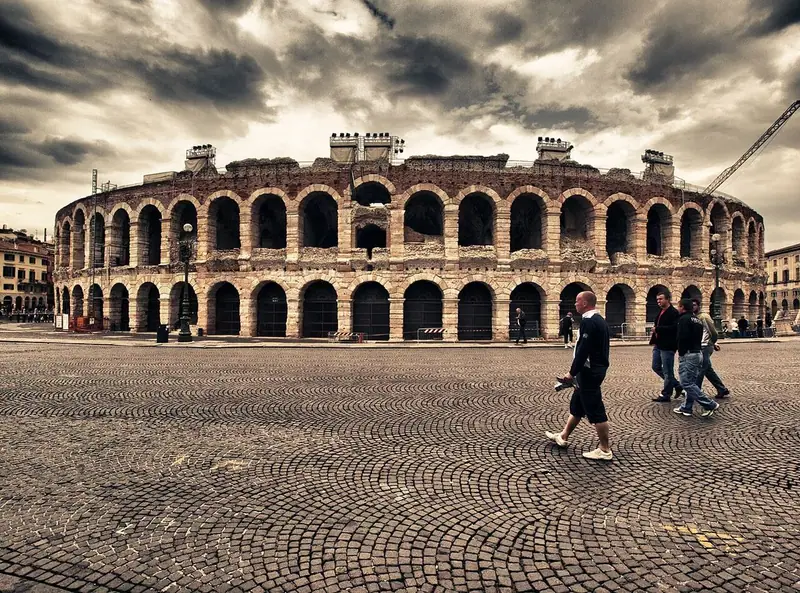 Roman11 stops · 1st c. BCE – 1797 (Roman colony to the end of Venetian rule)
City of Verona audio guide
A Roman arena still used for opera, the towers and tombs of the della Scala lords, and the Romanesque splendour of San Zeno, in a bend of the Adige.
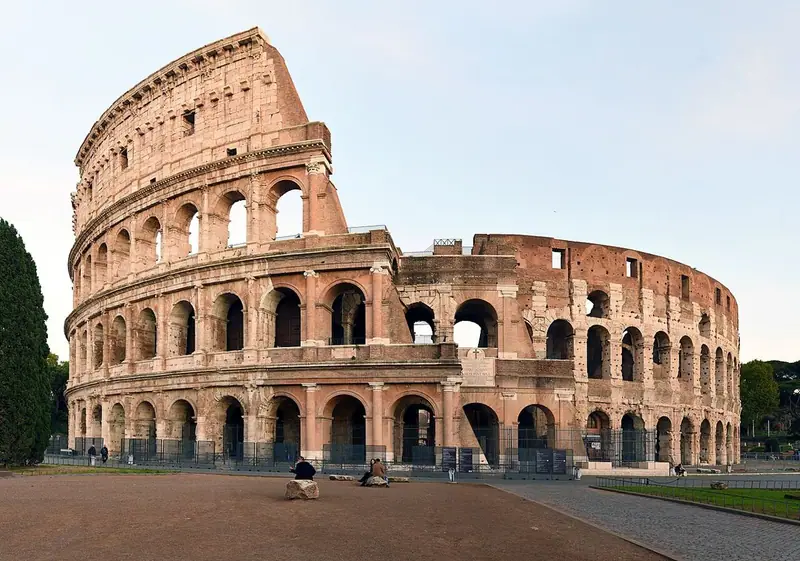 Roman7 stops · 70–80 CE
Colosseum audio guide
From the outer façade into the corridors and seating, then down to the arena floor and the hypogeum beneath it.
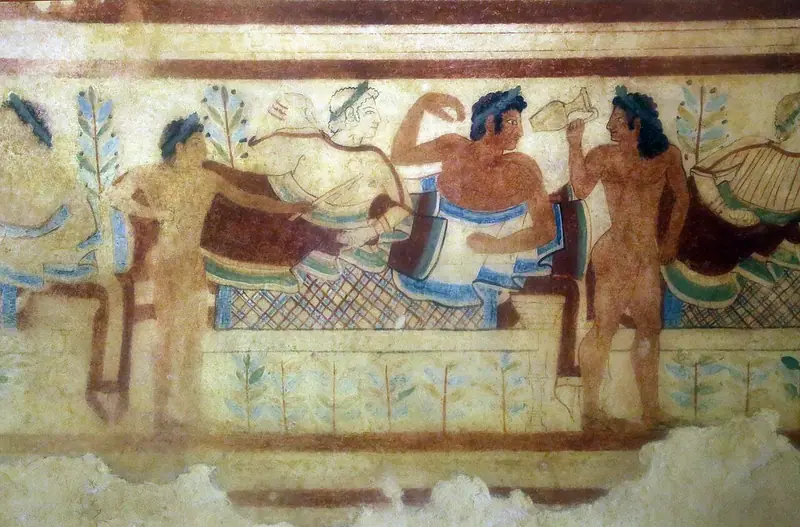 Etruscan9 stops · 9th – 3rd century BCE
Etruscan Necropolises of Cerveteri and Tarquinia audio guide
The Etruscan cities of the dead: the tumuli and tomb streets of the Banditaccia at Cerveteri, the Tomb of the Reliefs, and the painted tombs of Tarquinia’s Monterozzi necropolis.
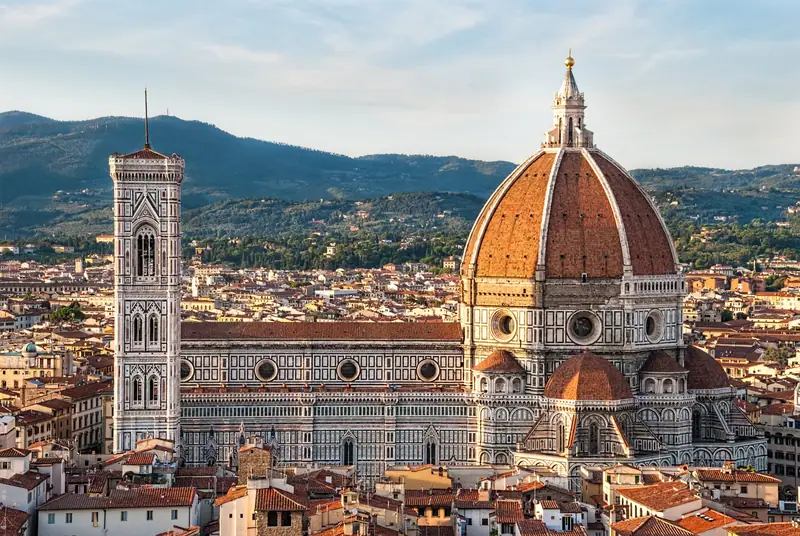 Renaissance7 stops · 1296–1436
Florence Duomo audio guide
The Gates of Paradise, Giotto’s Campanile and Brunelleschi’s dome, the great monument of Renaissance Florence.
Every guide, in every country
Roman Forum and every other guide we publish, including future ones. One payment, no subscription.