Before you start
Ostia Antica, the ancient port city of Rome, lies near the mouth of the River Tiber in Lazio, Italy, about 25 kilometres south-west of central Rome and easily reached by local train. It is not a UNESCO World Heritage Site, but it is one of the best-preserved Roman towns anywhere, managed by the Parco archeologico di Ostia antica, part of Italy’s Ministry of Culture. This guide follows the main street, the Decumanus Maximus, from the Porta Romana past the Baths of Neptune and the theatre to the Square of the Guilds, then turns off to the House of Diana and the Thermopolium, ending at the Capitolium and the Forum.
Use it as a self-guided tour of Ostia Antica: 7 stops in visit order, each played when you’re ready, at your own pace.
 Free preview · Stop 1
Porta Romana and the Decumanus
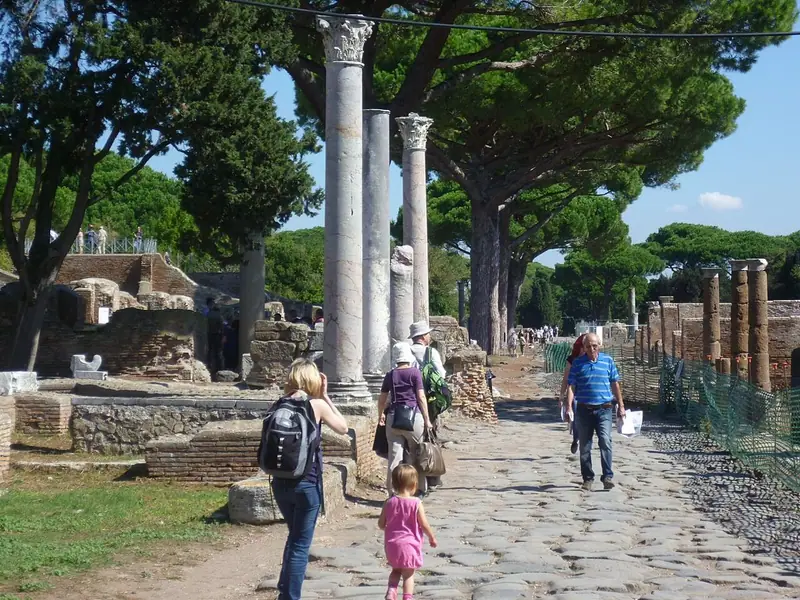
Enter through the Porta Romana, the gate on the road from Rome, and set off along the Decumanus Maximus, the main street that runs right across the town towards the sea. Walk on the original basalt paving and look at the tombs lining the road just outside the gate, since Romans buried their dead beyond the city walls. Notice the brick buildings on either side: much of Ostia was rebuilt in the second century CE in fired brick, a durable material that has survived far better than the marble and stucco that once covered it. Shops, warehouses and apartment blocks lined the street, often with arcades to shade passers-by. Look for the large warehouses, or horrea, used to store grain bound for Rome. Pines and cypresses frame the ruins, making Ostia one of the most atmospheric Roman sites to walk through.
Photo: Radosław Botev · CC BY 3.0 pl · Wikimedia Commons
What to see at Ostia Antica: 7 stops, in visit order
- 01
 Porta Romana and the DecumanusIl Decumano MassimoFree preview
- 02
 Baths of NeptuneTerme di NettunoIn the guide
- 03
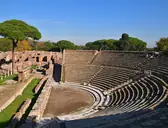 The TheatreIl TeatroIn the guide
- 04
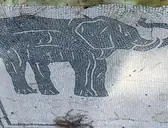 Square of the GuildsPiazzale delle CorporazioniIn the guide
- 05
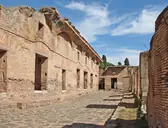 House of DianaCaseggiato di DianaIn the guide
- 06
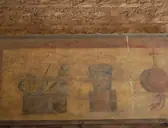 The ThermopoliumIl Termopolio di Via di DianaIn the guide
- 07
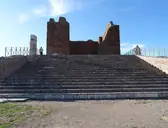 Capitolium and the ForumIl Capitolium e il ForoIn the guide
Site map of Ostia Antica
History of Ostia Antica
Ostia was built by the Romans, and it grew with Rome itself. Roman civilisation itself spanned well over two thousand years. Tradition dates the founding of Rome to 753 BCE; kings ruled until about 509 BCE, when the Republic was established; after a century of civil wars, Augustus became the first emperor in 27 BCE; the Empire reached its greatest extent under Trajan in 117 CE; the Western Empire ended in 476 CE, while the Eastern Roman, or Byzantine, Empire endured until the fall of Constantinople in 1453. Roman tradition credited the fourth king, Ancus Marcius, with founding Ostia in the seventh century BCE, but the earliest remains found so far are those of a small fort, or castrum, of around the fourth century BCE, built to guard the river mouth and Rome’s salt pans. As Rome grew, Ostia became its port, handling grain and goods from across the Mediterranean.
The full history continues in the guide.
Ostia Antica guide: questions
How many stops does the Ostia Antica guide have?
7 stops, in visit order: 1. Porta Romana and the Decumanus; 2. Baths of Neptune; 3. The Theatre; 4. Square of the Guilds; 5. House of Diana; 6. The Thermopolium; 7. Capitolium and the Forum.
Can I do a self-guided tour of Ostia Antica with this guide?
Yes. The guide is made for a self-guided tour: 7 stops in visit order, each with a photo, a story and a voice, so you can explore Ostia Antica at your own pace, without joining a group. Download it before you go and it works offline.
How long is each guide?
The 7 stops add up to about 6 minutes of listening in total. You play each stop when you’re ready, so you can go at your own pace.
Does the guide work offline?
Yes, once it’s downloaded. The guide is a single self-contained web page (about 7.9 MB) with the photos, text and audio built in. Download it to your phone before you go (Wi-Fi is best); after that it opens in any modern browser on iPhone or Android, with no app, account or mobile signal needed.
Does it use GPS or need my location?
No. The guide doesn’t use GPS and doesn’t know where you are: you play each stop when you reach it. It works on iPhone and Android in any modern browser, and it’s in English.
What’s included?
One self-contained HTML guide: 7 stops in visit order, each with a photo, text and a voice, plus the story of who built the site.
Who built Ostia Antica?
Ostia was built by the Romans, and it grew with Rome itself. Roman civilisation itself spanned well over two thousand years.
Where is Ostia Antica?
Ostia Antica, the ancient port city of Rome, lies near the mouth of the River Tiber in Lazio, Italy, about 25 kilometres south-west of central Rome and easily reached by local train.
Is there a free audio guide to Ostia Antica?
The first stop, Porta Romana and the Decumanus, is free to read and hear on this page, so you can try the Ostia Antica audio tour before you buy. The full guide, with all 7 stops, is a one-off purchase: download it once and it’s yours to keep, working offline.
Is the Ostia Antica guide worth it?
If you’d like to know what you’re looking at, yes. For $10 you get 7 stops in visit order, each with a photo, a short history and a voice you play when you’re ready, plus a site map of the stops, and about 6 minutes of listening in all. It’s short on purpose, so you spend your time looking, not listening. It’s yours to keep, works offline and needs no app. The first stop is free on this page, so you can try it before you buy. If you’d like hours of detail, a guided tour will go deeper.
Audio guide or guided tour?
It depends how you like to visit. This guide lets you explore Ostia Antica at your own pace, at any time, for a one-off price. A guided tour gives you a live expert you can ask questions, but at fixed times and usually for a higher price. Many people use both: a tour for the big picture, and the guide to read beforehand or to revisit the stops in their own time.
Is this the official Ostia Antica guide?
No. It’s an independent guide by The Historian Guide, not affiliated with or endorsed by the operator of Ostia Antica. For tickets and opening hours, check the official site operator before you go.
Does the guide include entry tickets or opening hours?
No. The guide is a digital companion only. Admission to Ostia Antica is separate, so check the official site operator for current tickets and opening hours before you go.
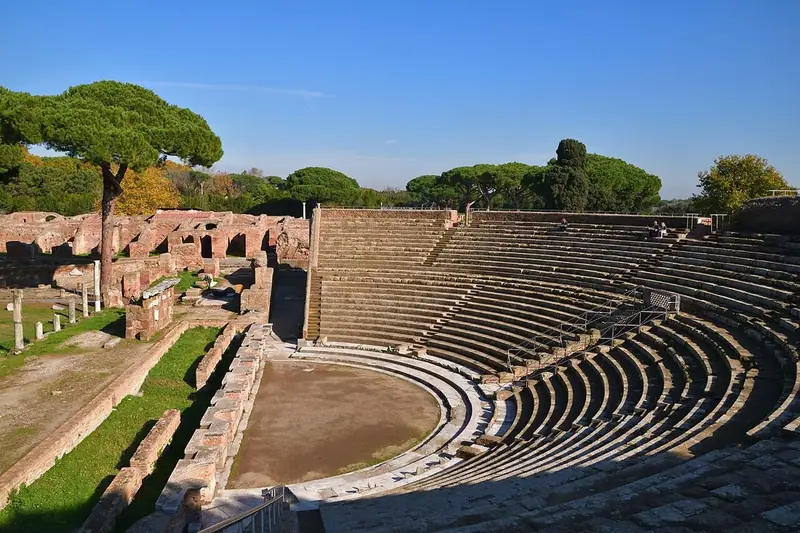
- Stop 1 · Porta Romana and the Decumanus: Radosław Botev · CC BY 3.0 pl · Wikimedia Commons · resized
- Stop 2 · Baths of Neptune: Dennis G. Jarvis · CC BY-SA 2.0 · Wikimedia Commons · resized
- Stop 3 · The Theatre (also the cover): Rabax63 · CC BY-SA 4.0 · Wikimedia Commons · resized
- Stop 4 · Square of the Guilds: I, Sailko · CC BY-SA 3.0 · Wikimedia Commons · resized
- Stop 5 · House of Diana: Jean-Pierre Dalbéra from Paris, France · CC BY 2.0 · Wikimedia Commons · resized
- Stop 6 · The Thermopolium: Massimop · CC BY-SA 3.0 · Wikimedia Commons · resized
- Stop 7 · Capitolium and the Forum: Livioandronico2013 · CC BY-SA 3.0 · Wikimedia Commons · resized


All photographs from Wikimedia Commons under the licences shown.
More guides in Italy
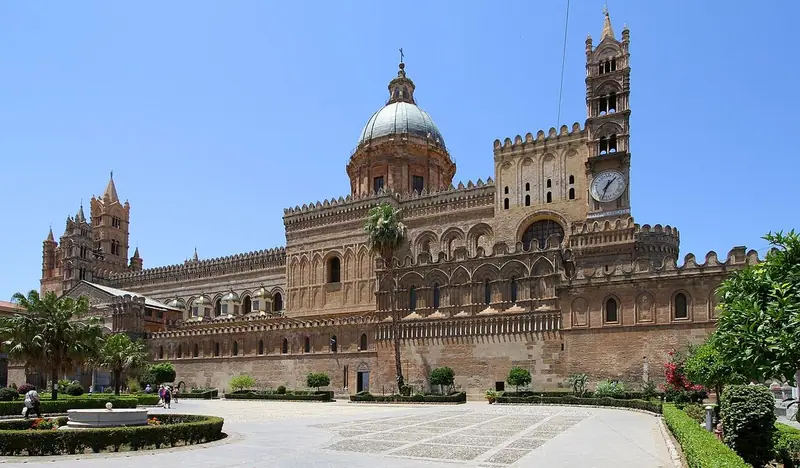 Arab-Norman11 stops · 1130 – 1194 (Norman kings of Sicily)
Arab-Norman Palermo, Monreale and Cefalù audio guide
Norman kings, Byzantine mosaicists and Arab craftsmen together: the Palatine Chapel, red-domed churches, the Zisa palace and the golden cathedrals of Monreale and Cefalù.
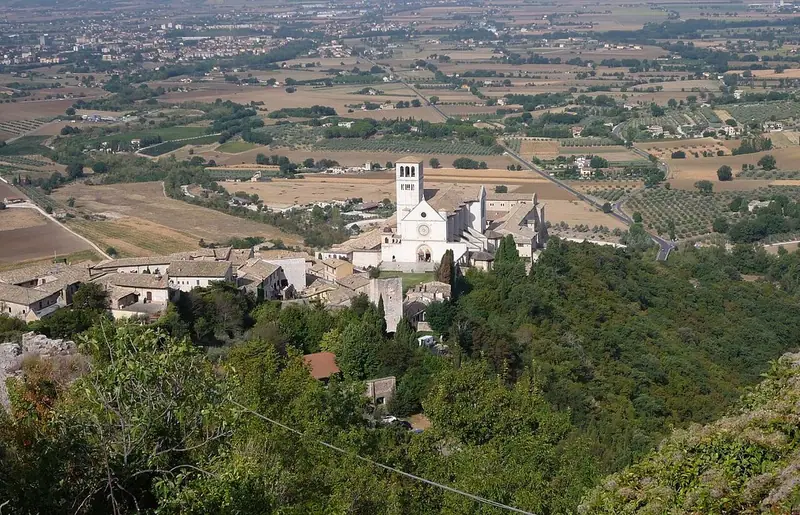 Franciscan10 stops · 1182 – 1253 (lives of Francis and Clare; basilica begun 1228)
Assisi audio guide
The hill town of Saint Francis: the double basilica with Giotto’s frescoes, his tomb, Santa Chiara, San Damiano and a Roman temple on the main square.
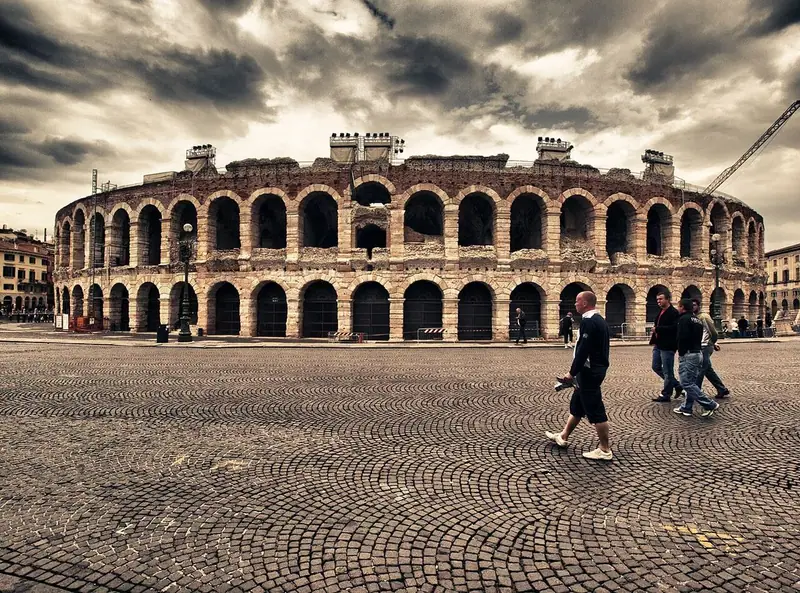 Roman11 stops · 1st c. BCE – 1797 (Roman colony to the end of Venetian rule)
City of Verona audio guide
A Roman arena still used for opera, the towers and tombs of the della Scala lords, and the Romanesque splendour of San Zeno, in a bend of the Adige.
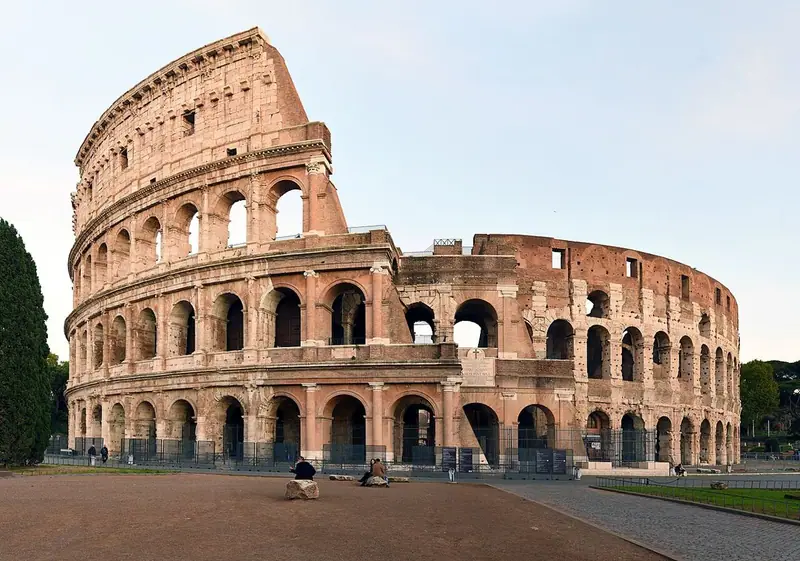 Roman7 stops · 70–80 CE
Colosseum audio guide
From the outer façade into the corridors and seating, then down to the arena floor and the hypogeum beneath it.
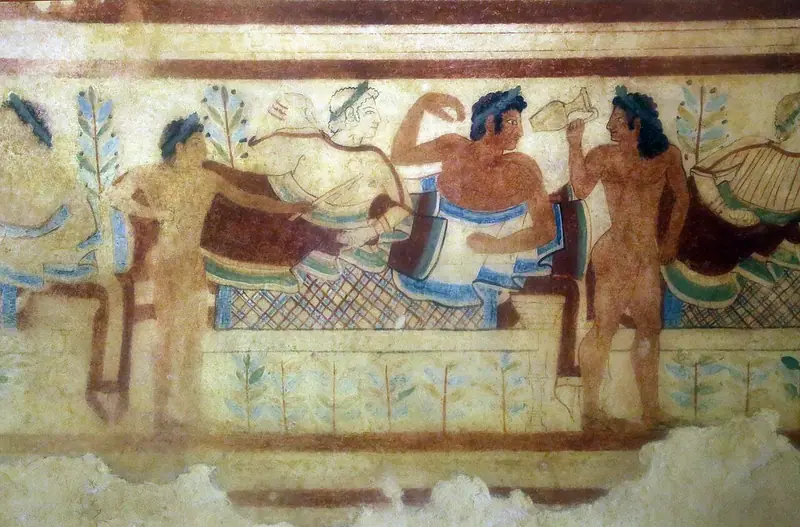 Etruscan9 stops · 9th – 3rd century BCE
Etruscan Necropolises of Cerveteri and Tarquinia audio guide
The Etruscan cities of the dead: the tumuli and tomb streets of the Banditaccia at Cerveteri, the Tomb of the Reliefs, and the painted tombs of Tarquinia’s Monterozzi necropolis.
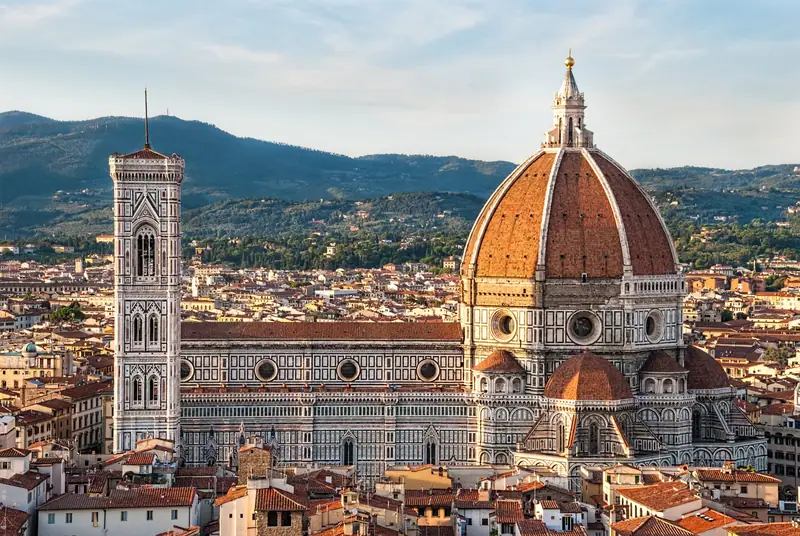 Renaissance7 stops · 1296–1436
Florence Duomo audio guide
The Gates of Paradise, Giotto’s Campanile and Brunelleschi’s dome, the great monument of Renaissance Florence.
Every guide, in every country
Ostia Antica and every other guide we publish, including future ones. One payment, no subscription.