Before you start
The Kraton, the royal palace of Yogyakarta, lies at the heart of the old city, between two great public squares. It is still the home of the reigning Sultan of Yogyakarta and a living centre of Javanese culture, with daily music, dance and puppet performances. It stands on the line that links Mount Merapi in the north with the Indian Ocean in the south, and in 2023 this Cosmological Axis of Yogyakarta and its historic landmarks became a UNESCO World Heritage Site. This guide begins in the northern square, visits the outer audience halls and the inner palace, then heads south-west to Taman Sari, the old royal pleasure garden known as the Water Castle. Parts of the palace are closed for ceremonies at times, so check on arrival.
Use it as a self-guided tour of Yogyakarta Kraton: 8 stops in visit order, each played when you’re ready, at your own pace.
 Free preview · Stop 1
Alun-alun Utara
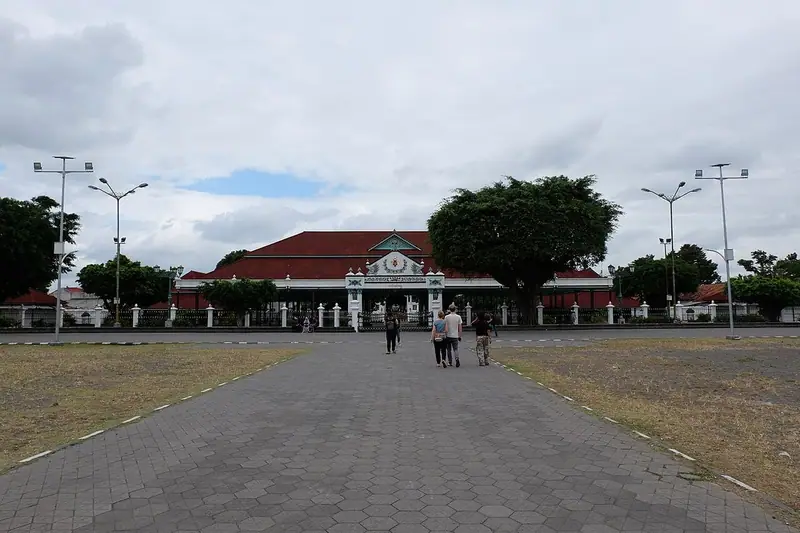
Begin on Alun-alun Utara, the great northern square in front of the palace. It is a wide open space of sand and grass where the sultan’s subjects once gathered, and where great royal ceremonies are still held. Look at the two banyan trees in the middle, each surrounded by a low fence, which are symbolic of the palace and its link with the people. Several times a year, during the festivals called Grebeg, palace guards in traditional uniform escort huge mountains of rice, vegetables and other food from the palace across the square to the Great Mosque, the Masjid Gedhe, on the western side, where the offerings are shared out. Look north along the straight road towards the distant monument of Tugu, which marks the northern end of the royal axis. Then walk to the pavilions on the south side of the square.
Photo: Panina Manina · CC BY-SA 4.0 · Wikimedia Commons
What to see at Yogyakarta Kraton: 8 stops, in visit order
- 01
 Alun-alun UtaraNorth SquareFree preview
- 02
 Pagelaran and Siti HinggilOuter Audience HallsIn the guide
- 03
 SrimangantiPerformance PavilionIn the guide
- 04
 Bangsal KenconoGolden PavilionIn the guide
- 05
 Hamengkubuwono IX MuseumA Sultan and a NationIn the guide
- 06
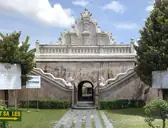 Taman Sari GateEntrance to the Water CastleIn the guide
- 07
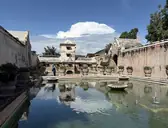 Umbul PasiramanRoyal Bathing PoolsIn the guide
- 08
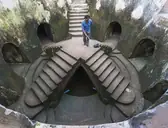 Sumur GumulingUnderground MosqueIn the guide
Site map of Yogyakarta Kraton
History of Yogyakarta Kraton
The Kraton was built by the Sultanate of Yogyakarta, which was founded in 1755 and still exists today, with its sultan serving as governor of the Special Region of Yogyakarta. The sultanate was created by the Treaty of Giyanti, which divided the Javanese kingdom of Mataram, under Dutch supervision. Its first ruler, Sultan Hamengkubuwono I, chose a site in a banyan forest between two rivers and built the palace in 1755 and 1756, and he is regarded as its chief designer. In 1812 British forces under Stamford Raffles stormed and sacked the palace. Most of the present buildings date from the reign of Hamengkubuwono VIII, between 1921 and 1939, and the palace has been repaired after several earthquakes, most recently that of 2006. Taman Sari was begun in 1758, under the first sultan.
Yogyakarta Kraton guide: questions
How many stops does the Yogyakarta Kraton guide have?
8 stops, in visit order: 1. Alun-alun Utara; 2. Pagelaran and Siti Hinggil; 3. Srimanganti; 4. Bangsal Kencono; 5. Hamengkubuwono IX Museum; 6. Taman Sari Gate; 7. Umbul Pasiraman; 8. Sumur Gumuling.
Can I do a self-guided tour of Yogyakarta Kraton with this guide?
Yes. The guide is made for a self-guided tour: 8 stops in visit order, each with a photo, a story and a voice, so you can explore Yogyakarta Kraton at your own pace, without joining a group. Download it before you go and it works offline.
How long is each guide?
The 8 stops add up to about 6 minutes of listening in total. You play each stop when you’re ready, so you can go at your own pace.
Does the guide work offline?
Yes, once it’s downloaded. The guide is a single self-contained web page (about 7.6 MB) with the photos, text and audio built in. Download it to your phone before you go (Wi-Fi is best); after that it opens in any modern browser on iPhone or Android, with no app, account or mobile signal needed.
Does it use GPS or need my location?
No. The guide doesn’t use GPS and doesn’t know where you are: you play each stop when you reach it. It works on iPhone and Android in any modern browser, and it’s in English.
What’s included?
One self-contained HTML guide: 8 stops in visit order, each with a photo, text and a voice, plus the story of who built the site.
Who built Yogyakarta Kraton?
The Kraton was built by the Sultanate of Yogyakarta, which was founded in 1755 and still exists today, with its sultan serving as governor of the Special Region of Yogyakarta. The sultanate was created by the Treaty of Giyanti, which divided the Javanese kingdom of Mataram, under Dutch supervision.
Where is Yogyakarta Kraton?
The Kraton, the royal palace of Yogyakarta, lies at the heart of the old city, between two great public squares.
Is there a free audio guide to Yogyakarta Kraton?
The first stop, Alun-alun Utara, is free to read and hear on this page, so you can try the Yogyakarta Kraton audio tour before you buy. The full guide, with all 8 stops, is a one-off purchase: download it once and it’s yours to keep, working offline.
Is the Yogyakarta Kraton guide worth it?
If you’d like to know what you’re looking at, yes. For $10 you get 8 stops in visit order, each with a photo, a short history and a voice you play when you’re ready, plus a site map of the stops, and about 6 minutes of listening in all. It’s short on purpose, so you spend your time looking, not listening. It’s yours to keep, works offline and needs no app. The first stop is free on this page, so you can try it before you buy. If you’d like hours of detail, a guided tour will go deeper.
Audio guide or guided tour?
It depends how you like to visit. This guide lets you explore Yogyakarta Kraton at your own pace, at any time, for a one-off price. A guided tour gives you a live expert you can ask questions, but at fixed times and usually for a higher price. Many people use both: a tour for the big picture, and the guide to read beforehand or to revisit the stops in their own time.
Is this the official Yogyakarta Kraton guide?
No. It’s an independent guide by The Historian Guide, not affiliated with or endorsed by the operator of Yogyakarta Kraton. For tickets and opening hours, check the official site operator before you go.
Does the guide include entry tickets or opening hours?
No. The guide is a digital companion only. Admission to Yogyakarta Kraton is separate, so check the official site operator for current tickets and opening hours before you go.
- Stop 1 · Alun-alun Utara: Panina Manina · CC BY-SA 4.0 · Wikimedia Commons · resized
- Stop 2 · Pagelaran and Siti Hinggil: xiquinhosilva · CC BY 2.0 · Wikimedia Commons · resized
- Stop 3 · Srimanganti: Michael Gunther · CC BY-SA 4.0 · Wikimedia Commons · resized
- Stop 4 · Bangsal Kencono: Photo by CEphoto, Uwe Aranas or alternatively © CEphoto, Uwe Aranas · CC BY-SA 3.0 · Wikimedia Commons · resized
- Stop 5 · Hamengkubuwono IX Museum: Fidaa mustaghfiroh · CC BY-SA 4.0 · Wikimedia Commons · resized
- Stop 6 · Taman Sari Gate: Crisco 1492 · CC BY-SA 3.0 · Wikimedia Commons · resized
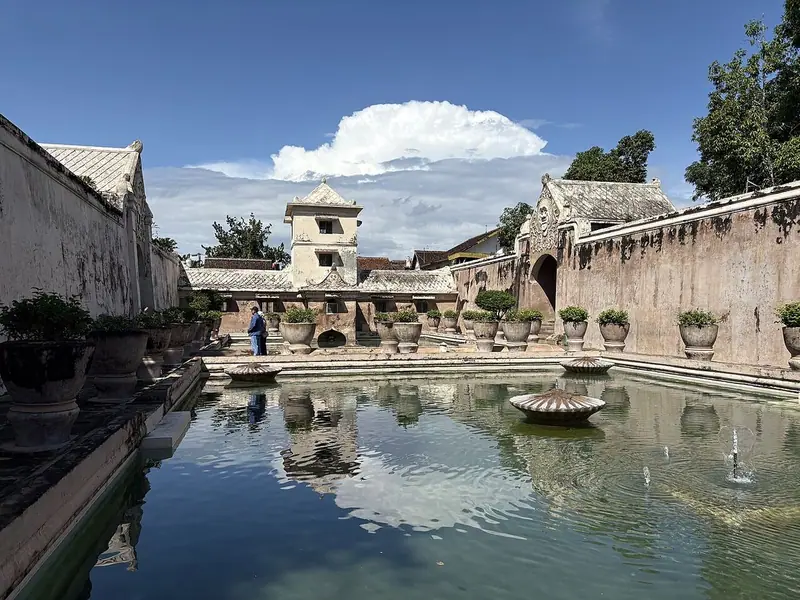
- Stop 7 · Umbul Pasiraman (also the cover): Chainwit. · CC BY 4.0 · Wikimedia Commons · resized
- Stop 8 · Sumur Gumuling: Herusutimbul · CC BY-SA 4.0 · Wikimedia Commons · resized


All photographs from Wikimedia Commons under the licences shown.
More guides in Indonesia
 Balinese Hindu8 stops · from the 13th century CE
Besakih Temple audio guide
Climb the slopes of Mount Agung to Bali’s Mother Temple: twenty-three temples along the ridges, with the great Pura Penataran Agung at their heart.
 Sailendra8 stops · c. 780–830 CE
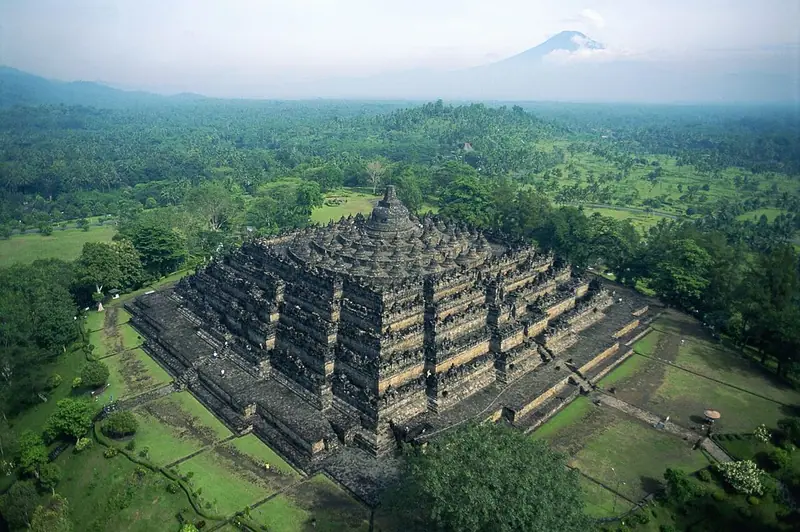
Borobudur audio guide
Circle upwards past the life of the Buddha in stone, gallery after gallery, to the stupas of the circular terraces.
 Dutch Colonial8 stops · 1619–1799 CE
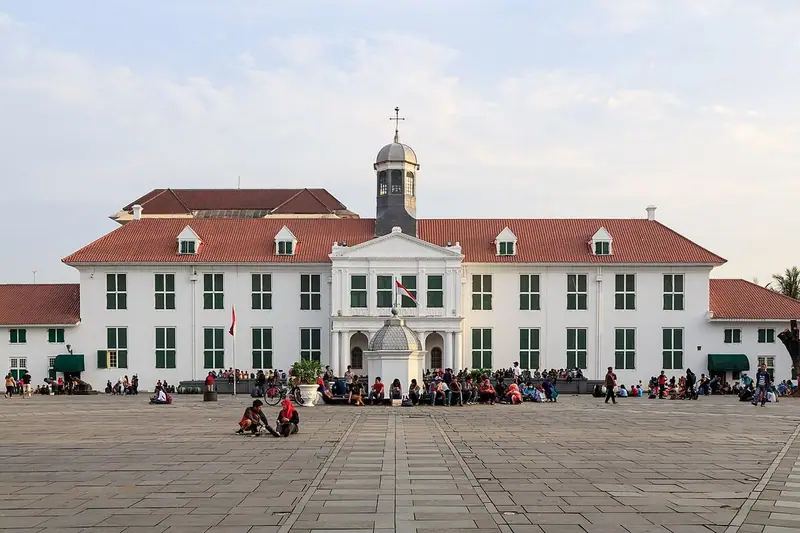
Kota Tua Jakarta audio guide
The cobbled square of old Batavia, Asian headquarters of the Dutch East India Company, past the Red Shop to the old harbour of Sunda Kelapa.
 Mataram8 stops · c. 850 CE
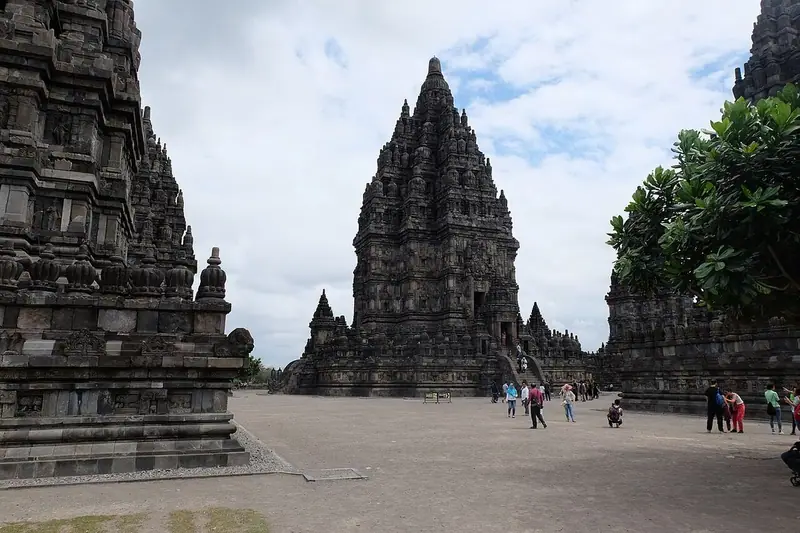
Prambanan audio guide
Soaring stone towers to Shiva, Vishnu and Brahma, wrapped in reliefs of the Ramayana.
Every guide, in every country
Yogyakarta Kraton and every other guide we publish, including future ones. One payment, no subscription.