Before you start
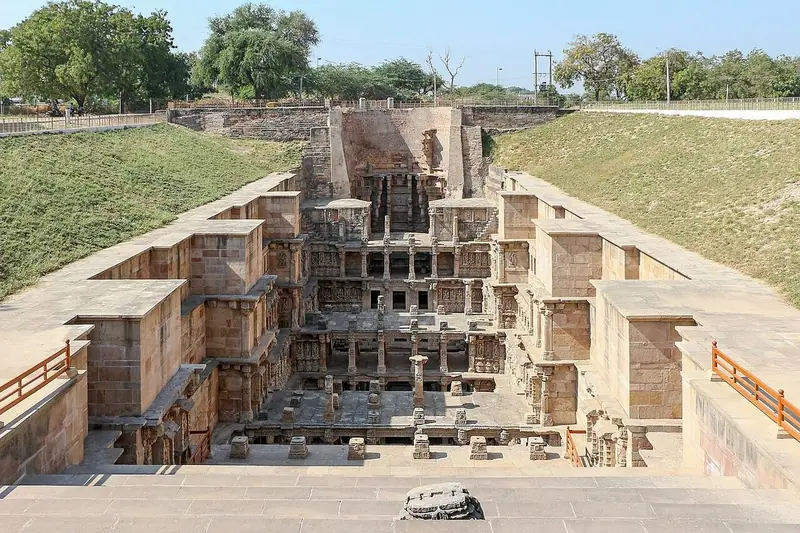
Rani ki Vav, the Queen’s Stepwell, lies on the edge of the old town of Patan in northern Gujarat, beside the Saraswati River. From the surface it is easy to miss: a long trench cut into the ground, until you look down and see a stone temple turned upside down, descending in seven levels of stairs and pavilions towards the water. More than five hundred principal sculptures, and over a thousand smaller ones, line its walls. UNESCO inscribed it as a World Heritage Site in 2014, and since 2018 it has appeared on the back of India’s hundred-rupee note. The steps are steep and the stone can be slippery, so take care on the stairs. The route descends from the entrance on the east through the pavilions and courts to the deepest level and the well, then ends at the Sahasralinga Tank nearby.
Use it as a self-guided tour of Rani ki Vav: 8 stops in visit order, each played when you’re ready, at your own pace.
 Free preview · Stop 1
The Queen’s Stepwell
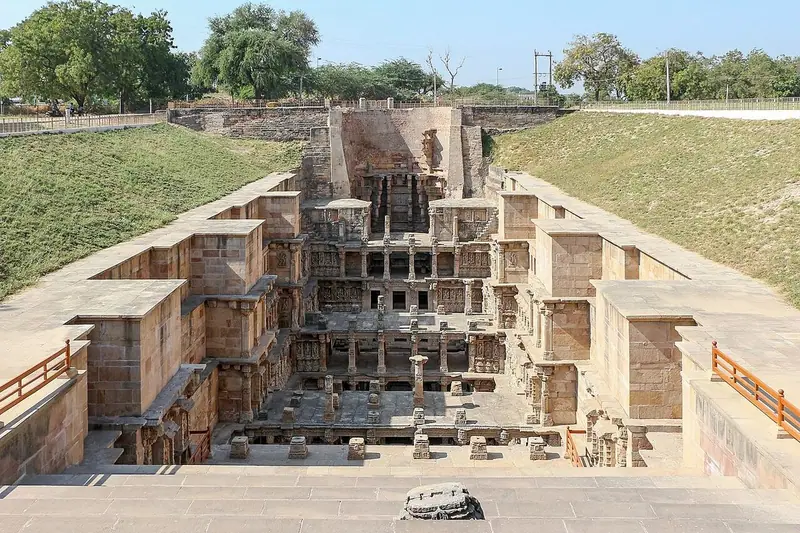
Begin at the edge of the stepwell and look down its length. It measures about sixty-five metres long, twenty metres wide and twenty-eight metres deep, and it was built at the height of the stepwell builders' skill, in the Maru-Gurjara style of western India. It was designed as an underground shrine, or inverted temple, honouring the sanctity of water. Medieval texts on architecture classify it as a Nanda stepwell, with a single entrance and three pavilion towers. When the scholars Henry Cousens and James Burgess came here in the 1890s, it was completely buried; only the shaft of the well and a few pillars could be seen. Excavations in the 1940s, under the princely state of Baroda, revealed the stepwell, and the Archaeological Survey of India carried out a major excavation and restoration between 1981 and 1987.
Photo: Bernard Gagnon · CC BY-SA 3.0 · Wikimedia Commons
What to see at Rani ki Vav: 8 stops, in visit order
- 01
 The Queen’s StepwellAn inverted templeFree preview
- 02
 The Stepped CorridorDescending into the earthIn the guide
- 03
 The PavilionsPillars, beams and cool airIn the guide
- 04
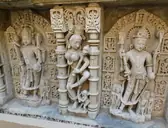 The Avatars of VishnuThe god of preservationIn the guide
- 05
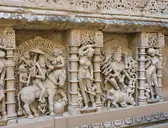 The GoddessesDurga and the divine mothersIn the guide
- 06
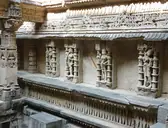 The Celestial WomenApsaras and scenes of daily lifeIn the guide
- 07
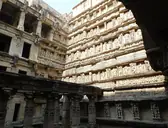 The Deep Court and the WellWhere the water liesIn the guide
- 08
 The Sahasralinga TankThe rival reservoirIn the guide
History of Rani ki Vav
Rani ki Vav was built under the Chaulukya, or Solanki, dynasty, which ruled Gujarat from its capital at Anahilapataka, the city now called Patan. Its construction is attributed to Udayamati, queen of King Bhima the First, who reigned from about 1022 to 1064. A chronicle written in 1304 by the Jain monk Merutunga records that Udayamati built this novel stepwell, surpassing the glory of the Sahasralinga Tank; it is generally assumed that she built it in memory of her husband, though some scholars date it earlier. Stepwells were built to cope with the seasonal rise and fall of water supplies, and they were also places for social gatherings and religious ceremonies. In later centuries the Saraswati flooded the stepwell and buried it in silt, hiding it for centuries until it was excavated and restored in the twentieth century.
Rani ki Vav guide: questions
How many stops does the Rani ki Vav guide have?
8 stops, in visit order: 1. The Queen’s Stepwell; 2. The Stepped Corridor; 3. The Pavilions; 4. The Avatars of Vishnu; 5. The Goddesses; 6. The Celestial Women; 7. The Deep Court and the Well; 8. The Sahasralinga Tank.
Can I do a self-guided tour of Rani ki Vav with this guide?
Yes. The guide is made for a self-guided tour: 8 stops in visit order, each with a photo, a story and a voice, so you can explore Rani ki Vav at your own pace, without joining a group. Download it before you go and it works offline.
How long do you need at Rani ki Vav?
We suggest allowing about 2 hours. The 8 stops add up to about 6 minutes of listening, and you play each one when you’re ready, so you can linger wherever you like.
How long is each guide?
The 8 stops add up to about 6 minutes of listening in total. You play each stop when you’re ready, so you can go at your own pace.
Does the guide work offline?
Yes, once it’s downloaded. The guide is a single self-contained web page (about 8.1 MB) with the photos, text and audio built in. Download it to your phone before you go (Wi-Fi is best); after that it opens in any modern browser on iPhone or Android, with no app, account or mobile signal needed.
Does it use GPS or need my location?
No. The guide doesn’t use GPS and doesn’t know where you are: you play each stop when you reach it. It works on iPhone and Android in any modern browser, and it’s in English.
What’s included?
One self-contained HTML guide: 8 stops in visit order, each with a photo, text and a voice, plus the story of who built the site.
Who built Rani ki Vav?
Rani ki Vav was built under the Chaulukya, or Solanki, dynasty, which ruled Gujarat from its capital at Anahilapataka, the city now called Patan. Its construction is attributed to Udayamati, queen of King Bhima the First, who reigned from about 1022 to 1064.
Where is Rani ki Vav?
Rani ki Vav, the Queen’s Stepwell, lies on the edge of the old town of Patan in northern Gujarat, beside the Saraswati River.
Is there a free audio guide to Rani ki Vav?
The first stop, The Queen’s Stepwell, is free to read and hear on this page, so you can try the Rani ki Vav audio tour before you buy. The full guide, with all 8 stops, is a one-off purchase: download it once and it’s yours to keep, working offline.
Is the Rani ki Vav guide worth it?
If you’d like to know what you’re looking at, yes. For $10 you get 8 stops in visit order, each with a photo, a short history and a voice you play when you’re ready, about 6 minutes of listening in all. It’s short on purpose, so you spend your time looking, not listening. It’s yours to keep, works offline and needs no app. The first stop is free on this page, so you can try it before you buy. If you’d like hours of detail, a guided tour will go deeper.
Audio guide or guided tour?
It depends how you like to visit. This guide lets you explore Rani ki Vav at your own pace, at any time, for a one-off price. A guided tour gives you a live expert you can ask questions, but at fixed times and usually for a higher price. Many people use both: a tour for the big picture, and the guide to read beforehand or to revisit the stops in their own time.
Is this the official Rani ki Vav guide?
No. It’s an independent guide by The Historian Guide, not affiliated with or endorsed by the operator of Rani ki Vav. For tickets and opening hours, check the official site operator before you go.
Does the guide include entry tickets or opening hours?
No. The guide is a digital companion only. Admission to Rani ki Vav is separate, so check the official site operator for current tickets and opening hours before you go.
- Stop 1 · The Queen’s Stepwell (also the cover): Bernard Gagnon · CC BY-SA 3.0 · Wikimedia Commons · resized
- Stop 2 · The Stepped Corridor: VasuVR · CC BY 4.0 · Wikimedia Commons · resized
- Stop 3 · The Pavilions: VasuVR · CC BY 4.0 · Wikimedia Commons · resized
- Stop 4 · The Avatars of Vishnu: VasuVR · CC BY 4.0 · Wikimedia Commons · resized
- Stop 5 · The Goddesses: VasuVR · CC BY 4.0 · Wikimedia Commons · resized
- Stop 6 · The Celestial Women: VasuVR · CC BY 4.0 · Wikimedia Commons · resized
- Stop 7 · The Deep Court and the Well: VasuVR · CC BY 4.0 · Wikimedia Commons · resized
- Stop 8 · The Sahasralinga Tank: Snehrashmi · CC BY-SA 4.0 · Wikimedia Commons · resized


All photographs from Wikimedia Commons under the licences shown.
More guides in India
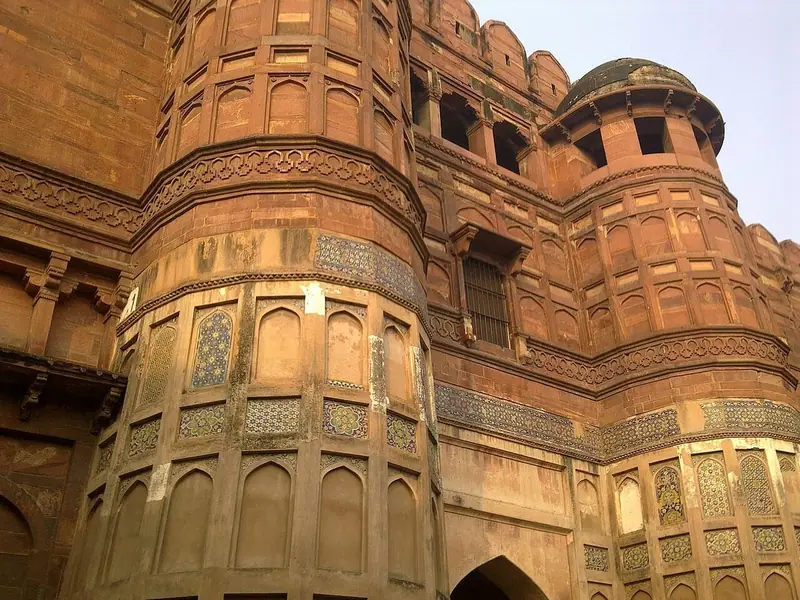 Mughal7 stops · 1565–1640s
Agra Fort audio guide
Red sandstone ramparts and marble palaces, with the Taj Mahal in view from the riverside terraces.
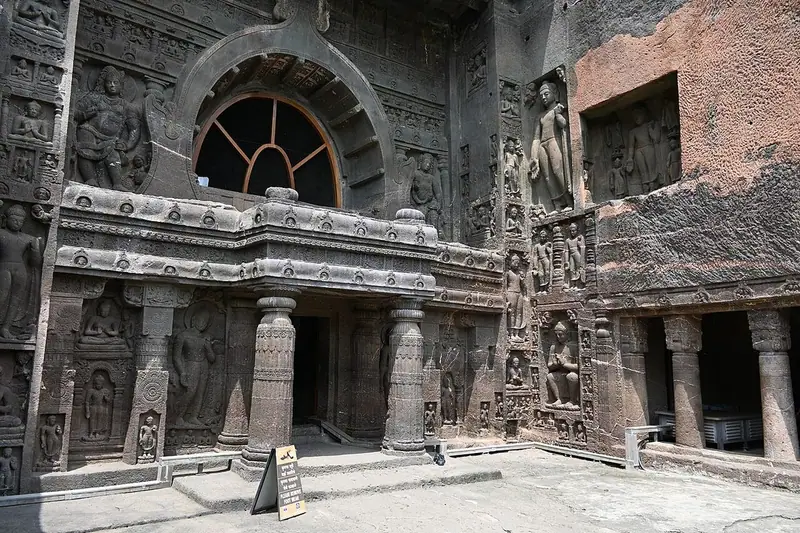 Deccan8 stops · 2nd century BCE – 5th century CE
Ajanta Caves audio guide
Thirty caves cut into a curving cliff above the Waghora river, their prayer halls and monasteries painted and carved by Buddhist monks and their patrons.
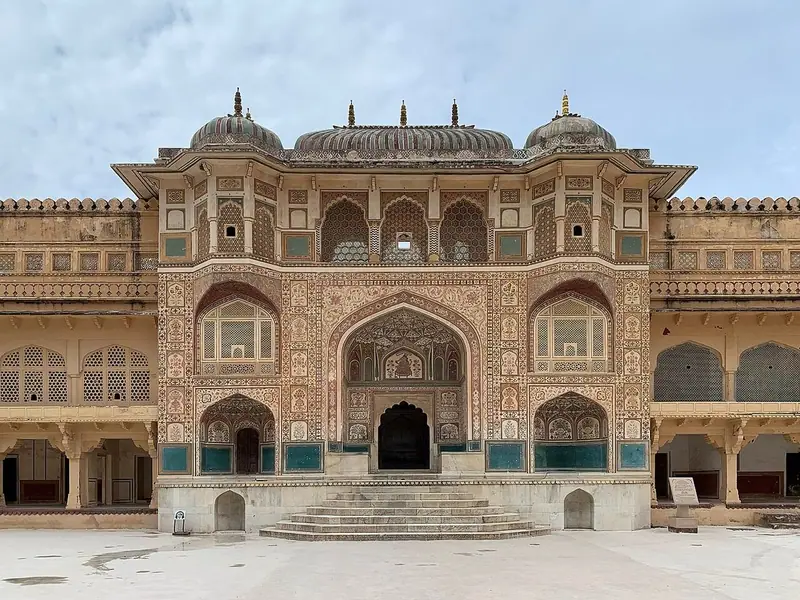 Rajput8 stops · 1592–18th century
Amber Fort audio guide
Up from Maota Lake through the great gates and courtyards to the Sheesh Mahal, palace of the Kachhwaha Rajputs.
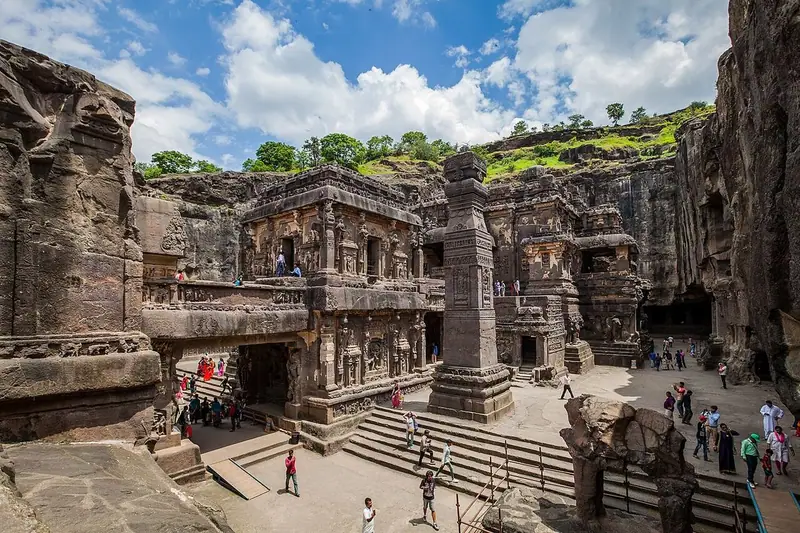 Deccan8 stops · c. 600–1000 CE
Ellora Caves audio guide
Thirty-four Buddhist, Hindu and Jain caves cut into a basalt escarpment, crowned by the Kailasa Temple.
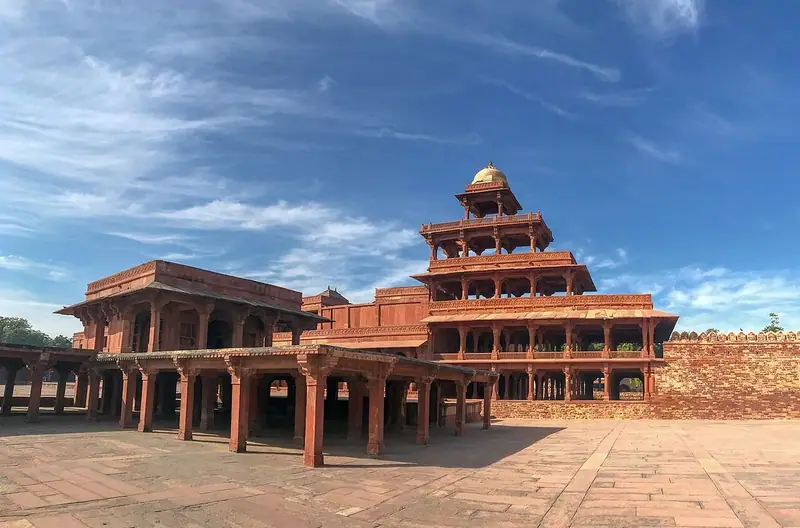 Mughal8 stops · 1571–1585
Fatehpur Sikri audio guide
Akbar’s short-lived red sandstone capital: the Panch Mahal, the Diwan-i-Khas and the tomb of Salim Chishti.
 Sikh9 stops · Sikh Gurus and Sikh Empire
The Golden Temple audio guide
Follow the marble path around the sacred pool, cross the causeway to the gilded Harmandir Sahib, and share a meal at the Guru ka Langar.
Every guide, in every country
Rani ki Vav and every other guide we publish, including future ones. One payment, no subscription.