Before you start
Bodh Gaya, a small town in the state of Bihar, about a hundred and fifteen kilometres south of Patna, is where Buddhists believe Siddhartha Gautama attained enlightenment under a pipal tree and became the Buddha. It is one of the four holy places linked to his life, together with Lumbini, Sarnath and Kushinagar. The Mahabodhi Temple Complex, the temple of the great awakening, holds the tall brick temple, the Bodhi Tree and the Vajrasana, the diamond throne, together with shrines marking the weeks the Buddha is said to have spent here afterwards. UNESCO inscribed it as a World Heritage Site in 2002. This is a living place of worship for pilgrims from across Asia and the world, so this guide asks you to move quietly and to follow the rules of the temple.
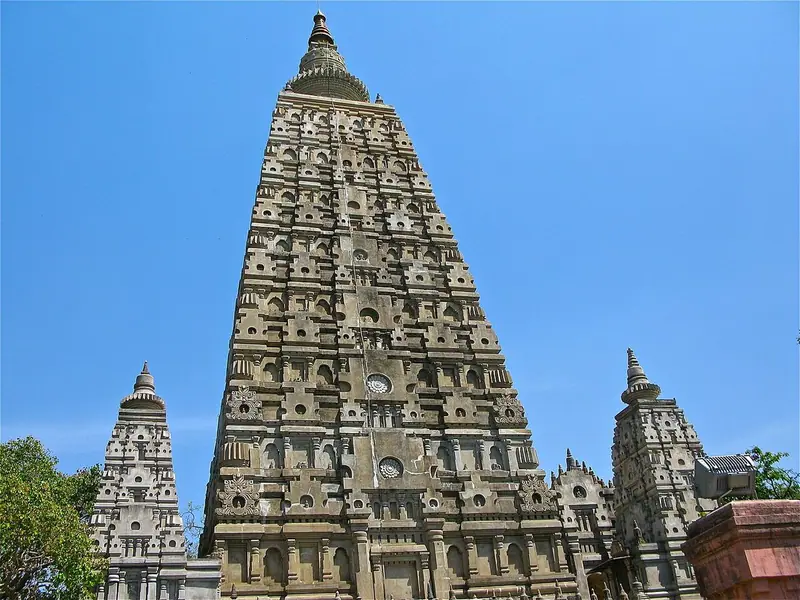
Use it as a self-guided tour of the Mahabodhi Temple: 9 stops in visit order, each played when you’re ready, at your own pace.
 Free preview · Stop 1
The Approach to the Temple
Begin at the entrance to the complex, where the temple’s tower rises above the town. Bodh Gaya lies near the river Niranjana, known today as the Phalgu, about sixteen kilometres from the city of Gaya. Tradition holds that Siddhartha, a prince who had renounced his life of comfort, came here after years of severe austerity, ate a meal of rice and milk, and sat in meditation beneath a tree. Around the complex you will see monasteries and temples built by Buddhist communities from many countries, among them Thailand, Myanmar, Bhutan, Japan, Tibet and Sri Lanka, each in its own national style. Pilgrims gather here in great numbers, especially in the cooler months, and many come to recite texts, make offerings or meditate for days. As you enter, leave your shoes at the counter, and remember that you are entering a place of worship.
Photo: Dharmabum33blue · CC BY-SA 4.0 · Wikimedia Commons
What to see at the Mahabodhi Temple: 9 stops, in visit order
- 01
 The Approach to the TempleA pilgrimage town of many nationsFree preview
- 02
 The Mahabodhi TempleA brick tower from the Gupta ageIn the guide
- 03
 The SanctumThe golden BuddhaIn the guide
- 04
 The Bodhi TreeThe tree of awakeningIn the guide
- 05
 The VajrasanaThe diamond throneIn the guide
- 06
 The Ancient RailingsStone posts from the second century BCEIn the guide
- 07
 Animeshlocha ChaityaThe unblinking gazeIn the guide
- 08
 The Jewel WalkLotus flowers at every stepIn the guide
- 09
 The Lotus PondThe shelter of the serpent kingIn the guide
Site map of the Mahabodhi Temple
History of the Mahabodhi Temple
According to Buddhist tradition, the Buddha attained enlightenment here around the fifth century BCE, though scholars debate the exact dates of his life. In the third century BCE the Mauryan emperor Ashoka, a great patron of Buddhism, built the first shrine at the site of the Bodhi Tree. The temple you see dates from the fifth or sixth century CE, at the end of the Gupta period; UNESCO counts it among the oldest surviving brick-built Buddhist temples in India. Pilgrims and kings from far away maintained it: an inscription records a Sri Lankan monk, and Burmese rulers restored the temple in the thirteenth and again in the nineteenth century. After Buddhism declined in India, the site passed into the hands of a Hindu religious leader, the mahant.
The full history continues in the guide.
Mahabodhi Temple guide: questions
How many stops does the Mahabodhi Temple guide have?
9 stops, in visit order: 1. The Approach to the Temple; 2. The Mahabodhi Temple; 3. The Sanctum; 4. The Bodhi Tree; 5. The Vajrasana; 6. The Ancient Railings; 7. Animeshlocha Chaitya; 8. The Jewel Walk; 9. The Lotus Pond.
Can I do a self-guided tour of the Mahabodhi Temple with this guide?
Yes. The guide is made for a self-guided tour: 9 stops in visit order, each with a photo, a story and a voice, so you can explore the Mahabodhi Temple at your own pace, without joining a group. Download it before you go and it works offline.
How long do you need at the Mahabodhi Temple?
We suggest allowing about 2 hours. The 9 stops add up to about 7 minutes of listening, and you play each one when you’re ready, so you can linger wherever you like.
How long is each guide?
The 9 stops add up to about 7 minutes of listening in total. You play each stop when you’re ready, so you can go at your own pace.
Does the guide work offline?
Yes, once it’s downloaded. The guide is a single self-contained web page (about 8.0 MB) with the photos, text and audio built in. Download it to your phone before you go (Wi-Fi is best); after that it opens in any modern browser on iPhone or Android, with no app, account or mobile signal needed.
Does it use GPS or need my location?
No. The guide doesn’t use GPS and doesn’t know where you are: you play each stop when you reach it. It works on iPhone and Android in any modern browser, and it’s in English.
What’s included?
One self-contained HTML guide: 9 stops in visit order, each with a photo, text and a voice, plus the story of who built the site.
Who built the Mahabodhi Temple?
According to Buddhist tradition, the Buddha attained enlightenment here around the fifth century BCE, though scholars debate the exact dates of his life. In the third century BCE the Mauryan emperor Ashoka, a great patron of Buddhism, built the first shrine at the site of the Bodhi Tree.
Where is the Mahabodhi Temple?
Bodh Gaya, a small town in the state of Bihar, about a hundred and fifteen kilometres south of Patna, is where Buddhists believe Siddhartha Gautama attained enlightenment under a pipal tree and became the Buddha.
Is there a free audio guide to the Mahabodhi Temple?
The first stop, The Approach to the Temple, is free to read and hear on this page, so you can try the Mahabodhi Temple audio tour before you buy. The full guide, with all 9 stops, is a one-off purchase: download it once and it’s yours to keep, working offline.
Is the Mahabodhi Temple guide worth it?
If you’d like to know what you’re looking at, yes. For $10 you get 9 stops in visit order, each with a photo, a short history and a voice you play when you’re ready, plus a site map of the stops, and about 7 minutes of listening in all. It’s short on purpose, so you spend your time looking, not listening. It’s yours to keep, works offline and needs no app. The first stop is free on this page, so you can try it before you buy. If you’d like hours of detail, a guided tour will go deeper.
Audio guide or guided tour?
It depends how you like to visit. This guide lets you explore the Mahabodhi Temple at your own pace, at any time, for a one-off price. A guided tour gives you a live expert you can ask questions, but at fixed times and usually for a higher price. Many people use both: a tour for the big picture, and the guide to read beforehand or to revisit the stops in their own time.
Is this the official Mahabodhi Temple guide?
No. It’s an independent guide by The Historian Guide, not affiliated with or endorsed by the operator of the Mahabodhi Temple. For tickets and opening hours, check the official site operator before you go.
Does the guide include entry tickets or opening hours?
No. The guide is a digital companion only. Admission to the Mahabodhi Temple is separate, so check the official site operator for current tickets and opening hours before you go.
- Stop 1 · The Approach to the Temple: Dharmabum33blue · CC BY-SA 4.0 · Wikimedia Commons · resized
- Stop 2 · The Mahabodhi Temple (also the cover): Ken Wieland from Philadelphia, USA · CC BY-SA 2.0 · Wikimedia Commons · resized
- Stop 3 · The Sanctum: Amitabha Gupta · CC BY 4.0 · Wikimedia Commons · resized
- Stop 4 · The Bodhi Tree: Rohit Sharma · CC BY-SA 4.0 · Wikimedia Commons · resized
- Stop 5 · The Vajrasana: Rohit Sharma · CC BY-SA 4.0 · Wikimedia Commons · resized
- Stop 6 · The Ancient Railings: Sumitsurai · CC BY-SA 4.0 · Wikimedia Commons · resized
- Stop 7 · Animeshlocha Chaitya: Sumitsurai · CC BY-SA 4.0 · Wikimedia Commons · resized
- Stop 8 · The Jewel Walk: Sumitsurai · CC BY-SA 4.0 · Wikimedia Commons · resized
- Stop 9 · The Lotus Pond: Sumitsurai · CC BY-SA 4.0 · Wikimedia Commons · resized


All photographs from Wikimedia Commons under the licences shown.
More guides in India
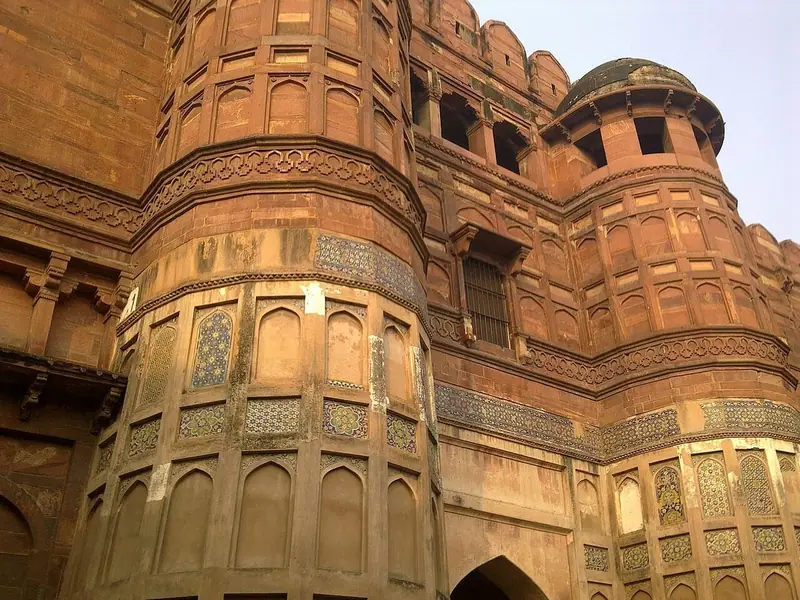 Mughal7 stops · 1565–1640s
Agra Fort audio guide
Red sandstone ramparts and marble palaces, with the Taj Mahal in view from the riverside terraces.
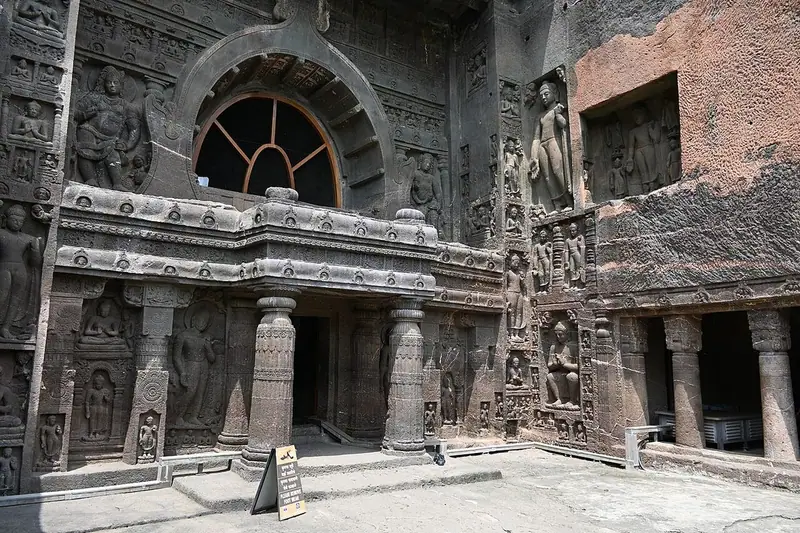 Deccan8 stops · 2nd century BCE – 5th century CE
Ajanta Caves audio guide
Thirty caves cut into a curving cliff above the Waghora river, their prayer halls and monasteries painted and carved by Buddhist monks and their patrons.
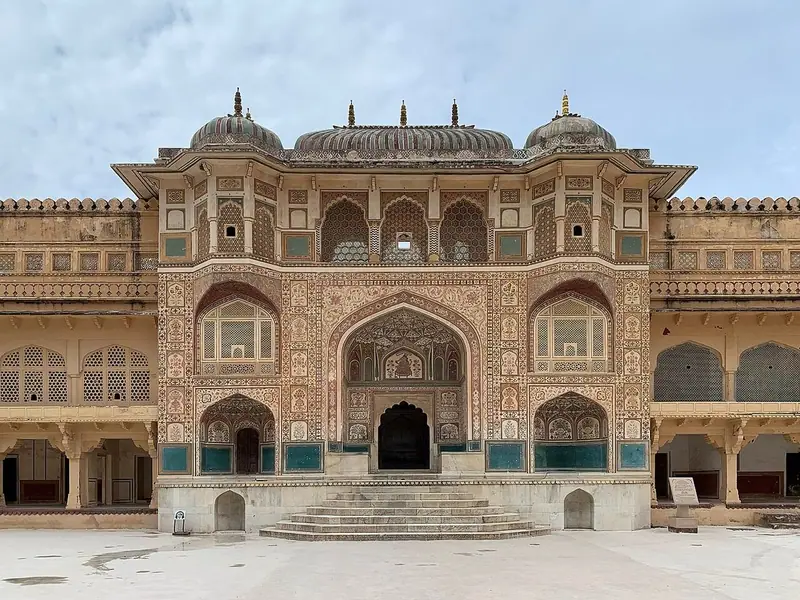 Rajput8 stops · 1592–18th century
Amber Fort audio guide
Up from Maota Lake through the great gates and courtyards to the Sheesh Mahal, palace of the Kachhwaha Rajputs.
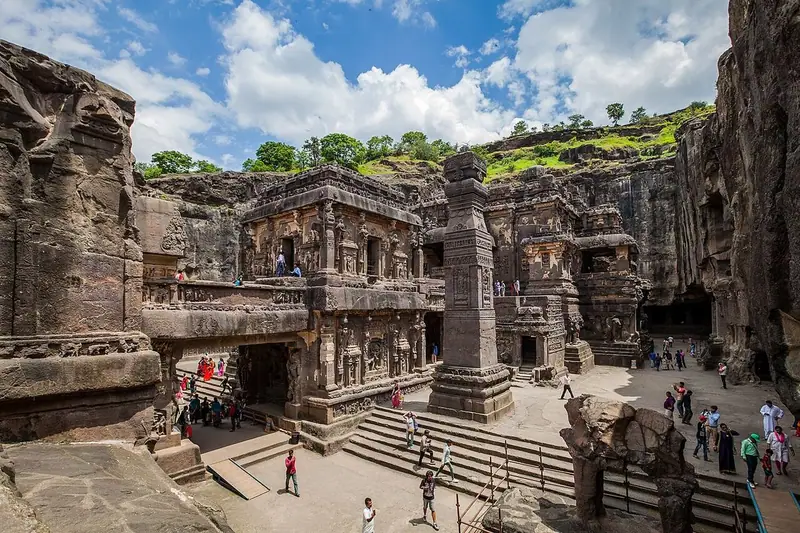 Deccan8 stops · c. 600–1000 CE
Ellora Caves audio guide
Thirty-four Buddhist, Hindu and Jain caves cut into a basalt escarpment, crowned by the Kailasa Temple.
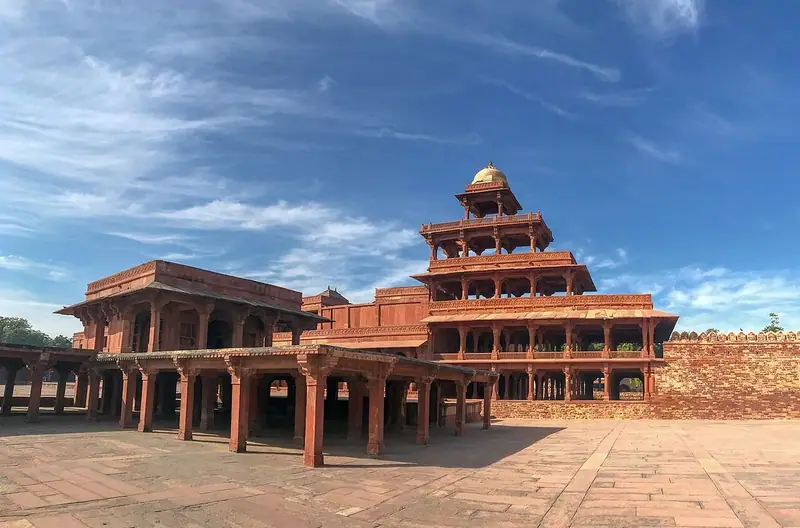 Mughal8 stops · 1571–1585
Fatehpur Sikri audio guide
Akbar’s short-lived red sandstone capital: the Panch Mahal, the Diwan-i-Khas and the tomb of Salim Chishti.
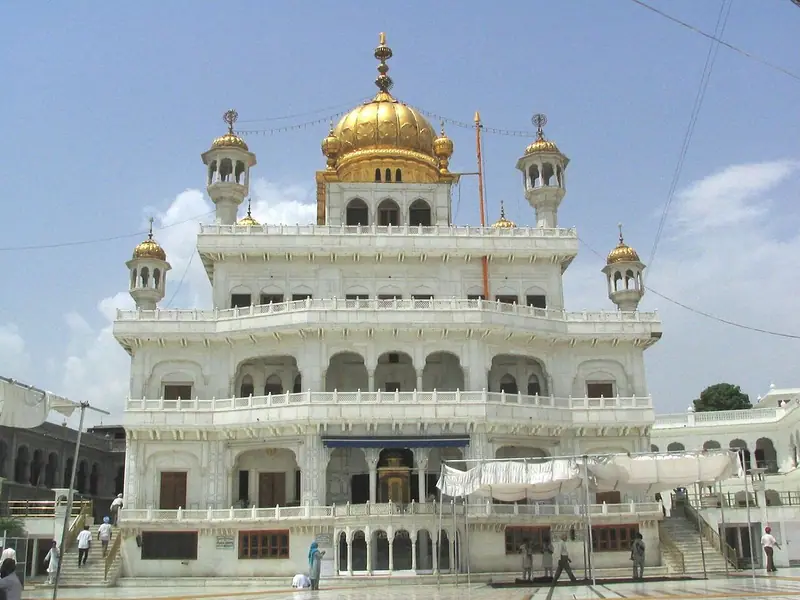 Sikh9 stops · Sikh Gurus and Sikh Empire
The Golden Temple audio guide
Follow the marble path around the sacred pool, cross the causeway to the gilded Harmandir Sahib, and share a meal at the Guru ka Langar.
Every guide, in every country
Mahabodhi Temple and every other guide we publish, including future ones. One payment, no subscription.