Before you start
Jaipur, the capital of Rajasthan, was founded in 1727 by Sawai Jai Singh II as a new royal city on the plain below the hills of Amber. Its walled centre was laid out on a grid of broad streets lined with uniform shopfronts that meet at great public squares, and it has kept its trades and crafts to this day. At its heart stand the City Palace, the temple of Govind Dev Ji and the Jantar Mantar, an observatory of giant masonry instruments built by a scholar-king. UNESCO inscribed the Jantar Mantar as a World Heritage Site in 2010, and the walled city of Jaipur in 2019. This guide follows the old city from its bazaars and the Hawa Mahal to the observatory, the palace and the temple.
Use it as a self-guided tour of Jaipur and Jantar Mantar: 9 stops in visit order, each played when you’re ready, at your own pace.
 Free preview · Stop 1
The Walled City
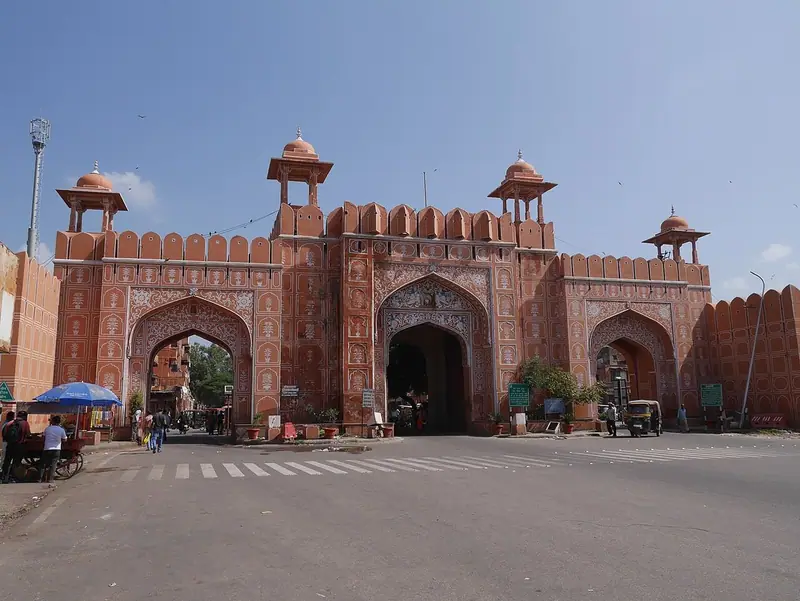
Begin at the crenellated walls of the old city, pierced by monumental gates. Unlike the hill towns of Rajasthan, Jaipur was built on open, level ground south of Amber, protected by forts on the surrounding ridges, among them Nahargarh, which looks down on the city from the north-west. Jai Singh II chose a grid: broad, straight avenues crossing at right angles, with the city divided into nine blocks. UNESCO describes how most of the city’s streets, public spaces and royal buildings were completed in just four years, from 1727 to 1731, a single planned project rather than a town that grew over centuries. The pink colour that gives Jaipur its nickname came later: in 1876 Maharaja Sawai Ram Singh II had the city painted to welcome the Prince of Wales, the future King Edward VII, and many avenues are still kept that colour today.
Photo: Logawi · CC BY-SA 4.0 · Wikimedia Commons
What to see at Jaipur and Jantar Mantar: 9 stops, in visit order
- 01
 The Walled CityA capital planned in four yearsFree preview
- 02
 Johari Bazaar and the ChauparsA city built for tradeIn the guide
- 03
 Hawa MahalThe Palace of WindsIn the guide
- 04
 The Jantar MantarThe great king of instrumentsIn the guide
- 05
 Bowls, Cylinders and StarsMeasuring the heavens in stoneIn the guide
- 06
 Mubarak MahalThe palace of welcomeIn the guide
- 07
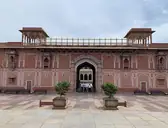 The Hall of Private AudienceSilver jars for Ganges waterIn the guide
- 08
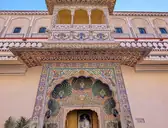 Pritam Niwas Chowk and Chandra MahalFour gates for four seasonsIn the guide
- 09
 Govind Dev Ji TempleThe god who reigns over JaipurIn the guide
Site map of Jaipur and Jantar Mantar
History of Jaipur and Jantar Mantar
Jaipur was built by the Kachhwaha Rajputs, rulers of Amber, and above all by Sawai Jai Singh II, who reigned from 1700 to 1743. A soldier and courtier of the late Mughal empire, he was also a passionate astronomer who built observatories at Delhi, Jaipur, Ujjain, Varanasi and Mathura. With his architect-planner Vidyadhar, he designed Jaipur according to the principles of Vastu Shastra, the traditional Hindu science of architecture, and much of the city was completed between 1727 and 1731. The city was divided into nine blocks, two for the palace and state buildings and seven for the people, and traders were invited to settle there. His successors added the Hawa Mahal and later buildings, and in 1876 Maharaja Sawai Ram Singh II had the city painted pink. Jaipur joined the Indian Union after independence, and the royal family still lives in part of the City Palace.
Jaipur and Jantar Mantar guide: questions
How many stops does the Jaipur and Jantar Mantar guide have?
9 stops, in visit order: 1. The Walled City; 2. Johari Bazaar and the Chaupars; 3. Hawa Mahal; 4. The Jantar Mantar; 5. Bowls, Cylinders and Stars; 6. Mubarak Mahal; 7. The Hall of Private Audience; 8. Pritam Niwas Chowk and Chandra Mahal; 9. Govind Dev Ji Temple.
Can I do a self-guided tour of Jaipur and Jantar Mantar with this guide?
Yes. The guide is made for a self-guided tour: 9 stops in visit order, each with a photo, a story and a voice, so you can explore Jaipur and Jantar Mantar at your own pace, without joining a group. Download it before you go and it works offline.
How long do you need at Jaipur and Jantar Mantar?
We suggest allowing about half a day. The 9 stops add up to about 7 minutes of listening, and you play each one when you’re ready, so you can linger wherever you like.
How long is each guide?
The 9 stops add up to about 7 minutes of listening in total. You play each stop when you’re ready, so you can go at your own pace.
Does the guide work offline?
Yes, once it’s downloaded. The guide is a single self-contained web page (about 8.3 MB) with the photos, text and audio built in. Download it to your phone before you go (Wi-Fi is best); after that it opens in any modern browser on iPhone or Android, with no app, account or mobile signal needed.
Does it use GPS or need my location?
No. The guide doesn’t use GPS and doesn’t know where you are: you play each stop when you reach it. It works on iPhone and Android in any modern browser, and it’s in English.
What’s included?
One self-contained HTML guide: 9 stops in visit order, each with a photo, text and a voice, plus the story of who built the site.
Who built Jaipur and Jantar Mantar?
Jaipur was built by the Kachhwaha Rajputs, rulers of Amber, and above all by Sawai Jai Singh II, who reigned from 1700 to 1743. A soldier and courtier of the late Mughal empire, he was also a passionate astronomer who built observatories at Delhi, Jaipur, Ujjain, Varanasi and Mathura.
Where is Jaipur and Jantar Mantar?
Jaipur, the capital of Rajasthan, was founded in 1727 by Sawai Jai Singh II as a new royal city on the plain below the hills of Amber.
Is there a free audio guide to Jaipur and Jantar Mantar?
The first stop, The Walled City, is free to read and hear on this page, so you can try the Jaipur and Jantar Mantar audio tour before you buy. The full guide, with all 9 stops, is a one-off purchase: download it once and it’s yours to keep, working offline.
Is the Jaipur and Jantar Mantar guide worth it?
If you’d like to know what you’re looking at, yes. For $10 you get 9 stops in visit order, each with a photo, a short history and a voice you play when you’re ready, plus a site map of the stops, and about 7 minutes of listening in all. It’s short on purpose, so you spend your time looking, not listening. It’s yours to keep, works offline and needs no app. The first stop is free on this page, so you can try it before you buy. If you’d like hours of detail, a guided tour will go deeper.
Audio guide or guided tour?
It depends how you like to visit. This guide lets you explore Jaipur and Jantar Mantar at your own pace, at any time, for a one-off price. A guided tour gives you a live expert you can ask questions, but at fixed times and usually for a higher price. Many people use both: a tour for the big picture, and the guide to read beforehand or to revisit the stops in their own time.
Is this the official Jaipur and Jantar Mantar guide?
No. It’s an independent guide by The Historian Guide, not affiliated with or endorsed by the operator of Jaipur and Jantar Mantar. For tickets and opening hours, check the official site operator before you go.
Does the guide include entry tickets or opening hours?
No. The guide is a digital companion only. Admission to Jaipur and Jantar Mantar is separate, so check the official site operator for current tickets and opening hours before you go.
- Stop 1 · The Walled City: Logawi · CC BY-SA 4.0 · Wikimedia Commons · resized
- Stop 2 · Johari Bazaar and the Chaupars: Yamen · CC BY-SA 4.0 · Wikimedia Commons · resized
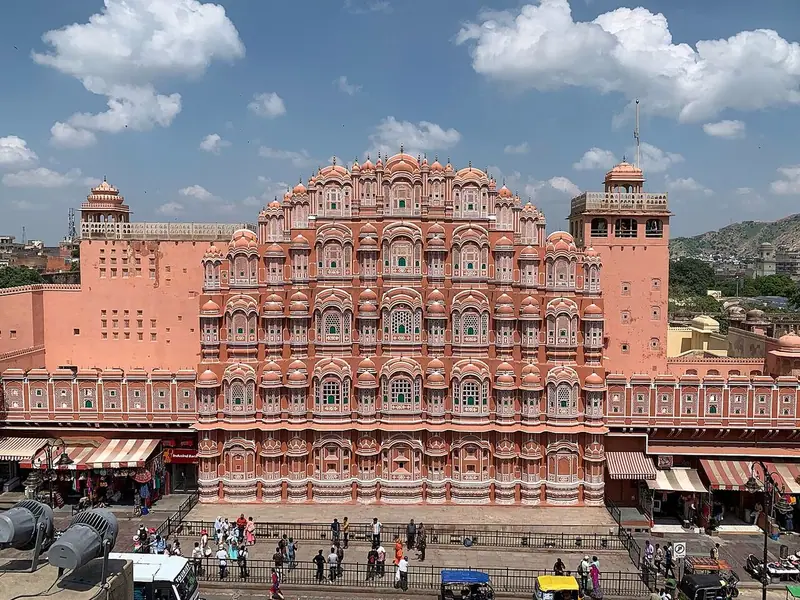
- Stop 3 · Hawa Mahal (also the cover): Chainwit. · CC BY-SA 4.0 · Wikimedia Commons · resized
- Stop 4 · The Jantar Mantar: Srilakshmi1991 · CC BY 4.0 · Wikimedia Commons · resized
- Stop 5 · Bowls, Cylinders and Stars: Marcin Białek · CC BY-SA 3.0 · Wikimedia Commons · resized
- Stop 6 · Mubarak Mahal: Jakub Hałun · CC BY-SA 4.0 · Wikimedia Commons · resized
- Stop 7 · The Hall of Private Audience: Chainwit. · CC BY-SA 4.0 · Wikimedia Commons · resized
- Stop 8 · Pritam Niwas Chowk and Chandra Mahal: Sourabh.biswas003 · CC BY-SA 4.0 · Wikimedia Commons · resized
- Stop 9 · Govind Dev Ji Temple: Jakub Hałun · CC BY-SA 4.0 · Wikimedia Commons · resized


All photographs from Wikimedia Commons under the licences shown.
More guides in India
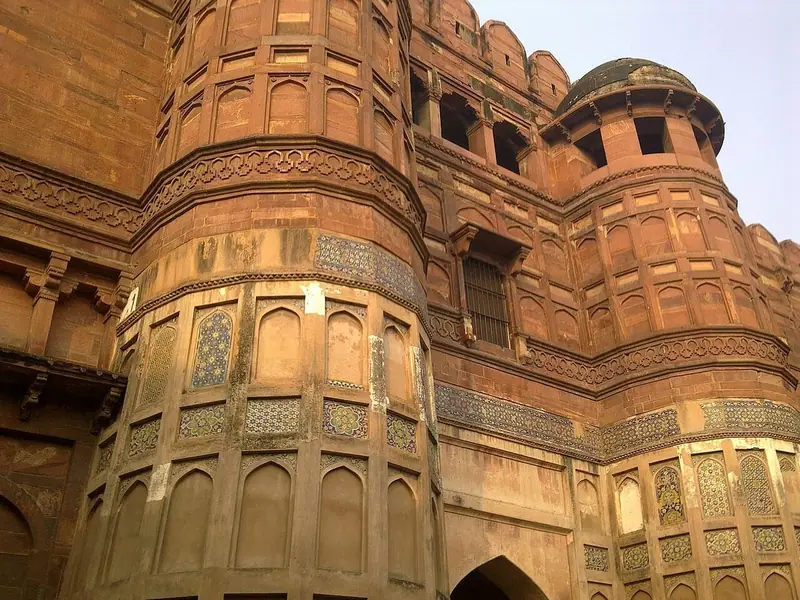 Mughal7 stops · 1565–1640s
Agra Fort audio guide
Red sandstone ramparts and marble palaces, with the Taj Mahal in view from the riverside terraces.
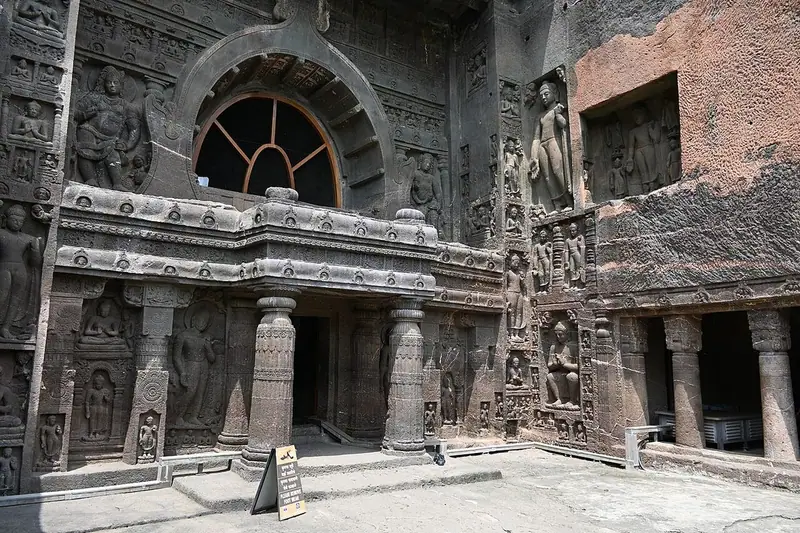 Deccan8 stops · 2nd century BCE – 5th century CE
Ajanta Caves audio guide
Thirty caves cut into a curving cliff above the Waghora river, their prayer halls and monasteries painted and carved by Buddhist monks and their patrons.
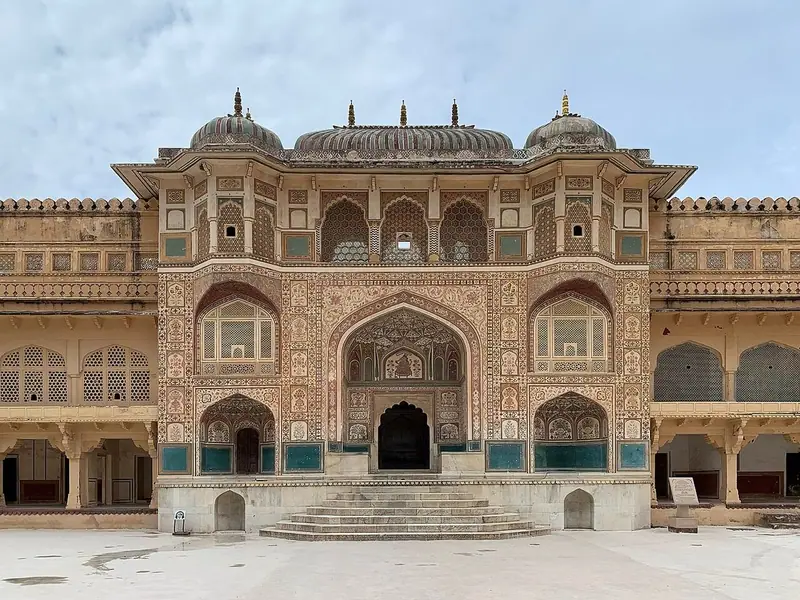 Rajput8 stops · 1592–18th century
Amber Fort audio guide
Up from Maota Lake through the great gates and courtyards to the Sheesh Mahal, palace of the Kachhwaha Rajputs.
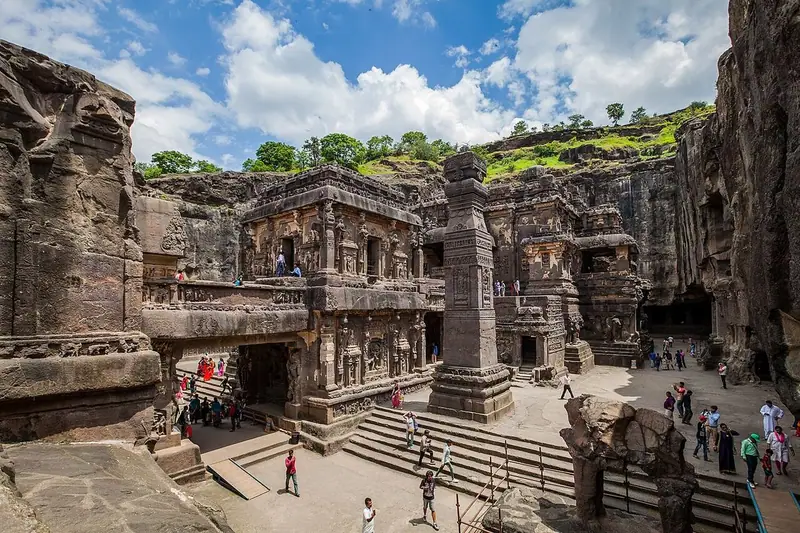 Deccan8 stops · c. 600–1000 CE
Ellora Caves audio guide
Thirty-four Buddhist, Hindu and Jain caves cut into a basalt escarpment, crowned by the Kailasa Temple.
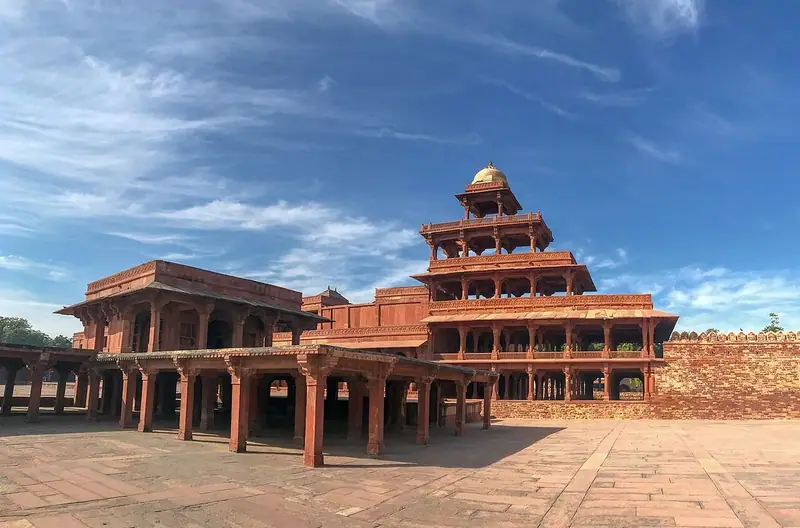 Mughal8 stops · 1571–1585
Fatehpur Sikri audio guide
Akbar’s short-lived red sandstone capital: the Panch Mahal, the Diwan-i-Khas and the tomb of Salim Chishti.
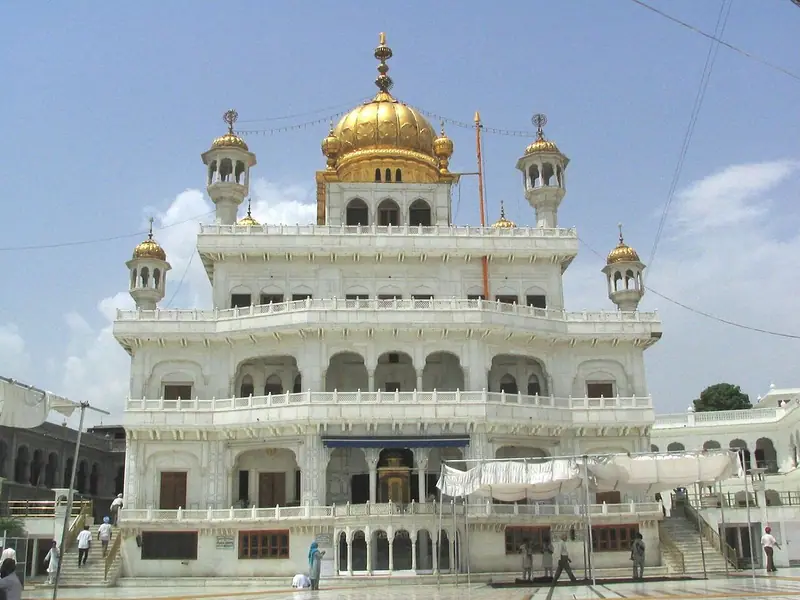 Sikh9 stops · Sikh Gurus and Sikh Empire
The Golden Temple audio guide
Follow the marble path around the sacred pool, cross the causeway to the gilded Harmandir Sahib, and share a meal at the Guru ka Langar.
Every guide, in every country
Jaipur and Jantar Mantar and every other guide we publish, including future ones. One payment, no subscription.